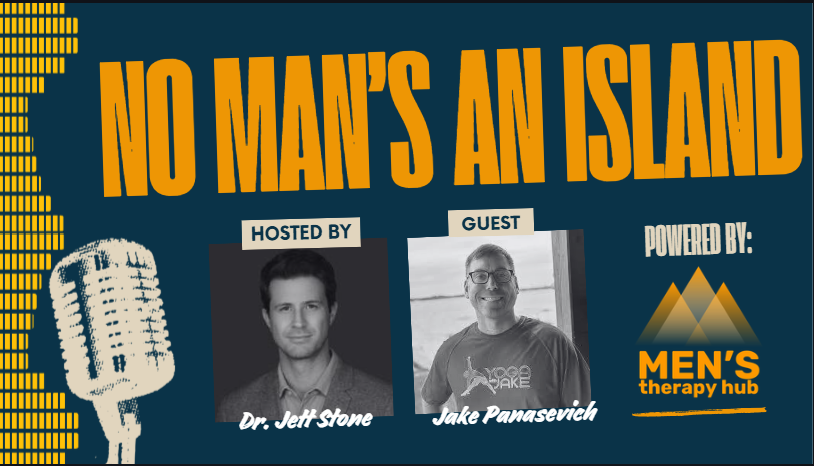
Episode 36 of No Man’s an Island
Yoga is often misunderstood. For many men, it can seem intimidating, inaccessible or simply not designed for them. Yet beneath the stereotypes lies a practice that can improve physical health, support mental wellbeing and help men develop a stronger relationship with themselves.
In Episode 36 of No Man’s an Island, Dr Jett Stone speaks with Jake Panasevich, a yoga teacher, health science journalist and former Division I wrestler whose own journey into yoga began after years of injury, chronic pain and uncertainty about who he was beyond sport.
Jake shares how yoga helped him recover from multiple surgeries, chronic back pain and a difficult transition away from competitive wrestling. Together, Jett and Jake explore masculinity, identity, emotional resilience and why learning to listen to your body can sometimes be one of the most powerful forms of personal growth.
The conversation also challenges common misconceptions about yoga, particularly among men. Jake explains why flexibility is about far more than touching your toes and how yoga can complement strength training, endurance sports and everyday life while supporting better mental health.
What we cover
- Jake’s journey from collegiate wrestling to yoga teacher
- Recovering from injury, chronic pain and loss of identity
- Why many men feel resistant to trying yoga
- The relationship between physical and psychological flexibility
- Masculinity, vulnerability and emotional resilience
- Building male community through shared practice
- Yoga as a tool for managing anxiety and depression
- Breathwork, mindfulness and self-awareness
- Why elite athletes increasingly prioritise mental wellbeing
- The importance of mentors and positive male role models
- Performance culture and the pressure many men place on themselves
- Introducing boys and young men to yoga and emotional literacy
Listen and watch
YouTube: [Embed video]
Apple Podcasts: [Insert Apple Podcasts link]
Spotify: [Insert Spotify link]
Takeaways for men
- Physical pain and emotional pain are often more connected than we realise.
- Flexibility is not about becoming bendy. It is about learning how to adapt when life changes.
- Many men wait until a crisis before prioritising their wellbeing.
- Community and connection remain essential for long-term health.
- Strength includes vulnerability, honesty and self-awareness.
- Mental fitness deserves the same attention as physical fitness.
- Small, consistent actions often create the biggest long-term changes.
- Yoga can support any lifestyle, whether you are an athlete, office worker or complete beginner.
Quotes to share
“Yoga taught me the courage to know when it’s time to shift gears.”
“You practice yoga to love your life and do the things you love better.”
“For the first time in my life, I sat still long enough to think about who I was.”
“Strength isn’t always pushing harder. Sometimes it’s knowing when to stop.”
“The people you surround yourself with have a profound impact on your wellbeing.”
“You don’t need to become a yoga person. You just need to become more connected to yourself.”
Resources and links
Guest
Jake Panasevich
https://yogawithjake.com
Instagram
https://www.instagram.com/yogawithjake
Dr. Jett Stone
https://jettstonephd.com
Men’s Therapy Hub
https://menstherapyhub.co.uk/therapist/
Related resources
Find a male therapist
https://menstherapyhub.co.uk
Episode credits
Host: Dr Jett Stone
Guest: Jake Panasevich
Powered by: Men’s Therapy Hub
Podcast: No Man’s an Island
Music: Raindear