No Man’s An Island Episode 32
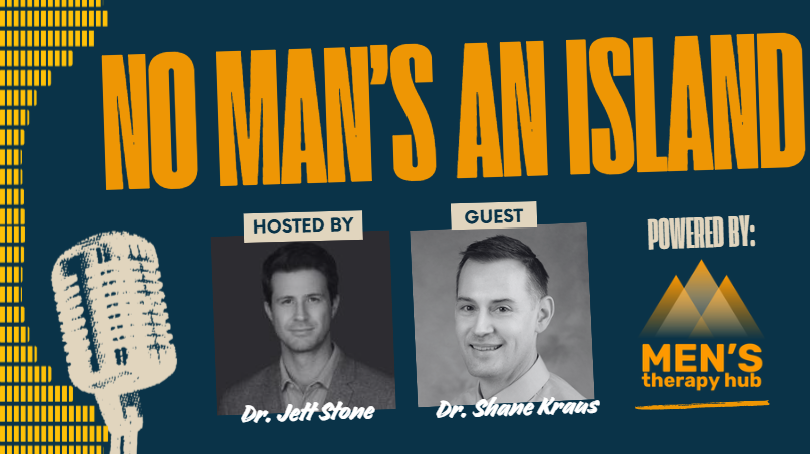
In this episode of No Man’s An Island, Dr Jett Stone is joined by Dr Shane Kraus, a clinical psychologist specialising in compulsive sexual behaviour and behavioural addictions.
Shane is an assistant professor of psychology at the University of Nevada, Las Vegas, where he directs the Behavioral Addictions Lab. He is also a co-author of The Landscape of Pornography Use by Men in the United States, published by the American Institute for Boys and Men.
They explore why pornography remains one of the most common yet least understood digital experiences in the lives of boys and men. Shane shares how he came into this field through clinical work with men who were struggling to stop using porn despite wanting to, and why research has historically been underfunded due to stigma and moral judgement.
The conversation looks at how porn use becomes problematic, the difference between moral conflict and compulsive behaviour, and the role of shame in keeping men stuck. They also discuss early exposure, algorithms, loneliness and how modern technology is shaping men’s sexual development in ways we are only beginning to understand.
What we cover
- Shane’s route into studying compulsive sexual behaviour and behavioural addictions
- The difference between compulsive sexual behaviour disorder and self-reported porn addiction
- Moral incongruence, shame and why not all porn use is a clinical problem
- Early exposure to pornography and why starting young increases risk
- The role of algorithms in escalating content and shaping behaviour
- Loneliness, isolation and why porn can become a substitute for connection
- OnlyFans, AI porn and the future of sexual content
- How porn use can affect relationships, expectations and intimacy
- What therapists can do when clients present with porn-related concerns
- Why more research and funding are urgently needed
Takeaways for men
- Using porn does not automatically mean you have a problem, context and control matter
- If you feel unable to stop despite wanting to, it may be worth exploring further support
- Shame can keep you stuck in a cycle, talking about it is often the first step forward
- Early and regular use can shape expectations around sex and relationships
- Real intimacy involves connection, communication and compromise, not control
- Loneliness can drive behaviour that looks like addiction but is rooted in unmet needs
- You can change habits over time, but it requires awareness and consistency
Quotes to share
“ It’s not a problem unless you can’t stop doing it when you want to ”
“ Shame doesn’t solve anything, it just keeps the cycle going ”
“ Porn isn’t the issue for everyone, but compulsivity is ”
“ Real relationships require compromise, not control ”
“ The younger you start and the more regularly you use, the greater the risk ”
Resources and links
Men’s Therapy Hub – Find a male therapist
No Man’s An Island – Podcast hub:
Dr Shane Kraus: https://www.unlv.edu/people/shane-kraus
Behavioral Addictions Lab: https://www.unlv.edu/people/shane-kraus
American Institute for Boys and Men report: https://aibm.org/research/the-landscape-of-pornography-use-by-men-in-the-united-states/
Related Men’s Therapy Hub resources:
Addiction and Substance Abuse in Men – Breaking the Cycle and Getting Support
Workplace Mental Health – Coping with Stress, Pressure and Burnout on the Job
Episode credits
Host: Dr Jett Stone
Guest: Dr Shane Kraus
Powered by: Men’s Therapy Hub
Music: Raindear
Transcript:
Jett Stone (00:02)
Welcome to no man’s an Island, podcast powered by men’s therapy hub, a directory of male therapists for male clients. I’m Dr. Jet Stone. And my guest today is Dr. Shane Krauss, one of the leading clinical psychologists focusing on compulsive sexual behavior and behavioral addictions more broadly. He’s a coauthor of the recent publication, the landscape of pornography used by men in the United States, which was put out by the American Institute of boys and men.
Shane’s an assistant professor of psychology at the University of Nevada, Las Vegas, where he directs the behavioral addictions lab, which is a research program focused on addictions that don’t involve substances. So not just compulsive sexual behavior, but gambling and gaming. And I wanted to have Shane on our podcast because porn use is the most common unsupervised digital experience in the lives of young men and boys. And I feel like almost nobody’s having an honest conversation about it, or at least we’re starting to trying to. It’s understudied and underfunded and
has a huge impact and I hope to discuss what we know, what we don’t about what porn is doing to men. And there’s so much ground to cover that we may not even get into gambling and Shane, welcome.
Shane Kraus (01:14)
Yep.
Thank you for having me. I’m excited.
Jett Stone (01:17)
So you started, I did some background ⁓ on you and you started in criminology, then forensic psychology. And as an opener to this podcast, we always like to ask, how’d you end up where you are studying behavioral disorders? And like you were, you were a member of the world health organization work group that defined compulsive sexual behavior as a diagnosis. So walk me through your trajectory.
Shane Kraus (01:39)
Sure, so yeah, so thank you. So I went to graduate school, clinical psychology, in Bowling Green State University in Bowling Green, Ohio, and I was kind of working in two labs. One was doing work in serious mental illness, and the other one was another lab with Harold Rosenberg on alcohol and doing addictions. And I was seeing, you know, classic substance use, cocaine, alcohol cases, and I started seeing all these men with pornography issues. And I had written one article on pornography in the past, and I went to my old advisor, Harold, and said, hey, what about if we did something on
pornography and he was like, well, I don’t really study that but you know, it’s interesting and he happened to be a world expert in craving like drug craving and I said, what do we do is study on porn and craving, craving for porn. He goes, well, I don’t know, let’s do it and we did it and that was my dissertation and that study turned out to be really interesting and kind of looking at in a sense problematic pornography use and that study was successful and we published it and then of course that led to me going to Yale as well and doing research there and yeah, I kind of fell into it but it came through, I’m a psychologist as well and
by people, by men coming in saying, hey, I’m having issues with porn. I can’t stop using it even though I want to. And that’s really, really fascinating. And this is, gosh, going back to 2010, 2011, so this is well before DSM-5 where gambling was reclassified. So it really kind of was an earlier phase, and gambling got more attention as a quota behavioral problem versus pornography, which is not discussed. Yeah.
Jett Stone (03:02)
Yes. What’s your understanding of like why the research field has been so slow here? Like what’s the stigmatization on studying such a common part of human sexual life today?
Shane Kraus (03:16)
Yeah.
That’s a really good question. I think the biggest thing is, when it comes to food, So when it comes to food, sex, gambling, these are morally judged behaviors. So if someone’s overweight or trying to lose weight, there’s a lot of judgment and stigma. Same thing if people have a gambling issue. If someone has an alcohol problem, they tell their family, we’re so sorry, we’ll help you. They say, I have a gambling problem. How dare they? They’re a terrible person, right? The moral judgment’s real. Same thing for sex. It’s the stigma and the shame. And I think these are morally heavily judged behaviors. And that just drives a lot
of people to not seek treatment, not to get help, but also because they’re morally judged, know, Congress, the federal government doesn’t really want to fund that kind of research, right? So when someone’s dying from fentanyl, obviously we see it, we see it right there, but when someone’s life is being slowly destroyed by gambling or sexual behavior, it’s not as subtle. And because of the moral judgments people might think about, you know, people don’t want to fund that in terms of research. So it’s really lack of funding is why we’re where we are. There just hasn’t been the big, you know, opportunities. Yeah.
Jett Stone (04:16)
That’s why I’m so glad you’re on today because it’s the moral judgment, not only of the funders or potential funders, but also the moral judgment of the person who is looking at porn. Right. It’s, and can that’s a big part of your research that I found was the moral judgments. Can you say a little bit more about like moral incongruence and religiousness and how that’s impacted your findings? Cause it’s really important.
Shane Kraus (04:40)
Sure. Yeah.
Yeah, and I would say it’s an evolving thing. So it goes back to kind of basic things, right? So if you do a behavior, whether it’s an addictive behavior, or substance use,
pornography, if you do something that kind of causes friction, so like when I do trainings, I’ll have people rub their hands really fast and like it’s hot, like that’s called friction. Well, when you do something that violates your values and let’s say it’s a religious value, a personal value, it’s gonna cause friction. And some people ignore that, they push it down, but it keeps causing guilt, shame, these things, right? And that happens true for gambling, know, lots of other behaviors. But with pornography, we’ve noticed that this moral incongruence where often the initial work with Joshua Grubbs, a colleague of mine,
and I did with Christians and Christianity, found that a lot of Christians were experiencing this kind of friction and also self-identifying as having a porn issue. But one of the things that I’ve written on, and I think he and I both agree, and the scholarship has evolved, is that people can have both. You can have moral incongruence, your pornography use could say, hey, this is violating my values, and it’s compulsive, they’re both real. So the issue early in the research was that we were worried about people being false diagnosed, know, someone coming in,
Hey, I’m you know, I use porn once a month and yeah, it’s I’m addicted and thinking there’s no way that’s there’s no compulsivity here So that that was coming up, but I think through the more and more scholarship we find I just don’t see that those clients I mean, I just I’m not seeing that as much. I think they’re there. There is some moral disapproval disapproval or disagreement whatever but it’s really the Compulsivity that’s the heart of it If you cannot stop what you’re doing and you need to do it You need to stop and it’s causing issues. You got a problem, right and say
and that’s the real heart of it. And if you don’t have that, like I had a client one time and I said, well, have you ever tried to quit? No, I said, go do that and come back. And he came back a couple weeks later and he’s like, yeah, I didn’t have any issues. Right, because it’s more a moral issue. Let’s talk about doing psychotherapy for your values. That’s more helpful for you rather than you self-identifying as having a problem.
Jett Stone (06:41)
Yes. And for this might be a good time in our discussion to talk about some of the terms that are thrown out there because, know, in my clinical practice, I’ve certainly had people who have come in and been like, you know, I think I might have a porn addiction or they throw it down, you know, or they throw that line out as if it’s like, you know, ⁓ shared clinical knowledge that porn addiction is a thing. Could you, you walk us through, ⁓ compulsive sexual behavior disorder?
Shane Kraus (06:55)
Mm-hmm.
Jett Stone (07:10)
versus self-reported ⁓ porn addiction, ⁓ problematic porn use, right? All these different languages would be very helpful.
Shane Kraus (07:16)
Yeah, sure. Absolutely.
Okay, so it goes back to, so there was initial really cool work by someone called Dr. Patrick Carnes on sex addiction, really an intro, he was himself a survivor, really this interesting research of people with trauma often develop issues later, sometimes it’s sexual avoidance, sometimes it’s sexual compulsivity. So he really was doing some interesting work where framing sex as an addiction, traditional addiction framework. And over time that just didn’t, and then there was proposed DSM, hypersexual disorder, right, having high sex
you know, excessive behaviors, those never caught on. In a sense, they weren’t accepted for the DSM, Diagnostics Manual for the US or the world. And what came through the last seven or eight years was compulsive sexual behavior disorder. So this is the framework where it’s compulsive. The reason it’s compulsive is that you can’t stop doing it even though you want to, right? That’s the framework. And this is an impulse control disorder in ICD-11. This is an international classification, know, manual of diseases. And the framework there is, you know, using ⁓
sex or porn despite having adverse consequences, deriving little pleasure, failed attempts to quit or stop, things like that. That’s the hallmark of it, right? Not due to only moral congruence, know, I’m doing this, it bothers me, I’m distressed. No, that doesn’t mean you have a problem. You have to be clinically impaired by it.
the porn, right? Like I said, with pornography, if someone has no trouble quitting, well, they don’t have a problem. They might have distress from, this has affected my marriage. Perfect, we can talk about that. But it’s not a CSPD, right? So the term problematic pornography use was myself and other people, because porn addiction isn’t a diagnosable term in terms of DSM-5, TR, the revision for diagnostic manual for the US, or in ICD-11, it’s not a behavioral addiction,
⁓ It’s kind of a broader term to show that you’re having issues with porn, unable to stop or quit, things like that. So it’s more of a kind of a softer term that’s more inclusive, know, or encompasses more. ⁓ So, and I think right now, you know, people use the term porn addiction. Technically there isn’t a criteria, but you can be diagnosed with CSPD in ICD-11 criteria, and pornography is just one of the behaviors, just like it could be for casual sex or paid sex or, you know, something like that. So, yeah.
Jett Stone (09:17)
Mm-hmm.
Mm-hmm.
That’s helpful. And one of the things that, you know, is helpful to tease apart, because I know you do, you’ve done some research on the neurobiology of this, like how are we distinguishing between what’s an addiction under like the addictive ⁓ category versus impulse control? Like sometimes that gets a little bit fuzzy.
Shane Kraus (09:58)
Yeah, so and again, just remember there’s not been a ton of funding. Europe is doing a way better job right now in terms of Poland and Germany funding projects. So we know that, right? So the hallmark, what’s similar is the compulsion, right? So addiction, right? The term addiction is from Latin, which just means to be enslaved or unbound, right? You can’t stop. So the hallmarks are a couple things. So you can’t stop, it’s compulsive, deriving little satisfaction, things like that, failed attempts. Those are similar.
Jett Stone (10:05)
Yep.
Shane Kraus (10:28)
with addiction frameworks. The difference with addiction is that you have withdrawal, you have tolerance, you have these other factors, right? And those have not yet been established. There’s research on those coming out and there seems to be people reporting tolerance and withdrawal symptoms related to stopping pornography or sex, but that’s still not well established yet. So which is why impulse control, the central features are those compulsions, the difficulty stopping and regulating, but you don’t have the tolerance, you don’t have the withdrawal, you don’t have some of the other stuff.
You don’t have using sex as coping. So in hypersexual disorder, if you go back in time, using sex as a coping mechanism, well that’s not in either camp yet. But who knows, that could be something that’s worth studying.
Jett Stone (10:58)
Yes.
I’m glad we started with sort of like a lay the land in the language because that it gets confusing. From your ⁓ standpoint, what has been frustrating to you? I mean, we’ve talked about the stigma, but as someone who leads a lab, you know, looking at these things and is interested in the policy work and out there, you know, doing the hard work of talking about this and actually trying to have like genuine conversations without chuckles, you know.
Shane Kraus (11:15)
Hmm.
Yeah.
you
Yeah.
Jett Stone (11:39)
You know,
like what is frustrating to you? What are you noticing out there as this discussion becomes more in the public consciousness?
Shane Kraus (11:46)
Mm-hmm.
Well, I think it’s, you know, having done this for over a decade, and not to date myself, but I feel like, oh, I’ve been around for a little bit. So as someone who’s been doing this for a little bit, right? When I first started this, yeah, I literally, when even I was a fellow at Yale, people were like, why is you doing this? Drawing your career away, Shane. But I had a couple amazing mentors at Yale. Mark Vitenza was one of them, Steve Martino. And they’re like, no, no, do what you believe in. We’re going to support you. And that was really great. Now, though, know, keynote medicines, know, addiction medicine conferences with, you know, thousands of physicians there, psychiatrists, they’re all,
Jett Stone (11:53)
you
Shane Kraus (12:18)
They’re all on board. So I don’t really get the chuckles anymore. I think the one frustration now is the funding because I really think these questions around is it addiction? Is it impulse control disorder? That’s a good question. But we kind of need the funding to do fMRI. We kind of need the really good longitudinal. We really need to do good in depth clinical interviews with youth.
men, women, partners, everyone. We gotta really spend the money and do the time. And I think we haven’t done that yet. So you have a lot of good scholarship that has been built off, like for example, Joshua Grubbs and I had a big sports betting grant, huge, one of the largest ever. And we did this very successful. We published many papers from it on gambling, but we threw in pornography stuff and CSBD stuff too, because you’re comorbid. And we’ve actually published a lot from that as well. And the funders cool about it, which we’re grateful for.
But it’d be much better to have a grant, that kind of grant for actually sex then. So we did a lot of great scholarship, the people said, why didn’t you ask this? Well, that wasn’t the purpose of the grant, it was gambling, it’s sports betting. But we published many pornography papers that I think are now well cited. But if we had actually funded it upfront, you could get the in-depth work. So I think my main frustration now is A, two things. One is people knowing it’s a real issue. It really is a problem and to stop the moral judgments,
just like people with food or having weight issues or gambling. So stop the moral judgments. It’s not a sign of moral weakness. And then really kind of getting better treatments because treatment does work, but it’s not been well.
system, you know, like kind of like systematically done well. So, you know, CBT works, we can talk about acceptance, commitment, therapy is helpful. But I’d love to see standardized protocols, you know, things for clinicians around the world to implement that hasn’t been done as it’s been done for alcohol and drugs. Right. So so I think it’s those things. I think really it’s about funding at this point. I don’t believe that people don’t believe it anymore. I mean, I think we’ve shifted that. It’s been weird to be part of the first part of that, where people like you said, this is, you know, terrible.
this isn’t a real thing. And now people, you 40 people waiting in line at a conference to ask you questions and asking for your slides, And we’ve given some of the first talks of these conferences on the topic and there’s no snickers. It’s all like, how do I implement this? The question is now it’s the phase two, which is the treatment, the implementation, the harder things.
Jett Stone (14:45)
Yeah. ⁓ you know, as a therapist, when these issues come into the therapy room, you do look around and there aren’t a ton of tool kits to turn to. And I think, you know, in assessment, and you can tell me what you think, I think it really is important to do a deep inquiry on someone’s sexual history. ⁓ and you know, their sort of, ⁓ moral life and what they think about and right and wrong and the religion, that’s a part of it.
because there’s a lot of shame in the room, which I’m sure we’ll get to here at some point that makes it so difficult to not just talk about like out in the open to people, but even in the therapy room, I talked to therapists who have such difficulty even inquiring about it as if they’re running a file of their own, you know, moral compass if they ask about it or something, you know, and it’s like, we’re supposed to be able to talk about everything in the therapy room. so,
That’s more of a general comment on it that I’m glad that things are changing and that you’re seeing it out there in the field. I want to ask a more specific question here though. You came out with it and colleagues came out with a recent report in AIBM, American Institute of Boisman, and it’s that poor use can be linked to negative, neutral, and positive ⁓ outcomes. Linked, right? Not causal. I’m trying to be careful with language here. ⁓ And I think…
Shane Kraus (16:08)
Mm-hmm. Mm-hmm. Yeah.
Jett Stone (16:13)
I do want to touch on how it can be positively used because there’s a lot of junk out there, a lot of terrible stuff, AI, porn, all that, but there’s also like beneficial aspects to it. And it’s good to at least touch upon before we go dive more, a little bit more into the potentially negative.
Shane Kraus (16:18)
Sure.
Yeah.
Sure.
Yeah, sounds good. Yeah, so let me just say this. So, you know, I’m a psychologist like you, and you know, people often say, why do you study so much of the negatives? I say, well, because people don’t come to treatment to do therapy today. My life is amazing. I mean, imagine if we got to clients came in and like, my marriage is great. My children are thriving. Like, you know, yeah, my I have a wonderful relationship with my mother. And you’re like, that’s amazing, right? We don’t get that. We get people who are in distress. And that’s okay. That’s what we do. You know, we’re this is what, you know,
Jett Stone (16:48)
We don’t know what to do when that happens actually.
Shane Kraus (16:58)
the point of being kind of a help seeking, a helper, right? And so it makes sense. So I do think that the literature, including a lot of what I write, is based on helping people who come to clinical practice. So because of that, you have more of that negative look at the negative relationships. Yeah, there are positive things. I think it goes back to values and relationships and functioning. So for couples, so lot of porn use generally doesn’t help couples to some degree because it’s not used together. If the couples don’t have shared values with pornography, if it’s used,
Isolation or secrecy not so good, but it’s interesting. There is you know some evidence that for couples Added some content or something could help spice their relationship or you know, there’s erotic Tantric videos and massage videos and those all sex therapists often give those out or you know prescribe those or recommend those right? So yeah, they’re also people who I’ve been blessed to be married for over 20 years I got married very young which was the best decision I ever did but not everybody has relationships
has
access to a partner. For some people pornography might be the way that they’re able to get those sexual needs met. And I think it’s very easy for us or for someone who’s in a relationship and has access to a partner, loving partner, to make those quick judgments. so I think we want to balance that and I think there are some, and I think the report talks about that. And also for some people who are self-exploring themselves and what they’re interested in, think that has a place. So I think those are all true. And there could be more research on those. But I think the issue is that
of pornography is generally done in isolation and secrecy and not in the other context, which is why we see these problems that we see. A lot of people coming in who are couples are not used at porn as being seen done in secrecy or feels like acts of betrayal or something, right? So that’s kind of why we see it clinically that way.
Jett Stone (18:46)
Yeah, and clearly there are positive use cases for it and there’s no… There ought to be no shame in terms of exploring sexuality and watching other people have sex. That ⁓ can be a human desire. And I think the negative outcomes that you’ve found in your research and others, colleagues, ⁓ can you just…
quickly give us like a brief overlay of like, you know, some of the correlational findings. Cause like you said, the research isn’t all there, but ⁓ what can, maybe I’ll ask it this way. What concerns you the most? You said isolation, secrecy, when it comes to the research out there.
Shane Kraus (19:29)
Yeah. ⁓
Yeah,
I think it’s that. I think it’s also depression, anxiety. I think it goes back to, you know, so I always ask people when I see people in practice, why do you do what you do? So if they’re in for alcohol, gambling, pornography, it’s what’s the function of the behavior, right? What are you doing when you do and what do get out of it? And what concerns me is when pornography becomes, you know, potentially the coping or the boredom and they’re not enjoying it, it doesn’t really satisfy them. That’s the escapism. That’s the concern that I have for it. But yeah, I mean, it’s correlated with lots of mental health issues.
Again, because it’s so tied to isolationism and the other thing too is I think pornography is a fantasy and I think if you use it a lot and depending on when you start using pornography, you kind of forget that it’s not real per se and then you kind of impose those beliefs or values on someone else who may or may not be interested in those fantasies or those beliefs. So I think that’s my concern is that the report, we see these really young ages of kids, 11, 12 using pornography,
is not good, just like kids smoking at 12 is not good. drink, kids smoking, drinking at 12 is not good. So really early use before kids have time to develop healthy sense of self and others, and I think is really problematic. And the pornography today is not the pornography for my days. It’s very changed and very different, and in a way that’s instant access on their phone. But the age is 11, 12 now, and that’s kind of regular use.
And that really, I think, is alarming. Because what does that mean for that young person who develops and perhaps has different, believes things differently about women or men or whatever based on what they see and then struggles to implement those and lack of social skills or relationships, you know, with other kids, you know. And that’s, think, a real concern.
Jett Stone (21:22)
It’s a concern of mine because you’re right, the isolation of it and when it’s imposed upon a relationship in this really inorganic way. So my co-host of this podcast, Chris Hemings, his wife’s seen as a sexologist and she made a really good point about ⁓ the algorithms today, right? Like this isn’t the pornography of even just like five years ago or 10 years ago. And that, you know, it might start somewhere mild, like, you know,
Shane Kraus (21:30)
you
Okay.
Jett Stone (21:51)
curious, spicy or something like it might begin ⁓ innocently and then what the algorithm does, which is this external force that’s imposed upon us as people on the internet, more importantly, young people, young men and boys on the internet. So it’s imposed and like escalates. if you might get, put some mild content, just escalates and escalates into something that can be extreme. It could be ⁓
Shane Kraus (21:54)
Mm-hmm.
Mm-hmm.
Jett Stone (22:21)
you know, way out of the bounds of what you were initially there for. And so then the shame you then feel from watching something that was so out there then becomes your own shame to live with. And I just wonder, you know, that’s a general comment. I it was really important to share with you and your thoughts on it.
Shane Kraus (22:37)
Yeah.
Yeah, so I would say that we’ve been doing some of this work. So Bailey Wei, she’s gonna be seeing Dr. Wei. She graduates in May, which is exciting, from the lab. Some of her dissertation work too we’ve been publishing is at a really early age of onset of pornography, 11, 12, 13, kind of is related to adult issue ⁓ use and higher rates of more fetish or more kind of extreme pornography. And I think that’s, you’re getting at a point of escalation. And this hasn’t been really well studied yet. But what we know for other behavior,
and gambling and or substances that people escalate because of tolerance, right? So this is, it goes back to the question of tolerance. So we have a paper under review on tolerance that looks pretty strong that there is probably evidence of tolerance for pornography. But I think people are seeking more and more and the algorithms are doing it perfectly. Because what do we know? if we pause real quick and we think about pornography, if we hook up men to machines, we look at their arousal, their rate, their penis, and we show them soft core pornography,
just light, you terrible music, you know, you know, whatever. Men’s arousal will stay up a long time. They’re super, super interested. Interestingly, hardcore pornography, they get bored after five or 10 minutes. It has to change. So people habituate very quickly, particularly men to porn. So you have to kind of really change it up, the positions, the scenes, the content, because people habituate very quickly. But weirdly, if it’s more mild content, it keeps arousal and keeps interest. And I think
But that’s not how you make money, right? This is how these algorithms don’t work that way, right? That what they want is people seeking more more content. And that’s I think one of the big issues. And to go back to the point on the kids, there was a survey I think was out of Canada, I’m not sure, but there was one where they looked at asking girls in high school, adolescent girls, and I think 60 or 70 % were reporting feeling pressure to be choked by boys and stuff during their first sexual experiences. And it goes back to like that’s something that’s
are more of a common popular theme, right? 10 years ago that really wasn’t there and I think that is absolutely probably being driven by these algorithms and the extremely, again, if you’re starting at 12, by the time you’re 17, four or five years later, you’re probably gonna be looking at a lot more extreme content. I mean, again, we need more data on that. We don’t have the longitudinal data on that, but I would say that other behaviors that have been well studied follow that model. So I don’t think pornography is gonna be very different, honestly.
Jett Stone (25:07)
Yeah, I’m, as you say that I’m actually interested in what we do know at this early stage of the game about the gender differences in, in porn use and in problematic porn use. I don’t know if they’ve sort of distinguished that, but
Shane Kraus (25:17)
Yeah.
Sure. Yeah, so what we know, so we know boys are more interested, they use more porn, they’re more interested in porn. ⁓
They have used it more frequently. They have higher rates of problematic issues. And that starts from adolescent all the way up. Men are always winning the awards here for pornography issues. But I would say women are catching up. So I think the data we’re seeing over time from other studies, other countries, is that women’s issues are also going up as their uses go up as well. ⁓ But women are really interesting when we think about CSPD. if we go broad category, men are more likely to do a lot. So most men will do the porn.
Jett Stone (25:58)
Mm-hmm.
Shane Kraus (26:01)
and then they’ll do casual hookup sex, some kind of sex with someone else, if they’re able to do that. Women are actually more likely to have casual partners with other men, if they’re heterosexual women. They’re actually more likely to do that first, then go to pornography. Pornography is definitely lower on the list, but for men it’s always number one. And then it’s porn plus, I always call porn plus, because they’ll do the porn and then they’ll do the prostitutes or sex workers or hookup sex and stuff. So pornography is generally always in the male frame with other activities, but for women it’s
Jett Stone (26:23)
Mm-hmm.
Mm-hmm.
Shane Kraus (26:31)
often more dyadic, more relationship focused, sex first.
Jett Stone (26:36)
Not a surprise.
What’s your sense of why it’s a porn first with men? I might have to hypothesize a little bit here, but…
Shane Kraus (26:43)
You know, I don’t…
I’m not sure, I mean I think the relationship component of women wanting relationship connection with another person makes sense. I think males start masturbating very young at a young age. It’s often a very solitary behavior, which makes sense. And it just becomes ingrained and conditioned, you know. And now they have porn, so they’re able, now they’re imprinting or kind of whatever you want to call it, to porn. So rather than using their imagination, right, and things like that. So that’s I think probably why, and I think it’s the biology, right, the testosterone.
that we know is a sex drive and as you’re going to puberty and adolescence or have lots of hormones and not both both boys and girls are going crazy but the boys I think are more visually oriented and I think pornography is just visually you know stimulating which makes sense and now that the average 11 year old has an iPhone or a smartphone it’s not very surprising that they’re very few phones are regulated they’re all looking at porn right
Jett Stone (27:39)
I mean it’s not just the easy availability of it, it’s also ⁓ what ⁓ Sina, ⁓ the wife of the Michaelis was saying, it’s bastardized ⁓ the production of videotaped sex in a way that like it is, it can be an art, it can be done tastefully.
Shane Kraus (27:50)
Mm-hmm. Mm-hmm. Mm-hmm.
Yeah.
Jett Stone (28:06)
And I think that with AI and just with just the amateur use of it across like, you know, tons and tons of websites and men willing to pay for it, like they’re more willing to pay for OnlyFans than they are like a chat cheap subscription. Like I think I saw that somewhere. Like that it’s really corrupting the fantasy life of sex in so many ways. And I think that that that’s just another general comment that why this research is so important now, because we’re in un…
Shane Kraus (28:15)
Yeah.
Mm-hmm. Mm-hmm.
Mm-hmm.
Jett Stone (28:35)
Chartered territory.
Shane Kraus (28:36)
Mm-hmm.
Yeah.
Yeah, we have a paper on OnlyFans that’s out, so it’s not published yet, but I would just say, just to give you a tip, is that we found we call it lonely fans because unfortunately the driver for these men who are willing to pay is loneliness and mental health. So I think there are people who buy content who are not struggling with only, but you see this older demographic of men who are more isolated and alone. I think all people want connection or most people really want intimacy in different ways and I think if you’re not able to do that,
Jett Stone (28:41)
Okay.
Hmm.
Shane Kraus (29:08)
for it, maybe you feel more connected to that person. And I could understand that happening. And I think that’s probably why that’s growing as a market. The question of the content and all that and being pirate, you what’s pirated now is a whole different discussion. I don’t know the article, but I talked with Joshua Grubbs a couple years ago. He had told me that a lot of porn that was pirated first, so the more extreme stuff got pirated, which became then mainstream, right? And then more extreme stuff became mainstream and then they kept upping and it’s
really what was pirated. So a lot of where we are now, the extreme stuff was all like taboo, but that’s what got pirated and put on the websites and that became mainstream, right? And now it keeps upping the ante. So it’s an interesting time. mean, I think it’s a, like I said, it’s a huge topic and I think we’re not having a conversation or we’re having few conversations around it, I would say.
Jett Stone (29:57)
Yes.
Let me add my clinical perspective in the sense, you know, I will meet, let’s say Gen Z men, millennials, early millennials. And then I get the sense when they’re like in the relationship formation phase of things and sexual sexual difficulties arise or even just like general relational difficulties, understanding ⁓ their partner, oftentimes another woman. It does feel
like they grew their sense of how to be with another person in a very isolated state. I anecdotally feel like, oh my gosh, you were probably just in front of your computer, like understanding what it means to like meet a girl. Whereas, you know, those of, you know, let’s say my generation, I’m not like, you know, I’m 41, but like, you know, you sort of had to go out there and it was a lot of trial and error and a lot of like dealing with friction and, and you’re.
Shane Kraus (30:48)
Mm-hmm.
Jett Stone (30:55)
working through your own shames and I just felt like that trial and error was something that’s very important to adolescent development. I just, again, I’m putting that out there as an idea of, but I don’t know if it is well supported in the research.
Shane Kraus (31:12)
I think it’s an important
question. think things are different though. think you’re right, young people texting now rather than have a conversation. think this technology is just how, it feels less anxious. There’s lots of stuff on anxiety out there though. I don’t want to get sidetracked, but the reality is how you treat anxiety to make people do what they’re supposed to do. Stop avoiding what you’re, that makes me anxious, so what, go do it anyways, right? That’s the secret, right? And your body will habituate and your anxiety comes down. But I think about, I think I was in seventh, eighth grade, I think I was eighth grade or whatever.
you
know, very nervous to talk to girls at that age, you know, because I was awkward and I was in tall. I didn’t grow like a foot until I was like 16, 17, I’m late bloomer as they say. And I remember my grandpa said, who cares? So I remember I went to a dance and I started asking and they’re like, no, I was asking for dance. I think I got to the fourth one or fifth one and I got a girl to say yes. And then when I went again, the second time it was like yes right away. And I realized it’s like just.
Who cares? I don’t want answer you. Just go down the line. There’s 30 of them at the wall. Who cares? And I realized that that was an important pivot. And I think young men today don’t see that confidence, they’re lacking confidence. And what a…
Women want is confidence, What people want in a partner is confidence, commitment, love, things like that. So I think it’s those things. And I think porn is not helping them. It’s not creating, it’s not a situation where you have to listen to a partner, engage with them, go to dinner, and have these relationship skills, and be connected and be truly interested in what’s happening in their life and their interest in your life. Well, that’s what leads up to committed relationships and sex and intimacy. It isn’t you just show up, right, and everyone wants to have an orgy, right?
And I think, but if that’s all you see and know, then I think it kind of skews your ability to talk to people.
Jett Stone (32:56)
Absolutely,
there’s, I mean, just that anecdote of the dance is so perfect because I can relate to it. don’t know if they still have the same school dances. I think in a lot of places in the US, they’ve like, you know, maybe like you.
Shane Kraus (33:02)
Yeah, I’m not sure. Yeah.
Jett Stone (33:10)
school, but I think there’s something to the not knowing, right? Not knowing if the person’s going to say yes when you ask them, versus the knowing that comes with porn, right? Like, or at least the assumption of knowing this is how it’s done. And you walk into a relationship with that and you fall flat on your face or you get humiliated and then, you know, we can play the tape forward where that goes with some men, which is, you know, one of the questions I had for you, like,
Shane Kraus (33:11)
Yeah.
you
Right. Yep.
Jett Stone (33:40)
I know there’s not a lot of long, jatoodle research, you know, over the course of more funding, please. But what, what distinguishes the kid who, ⁓ develops like a healthy sexuality, despite early pornography exposure from the ones who don’t, who doesn’t like, ⁓ I, this is kind of an open question, but like, do you get where I’m going with that? Like there are some heavy users who have seemed to have really healthy sexualized and there are some heavy users who
Shane Kraus (34:04)
Yeah, so that’s a real.
Jett Stone (34:09)
really can go down into a bad place.
Shane Kraus (34:10)
Exactly, and that’s
literally one of the things we say in the report we don’t know. So what we don’t know, because we know, so we know lots of…
Jett Stone (34:14)
Okay.
Shane Kraus (34:16)
men or young boys use porn or dabble here and there and turn out to not have any issues. And some people really get in a rabbit hole really quickly at young age and never get out of the hole. And that’s a question of, and that’s where longitudinal and also interviewing, like what happened? And that’s kind of what we’re trying to understand. But what we know so far is the younger you start, and not just your age when you started, the regular using, like weekly or greater. So you might have seen porn at 14 and then didn’t touch it till you’re 20. Well, that’s, but the person who started at 13,
and started regularly looking at porn at 14, that’s the predictor of who’s going to have a problem. So we know it’s not just exposure, it’s regular initiation. So that’s kind of coming out pretty clear. So I think that’s, I mean, it makes sense, If you’re smoking, you know, I was a kid, so I used to, 13, 14, you know, trying to get cigarettes and stuff. I was a wild kid, military brat. So, and, but I think, but trying to steal a cigarette from someone you know is very different than smoking a pack of cigarettes every day at 14 or 15. And I think that,
Jett Stone (35:07)
Mm-hmm.
Shane Kraus (35:16)
is the thing I think is that regular use of porn really is a predictor and that’s the younger generation. That didn’t exist 20 years ago, 25 years ago. You just couldn’t really see porn all the time. And so I think we don’t know that’s the question. I think it’s a really great question that we need more research on, but I would say we know there’s some aspects that are more riskier than others.
Jett Stone (35:34)
Yeah.
Speaking of the risk element of it, I think there’s a misconception that I’d love you to debunk that porn use causes sexual violence. ⁓ And that’s not exactly true from this landscape report. Actually, I was going to give the finding, but I think you’re better suited to maybe explain that.
because I think it’s a question on, understandably so, on the minds of all of us.
Shane Kraus (36:08)
Yeah, I think it goes back to, I think it’s this question of what causes what. And again, we don’t have the research. We find this very weak relationship. The question is, is someone who’s predisposed to violence more likely to gravitate to violence? Again, you know.
I don’t do lot of research with sexual offenders, so this is not an area that I’m super knowledgeable on. But the question is, we know pornography is related often to sexual offenses too. So it’s complicated. I would say that the majority of people who look at pornography, ⁓ even as young boys, are not gonna turn out to be sexually aggressive. I do think my concern though is that they’re gonna have beliefs ⁓ towards a partner that may be not realistic. this is our first date and we should be having sex and it’s like what, or like expectations around.
on what women’s bodies should look like and maybe that have been shaped by OnlyFans or AI porn or whatever. And I think those are more likely, I’m more concerned with actually is that than the violence per se. But yeah, I don’t know that we have that. I do think that maybe people who have more violent tendencies are drawn to the content because it is there. Whether you want it or not, there is a lot of violent and degrading pornography available. I mean, it’s everywhere. So you have to almost try to not, you have to intentionally
to try to filter it out almost. And I think that is alarming because again, to go back to that high school study when girls are feeling, I think it was 70 % feeling pressured by boyfriends to be choked during sex, that to me is alarming, right? That’s not, that’s.
concerning when they’re feeling pressure, but also that that’s such a, should be a desirable behavior for sex, particularly for adolescents. That seems really alarming to me. So yeah, so we don’t have great knowledge. I wouldn’t say we can’t dismiss it, but we also can say it’s actually causal. I think we need more research. But again, more interviewing, more in depth understanding people’s childhood, what escalated, what would be really helpful. And again, that hasn’t happened yet.
Jett Stone (37:48)
Yes.
Yeah.
I work primarily with adults, so I’m not a child psychologist or developmental psychologist or therapist, but you know, I am curious how, because so much is out of the control of parents and even adults, like addictions that can feel addictive behavior, compulsive behavior can feel out of control. Like you have no self autonomy in a way over it.
You’re governed by something else. And in a way we are because these big tech companies, you know, I could go on and on about that and how, you know, you, go on your phone to check email and next thing you know, you’re down on algorithmic rabbit, rabbit hole on the, I know you’re sort of dabbling in the policy front as well. And a lot of what I’m hearing as well, the policy is moving too fast for the research that we have. And I’m like, well, how is that?
Shane Kraus (38:48)
Mm-hmm. Mm-hmm.
Jett Stone (38:59)
Like what is going on with the policy and why is it so bad that we’re putting measures out there? Is it backfiring? Are the policy measures backfiring in some way? like what are we doing? Because it’s almost out of our control in some ways.
Shane Kraus (39:00)
Yeah.
Mm-hmm. Yeah.
Yeah.
Yes.
So I would say out of the group on the committee, I’m going to have probably the most strong feelings, but I’ve been studying it the longest, so feel like I can say that. So my perspective is that I really think we need two things. One is we need to work with the cell phone companies, or who make the cell phones, and the providers to say that a child, I have a middle schooler, or soon to be middle schooler, who has a flip phone, no smartphone. And yeah.
Jett Stone (39:20)
Okay, go for it,
Really? I’m coming back
to that one.
Shane Kraus (39:41)
Yeah, so yeah,
so you know, and all his five little male buddies are all their parents have we’ve all agreed they’re all getting a flip phone and we’re all gonna say model so and that’s gonna get text and call and they’ll be happy so and he’s happy he’s fine but it goes back to like I think that you know we need to work with providers or these you know Apple and these companies to really kind of create some kind of restrictions. I do believe in age verification laws I think there we’ve done them really great stuff like if like here in Nevada use Nevada Las Vegas as a point we have
Jett Stone (39:50)
That’s awesome.
Shane Kraus (40:10)
of legalized cannabis, we have gambling, we have lots of ices. But if you try to get into dispensary without your ID, you could be 90 years old and a walker and they will not let you in. They don’t care. And they scan it too. They’re gonna scan that ID card. If it’s not valid, you’re out. So I think same thing for gambling. You’re not gonna see a seven-year-old sit at a slot machine for more than 30 seconds before that kid’s grabbed. So I think there’s reasons these things work when companies have done online sports betting or gambling and they have age verification.
haven’t gone down, they’ve only gone up. I think it makes absolutely sense that we should have age verification. But every state’s implementing its own laws, which I don’t like. We need a federal standard. And again, there’s ways to do it with that. Don’t track adults. I don’t want people’s private life to be tracked. At the same time, there’s ways to get like a cookie or something that just says, yep, this is an adult browser. It’s been verified. And they’re good to go. But for a child’s phone, child tablet, it’s just not an option. again, and I think that should be the default if you’re a minor and you
Jett Stone (40:51)
Mm-hmm.
Shane Kraus (41:10)
know minors phones are under a guardian or parent or you know Grandparent and it’s easy to just have that phone be it’s a minor phone and they just can’t do it even if they want to and I think that has to be the standard because it’s just the rates are way way too high and this is the same thing for social media no social media under 16 would be a hard rule I would support and also with no flip no smartphones before high school these same thing again your kids might think they need a smartphone Oh, they’ll be out of their friend with friend groups. No, they won’t be fine and if you do it and at
Jett Stone (41:30)
Mm-hmm.
Shane Kraus (41:40)
when people do it then everyone does it then we don’t have this issue. the corporations and companies don’t care. I mean the only way is through litigation as you see that will start and it’s gonna keep going.
Jett Stone (41:49)
Right. And so you’re kind
of implying with what you’re saying is that a lot of porn use is consumed over the phone. Yeah. Yeah. Well, I mean, which is crazy, because if you think about it, like there’s phones in schools. And I think I even saw in your report that like something like 40 percent of porn is consumed at school. Is that right? I mean,
Shane Kraus (41:58)
Oh, so I’m cell to phone. Yeah, it’s 90, 95%. Yeah. Yeah.
Yes. Yeah. So, yeah, no,
no. So having an elementary soon to be a middle school kiddo having I have a lot of friends who are elementary teachers and sometimes they know what I do and then I I study behavioral stuff and they’re like.
I said, oh hey, how was your Oh yeah, we caught another third grader, fourth grader on the tablet looking at porn or showing their friends. And a lot of them have iPhones. So the Arc County District here in Las Vegas, they actually took away the phones. They have to go in the bags now because the kids were on TikTok, they’re on social media, they’re looking at porn. And now the kids are doing better because there’s no phones out. And I just think that it makes sense. would you expect, the human brain doesn’t develop until you’re in a young adulthood, boys maybe 12,
24, 25, it’s probably pretty good. Ladies are about 23, 24, pretty strong for decision making. Why would you expect a 15 year old to really make informed grade decisions? It’s just not. This is why we have loss rate and roles around age and stuff. So yet we expect a 12 year old, 13 year old. My Johnny won’t do that. Well, your Johnny is doing that because he’s curious and that makes sense. That’s why you don’t give Johnny the iPhone.
Jett Stone (43:21)
Well, I hope to do a follow-up with you in a few years to see how the flip phone thing is going. I have a nine and a half year old.
Shane Kraus (43:30)
Well, there’s all, but to be fair, it’s no, it was this or nothing. And my, and I don’t want that. Then you won’t get a phone. I don’t care. And now it’s fine. And it plays music. It’s fine. But also there’s safety issues, you know, you want to make sure, you know, yeah.
Jett Stone (43:34)
Mm-hmm.
Sorry for interrupting you. I was saying, I love your directness because there’s a part of you that is just like the dance story. When you were a kid, you’re like, I had some coming to me and I’m like, just change your behavior. Just do it differently. And there’s something very endearing about that way of approaching it. Can you say more about your, it must have developed from somewhere.
Shane Kraus (44:04)
Yeah. Well, so here’s the thing. Yeah.
No, no, because I work a lot with parents and adolescents and I just tell them number one, you and your you know, as a parent, you’re not you’re not best friends with your child because they’re a child and you’re an adult. That’s a little weird. Number two is you got to you have to make the decisions they can’t because just like when I was a kid, know, military family background and stuff. So, you know, and sometimes I didn’t agree with things. But when I got older, I could appreciate them. You need to make decisions they can’t understand and comprehend. And that’s your job. And if if the risk for the cell phone or smartphone is too great, which it is because of
Jett Stone (44:10)
Yeah.
Shane Kraus (44:37)
the social media or you’re gonna restrict it so they can’t have social media and you’re gonna enforce it. Well that’s fine and it’s okay that they’re upset with it. Your job is not to have your kid agree that you give them whatever they want. think parents today are worried, well they’ll feel isolated, they’ll be alone. No they won’t, they’ll be fine. What we know is when we take, I literally take when we work with clients and youth, we take their phones away, the smartphones, and they’re suddenly sleeping and they don’t have anxiety and they don’t have the body issues. They don’t have the eating, girls with the eating disorders. It’s very clear that
being online all the time to false and twist, know, algorithms that are distorting reality to people who don’t have the capacity to make informed consent or to understand what’s reality. You you can ask, if you think 15 year olds know a lot, ask them how to pay taxes and get their response. was probably like, tell a parent, well, ask your 14 year old how to make money. And they’re like, uh-huh. Well, if they can’t give you a logical and adult decision, then why are you asking them to be an adult? And you know, they’re 14, okay? So yeah.
Jett Stone (45:28)
All right.
Shane Kraus (45:37)
So goes back to, yeah, it’s hard, but I think that I’ve treated enough kids and done this work long enough to where this is the only response. Because it’s not that you’re a kid, you could have the most mature kid in the world, but the algorithms, the social media, they’re not interested in your kid. They’re interested in selling your kid’s ads and commercials and making money. This is how it works. It’s corporate America. You have to accept that reality.
Jett Stone (46:03)
Yes, it’s we’re we’re the victims of corporate America and in a lot of ways can we’ve you know, we’ve talked about sort of the impact on the younger generations a bit here. You know, I work with a lot of grown men who I do talk about porn use because it’s an important part of their, you know, live, not just their sexual life sometimes. What in these
Shane Kraus (46:07)
Yeah.
Jett Stone (46:33)
cases where let’s say I’m going to give you an example of just a total, I’m making it up, right? Um, someone comes and it’s a very gray case. I think I have an addiction to porn and I’m not really sure. Um, you know, and I watch, you know, a BDSM, whatever it is, like they’ll start talking about their porn use. What is a good framework for not just the therapist, but I guess it could be a parent or anyone working in the space of like helping them distinguish.
what is a real clinical problem versus like what is something that, you know, I’ll talk to you about and it is not pathology and that’s something like how can we, I guess, enter that conversation in a way that is compassionate and understanding.
Shane Kraus (47:21)
Yeah.
Yeah, that’s a great point. So a couple things. One, what’s the purpose? Why do they do it? So for someone who has no other access to intimacy and they’re using pornography, that might be so. So what’s the purpose? So I always use an act or a values framework because everyone’s values are different based on their religious beliefs. So for some people, pornography is acceptable or it’s part of that, you they’re okay with it. Fine, different cultures, subgroups, have different use, different values. Fine, absolutely fine. So I would understand what their values are.
and go back to are they living in a way that’s how they wanna be, So authentically. And for some people, if pornography is not helping them authentically, then let’s figure out how to do that. If it isn’t a values issue, but it’s too much or too problematic, meaning like they’re using it more than they want to, they’re, you like if you’re, you know, so I had a client who was like going to the parking lot and literally on lunch on their phone to look at porn, and it’s like, what are you doing? It’s like, I was just bored. It’s like, that’s not functional. That’s not working, right? So it goes back to those things, I think,
Jett Stone (48:01)
Mm-hmm.
Shane Kraus (48:22)
like we talked about the compulsivity, the struggling to stop or quit. I think understanding that, I think those are the conversations you want to have. I think with younger people, we have the conversations around your values as parents, why you think, you know.
why my concern, and I’ve talked to young people, is that if you’re looking at lot of pornography that’s adult content, that’s like you said, BDSM or something, that may not relate to the partner that you wanna be with. So again, you could look at BDSM pornography and not have, that doesn’t mean it’s CSPD, but if that’s the only porn you can get or the only arousal pattern you can find at all, well that’s gonna make it very, probably very difficult to have relationships with most people because most people, that’s not gonna be their primary or only arousal strategy, right?
Jett Stone (49:07)
Yes.
Shane Kraus (49:07)
So again, there are people who can do that, you know, once a month, they spice it up once a month, cool. But then they have good old fashioned, just regular, you know, what you call vanilla sacks or whatever, right? And that’s great, that’s fine. But the issue is when you lose the flexibility to be able to work with your preferences and get too narrow and too extreme, that’s where the issues come in. And that’s the issue with pornography is that now it’s not really vanilla, it’s so extreme and so specific. And with AI, we haven’t talked about that, but AI porn, you know, we haven’t published on that yet.
And we’re going to start to collect, we want to collect new data, but I think my issue is this is going get so niche and so focused that I think it’s going to also lead to more potentially more fetish kind of stuff. that’s the problem with that is that you become only aroused in a certain way and that’s not really functional, right? If that makes sense, you know. So, yeah.
Jett Stone (49:55)
Yes.
It’s a bigger discussion where we’re not going to have time for, but how does the extreme nature and almost like outside and with AI, it’s almost like beyond something you would ever even see in actual real life. How does that change the dopaminergic system of the brain, if at all? Because I know the dopamine is thrown out there. mean, I’m throwing a question at you that you could probably spend two hours responding to, but like, ⁓
Shane Kraus (50:18)
Yeah.
Yeah, sure. Yeah,
Jett Stone (50:27)
How does it change it? Sorry.
Shane Kraus (50:30)
yeah. So we know porn, you get some dopamine hit. So we don’t know that. That’s a really good question. mean, has anyone done fMRI research on looking at like, if I actually customize this porn to…
to really your big preference, how does your brain light up compared to like just, you know, some random stuff, right? I don’t know, we don’t know that. But I would say, let me, I’m gonna take you to a parallel. So I do sports betting stuff and we’ve been doing a lot of cool stuff there. And my concerns with sports betting right now and why we’re seeing a lot of issues with, not just because it’s gambling, sports betting is gambling, is that it’s so customized, right? You can do everything, you can do a parlay, you can do your team, your play or the time. And what we know is that the more customizations
the more people get into rabbit holes. And I think pornography is the same way. The more you can customize it, the more extreme, whatever, it’s going to make it more unrealistic. And the issue is that, you know, your partner might be beautiful and lovely, but they’re not going to be that customized. You know, they’re not a robot. You can’t make them say what you want and all these things. And so people get used to this this pornography or this content that they have so much control over, if that makes sense. But that’s not the real world. To be in a relationship, you got to compromise on everything, you know.
like
compromise, right? You both feel like, well, we both didn’t get what we want, but we’d known one, yay, we’re gonna success, right? That’s life, right? And that’s complicated, but that’s also awesome because just because you won, doesn’t mean you should have it, right? I always think of member of Jurassic Park, right? Just because you could, did you think that, you know, should you have built the dinosaurs? And I think it’s the same thing, right? Just because you can get super constant pornography. Is that a good thing? Because what if as a young person, you finally meet this amazing partner who’s awesome, but they’re not all these like really neat,
things and suddenly you’re not able to connect with them sexually or emotionally and mentally. I think that’s a reality right because you’ve gotten so enforced and this very you know cartoonish thing with pornography. There’s a lot of that going on with pornography. Yeah. Yeah. Yeah.
Jett Stone (52:24)
which is why your research comes in a really important
time as AI starts to really compromise our society and our biologies. ⁓ So there’s so many parallels there. I you talked about gambling, sports betting. I think of it a lot like ultra processed food, right? It’s a version of ⁓ a food that doesn’t exist in the natural world.
Shane Kraus (52:32)
Mm-hmm.
Yeah.
Thank
Right.
Thank
Jett Stone (52:51)
Just like it’s a version of sex that doesn’t really exist in the natural world and it it prays, you know, maybe another similarity there with ⁓ sports gambling is that you know, it preys on ⁓ Vulnerable populations ⁓ Both as people who are in the the videos and and people who consume them a lot of times I know you’ve done some research on that and it’s interesting because sports betting does too right like I was listening to something where
Shane Kraus (52:55)
Yeah.
Thanks.
Mm-hmm. Mm-hmm. Mm-hmm. Mm-hmm.
Jett Stone (53:21)
You know, people bet on sports like, you know, a minor league basketball game. you know, a parlay of who’s going to score the first point of some like, you there’s niche sports is niche sports and they can, it’s, it also creates corruption too, because then those people who are playing in that game, you know, in a semi-pro game are more likely to take a bribe because, know, so, I mean, it’s just a mess and I think you’re on the forefront of it.
Shane Kraus (53:24)
Yeah, yeah, yeah, yeah, yeah, yeah.
Yeah, absolutely. Yeah. Yeah, exactly. Yeah. Yeah. Yeah.
Thank you. Yeah, it’s one of those things that, you know, again, goes back to like in sports betting, you know, I think it should be there, but I’m we’re really finding problems with.
When people, so with sports betting, when people are betting, they’re drinking, like we found, we published, they drink a lot, they have more impulsive, they’re doing, know, taking a lot of risks. Well, you probably shouldn’t be sending them 400 ads, know, live ads during the games to parlay’s. Just cut off the live betting, I mean, and let people just watch the game. I went to Legion Stadium for a football game a while ago, and the people are, Legion Stadium, it’s amazing, and you’re sitting there like, wow, but people are out there.
Jett Stone (54:19)
You should say who
plays there for the people who may not.
Shane Kraus (54:21)
Oh yeah, well it’s a Raider. It was in C, not
the Raiders, but it was amazing. was C, you know we had a team, so you know we were playing this amazing game. But people are on their phone betting, and I’m like, we’re in Allegiance. This is the coolest thing ever. And they’re not in the moment, they’re on their phone betting. And I think, this is where like I personally and my researchers focus on really restricting or cutting off live betting and parlays while the game. Because people are not making good decisions, but you can still bet ahead of time, porn’s the same way. I think there has to be some, you know, or know that the risk factor is
of the customization, the more you go down the rabbit hole, the more you might really struggle to have reality. Because people are real, and people are real in all their gritty and their good and their bad and everything, and that’s what makes humans awesome, is that you never know. And that’s what makes relationships so cool. But you can’t control everything, but for men, I think who want control, who are insecure, who are struggling with isolation, who want the perfect person, that’s not real. There is no perfect person, right? And that’s where I think porn, and the company,
Jett Stone (54:56)
Mm-hmm.
Shane Kraus (55:21)
to be, you know, meta, all of them, they’re all going to start making robots and all these things because they know there’s money to be made, you know, but we need to heal them in and get them out of that, not let them just be lost to this, you know, software.
Jett Stone (55:32)
Mm-hmm.
And before we end in a little bit here, I want to just rewind a bit back in terms of working with people who are sort of dealing with ⁓ what they might think is porn addiction or potentially CSBD. And you talked about what’s the function of it and, know, how is it effective for them? How is it ineffective for them? That’s another way of saying that. What, as part of that, it’s important to know like motivation.
Shane Kraus (55:39)
Sure.
Mm-hmm.
Mm-hmm.
Mm-hmm.
Thank
Mm-hmm.
Jett Stone (56:06)
And what’s interesting is when I do inquiries around like porn use and in my work, it’s always like, it’s very difficult outside of like stress or there’s some utilitarian reason, you know, it makes me feel better. then I, you know, whatever, ⁓ curiosity, like, there, is there more to that because there’s deeper longings there and
Shane Kraus (56:15)
Mm-hmm. Mm-hmm. Mm-hmm.
Yeah. Yeah, I mean,
I think, you know, for some people it’s just, you know, excitement, boredom. mean, again, it doesn’t mean it’s always…
a bad thing. But yeah, there’s different motives, I think, but I do think the long, the longing, the intimacy, the loneliness, I think that’s gonna be something we’re seeing is that loneliness, you know, because I think it’s driving. And I think we’re seeing an epidemic of male loneliness, men who don’t have close male friendships, right? That’s really big. And, know, versus, you know, I’m blessed to have several very close friends, know, very, very close friends and, and relationships that matter. I mean, I think men need their best friends. And I think that’s not happening for younger people today. And that’s a problem, you know, and I think porn is kind of filling in for that.
Jett Stone (56:40)
And…
Shane Kraus (57:04)
you
Jett Stone (57:04)
Yeah,
I do think that that rests at ⁓ the base of it. Connectedness, it’s not even just connectedness with a romantic partner, it’s just feeling like you have ⁓ solid relationships. ⁓ So there’s a question that we always ask our guests on this show and it’s the magic wand question or as Chris would say, the keys to the vault. Like if you could…
Shane Kraus (57:14)
Yeah. Yeah.
⁓ Yeah.
Jett Stone (57:31)
implement a policy and you start to touch on it with phones. Like if you could narrow it down to the biggest impact maybe in a focused way and you had all the money in the world to do it. Would it be the flip phone things or is there something else that you’d ⁓
Shane Kraus (57:34)
Mm-hmm. Mm-hmm.
Mm-hmm.
Well,
would implement. mean, I don’t know that you could mandate like.
15 year old’s flip phone, but I would really implement the phone providers for what is it, for iPhones, what is it, ⁓ droids, all that. I think they have the technology, they have the abilities, we know this actually really create minor plans and really block and restrict. It’s not hard to do. I would really want legislation to do that. I think they know that that’s coming. I can just tell you that from conversations I had with different people in the industry, they’re working on it. I know Apple is working on something right now. They’re trying to figure that out because they know the lawsuits are coming.
they got to own those, know, just like Metas, got tons of them. Well, the algorithms are there. They did their own internal homework. They know what they’re doing. And that homework is going to sync them. All those reports are going to sync them. So I think I would love to see that. But then also I’d love to see the biggest thing I really want to see is a federal oversight where, you know, of a committee for online, you know, behavioral things, a federal agency that can do gambling and, you know, pornography and all these things that can actually provide federal oversight for statues, but also funding, you know.
We need to understand its effects on kids and mental health and young people. And again, we want to make sure we don’t assume, like you said, that most people, I don’t think everyone has an issue with this. I think some people use pornography in a way that works for them, and that’s okay. But I think for kids it’s absolutely unacceptable. ⁓ And it’s happening a lot. That’s the group I think that has a lot of frequency and use. And that worries me, that troubles me. And I think that has to be studied and treated. And I think we’re going to have more men and women down the road going into treatment.
because some of the students I work with now are new psychologists in private practice, they’re out in the community and they’re seeing 19, 20 year old men who are having really profound relationship issues, arousal issues, and they started using porn at 11, consistently at 11. And that’s something that 20 years ago I didn’t see, I never saw that, that didn’t exist. That’s the reality now.
Jett Stone (59:37)
Yeah.
Yeah, the
earlier use is really a problem. I will end, but I actually do want to leave with a question of like, if there’s someone out there who’s listening and there probably is, who’s let’s say an adult, somewhere in the range of 18 to 100, and they really want to quit, regardless of whether they can meet the criteria of CSBD or not, or whether they think it’s an issue. And they just want to quit. They don’t like values wise, as you said, how it’s become a part of their life.
What’s something that you’ve seen out there? I’m not trying, you know, I know there’s no panacea. I’m not trying to give you, make you give me a whole treatment plan here, but like what’s something out there that you feel like, you know what, that will, like you’ll get mileage out of that if you try.
Shane Kraus (1:00:27)
Yeah, I think there’s tools. mean, I would say that if you’re having an issue, see if you can talk to a buddy or a friend to help you be accountable. again, I think if your knowledge is not, you think about how to restrict your own access or other things, tools that you can use. I think talking to someone else about, I think going back and ask yourself, why do I do what I do? And then can I get that need met elsewhere? So there are people who ⁓ asking young men, masterbate regularly, it’s pretty normal and healthy. how do we, can you do that without pornography? And at first it might be difficult, but over
Jett Stone (1:00:34)
you
Shane Kraus (1:00:56)
or a month or two months, you don’t need pornography because the plumbing still works without porn, right? And then just have to shift the behavior. And there’s those things too. So I think there’s that. think if they’re really struggling, maybe seeing a therapist or a counselor could be helpful. There are groups out there that, but I think a lot of people can really make big changes. They just gotta say, this worth it to me? Is this behavior making me feel?
the way I want to feel about myself. And the answer is no, then shift it. saying, well, I’m going to be only out abstinent. Well, that’s probably not going to work. So maybe masturbation. If they’re having, if they have a partner re-engaging in sexual intimacy, because often the partners, if you’re using lot of porn, you’re not really engaged with your partner. So there’s, think all those things are out there. I think there’s plenty of tools, but I think beating yourself up and feeling guilty doesn’t solve anything. It just keeps his shame, it’s called a shame cycle or spiral. And it just makes it worse. But acknowledging you have an issue
and move on and try to figure out how else to live your life. But also change your habits, right? Habits take three, 30, 60 days to change. It’s gonna take a while.
Jett Stone (1:01:59)
Well, I think speaking to that shame piece is a nice way to end our conversation. ⁓ Where can listeners out there find you and your work and your colleagues?
Shane Kraus (1:02:09)
Yeah, I have the behavioral addiction, if you look at UNLV behavioral addictions lab, I’m there. think I’m on Twitter, I forgot the name of it, but I’m on them somewhere. We post a lot of our research articles. But yeah, and my email’s available if people want to find me. I’m pretty accessible. But yeah, we’re doing the work out there. We’re always doing different things in this topic, and I’m excited to continue this work. It’s just, like I said, it is a little weird to be now considered kind of a leader when I started. It was such a small field, and now there’s all these brilliant young
people behind me, I’m very grateful for the success.
Jett Stone (1:02:43)
Well, that’s great. And even just talking to you today, it’s very liberating to have a normalizing conversation, ⁓ you know, with, you know, taking the shame out of the room as much as you can and just finding the language for it. So appreciate you coming on. It was a real pleasure to have you.
Shane Kraus (1:02:46)
Mm-hmm.
Thank you.
Thank you so much.