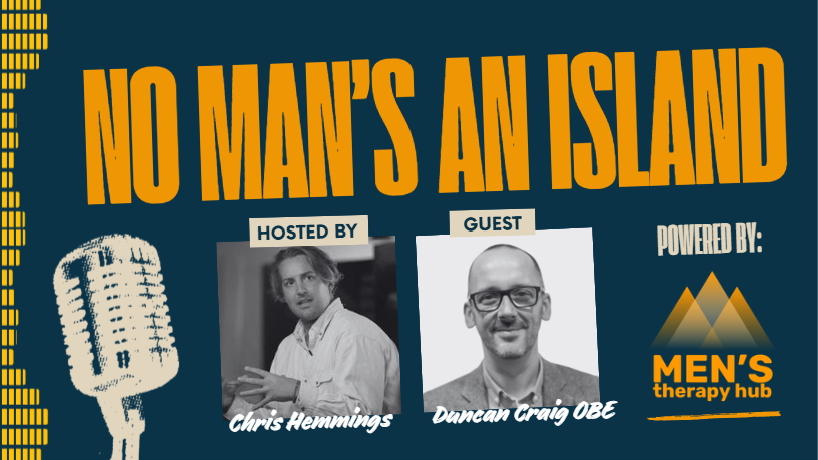
No Man’s An Island Episode 31
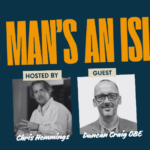
In this episode of No Man’s An Island, Chris Hemmings is joined by Duncan Craig OBE, CEO and founder of We Are Survivors, a charity supporting boys and men who have experienced sexual abuse, rape and exploitation.
Duncan shares his journey into this work, including his own experiences of abuse growing up in working-class Manchester and the absence of support for male survivors at the time. He reflects on the impact of shame, silence and poor sex and relationship education, and how these shaped his understanding of himself, masculinity and mental health.
The conversation explores what happens when men are finally given space to speak, why male-only environments can be so powerful and how community, not just therapy, plays a vital role in healing. Duncan also outlines how We Are Survivors works with men in practical, accessible ways, helping them engage at their own pace.
They also discuss the wider cultural issues that still affect male survivors today, including the lack of recognition, the impact of shame and guilt and the barriers men face when trying to access support. Duncan finishes with the one change he would make with unlimited resources: prison reform, focusing on prevention, rehabilitation and addressing the root causes of violence.
What we cover
- Duncan’s personal story and the founding of We Are Survivors
- Growing up in working-class Manchester and the impact of silence and stigma
- Grooming, masking and the long-term effects of abuse
- Shame, guilt and why many men struggle to speak
- The lack of support for male survivors and the barriers to accessing help
- Why male-only spaces can be powerful for healing
- How We Are Survivors supports men through community and therapy
- The importance of language and why many men feel they cannot speak
- Cultural attitudes towards male victims and the need for change
- Prison reform and addressing the root causes of violence
Takeaways for men
- If you have never spoken about what happened to you, you are not alone and support exists
- Shame can make you feel like you are the problem, but what happened to you is not your fault
- You do not need to explain everything perfectly to begin, taking the first step is enough
- Being around other men with shared experiences can reduce isolation and build understanding
- Healing does not have to start with therapy, community and connection can be powerful first steps
- Your value is not defined by what has happened to you
Quotes to share
“ When you don’t have the language to speak, sometimes silence seems the only option ”
“ Shame isn’t about what I did, it’s about believing I am something bad ”
“ The hardest step is often getting through the front door ”
“ We don’t do well in isolation, we survive in packs ”
“ It’s not about what did I do, it’s about what was done to me ”
Resources and links
Men’s Therapy Hub – Find a male therapist
No Man’s An Island – Podcast hub:
We Are Survivors: https://www.wearesurvivors.org.uk/
We Are Survivors on social media: https://www.instagram.com/thisissurvivors/
Episode credits
Host: Chris Hemmings
Guest: Duncan Craig OBE
Powered by: Men’s Therapy Hub
Music: Raindear
Transcript:
Chris (00:00)
Welcome to No Man’s An Island, a podcast powered by Men’s Therapy Hub, a directory of male therapists for male clients. In this episode, we’re joined by Duncan Craig. He’s the CEO and founder of We Are Survivors, an organization supporting boys and men who’ve experienced sexual abuse, rape, and exploitation across Greater Manchester. He’s been doing this work for over a decade, and he’s yet another one of these guys that I’ve known about for a long time and haven’t spoken to, but here we are.
He’s been working for a long time to challenge these long held, often wildly inaccurate beliefs about male victims and creating spaces where men can speak openly about experiences that are too often silenced. Hey Duncan.
Duncan Craig OBE (00:37)
Hey, Chris, like really nice to actually see ya.
Chris (00:40)
Yeah, it’s so strange and so many of the people I have on this podcast, we have the same thing at the start where it’s like, there you are, person I’ve known about for many, years. So yeah, first question on this podcast is always the same, which is what brought you into this space? So for you, why did you, why did you found We Are Survivors? What was missing at that time? And what was it that made you want to do it?
Duncan Craig OBE (00:50)
Yeah, yeah.
So, gosh, I guess, if I’m, there’s a really easy answer. The really easy answer is I’m a survivor of childhood sexual abuse, rape and sexual exploitation, was abused when I was from about 11 to about 16, 17, and then again from about 17 to about 21, 22. There was no support for men, when I was looking for it, so I decided to start something myself. That’s a really easy, that’s the quick answer.
The longer, more complex answer is I think since being a child, I’ve really recognized something about inequality, health inequality, justice inequality, and something about the way that men are looked at compared to, or males are looked at compared to females are looked at. You know, growing up in a real working class area of Manchester.
really recognising gender roles and gender stereotypes and I think having had a quite a successful career in theatre for many many years for like over a decade really recognising masking I didn’t think I didn’t call it masking at the time but playing a character
Chris (01:56)
Mm.
Duncan Craig OBE (02:13)
And I realised all of these actors I was working with that were playing a character on stage or on television, they’re just doing the same thing I’m doing, but I’m not prepared to admit it. They’re doing it for a living. I was living it, literally. And I was masking the fact that I’d been abused. I was masking my poor mental health. I hadn’t even admitted to myself kind of what was going on. And so when an opportunity to go and do some volunteering came up.
Chris (02:25)
Okay. And what were you masking?
Duncan Craig OBE (02:40)
volunteering in the Red Light District in Manchester, working with sex workers, predominantly female at the beginning, and then helping set up an organisation and a project that looked at working with male sex workers, boys and men who were either at risk of sexual exploitation or were being sexually exploited, and kind of recognising vulnerability and then recognising
my own vulnerability and then at that point going to therapy and going wow I want I remember literally leaving my therapist office once and thinking I want to do that I want to I want to make someone feel like that and then start in a process of becoming a therapist and it was during that that during my training
that first of all, it began to recognise how important addressing inequality is for me. And then looking and supporting other people to address the inequalities that they have, which was so often something happened in the past, never been able to speak about it before, et cetera, et cetera. And me going, oh, let me look at where I can refer you on to.
let me look at where we can help because my practice at that point was in the NHS because it was my clinical placement practice. And then thinking in supervision, as you know, all therapists, have clinical supervision and rightly so, And sitting with Heather, my supervisor, who I was on talking to the other day and it’s 20 years that she’s been my supervisor, which is mind blowing.
Chris (04:07)
And rightly so.
Duncan Craig OBE (04:17)
I’m sitting in her office and talking about the fact that I was really like genuinely disturbed by the experiences of a lad that I was working with. I’m kind of going, why does this person’s life continue to kind of go around my head and having nightmares when I was at sleep about what happened to him happening to me? And we now know that as vicarious trauma.
Secondary trauma never even I didn’t have the language for that at the time and then kind of sat there and Heather saying, you know, what is it about this person that you think is causing you so much distress? And I said, I don’t know. It’s not like I was abused. And I remember she said, Duncan, I didn’t say you were. And this like, shooom, this tsunami of flooding.
Chris (04:42)
you
Duncan Craig OBE (05:07)
just I remember seeing his face in my mind. I remember thinking that can’t be the person that I have told stories about over the years. Like how I lost my virginity story suddenly had a completely different meaning. And yeah, looking for help for me, looking for help for other people, realizing that there was so very little. I thought as soon as I get well, as soon as I
Chris (05:23)
Hmm
Duncan Craig OBE (05:32)
get my qualifications as soon as I think I’m skilled enough I’m going to do something and we did. We opened the doors in 2009 and now I’m very very proud that we’re now the largest male survivor organisation in the UK.
Chris (05:45)
Wow, what an incredible achievement that is. And an achievement just the fact that you exist, nevermind that you’re now helping so many people. And the reason I asked this question at the start is because it often brings up so many possible avenues of discussion. I don’t know where to start here, but I’m going to choose one, which is you talked there about trauma. You also talked there about growing up in Manchester in the, when, eighties?
Duncan Craig OBE (05:56)
Yeah
So
I was born in 76. So yeah, 70s, 80s.
Chris (06:10)
Yeah. Okay. Yeah.
I mean, I was born in 87, right? So I was 90s Manchester. can, you know, there’s a Mancunian podcast again. And I’m very interested in you were experiencing mental health problems during that time. And yet I can only presume you didn’t have the language for them. You didn’t have the understanding because there wasn’t the understanding we have now. So.
Duncan Craig OBE (06:21)
Yeah.
Completely.
Chris (06:36)
Can you take us on a little bit of a journey in terms of, and look, you can tell us as much or as little about what happened as you want, that’s up to you. But from the time of growing up, from the time of experiencing that, and obviously then suppressing it until that moment in your supervisor’s office, what happened internally in terms of your experiences, but also what was happening externally, which meant that maybe you could now engage with it in a different way.
Duncan Craig OBE (06:41)
Yeah, of course.
Mmm. Yeah.
Yeah, I mean, that’s a really good question that in terms of the external bits. So let’s start at the beginning. know, I grew, I was born in 76 in Gorton in Manchester. So a really working class area of Manchester. You know, I literally remember being a kid and the council tar mucking our road because it was Coronation Street, Cobbles.
And I remember it really distinctly because we were like, we’re not, there’s no tarmac round here. We were like these kids digging it up with lollipop sticks. Cause we just didn’t want that kind of, that was too posh. We wanted our couples. and you know, like it was, you know, men were men, women were men. It was so gender norm, stereotypical, nothing about difference. When I’m…
Chris (07:29)
Right.
You
Duncan Craig OBE (07:52)
talking to police officers, I teach police officers about dealing with male rape victims and I talk about growing up, I don’t think I understood difference because there wasn’t that much. There was a mixed race girl in my class, there was a Chinese lad in my class, I genuinely don’t even think I understood ethnicity. What I understood was food. I remember he had different food at lunchtime than I did. So this really interesting way of looking at difference.
Chris (08:00)
Hmm.
Duncan Craig OBE (08:18)
And then there was these two old fellas, and I say old fellas, I don’t even think that they were as old as I am now. But we saw them as these two old fellas and yeah, and they were like, they were different. You know, and they’d be the kind of, the adults would always look down on them and call them names, which I now recognize as homophobic slurs. And so I think in some way in my brain I understood.
Chris (08:27)
Old to you, yeah.
Duncan Craig OBE (08:44)
What is it to be a man and what is it to be a woman? And outside of that, you’re different and different doesn’t exist because difference is bad. So I grew up in those conditions and not just the physical differences or the demographic differences, but illness difference as well. The person that, the woman that lived on the next street to us, very clearly nowadays would probably be classed as having bipolar or schizophrenia.
But she was just that mad woman that everybody ran away from being scared of. So mental health wasn’t even thought about in that particular way. So that’s how I grew up. And I think I internalized so much of that in terms of depression is pull your socks up. Anxiety is what you’re scared about. I’ll give you something to be scared about. Just get on with it. real, and I think, I don’t think sometimes we talk enough about class.
Chris (09:29)
Yeah. Just get on with it.
Duncan Craig OBE (09:37)
in these conversations of how important class is and you know the working class were just like pull your socks up get on with it we haven’t got time to be talking about this nonsense we just need to get the money in to feed the kids and blah blah blah and so yeah I grew up with that and and I guess kind of get into my sort of
early teens, that sort of 11, 12, I met a friend and I used the term friend in inverted commas because I remember him as being my friend and like I say, 20 years later, thinking about him and remembering his face, I kind of thought, actually that can’t have been a friend because how I used to talk about him in my adult life,
When I told the truth, when I finally made my disclosure, when I remembered everything, I went back to some of my actual friends and said, hey, do remember when I used to tell you about Joe Bloggs and, you know, what do you think about him? And everybody said, well, you just always thought you were talking about someone at school. Like there was like an equality to the way you talked about him. And actually,
I was 11, 12, 13. He was about 53, 54, 55. Like it always feels like such a shock to me that there was that visible difference, but I never saw that. And I guess what he did was he, I mean, we could talk about the grooming manipulation, but let’s get right underneath it. What did he do? I think he, he made me
Chris (10:58)
Whoa, okay.
Sure.
Duncan Craig OBE (11:18)
feel the difference that I felt inside of me, he made that okay. And so when he would bring a porno mag in to our friendship or when we would be play fighting or when he would be then touching me inappropriately or when it moved on to kind of any sort of like sexual acts, it was like, it was like the pilot landing the plane.
Chris (11:22)
Yeah, okay.
Duncan Craig OBE (11:43)
Pilots taking you from in the sky to the ground, but in the smoothest transition possible, where you don’t even recognize that you’ve moved from the air to the land. That’s that real grooming and he was an expert at it. And so much so that I guess everything about how I didn’t like it, the feelings that it was inside of me, the depression, the kind of like…
Chris (11:53)
Hmm.
Duncan Craig OBE (12:08)
Like I’m tarnished. Like my worth, my self-worth was zero. Like I could feel, I could feel like I’m the center of attention on the class clown at school. And then the moment I would see him, it would just all disappear. And I was worthless in respect of whatever he wanted to happen happened. So my…
My skin and bones, for want of a better phrase, the very physicalness of me had no value, which then means the psychological bit of me was worthless. And so that’s how I was. you know, I probably, if I’m really honest, I think probably right up until my…
Chris (12:38)
Mm-hmm.
For how long?
Duncan Craig OBE (12:51)
late 20s when I became a therapist. When I started trying to be a therapist and was like, my god, this is amazing. I can now, I now have understanding in theory. I can understand theory about that client, that client and that client and secretly, hmm, this might apply to me. And I think, I think I found my worth being a therapist.
Chris (13:09)
Myself, yeah. Yeah. Yeah, shit.
Mm.
Duncan Craig OBE (13:17)
And
what is interesting because my worth was often measured from being like 18, 17, 18 up until like…
late 20s. My worth was valued by my job because I was in theatre, in television, so I had access to lots of celebrity kind of stuff that actually people valued me quite high. There wasn’t a nightclub that I didn’t go to that I didn’t get in free and I just got walked to the front. There wasn’t another, there wasn’t a concert venue that I just didn’t literally, could literally just walk to the door.
say who I was and I’d be let in because everybody wanted to come to my venues and come and see my show. So there was a literal kind of you scratch my back, I’ll scratch yours within that nighttime economy. So I had lots of social value worth the sexual exploitation, kind of being brought in by, again, a friend that I met at Granada Television where I was working at the time.
Chris (14:04)
Hmm. Yeah.
Duncan Craig OBE (14:21)
a friend introduced me to somebody that he knew, his boss, who sexually exploited me and kind of that sex for exchange kind of stuff. if I just numbed it and went along, then my body became a value. So I had a value in social sense. My body had a value, but my mind and my…
soul for want of a better phrase, had no value. It had no value to anybody else. I never saw anybody else give it any value, which meant I never gave it value. And being in therapy taught me something different. It taught me about even the point of every week, this one person that yes, of course I paid them some money, but this person,
Chris (14:55)
Hmm.
Duncan Craig OBE (15:10)
held a space for me for an hour for once a week. That’s how important I was to that person. And I began to understand value and then training taught me so much more.
Chris (15:17)
Hmm.
And I want to put a pin in that because I want to come to that. That’s really interesting. I just have this, this overriding thought of, so you grew up in, this was happening in the 1980s, right? So not only.
Duncan Craig OBE (15:32)
So
yeah, well, like late 80s to early 90s,
Chris (15:34)
mid eighties, nineties.
So this was happening in like Thatcherism and anti-homosexual campaigns. And also we had Dr. Sophie King Hill recently on, I think it’s episode 24, 25, actually my favorite episode today. I know you’re not supposed to have favorite kids, but I do. And what she said at the end, which I’m going to ask you at the end, which is if she could do anything, she would.
Duncan Craig OBE (15:40)
Yeah.
Yeah.
Chris (16:00)
completely revolutionize sexual relationships education. Because what happens there is, not only are you growing up in a time where you can’t really talk about your sexuality, you’re growing up in a time where as a young teenager, you haven’t been given the tools to talk about it anyway. You don’t know what’s right and what’s wrong because it was just don’t, it was still Victorian, right? It was just don’t, I remember even like our school was
Duncan Craig OBE (16:03)
Holy.
completely.
Yeah, yeah, yeah.
Chris (16:26)
We basically were shown a cartoon about sex and it was like, any questions? No? Alright, on we go, that’s it, you know? I’d get angry thinking about it and so it’s like, what fucking chance did you have?
Duncan Craig OBE (16:29)
Yeah. Yeah.
Yeah,
yeah. But then on top of that, Chris, as well, like, let’s let’s do a little bit of historical context. So my understanding of relationships of sex was also in the shadow of HIV and AIDS. And so when I was seeing on television, I remember I distinctly remember this program called First Aid and it was Mike Smith and
Chris (16:50)
Yeah, fuck.
Duncan Craig OBE (17:01)
I Jonathan Ross. And I remember watching it with my friend Christian. And there was a kind of a bit of a conversation about anal sex and condoms in a very factual way. I didn’t take it as factual. I remember literally being in this place, being abused and straight away thinking, oh, now I’ve got AIDS.
Chris (17:27)
Wow, yeah, okay.
Duncan Craig OBE (17:28)
And that
kind of value, and you know, I’m HIV negative. I often talk about there but for the grace of God go I, of all of the people that I grew up with as a gay man, that I came out with. You know, how many of us are left, literally. know, the kind of, that line in Pet Shop Boys being boring.
Chris (17:39)
Yeah.
Yep.
Duncan Craig OBE (17:53)
You know, of all the people I was kissing, some are here and some are missing. You know, like literally there are people that, you know, I’ve, I know we lost and there’s people that I don’t know where they are and you know, I’m one of the lucky ones and I have so much survivor’s guilt around that. That’s a, that’s a real generational thing for my generation. You know, 50 plus year old gay men. But I grew up with all of that and then
Chris (17:58)
Mm.
Duncan Craig OBE (18:18)
thinking about my worth and thinking, well, now at some point I’m probably just going to die anyway. So that the of the worth of the body, the worth of the mind, the worth of the soul is directly linked to my poor education around sex and relationships and mental health and et cetera, et cetera. And that the state, the state is responsible for that.
Chris (18:40)
Mm.
Yeah, I agree. You are of a generation of men who were victim blamed and were shamed for something that was absurd and disgraceful actually.
Duncan Craig OBE (18:47)
Yes, completely. Completely.
Yeah.
Yeah. Yeah. But it plays, you know, it has a real impact on like, so the very fact that we were in the, you know, in the shadows of the kind of AIDS crisis, which meant that, and then also section 28. So no teachers at school were talking about anything. like, absolutely. So, so I, I remember there being
Chris (19:08)
Yeah.
Well, it was illegal to do so.
Duncan Craig OBE (19:16)
conversations at school about girls and about you know the safety of girls and don’t go off with strangers and blah blah blah. I never once in my life imagined that that also meant for boys too and so when my friend became the person who now I recognize as not my friend who’s a paedophile I had no compare contrast.
Chris (19:40)
because you weren’t at risk, allegedly.
Duncan Craig OBE (19:42)
Absolutely
and not only was I not at risk but the education that I was getting around sex and stuff, the physiology was so poor. I could tell you about tadpoles but I tell you what I couldn’t tell you. I couldn’t tell you that regardless of who it is that’s touching you, you can become aroused physically and psychologically. I’m well if this horrible thing is happening here
but this thing that I think is pleasurable is happening here, then I must be sick. I must like it. If I like it, that means I’m like those two old men around the corner that everybody uses those names are and it feels unsafe. So I better make sure that no one ever finds out about that. So I begin to kind of assimilate what’s happening to me as a child abuse victim to be what
Chris (20:13)
Mm.
Yeah.
Duncan Craig OBE (20:31)
people who are same-sex relationships do. So I assimilated both. And then the internalised homophobia begins.
Chris (20:38)
Well, I was just going to say, internalized
shame, internalized homophobia, internalized victimhood, like everything. Everything. And no outlet for it.
Duncan Craig OBE (20:44)
Yeah. Yeah.
Completely. No outlet for it because, again, growing up in that, pull your socks up, get on with it, men don’t cry, men fight, women stay at home, all of that kind of bullshit. even now I’m starting to talk to you. I don’t think I’ve ever said it in this condensed way, like, fucking hell, that’s a lot. It’s a lot for anybody.
Chris (21:05)
Yeah. Yeah, it is.
It is. And many of your generation, it’s remarkable that so many of you have survived. I just, you know, that OBE you have at the end of your name is well-earned. Let’s put it that way. And I didn’t give you, I didn’t give you those props at the start. I should have done. Because, because, you know, and this is why I’m so keen to talk about the move from there to where you are now, because what often happens, right? And, know, my story of
Duncan Craig OBE (21:16)
Yeah, thank you.
Chris (21:30)
grieving my father’s death and then just taking drug addiction and cocaine and then realizing like, what the hell am I doing? Suddenly that moment, you had it with your supervisor, that moment of like, wait, what? So like, how did you start to turn that mirror onto yourself and say, wait, this is my experience, which you’ve talked about a little bit, and on top of that then say, I am more valuable than keeping all of this inside.
Duncan Craig OBE (21:32)
Hmm.
Yep.
Yeah.
Chris (21:56)
I am worth people caring for, like, sorry, I’m worth caring for.
Duncan Craig OBE (22:01)
Yeah, yeah. think it starts with the space that I really resented for so much, which was like kind of that celebrity, actor-y world. Because I began to see the real, what was that phrase? Tears of a clown.
I began to see the reality of some of these people who the public and their fans would just be like, my God, they’re amazing. And I saw them backstage. I saw them in their dressing rooms. I saw them at their lowest and just having this real realization of the kind of the front and the behind the scenes. Yeah, I don’t think I would call it a coping strategy then. I totally call it a coping strategy now.
Chris (22:41)
The coping strategy.
Right.
Duncan Craig OBE (22:49)
And
I think at that point, me going, I can’t fucking deal with this shit. I am not one of those people, so I’ll run away from it. And I think as I was running, I just hit a brick wall. And that moment between leaving the theater world and the arts and stuff behind, my next job was in a needle exchange, giving clean injecting equipment to street-based…
heroin users. mean, yeah, but I’m also polar opposites. One minute, you know, literally one minute I have a massive expenses account and I’m going to all these glittery first night parties and I’m, you know, my job at that point really was getting people on the sofa of Graham Norton-y type. That was my work. And now I am on a Saturday morning, I am volunteering, looking for work.
Chris (23:15)
You’ve really been on the front line, huh? Holy shit.
Duncan Craig OBE (23:41)
in a needle exchange, giving street homeless injecting drug users clean injecting equipment, whilst also at times trying to stop people from overdosing literally. know, CPR while we’re waiting for the ambulance to come. And I was so much happier there than I ever was in the theatre, than I ever was in television. And I think that’s because I recognised this kind of, I don’t know,
raw honest truthfulness about these men and women, but mainly men, that they’re just the brutal honesty of homelessness and drug addiction. And that really made me think more about my own drug use and my own alcohol use. And maybe this was about masking and coping mechanisms and talking to this person who used to come in once a week to do
counseling and me like hmm maybe I should go and get some of that so we’re talking now early 2000s something like that 2004 2004 I decided to go and do a night school you know I say this with my tongue pressed firmly in my cheek and I was a little bit too busy being abused when it was GCSEs I had other things to occupy my mind
So I didn’t really have that great of GCSE. Creative stuff, yeah. Anyone can laugh at it. But yeah, mean literally like creative stuff, A, B, C, the other stuff, no. I had nothing to do with it. So yeah, I went to night school with a load of kids and I did eight, 10 weeks.
Chris (25:03)
Fucking hell, okay.
Only a survivor can laugh like that that sort of thing.
Duncan Craig OBE (25:29)
counseling concepts course and just was like, like mind blown. And then from that went and did another night school course and did a certificate for a year and just found this thirst for discovery and also in like making sense of things.
Making sense of shit is so addictive. It really is.
Chris (25:55)
I’ve often spoken
about this, there’s a module on our course where we were doing things like, basically a lot of self-awareness stuff. So it would be like, what is self-compassion, right? And that would be a whole evening on self-compassion, or sorry, a whole lecture, 90 minutes on self-compassion. And there would always be somebody in the room who like halfway through the lecture would go, fuck’s sake. And they’d put their hand up and we’d all go like, all right, what is it? And they’d just go, this is me and this and this and this.
Duncan Craig OBE (26:16)
Yeah
Yeah Yeah
Chris (26:22)
And to me it was just like that should be taught in every school, to every child. Like it was just, and I was hooked like you were, like I was completely hooked on it.
Duncan Craig OBE (26:25)
Completely. Completely.
But isn’t it so exciting
to be in those spaces when, like the moment in the classroom, someone does that for fuck’s sake, excuse me, like that, like I am so wired whenever I hear people like that, because I’m like, this is like, give me more, give me more, I’m hungry now.
Chris (26:46)
Yeah. I want to talk about, there was a time when you first disclosed your sexual abuse, right? So I want to hear what that was like for you. I also want to hear the challenge because on one of our earliest ever episodes, Eleanor Donoghue from James’s Place came on, right? And she said, and I use this quote from her all the time now when I’m talking to people, when I’m trying to advocate for men.
Duncan Craig OBE (26:51)
Yeah. Yeah.
Chris (27:12)
which is that men would come into James’s place and still do. And the biggest hurdle they have to overcome is these men will say, somebody is more worthy of this space than me. There’s people who have it worse than me and James’s place have to go like, hey, like we exist for you right now. So like this hurdle that you had to step over to finally say the words to somebody, what was that like for you? And what is it that you see as the biggest hurdle for men and still now in-
Duncan Craig OBE (27:26)
Yeah.
yeah yeah yeah
Chris (27:39)
those words leaving their mouth.
Duncan Craig OBE (27:40)
I think so it was, I suppose in some way, the first time I ever said it, the first disclosure in Heather’s office was, I suppose, accidental.
You know, like you know this when you’re in supervision, kind of, you’re just sort of like purging, aren’t you? You’re just trying to, you’re not making sense of it in your mind and then saying it. Good supervision in my view is about spewing it all out and then making sense of it in the room with your supervisor. And so that was that first thing. And I just, think, I don’t think I have had a response other than like this, like, my God, this overwhelming response.
I then went into like overdrive, now I need to fix it. Now I need to sort this out. And so the real hurdle was, well, who the fuck is going to listen to me? Because where are the rate crisis centers for me? And I remember ringing like four or five organizations asking for help and all of them, lovely, but were basically saying they can’t help me because I’m a man, because I’m male.
And so finding the support, let alone saying it, finding the actual support where I could say, hi, do you work with men? No, sorry. Okay. Hi, do you work with men? No, sorry. Okay. And then finally finding somebody who said, we don’t work with men, but I know a website that does.
And so I went onto this website, which was male survivor in based in the States and spent the first six months of my healing chatting to men in the middle of the night when it was daytime for them and nighttime for me, cause I couldn’t sleep. And you know, somebody saying, I know about this group in England in Wiltshire and me being like, how the fuck have I had to go?
Chris (29:07)
Mm.
Duncan Craig OBE (29:27)
metaphorically, yeah, via Texas and then found this group and so really my first big disclosure was sat in a room just near Stonehenge with a load of other male survivors that I don’t think for the first hour I even knew what they looked like. I could tell you what their shoes looked like.
Chris (29:27)
via the states. Yeah.
Right.
Duncan Craig OBE (29:51)
But we
were literally in this room and that was a big thing because I, at that point, I think I needed some kind of identity linked to my trauma. I think I needed to. I needed to be able to kind of link the two things because it felt so abstract. I needed it to be part of me in order for me to be able to work through it.
And so, yeah, saying those words, hi, you know, hi, my name’s Duncan and I was sexually abused, like was so overwhelming, you know, like I remember driving back, I remember feeling this absolute sense in that room with those like 20 men, feeling a love like I don’t think I’ve ever felt before, like this.
Like nobody wanted to, nobody was trying to have sex with me. Nobody was trying to get something from me. Nobody was trying to, no one was trying to do anything. They were just holding this space. They were just there and accidentally holding the space and just being like overwhelmed with it. And we were there for four days, I think it was. And then I drove back home from like Wiltshire to Manchester.
and I am not even exaggerating, I bawled my eyes out. I don’t know how I didn’t crash, because I just literally couldn’t say, I was just crying. And I was crying, I think for two reasons, and I’ve done a lot of therapy around this. think I was crying because I didn’t want to leave that new protective space, that bubble that I had. So I was grieving because I’ve left that and when I’m ever gonna get that again.
And I think that’s the first proper time I connected with that boy, the little Duncan, the 11, 12, 13 year old Duncan. And I think I began grieving for him, for what he’d lost, for the Hollywood movie, Loss of His Innocence, but just the loss of self.
Chris (31:47)
Hmm.
to start to heal the wound.
Duncan Craig OBE (31:50)
to start to heal the wound. And then I got home and my husband was at home and I remember him saying, are you okay? And I was like, yeah. And he was going, okay, I’ll like leave you to it. And I think I slept for about 48 hours and then got up and went and sat on the sofa and I said, can I talk to you? And he was just like, of course you can. And I just.
shared with him and I think for about three hours he just sat listening to me as I purged myself of this experience and I remember him saying, what do you want to do now? And I said, I want to do that, but here. And he was just like, okay, I ain’t going to stop you. I’ve seen that look in your face before and tell me what you need.
Chris (32:29)
Yeah.
Duncan Craig OBE (32:37)
And it just, I just went on a mission and I’ve been on it ever since.
Chris (32:42)
Yeah, I’ve only known my wife for a few years and she has said that if men’s therapy doesn’t work, I have to promise her that I’m going to not try and launch something else in the near future because she knows that look too. and again, this might be the longest answer basically to that first question I’ve had so far. But the reason I ask it is because so many of us who work in these spaces are there for, I mean, it’s way more personal than it is political, right?
Duncan Craig OBE (32:51)
Yeah
Yeah, yeah,
yeah, yeah, yeah, yeah, yeah.
Chris (33:09)
Of course it’s political, but
underneath it all, we’re here because we’ve had personal experiences and we want to right the wrongs that we experienced. So what I hear there is you entered a room for the first time and you felt affinity with the people in the room, right? It’s gone.
Duncan Craig OBE (33:13)
completely.
I challenged that. No, I didn’t feel affinity with people in the room. I felt a real shared experience that everyone was in this room. I didn’t connect with them other than looking at their shoes, but I absolutely knew that they were shitting themselves as much as I was. So there was a real shared experience there.
Chris (33:42)
Okay.
And that’s what I was going to ask was because how important is that? Because what you’ve done is obviously, first of all, way ahead of time, well, not actually ahead of time, but way ahead of other people was record. Or most people was recognize we need men to do this work for men. Like that is, that is absolutely essential. So what is it about that? What is it about creating male only spaces that you see is so, cause I see the, there’s, there’s the people who are watching online.
Duncan Craig OBE (34:00)
Yeah! Holy… Yeah!
Chris (34:13)
on YouTube, we’re able to see behind you, there’s lots of posters, right? And there’s all men, it’s all men on those posters, right? And it’s like female only spaces for female survivors, very important, right? So I don’t like hate on them for not letting you in, that’s not their fault, but you needed a space that was a load of men in a room. Why? Like, what is it that you understand about that? And from the survivors that you see now, what is it about them sitting across from you as a man that maybe they wouldn’t be able to, maybe they could?
Duncan Craig OBE (34:15)
Yeah. Yeah, yeah, yeah, yeah, yeah.
Completely. Yeah, me neither. Yeah. Yeah.
Chris (34:41)
But for a lot of men, maybe they couldn’t unless that was another man sitting there.
Duncan Craig OBE (34:45)
think it’s about visibility. I really do. I think there’s something about being in a room with other survivors, other male survivors, felt a bit like I don’t need to explain to anybody all of this shit. You know why I’m here because you’re here for the same thing. And it’s that.
complete and utter unspoken acceptance. You know, we talk about like, I’m sure you had this kind of stuff in training, you know, human beings are essentially pack animals. We don’t do well in isolation. We have to kind of, we survive in packs. And I think that’s what that is. I think that men’s spaces for
for male survivors, men’s spaces for men who have had gambling addictions, men’s spaces for men to talk about loss, grief, mental health, fatherhood, fatherlessness, all of those things. There’s something important about visibility and about being together in your visibility. And let me…
Chris (35:44)
fatherhood. Yeah. Yes.
Hmm.
Duncan Craig OBE (35:59)
Let me be inadvertent, controversial. I don’t think it’s controversial. But I’ve sat in groups with, in men’s groups where there’s been trans men. I have no issue with that whatsoever. I don’t see their experience as being any different than mine. I really don’t. I don’t think it’s about, I don’t think it’s about having to drill down for me that much.
It’s just about a load of men being together.
Chris (36:26)
Yeah, well, we had Tate Smith on a transgender man quite recently and he talked about when he was presenting as a woman, his pain and challenge and emotional difficulties were met with compassion and empathy. And the further into his transition he got, the more he presented as masculine, the less they were taken seriously. So it’s like, of course we have an affinity there. We have an understanding of each other there because that’s also true for me.
Duncan Craig OBE (36:46)
Yeah, completely. I agree. Yeah.
Chris (36:53)
The older I got as a man and the more I grew into being male, the less my pain was taken seriously. So I totally agree. And I love the fact that kind of the leaders of the men’s movement in the UK, there was like a joint statement put out, which was just like, trans men are men and ⁓ we’re not buying into this crap. know, men’s therapy was trans inclusive. And I think after the trans episode, I think one therapist left because of it, which is like, okay, fine.
Duncan Craig OBE (37:00)
Yeah.
Yeah, we did, Yeah. Yeah.
Chris (37:19)
Goodbye. Like we’re trans inclusive and it will always be that way. And so that, so I like, I like that that is the experience and the understanding you have. And so what is it then that an organization like, I, I, obviously have a lot of listeners who are therapists or people who work in men’s spaces. What is, what is your approach when you get a man walk through your doors for the first time, probably looking more scared than he’s ever looked in his whole life?
Duncan Craig OBE (37:19)
Bye! Yeah, yeah.
Yeah.
Yeah.
Chris (37:44)
Right? What
Duncan Craig OBE (37:45)
Yeah.
Chris (37:45)
do you do and how do you actually get him? Because the thing is when a client comes through our doors, we’re never certain really why they’re there. When a client comes through your doors, you know why they’re there.
Duncan Craig OBE (37:54)
Yeah, yeah. That
completely, and that is, I mean, that’s so beautifully crafted, because what you’re talking about is visibility. Like, kind of, it fucking does what it says on the tin. And isn’t there something very stereotypically male about that? You know, like Ron Seal have a whole campaign about that aimed at men.
Chris (38:03)
Yes.
Duncan Craig OBE (38:16)
painting fences, you literally you’re right. Like men don’t have to declare themselves as a survivor because they’re here, so we know. And so the first thing is that they’ve got themselves over the front door. Like that always blows my mind when you think about how many barriers he and fences he’s literally had to climb over.
Chris (38:16)
Yeah. Yeah.
Duncan Craig OBE (38:41)
push over, smash down, go under, walk past, how many get to get to the front door? And so when he arrives, the first thing we’re doing is, do want a brew? That’s it. Do you want a brew? Sit down, I’ll be with you in two ticks. And then it’s like, okay, here’s the ground rules for you being here. Dead simple. Very transactional in a sense.
Chris (38:52)
Right.
Duncan Craig OBE (39:07)
I’m not going straight in with like emotional language because I think as a therapist, I think I really recognize how there’s a lot of psychoeducation, psychological education that you’re doing, should be doing in men’s work because we haven’t necessarily been given the language to speak. Years and years ago, like 2009, 2010, I did a thing where I asked at this little forum.
of survivors and I just said to the lad, hey, like, I’m gonna do a poster to advertise this brand new service that I’ve got. Will you tell me, why did you keep silent for so long? And I’ll take that quote and I’ll stick it on a poster. And there’s this one, the one that I remember the most is that this lad, he’s 32 years old and he said, when you don’t have the language to speak, sometimes silence seems the only option.
And I was just like, SHIT IN HELL! Yyyyyeeah
Chris (40:02)
my god, that could be the tagline for men’s therapy
hub. That could be the tagline for any men’s organization. That’s genius.
Duncan Craig OBE (40:06)
Completely. It’s
so from the heart. it really, completely, completely. And actually, it made me go back to when I was doing my masters and challenge some of the stuff that we’re being taught. Because we’re being taught as therapists, not necessarily thinking about groups of men or types of men or classes of men.
Chris (40:11)
Yeah. And true.
Mm-hmm.
Duncan Craig OBE (40:32)
You know,
like the language that’s available to the working class man is very different than the language that’s available to the middle class and the upper class man. So that’s the first starting point here. We don’t go straight into the kind of the therapist sort of like, you know, stereotypical tilt your head to one side, use some soft language, be quiet in a room that’s got some flowers and a couple of bright light, you know, that kind of stuff. So it very much is.
have a brew, sit down, take your feet off the telly’s on, the stereo’s on, et cetera, et cetera. And then, you know, it’s it’s a right, I’m gonna ask you a load of questions, answer what you want, don’t answer everything if you don’t want to, but let me be clear what this is. This is a needs assessment. And what I’m assessing is your needs. And if we work out what you need, and I can tell you what we offer,
then there’s a transaction because I still think we’re in this transactional language for men. And I think we’ll be in it for another couple of generations yet. I really do. really do. And then, you know, usually at the end, someone’s going, right, when can I come back? When can I do this? What’s that about? And so even things like we don’t even talk about therapy at the beginning. We talk about all the other things that people can do. If you want a Friday, if you want to join a load of other lads and go down to the RHS.
Chris (41:28)
Yeah, absolutely.
Duncan Craig OBE (41:51)
Bridgewater to our garden and what do I do some gardening? Yeah Meet here at this time the taxi will pick you up and I’ll take you over there if on a Monday afternoon You’ve got nothing to do and you feel like you just want to kind of come and hang out and Play board games play computer games sit and chin wag have a game of chess read some stuff Watch the teller on a Monday afternoon come down and do that
And then that like literally gives people that ability to like, okay. I don’t need to commit to something. Cause I also think as well, and my, my friend Rick Goodwin in Canada, who, you know, if there’s anyone that is like a hero with our sector, it’s people like, you know, Gary Foster in Australia and Steve LaPora in America and Rick Goodwin in Canada. You know, Rick used to tell me this, have this story about.
You know, we don’t really talk to men about emotional language and blah, blah, blah. And then we say some, right, okay, you want therapy? Okay, so it’s gonna be about 20 weeks and you’re gonna have to come every week. And you’re like, what? And he said, he did this men’s group and he asked them if they would commit to 12 weeks and nobody did. And so he said, well, what about if we just commit to two weeks? And people went, yeah, I can do that. And then they just kept coming back for 12 weeks.
Chris (42:56)
Hmm.
I asked my clients to commit to a block of four. Do a block of four and then let’s talk about it at the end. So just do that four.
Duncan Craig OBE (43:12)
Yeah.
Yep. that’s what
completely, so that’s what we then do here. So we do the, not going to do the big therapy stuff. And usually people go, actually, no, can I, can I also go on the therapy waiting? I said, yeah, of course you can. You know, you’re going to be waiting for about 21 weeks. So I’ll stick your name on it. But if you don’t want to go, sometimes after, you know, a month or so and people are doing the garden and they do in the safe room, which is our kind of like men’s support group and they’re doing this like, do you know what?
We’d set me off the waiting list. I don’t want to do therapy. I’m all right doing this. I can go on the wait list again, can’t I? If I want to, of course you can, whenever you want to. No, completely, completely. And so yeah, that’s how, and then, you know, what are we doing? We’re building communities. That’s why I think this works, because we’re building communities. And so we also give people the ability and the option of…
Chris (43:48)
Right. Yeah, because it’s not for everyone. Yeah. Yeah.
Duncan Craig OBE (44:07)
If we’ve got the government doing a consultation on blah blah blah, hey gents on a Tuesday night between this time and this time on this particular day we’re doing an open house and really if you want to just come and give your opinion you can have some pizza and blah blah blah like the amount people that turn up because what they do then is they’re feeling empowered to like I want my voice heard and so we make sure that we do that too.
And you know, and it’s good, it’s good for government, it’s good for academics, it’s good for everyone because we begin to build up the knowledge.
Chris (44:41)
Yeah. There’s something that you talked about when they first come in. They’ve, and you didn’t use this term, but I think they’ve done the hardest part by stepping in through the front door. Right? What I do with my therapy club, I’d have a 15 minute consultation with my therapy clients, right? Most therapists offer that now. At the end of that, say, Hey, look, regardless of whether or not we work together, well done for making it this far.
Duncan Craig OBE (44:48)
With that I don’t. Yeah.
Yeah. Yeah.
Completely.
Completely.
Chris (45:05)
because I
understand how many hurdles you’ve had to jump over, like you said before, in order to get to that point. And I think that’s the empowerment, right? And I think…
Duncan Craig OBE (45:12)
Yeah.
Chris (45:13)
And that’s just for like guys coming for regular therapy. And of course some of them will be survivors, of course. But for those guys who are coming into your, well, and it often comes out 20, 30 sessions later. ⁓ by the way, there was this thing. what’s there? Okay. Yeah, yeah, yeah. And so what you’re doing is you’re saying you’ve arrived here, well done.
Duncan Craig OBE (45:19)
Yep, yep. More than those that admit they are as well.
holy yeah. Usually that door knob comment.
Chris (45:39)
That’s the hardest part over. What we’re not going to do is immediately bombard you. We’re going to softly, softly catch a monkey. Because also I think our professions and you’re a therapist and what you’re doing is therapeutic. I think we can scare a lot of men away quite quickly by going in too hard, too deep.
Duncan Craig OBE (45:43)
completely.
I I
agree. And one of the things that we’ve now got that posted behind me is we’ve got an app called We Are OK. And what we have started doing, it’s not been going long and we still got some work to do on it, but we’re giving people a little kind of QR code and saying whether you decide to come back or not, it’s entirely up to you.
If want to get on the waiting list, that’s fine. If you want to come and do that, that’s fine. But just take this and just download this and you know, on your phone screen, it just says, okay, doesn’t look like anything. Doesn’t have like some big male survivor of sexual abuse app, nothing like that. And just have a look at that and just download it. Cause for me, if he three days later gets the collie wobbles and thinks, ah, now I’ve fucked that, I’m not going back there.
he’s still got something he’s still got this app and then two days after that he wakes up at two o’clock in the morning and thinks I’ll just have a look at this and actually there’s stuff there’s material there for him including our small language model AI app called Mic
Chris (46:57)
Mm.
Duncan Craig OBE (47:03)
And Mick we talk about as a member of our team because Mick is based on one of the lads that used to be here, who we lost tragically in a road traffic accident.
spoke to his Mrs and said, how do you feel about us naming this after Mick? And she said, you absolutely know that he would be over the fucking moon with that. And I was like, yeah. And we’ve programmed it to kind of just be someone to chat to or something to chat to. And, you know, we know already that that’s the thing that’s kind of.
Chris (47:26)
Hmm.
Duncan Craig OBE (47:38)
beginning to get people to think more about, okay, well if I’ve got this, what else can I do?
Chris (47:43)
To me, the biggest barrier for all of this for men to overcome and anybody to overcome who’s experienced victimization trauma, who’s a survivor, right? Is the shame. So how do you combat that? And what do we still get wrong culturally or in terms of therapeutic interventions, in terms of not understanding? And again, listeners will know.
Duncan Craig OBE (47:54)
complete that.
Yeah.
Chris (48:05)
my issue I’ve spoken about a lot about on my therapy course, just the amount of times I was just like, this doesn’t feel like it would be appropriate for a lot of men. This doesn’t speak to, this is not how men communicate. is so like, what have you learned? What have been your biggest revelations over the years doing this, where you think, wow, so much of what we have been doing has been misguided perhaps. And now we know better to combat that shame, but also to more actively engage men in their trauma.
Duncan Craig OBE (48:32)
So if you talk about shame, we also have to talk about guilt, because the two things kind of go hand in hand. Guilt being the phenomena that we experience when we think we’ve done something wrong. Shame being the phenomena that we experience when we think we are wrong or we think we are bad. And so, like, the thing that we don’t do enough of is we don’t build our antidotes.
So I think what therapists need to really do a lot more work on is where’s your antidote? So when somebody starts talking to you in a shaming, in a way that you absolutely know that there’s shame there, how are we going to inject the antidote, metaphorically speaking? And there’s something for me about really recognizing that it’s not about what did I
do it’s about what was done to me. It’s that Gisele Pellicott, know, shame must change sides. Like we’ve got to get right underneath that. And how do we do that? Well, we do that by taking the shame, which sits in the darkness and in the shadows, and we bring it to the top. And we use ourselves, I think therapists that don’t enter a therapy room as their whole self.
Chris (49:29)
Mm.
Duncan Craig OBE (49:47)
giving clients the option to ask questions. I think therapists that hide aspects of themselves are modeling something wrongly to a client about hiding and being in shadows and shame and et cetera. And I think we’ve really got to do a lot more of that. And it’s about the openness of it. I think the biggest thing though that we’re getting wrong at the moment is we’re not recognizing the deep imbibes
Chris (50:01)
Yeah.
Duncan Craig OBE (50:12)
of society’s inability to just name male survivors, to just be able to point to it. Because at the moment, we’re classed as victims of violence against women and girls. And we’ve got to do so much more about that. And if I get another, and you know, if any of the senior civil servants and ministers that I work with even listen to this, I hope they listen to this.
Chris (50:24)
Yeah.
Duncan Craig OBE (50:38)
because I’m not gonna stand for any longer this caveat that comes with whenever, before they’re gonna talk to me about male survivors, when they go, well, we know because it happens to more women, blah, blah, blah, blah, blah. I don’t need to be caveated. I don’t need a kind of an excuse or anything to talk about me or to talk about male survivors.
Chris (50:54)
Yeah.
Duncan Craig OBE (51:02)
And we’ve got to get past that because every time even I’m 20 years, 20, 21, 22 years out as a survivor, every single time, even to this day, when I get some person saying something like, as if it’s like to say, well Duncan, before we talk about male victims needs, let’s just take a moment to remember that this happens to women and girls more. Why?
If we’re talking about all people, sure, I’m dead happy to talk about it like that, but if we’re just talking about male victims, why are we having to do all of this just to get to this point?
Chris (51:39)
Yeah, and it’s been my big frustration that when we were talking about violence against women and girls, it would be the equivalent of me always saying, well, let’s not forget that more men and boys experience violence. And you would never do that, right? Because that feels like rotten to its core. That is to say that, to me, what that is, and I think that kind of Twitter…
Duncan Craig OBE (51:52)
Yeah, complete that, complete that.
Yeah.
Chris (52:02)
I know now that it’s X, it’s mostly just fascism and far-right lunacy. Exactly. So, Twitter as it was, it started to become this trauma contest. It is, my trauma is worse than your trauma, female trauma is worse than male trauma, gay trauma is worse than straight trauma, working class trauma is worse, and it’s like, yeah, but even if that’s true, even if some of that is true.
Duncan Craig OBE (52:05)
Yeah, but let’s just still call it Twitter just to piss everybody off.
Yeah.
Yeah. Yeah.
Yeah, he’s still a race to the bottom. Yeah.
Chris (52:27)
Yes, yes, rather than just
right now we’re talking about male victims. If you want to go and hear about female victims, there are probably a hundred different podcasts talking about that. And that’s important. And that’s great. we’re not. And actually, so my colleague, Will from Empath, who I’ve spoken about a lot, I will get him on at some point. I’m just trying not to be too much nepotistic. He and I had a big conflict, like a business conflict, because I went into a school and I did a talk.
Duncan Craig OBE (52:32)
Completely.
Yeah. Completely.
Hahaha
Chris (52:55)
And I decided I was just not gonna caveat. I decided I was not gonna caveat. And actually I spoke to my mom about this, my mom used to work in schools and she was just like, those old school third way feminists you were talking to in a school in Derbyshire, they weren’t ready for that. And I had Zach Seidler on and he was like, sometimes we have to caveat. And I was like, but I hate that we have to caveat. We don’t have to caveat here because this is a men’s mental health podcast. We don’t caveat here. But.
Duncan Craig OBE (53:09)
Yeah.
Yeah. Yeah, yeah.
Chris (53:22)
There is still a part of me that feels like I should, but I’m fighting against it all the time because actually we fail sometimes when we don’t and that’s frustrating.
Duncan Craig OBE (53:26)
Yeah. Yeah.
Completely. My husband works in oncology and they can talk about prostate cancer and they can talk about how many men die of prostate cancer. We can also talk about how many women die of cervical cancer and the kind of the real need to kind of fight back to say to women, come on, you were so good at doing the kind of the…
Prevention is better than cure and actually data is telling us that like fewer and fewer women are going getting pap smears and blah blah blah and you know we can talk about all that. Never when we talk about prostate cancer do we ever go yeah but of course you know more women die of breast cancer no one ever does that no one ever does that you know like even when we talk about the horrific data around suicide we don’t talk about
female suicide and then go, yeah, but more men die of suicide. Like, I don’t hear that. I’m sure someone will say, yes we do. I’ve never heard that. The only time I ever hear about this is when it’s in the violence against women and girls arena, which is only ever about domestic abuse, sexual harms, so-called honor based killing, sorry, so-called honor based abuse and forced marriage. And it’s like, I…
Chris (54:21)
Mm.
Duncan Craig OBE (54:43)
And here’s the interesting thing, Chris. I, on a regular basis, have lots of conversations with my female counterparts in some of the big organizations. I have never heard them say anything that gives me any indication of why they think it’s more important for them to have their voice heard than it is for me. I’ve always heard them.
kind of share space. And so then I go, well, who is it that’s actually saying this? Politicians. Policy makers. I think the cynical bit of meh says it’s something about misreading the public and directly connected to votes. Because there’s an element of any politician across the world.
Chris (55:14)
And why is that do you think?
Duncan Craig OBE (55:31)
Surely there’s always in the back of the mind, how is this going to play out with the public? And then how does that transfer to votes? I could be wrong.
Chris (55:38)
Well, I’m more cynical. I think that it’s partly because, or majorly actually, because, so I think it is to do with if we acknowledge that men are capable of being victims, somehow that undermines the violence against, the perception is that it undermines the violence against women and girls of gender. Because if men are fallible and men can be vulnerable, then men can’t just be demons, right?
Duncan Craig OBE (55:57)
Ciao.
Chris (56:03)
And for the violence against women and girls narrative to take hold, it’s much easier for that if all men are demons. Right? And that is the frustration because, as I said before about the trans man and his transition, we know that there is much more sympathy and compassion for women and girls than there is for men and boys. So it’s an easier sell. So the politicians, of course, it’s an easier sell if they’re showing compassion for women and girls. Because even men show more compassion and empathy for women and girls. Right?
Duncan Craig OBE (56:03)
Yeah, yeah.
Yeah, yeah.
Yeah.
Chris (56:31)
In the news media, I am sick and tired of seeing genocide happening. Here’s how many women and girls have been killed. And it’s like, what the fuck? Sorry, women and children have been killed. And it’s like, so the men are not even a, they’re not even a class, nevermind a secondary class.
Duncan Craig OBE (56:38)
Sure. Yeah, yeah, yeah, yeah. Yeah, yeah.
Yeah, yeah.
mean, I think you’re onto, I think there’s a real truth to what you’re saying. I think there’s a bit of it just goes, I think it’s more complicated than that, but I agree with you. Yeah, absolutely. But you know, the also, the other bit is, who do we not speak about here? Female perpetrators. We are letting female perpetrators down. I have a fundamental belief that everybody has.
Chris (56:56)
Of course it always is, it’s not just that.
Duncan Craig OBE (57:12)
the ability to create change for themselves in a positive way. That doesn’t mean that everybody will, but I believe everybody has the ability to. And so when we’re about, you know, those that no one wants us to speak about, sex offenders.
Even as a victim of a number of sex offenders, do I believe that they have the ability to change? Of course I do. I genuinely do. And so I want to do as much as I can to help people change, including sex offenders. And then when I get into that kind of category and I start looking at that, the thing that we don’t do anything about, female sex offenders. We’re failing them. And actually,
The women’s movement are failing them because they’re not even spoke about. They’re not even in the conversation. So we can talk about women and vulnerability and violence against women and girls, et cetera. But if we are talking about violence against women and girls, we should also be talking about female offenders. Nobody wants to talk about that because we’ve got to have a hero and a villain.
Chris (58:14)
No.
Duncan Craig OBE (58:17)
in our stories. And it’s wrong.
Chris (58:18)
And it’s much easier if
man equals villain and women equal victim. Yeah. And actually George from the Tin Men, see he speaks about this a lot. And what he says is, is that if we play feminism out to its end, then women should actually be comfortable saying that women are capable of being perpetrators. Because the whole point of feminism is to be treated equally and to have equal opportunity. And that means equal opportunity on
Duncan Craig OBE (58:22)
Yep. Yep.
store.
Chris (58:44)
positive and negative because humans are complex and there is no simple binary as much as we would like to believe in this modern day increasingly that there is a simple binary, there isn’t.
Duncan Craig OBE (58:47)
Sure
Yeah.
⁓ god
yeah. I mean if there was, every single therapist in the world would be out of job. Yeah.
Chris (59:00)
Yeah, well, yeah, because it would be really easy and it’s not.
It’s people and societal issues are incredibly complex. Duncan, you’re one of these people that I regret not speaking to sooner. You’re one of these people that we’re an hour and a bit in and we haven’t even really got into the depths of the work yet. So I would like to invite you back on at some point. So thank you for that. We have much to talk about. It’s been really interesting to hear your story. Thank you for sharing.
Duncan Craig OBE (59:07)
Yeah.
I’d love to.
Chris (59:26)
So much about yourself because you are, you know, you’re giving us your energy and that is a commodity these days very much. Before I let you go, I have to ask you the question we ask everybody at the end, which is I’m going to give you unlimited cash, the keys to the vault. You get to do one thing. What is it? What do you do and what impact is it going to have?
Duncan Craig OBE (59:27)
Thank you.
Yeah.
Yeah.
prison reform.
Chris (59:46)
Say more.
Duncan Craig OBE (59:47)
I think that we need to build less prisons, we need to spend so much time and energy and understanding the causes of criminality, the causes of violence and do something to fix those causes. And if we did that, we would not be locking up half as many people.
Chris (1:00:09)
Man.
Duncan Craig OBE (1:00:09)
And this
idea, men, yeah, absolutely. You’re right, you’re absolutely right there. We wouldn’t be locking up half as many men. And those that then are locked up, we then need to invest even more in to create change. Because like I say, as much as many people don’t like me saying this, including many of my fellow survivors, I truly believe…
in the capacity for every single individual to create positive change for themselves.
Chris (1:00:37)
And regular listeners will know that I live in Denmark and like the prison system here is incredible and rates of recidivism, which is one of my favorite words to say, which is reoffending rates are incredibly low here because from day one, it is about rehabilitation, actually about rehabilitation. Prison is not punishment, it is rehabilitation.
Duncan Craig OBE (1:00:44)
what happened yep yep yep
Yeah.
Yeah. Completely.
Real rehabilitation. Not that thing that we just call rehabilitation.
Chris (1:01:02)
Yeah, okay. And also just to go back to a previous point you’ve made, there’s been a real frustration of mine recently that like some women’s movement and like some female MPs have been trying to push to reduce the number of women in prisons, even though it’s like 90 something percent men are in prison. So again, it’s just like it’s okay for men to languish in prison and be punished much more for the same crime because they’re male.
Duncan Craig OBE (1:01:19)
Yeah.
Chris (1:01:26)
I don’t know, there’s a lot of frustration in it, which is why I want to get you back on to talk about it again. Duncan, thank you so much. ⁓ If people want to find you, if people want to find We Are Survivors, where do they go? How do they find you?
Duncan Craig OBE (1:01:27)
Yeah. Yeah. Thanks Chris. Yeah.
website www.wearesurvivors.org.uk or on social media we are This Is Survivors
Chris (1:01:45)
Awesome. Thank you so much. And I will definitely look forward to speaking to you again soon.
Duncan Craig OBE (1:01:48)
Thanks mate.