When men are victims of violence, there is still a powerful reflex in society to treat them differently from almost any other victim group. We may not always say it out loud, but the assumption often lingers underneath the surface: he must have done something, he must have provoked it, he should have been able to handle it or this is simply what happens to men.
That is victim blaming.
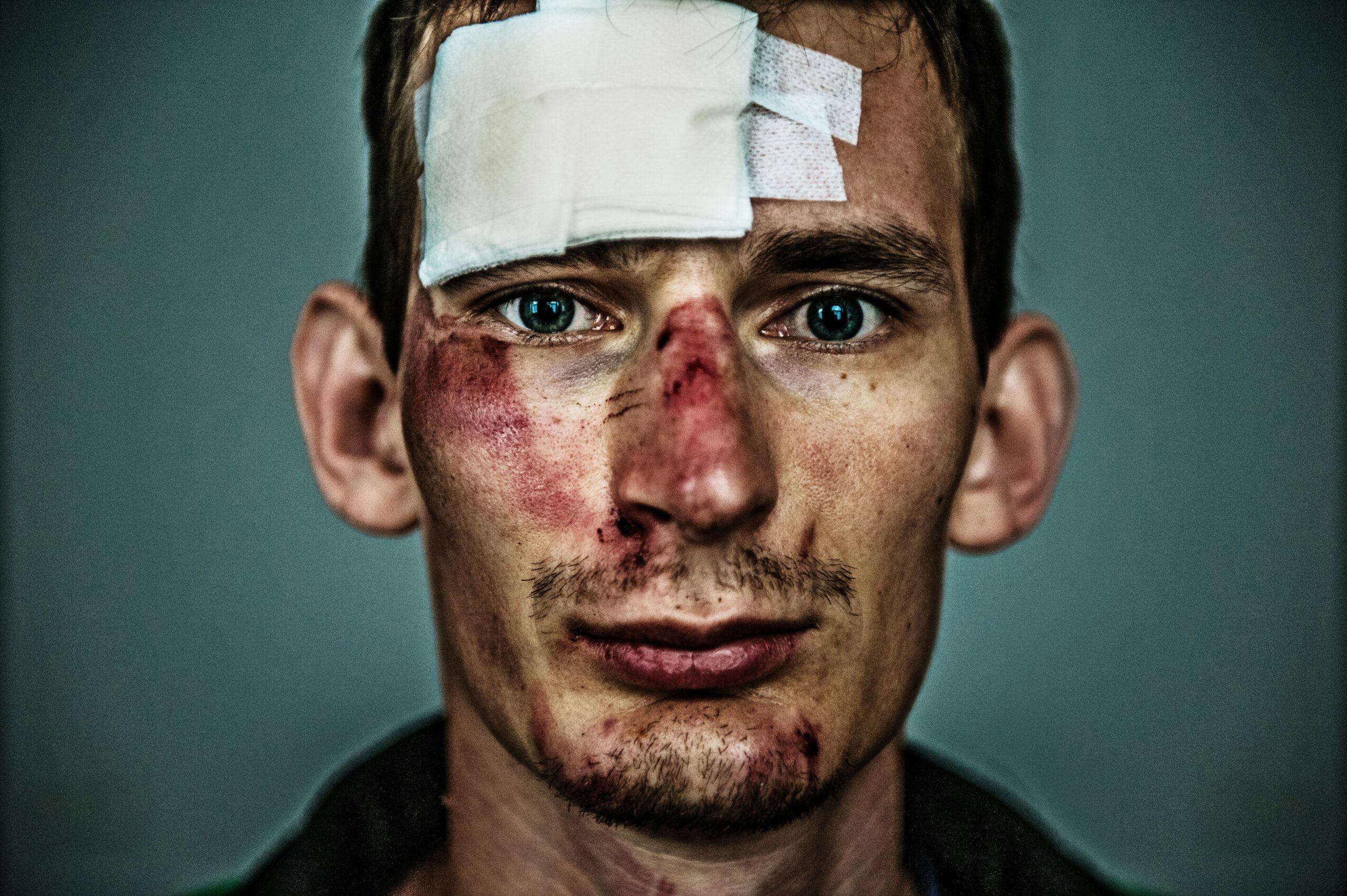
It is often subtler than the language used against women who experience abuse or assault, but it is no less real. In fact, one of the most corrosive ways it shows up is through minimising what has happened. A man is attacked and the response is not shock or tenderness, but distance. He is seen as dangerous rather than harmed. He is treated as if violence is part of his natural environment. The injury is real, but the compassion is missing.
That was one of the most striking themes in our recent podcast conversation with psychodynamic psychotherapist Philip Adlem. He described being violently assaulted as a young gay man and then moving through the world with the painful sense that other people saw not a victim, but a threat. Even a visible injury could lead people to assume he was the violent one. That experience will be familiar to many men, especially working-class men, black men, gay men and other men who are already carrying society’s projections.
Men are disproportionately the victims of violence
One of the most important points in this conversation is also one of the simplest. Men are massively disproportionately the victims of violence. That is a fact. Men are more likely to be assaulted, more likely to be seriously injured through violence and more likely to be killed.
Yet we often struggle to hold that reality with the seriousness it deserves.
Part of the problem is that discussions about male victimisation are so often derailed by one immediate response: yes, but men are usually the perpetrators too. That is also true. Men commit a great deal of violence. But it does not follow that male victims matter less, deserve less care, or somehow brought violence upon themselves because they share a sex category with those who harmed them.
That leap is not analysis. It is prejudice.
If a man is beaten, abused, mugged, sexually assaulted or killed, the fact that most violence is committed by men does not lessen what has happened to him. It does not make his pain smaller. It does not remove his right to protection, support and compassion. We would immediately recognise the cruelty of applying collective blame in many other contexts. Too often, when the victim is male, we let it slide.
The idea that men can take it
Beneath this is an old cultural story about masculinity. Men are supposed to be tough. Men are supposed to cope. Men are supposed to absorb pain without falling apart. If they are attacked, the logic goes, then at least they are built for it and they can take it.
But men do not have different emotional wiring that makes trauma bounce off them. Men do not experience humiliation, terror, grief or violation less deeply. The male body is not designed to absorb violence without consequence. The male psyche is not made immune from shock.
What is different is how the world responds.
When women are harmed, there is at least some social language available for vulnerability, even if that support is still far too inconsistent. When men are harmed, there is often an immediate drift towards suspicion, silence or ridicule. He should have fought back. He should not have been there. He should have seen it coming. He must have done something. Or, perhaps most commonly, nothing is said at all.
This is one reason male pain so often goes underground.
Why this matters in therapy
For men coming into therapy, these assumptions do not stay outside the room. Many male clients arrive already braced for disbelief. They expect to be misunderstood, minimised or quietly blamed. That expectation often comes from family history. It also comes from school, work, public life or past relationships. Sometimes it comes from previous experiences of trying to ask for help and being met with discomfort rather than care.
If a man has spent years receiving the message that his suffering is less important, it makes sense that he may struggle to name himself as a victim. He may describe what happened in flat, detached terms. He may laugh while recounting something devastating. He may skip over the violence and focus instead on what he thinks he did wrong. He may blame himself before anyone else gets the chance.
That is not evidence that it did not affect him. It is often evidence of how deeply he has had to bury it.
Therapists need to understand this. So do services more broadly. We cannot keep asking why men do not open up while ignoring the reality that many men have been taught, directly or indirectly, that opening up will not lead to recognition.
Male perpetrators do not cancel out male victims
This point deserves repeating clearly. The fact that men are most often the perpetrators of violence in no way undermines the fact that men are massively disproportionately its victims.
Both things are true.
In fact, if we are serious about reducing violence, we need to be able to speak honestly about both. We need to challenge male violence where men perpetrate it. We also need to care properly about men when they are on the receiving end of it. These are not opposing commitments. They belong together.
If we only talk about men as perpetrators, we create a flattened and dehumanised picture of male experience. We lose sight of boys bullied at school, men attacked on nights out, male survivors of childhood abuse, male victims of domestic violence, gay, bisexual and trans men targeted for who they are, working-class men profiled as dangerous, and men from different ethnic backgrounds treated as threats even when they are the ones in pain.
When those men try to speak, they should not have to first prove that they are ‘one of the good ones’.
What needs to change
We need a more honest public conversation about how readily we blame men for the violence done to them. We need to notice when we instinctively ask what he did rather than what happened to him. We need to challenge the habit of treating male suffering as less urgent, less tragic or less worthy of care.
And in therapy, we need to get better at recognising the ways men may have internalised these messages. Some male clients do not need pushing to speak. They need help believing that their experience will be received without suspicion or contempt.
Being male does not make someone less violated by violence. It does not make injury less frightening, nor the trauma less traumatic.
If we want men to seek help earlier, stay in therapy longer and trust that support is really for them too, we have to start here: when men are victims, they are victims. Not failed tough guys. Not potential perpetrators in disguise. Not people who probably brought it on themselves.
Victims.
And they deserve to be treated that way.
Chris Hemmings is a therapist & coach who specialises in working with men. He is also the founder of Men’s Therapy Hub.