Sex, Consent and Culture with Dr Sophie King-Hill
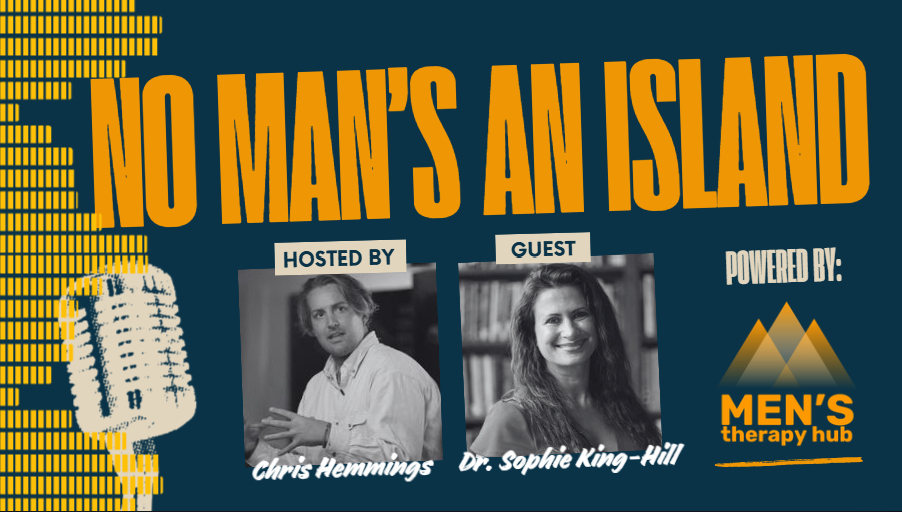
In this episode of No Man’s an Island, Chris Hemmings speaks with Dr Sophie King-Hill, an associate professor at the University of Birmingham whose work sits in the difficult territory most people would rather avoid. Sophie researches sexual behaviours in children and young people and the wider culture shaping boys’ attitudes, including misogyny and what boys are absorbing online. She is also passionate about youth voice and how we listen to children properly, speaking with them rather than just about them. This conversation goes beyond easy headlines. It looks at why the current blame narrative around boys is shutting down vital dialogue, why fear-based framing is counterproductive and what it would take to build safer, more honest conversations about relationships, sex and masculinity.
Sophie explains how public discourse often assumes boys are always sexually driven, always instigating, always the problem. Her research challenges that. She shares examples of boys who feel pressure to go along with sex they do not want because saying no risks rejection or ridicule. She describes the conflict between boys’ internal selves, their complex human reality, and the external script of what they are expected to be. With social media blurring online and offline life, that script never switches off. Boys are left trying to navigate porn, algorithms and polarised messages without safe spaces to process what they are seeing. Instead of open conversation, they meet shame, suspicion and the fear of being punished for asking the wrong question.
Chris and Sophie also explore how society responds to harm. Sophie is clear that violence statistics cannot be ignored and that this is not an apologist position. But she argues that punishment and retribution on a whole gender does not work. When boys are framed as risks rather than individuals, resentment grows, dialogue collapses and the door opens for toxic influences to offer identity and belonging. Sophie’s argument is simple and demanding at the same time: if we want change, we have to stop talking at boys and start talking with them. We have to treat them as stakeholders in the culture we are trying to shift.
What we cover
- Why boys’ voices are missing from research and public debate on sex and relationships
- How blame culture fuels resentment and shuts down dialogue
- Why the “boys always want sex” narrative creates harm for boys and girls
- Consent myths, including the instigator and gatekeeper story we keep repeating
- The clash between boys’ internal self and the external script of masculinity
- Why safe spaces cannot be declared, they have to be built and co-constructed
- Porn, algorithms and the lack of places boys can talk without fear
- Why early relationships and sex education protects children rather than sexualising them
- The risk of writing boys off early, especially those excluded from school
- What unlimited funding should go towards if we want long-term cultural change
Listen and watch
🎥 Watch on YouTube: No Man’s an Island – Episode 21
🎧 Listen on Apple Podcasts
🎧 Listen on Spotify
Takeaways for men
- If you want boys to open up, stop trying to fix them and start asking them what they need.
- “Safe space” is not a label. Psychological safety is built slowly through trust, consistency and respect.
- Boys can be harmed by the same sexual scripts that harm girls, including pressure, shame and fear of rejection.
- Critical thinking is now a mental health skill. Boys need help understanding algorithms, porn and manipulation online.
- Early relationships and sex education is safeguarding, not sexualising. Avoiding the topic does not protect children.
Key concepts explained
Blame culture
A social reflex to find fault and demand retribution rather than deal with complexity. In conversations about gender, blame culture can turn boys into a category to fear instead of individuals to understand, which shuts down dialogue and makes real change less likely.
Internal self vs external script
Sophie describes a conflict between who boys actually are and what they feel expected to perform. The internal self is complex and human. The external script is the narrow version of masculinity that demands certainty, toughness, sexual confidence and status. That friction creates emotional strain and isolation.
Developmentally appropriate relationships and sex education
Not teaching children “how to have sex” but building foundations early, such as correct language for body parts, boundaries, respect, consent, safety and the ability to ask questions without shame. Sophie argues this is how you protect children and reduce harm over time.
Quotes to share
“It’s really easy to blame people and say, ‘It’s their fault.’” – Dr Sophie King-Hill
“We need to reframe how we perceive young men and boys and how we perceive masculinity within society.” – Dr Sophie King-Hill
“Ask them. Ask the boys that you’re working with.” – Dr Sophie King-Hill
“If it was taken as seriously as English and maths, I think we would see massive shifts within society.” – Dr Sophie King-Hill
“We have to be really careful in how we frame young men and boys, with a real risk of demonising them as a gender to be feared.” – Dr Sophie King-Hill
Practical advice for men
Talk plainly with boys about what they are seeing online
Do not rely on vague warnings. Explain what algorithms do, why certain content is being pushed and how online influence works. Make it normal to ask questions without fear of punishment or humiliation.
Build safer spaces rather than announcing them
If you are a parent, teacher, coach or youth worker, involve boys in deciding how conversations will run. Let them help shape boundaries, confidentiality and expectations. Trust grows through repetition, not one brave chat.
Start earlier than you think
If you want teenagers to talk about consent, porn, pressure and relationships, the groundwork needs to be laid years before. Early education is about language, safety, boundaries and reducing shame.
Look for the human being behind the behaviour
If a boy is acting out, ask what function the behaviour is serving. Is it protection, status, belonging, numbness, fear, shame. Curiosity keeps the door open where judgement slams it shut.
Resources and links
- Men’s Therapy Hub – Find a Male Therapist
- No Man’s an Island – Listen to all episodes
- Episode 19 – Masculinity, Anxiety and Inclusion with Dr Sarah DiMuccio
Episode credits
Host: Chris Hemmings
Guest: Dr Sophie King-Hill
Produced by: Men’s Therapy Hub
Music: Raindear
TRANSCRIPT:
Chris (00:01)
Welcome to No Man’s An Island, a podcast powered by Men’s Therapy Hub, a directory of male therapists for male clients. On this episode, I’m joined by Dr. Sophie King-Hill, an associate professor at the University of Birmingham, whose work sits at what might be considered an uncomfortable edge of what many of us avoid talking about. Sophie’s research includes sexual behaviors in children and young people, sibling sexual abuse, and the wider culture shaping boys and young men’s attitudes, including misogyny,
what they are absorbing online. And she’s also passionate about youth voice and how we listen to it properly speaking with children rather than just about them. Hey, Sophie.
Dr. Sophie King-Hill (00:39)
yeah, thanks for having me.
Chris (00:41)
That’s quite all right. First question is always the same, which is how did you end up in this space? So for you, how did your research start to move towards understanding and talking about what’s going on with young men and boys, which I guess is what’s most relevant to our listeners.
Dr. Sophie King-Hill (00:59)
Yeah, so I haven’t always been an academic. I’ve been an academic for about 10, 11 years. Prior to that, I worked in the third sector. So I worked in a sexual health education capacity for leading sexual health charity for children and young people. I was their national impact coordinator, but I also educated in schools and educated young people on relationships and sex education. Before that, I worked with teenage parents.
for six years and I look back on that job, even though it was 20 years ago really fondly, they were really inspirational young people. And before that, I worked in an education capacity with young men in the criminal justice system. So what’s brought me to this research topic, so over the last 10 years, research in sexual behaviours in children and young people.
I noticed there’s a distinct lack of voice of young men and boys within this arena. However, it’s vitally important to have that voice included. So, for instance, in the third sector work that I carried out when I was educating on relationships and sex education, the young men and boys had agency and they wanted to be involved in these conversations. But often within kind of public discourse, it’s assumed that young men are always sexually driven. However, that was not my anecdotal experience.
Similarly with teenage parents, know the teenage dads were not a standalone category themselves so it was really hard to get funding to get them onto the courses but the ones that I was lucky enough to meet they
You know, they really wanted to be invested in their children’s lives. However, they were still combatting all of these different stigmas around being a teenage dad. ⁓ And then when I worked with young men in the criminal justice system again, you know, we kind of clumped them together as criminals and that’s it. And they have this label. But actually I got used to, I got to know each individual and their own intersectional identities. that’s the kind of brief kind of potted history of what’s got me to where we are
today, but what I did notice was that there’s a lot of, after some big events in the news ⁓ and quite high profile murders, there was a backlash and it seemed to cultivate a blame culture around men and boys and a search for retribution for past inequities across genders.
And I knew that that was shutting down vital dialogue that’s needed for a better society for everybody, ⁓ including men and boys. So I’ve noticed there’s a distinct lack of research there, lack of understanding, and just these assumptions about young men and boys that aren’t true.
Chris (03:53)
Where have they come from? Where is that narrative about men and boys that you say is not true? Well, actually, I’ll ask a two-fold question. What are those narratives that aren’t true and where has that pervasive mentality come from?
Dr. Sophie King-Hill (04:05)
So the preconceptions about men and boys, there’s a huge blame culture at the moment and there’s all sorts going on in media that feeds into this.
perception that they’re potential perpetrators, that it’s demonization of a whole gender rather than looking at its intersectional identities. You can’t just have boy and that’s it. Boy is a part of somebody’s identity that ⁓ consists of lots of different aspects. But I think these perceptions have come from the inequalities that women have suffered over the years and the changes.
in the systems there and so women and
why does society are at a point where they’re thinking, okay, so this has happened previously, we’re looking for blame, we’re looking for retribution. think culturally, as a society, we always look for blame, it’s like a predisposition that we have to look for whose fault it is. And, you know, like I said, current media is not helping with this kind of perceived demonization of boys as a gender, as potential threats, rather than bringing them along with us and working, you know, with you.
men and boys not at them and actually listening to them and that’s not at the detriment of work with women and girls or trans people or non-binary people that’s in a different yeah that’s the perception and it gets fed into from lots of different avenues there was a very popular Netflix flicks drama that came out recently ⁓ which fed into that narrative that boys are potential threats and a gender to be feared rather than
Chris (05:30)
That is the perception.
we’re talking
about adolescence. ⁓ Don’t mention the war.
Dr. Sophie King-Hill (05:52)
Yeah, wasn’t sure. Yeah, yeah, I’ve quite extensively about, yeah, damage.
Yeah, I’ve written quite extensively about the damage that adolescence has done in this field. I’m not taking away from the young man who’s the actor in it, you know, I think that’s phenomenal what he did as a young person in a drama. So that’s the caveat, but the perceptions that that laid out about young men and boys was incorrect, was incorrect and it fed a fear.
within wider society, that people are scared of young men and boys instead of working with them and seeing them as individual human beings.
Chris (06:34)
You mentioned a few moments in history there and I’m guessing you’re talking about Sarah Everard’s murder initially was a huge cultural moment. Whipped up partly because everybody was locked down and there was already like heightened social anxiety at the time. So understandable in the context. But again, it became, it was kind of the tail end of Me Too and it became this all men are X, right? All men are something and…
Dr. Sophie King-Hill (06:39)
Yeah.
Yeah.
Chris (07:02)
What are you trying to do with your work? Because I spoke, I had a great conversation ⁓ with Dr. Sarah DiMuccio. She works in kind of DEI and trying to engage men in that. And she says, you know, first of all, as a woman working in this space, she gets pelted from both sides. Like she’s considered sometimes a traitor by women and well, you don’t understand it by men. So like, but where are you trying to come in? Where do you position yourself here to try to call both sides in? Cause that’s…
Desperately what we’re trying to do on this podcast and listeners are gonna get bored of me saying this We’re always trying to do the yes, and yes and the you know, the the removal of the zero sum Where are you trying to do that? How are you trying to do that?
Dr. Sophie King-Hill (07:38)
Hmm.
So
we need to reframe how we perceive young men and boys and how we perceive masculinity within society. So these perceptions are not doing anyone any favors. We need to change the conversation around young men and boys. So I can give an example. So one example is consent. So when we think about consent, we think about a boy as the instigator and the girl is the gatekeeper. It’s a very heteronormative perception we have on consent as well.
In my research, what I’ve found is that young men and boys have different sexual wants and needs and experiences. They’re not always instigating for sex and some of the young men that I spoke to, found that they were very aware because no public discourse exists around young men and boys saying no, they would…
strategize as to how to say no so they would for instance if they were with a young woman they’d be saying things like are you sure you don’t have to because they were very aware that she would feel rejected if a boy who’s assumed to be sexually driven doesn’t want to do anything sexual
And so they try and maneuver the young woman into a position where she would say no. And if she wanted to go through with it, they would do it even if they didn’t want to. So that’s one example of where we’re doing this huge disservice to our population by making these assumptions. That’s not in any kind of public discourse at the moment. When we talk about consent, we’re normally talking about girls gatekeeping and boys instigating.
⁓ which isn’t correct. So boys are stuck, I think, at the moment. this is, like you say, this isn’t taken away from anything in any other areas. But this is where I think we’re getting incredibly wrong within society because a vast amount of the population we’re not bringing with us.
Chris (09:39)
And why aren’t we? why is it? And maybe you can’t answer that in totality because it’s such a big question, but there seems to be this reluctance from either side, right? And from all sides to, and we are living in an increasingly polarized world, which media is not helping with, but why are we struggling so much to get a critical mass of, in this instance, let’s say women and girls to turn and look at men and boys and say, hey,
Dr. Sophie King-Hill (09:53)
Mm-hmm.
Chris (10:08)
You’re also struggling with this. And that doesn’t mean that I’m not struggling with this other thing. And maybe there is a Venn diagram overlap sometimes. Instead, it’s if we’re talking about you, that means we’re not talking about me. So fuck you, basically.
Dr. Sophie King-Hill (10:15)
Hmm.
It’s really difficult. The thing is, within society, people want simple solutions for complex problems. So the answer is it’s complex, it’s complicated on so many different levels within society, types of conversations, because of not only the kind of public perception.
of men and boys, but also people’s personal experiences. So we know within society, we have a violence problem that sits within the male gender. there’s violence against themselves in terms of self harm and suicide, violence by men and boys against other men and boys, and violence against women and children. So we can’t escape from those statistics, you know, so that this isn’t an apologist position.
But the things we’re doing at the moment aren’t working. What I’ve seen in my research is that, you know, this kind of blame narrative and that it’s your fault, but you can’t be part of the solution. You can’t help us fix it. You know, it shuts down this dialogue, but it causes resentment.
So there’s resentment and grievance, feelings of worthlessness and helplessness, know, but constantly being told as a gender, know good, but also, know, that you’re part of the patriarchy, so that you’re privileged when actually it’s really complex. And a lot of men and boys are thinking, well, I don’t feel very privileged, you know, but it’s very difficult for them to vocalize that. So this is kind of big melting pot of very… ⁓
amplified emotions, very powerful emotions that are going on across genders that causes this binary perception of pick a side, you know, but it’s more complicated than that and I think that the narrative has gone down that route, you know, you’re either on their side or their side, you know, and it’s really difficult to try to unpick that and come together, although I do think it’s happening. I do, think I’ve seen more movement in the last five years in this area of my research than I have in
other area. Something’s shifting, you know, I think people are realising that we need to do more for young men and boys, for the good of everybody including them. I think one of the reasons why people are starting to sit up and listen is because of toxic influences.
They’re not the problem. They’re problem people, but they’re not the problem. So what’s happened over the last 50 years is that women and girls, for example, have been largely supported in the changing role of the woman. There’s still a long way to go. I sit here as a 46 year old woman and I know there is still a long way to go in terms of equitable chances for women and equality. However, we’ve been supported in a changing identity as a woman. So we’ve got access to safe abortion. We’ve got bodily autonomy through use of contraception.
Chris (12:46)
Sure.
Dr. Sophie King-Hill (13:03)
we’re part of the labour market, we don’t need a man in that kind of traditional sense as we did 50, 60 years ago. We can have our own bank account, yeah, can, yeah, so, so…
Chris (13:09)
You can have your own bank account.
Yeah, ridiculous. Yeah.
Dr. Sophie King-Hill (13:16)
So the position of the woman has changed. What hasn’t happened is that over the last 50, 60 years, the evolving role of the man and boy alongside that has not been acknowledged or noticed. And so we’ve created a big vacuum within society where toxic influences have got traction because young men and boys or men and boys have been freewheeling, looking for direction because they don’t fit as the main earner anymore. ⁓
And so it’s different type of role that we haven’t supported. So these toxic influences have come along and said, come with me, I’ll show you the way. I’ll give you your identity. And so what that’s done, because it’s gone into kind of wider popular culture, people have started to notice actually, what have we done? We’ve got to do more for our young men and boys. know, so in a way what they’ve they’ve done us a favour by highlighting a problem that was, that’s 50 odd years in the making, which is we’ve neglected the evolution of
the man and boys identity within modern society.
Chris (14:15)
Can you speak, and I know you don’t represent your entire gender, just to make that very clear, but can you speak as, you know, 46 year old woman, as you said, can you speak to and empathise with the very large cohort of, and it’s not just women, there’s a lot of men who have joined that side too, and non-binary people, trans people, there’s everybody, but largely it’s women who, when we are talking compassionately about men and boys, it just does not have a place in them, they cannot hear it.
Dr. Sophie King-Hill (14:19)
Yeah.
Chris (14:44)
Can you understand it, at least?
Dr. Sophie King-Hill (14:46)
Yeah, I can. mean, we’ve all as women got personal experiences of sexual harassment or worse or, you know, really adverse experiences that we’ve been through because of our gender, solely because of our gender. And it might not just be personal experiences, it might be things like the gender pay gap and other unfair systems within society.
But we’re predisposed, like I said, in this society, look for fault and blame, not reason. And I think that’s where the issue lies. We know that there’s problems within society, but I think we’re looking in the wrong place to fix it. Retribution is not the answer. Punishing a whole gender is not the answer. Saying to another gender, look,
This is not working out very well for us. This is awful. However, it’s not very good for you either for different reasons. Why aren’t we working together to try to solve this? Because at the moment, no gender’s winning for different reasons. But I do, think it’s tough. And that’s why, you know, I always say when I’m talking like this, that this is not an apologist position. Women are and girls are overwhelmingly raped, murdered, beaten, die by suicide because of men. OK, we cannot escape those numbers.
However, the way we’re going about fixing it is wrong. know, yet there has to be consequences for certain behaviours. However, this has to run alongside a restorative approach and listening, you know, communicating and not shutting down really important dialogue. And people are angry, you know, like what happened to Sarah Everard, which was like, that was horrendous. It was terrible.
People wanted to feel like they were doing something because it was such an awful thing that happened to her. You know, there’s that real emotive response. But I think a lot of people went down the wrong road and shut down the dialogue instead of saying, hang on a minute, this has happened within society. Everybody feels awful about it. How can we learn from this and get some positive from it? There was a lot of anger.
Chris (16:47)
And what you’re talking about there is, yes, there is a small-ish demographic of men who are violent and abusive. And yet what we do then by lumping all men into that is we make it much more difficult for the large cohort of men who aren’t a part of that, okay, we could have a long conversation about how we play our part in it, right? I wrote a whole book about being involved in like rugby culture at Birmingham University, by the way. Like it was gross and it was rancid and I was a part of it and it was…
abusive of each other and ourselves and people around us and sure and yet there is then that cohort of men who feel like well I am being spoken about as if I am the devil. You literally in a submission to parliament recently wrote blame culture is detrimental to the effort and blaming boys is counterproductive. Young men and boys need to be supported and empowered to be part of the solution. So how do we do that then?
How do we take that message of, yes, there is this abuse, there is this violence that goes on, and it is not good for anybody, and here’s how we help you to see that. Because if it’s not about attacking, then how do we do it?
Dr. Sophie King-Hill (17:58)
Through open communication and seeing people for their own intersectional identities. I mean, that might sound like a little bit wishy-washy maybe to some of your listeners, but what that means is take a step back and think about the whole person and all of those different jigsaw puzzle pieces that make them who they are, not just their gender, and take a trauma-informed approach if they’re displaying ⁓ harmful sexual behaviour or…
violence and try to figure out where that’s coming from and unpick it with them. I think quite often we’re just doing things at people and it shuts it down and it’s as if you’ve got to pick your camp. You’ve got to say I’m either on this side of the fence or this one. There’s no middle ground but like I said you know society wants simple solutions for complicated and complex problems.
But we’ve got to start to change these conversations. It’s really interesting when I talk about things like this at conferences, it’s generally women of my age that come up to me afterwards and say, I’m so glad you’ve said that. You know, so a lot of women are fearful of speaking up.
Chris (19:01)
Hmm, okay.
Dr. Sophie King-Hill (19:05)
as well because it’s probably, it’s getting a bit more of a popular opinion but it’s, you know, everything I say is research based, you know, this isn’t me kind of leading the charge from anecdotal experiences, you know, I’ve done a lot of research in this space that is telling us this is what we need to do. But yeah, there’s a lot of women that come up to me and say I’m happy that you’ve said that, you know, and they’ll talk about their own husbands, sons, brothers, friends and just say I’m sick of hearing the narrative.
but I know if I stick my head above the parapet it can be quite a dangerous space.
Chris (19:42)
Yeah.
Well, when I first started going into schools 12 years ago to do work around men, masculinity, mental health, a lot of the parents and the teachers would say, we are worried about the girls over the past three, four years. It’s very much now we’re worried about the boys and the girls, but it seems to be right now that there is a bigger concern even. And it’s interesting because we started this podcast and I keep asking guests and I kind of want to have,
people getting angry and saying we need more. And actually what everyone’s saying is people keep coming on here with these lovely messages of hope that things are changing. And I’m like, damn it, doesn’t make for such good clips that will go viral. But it’s true, right? And the fact this podcast exists is a testament to the fact that more and more of this work is happening. So I’m really happy about that. There’s a part of your research that I’m interested in. So you’ve explored how…
Dr. Sophie King-Hill (20:27)
in
Chris (20:37)
We draw the lines between like normal problematic and abusive and violent behaviors. What makes that so difficult? Because just off the top of my head, I think about like Instagram culture now and we, you know, I disagree with you, you’re gaslighting me, you know, like we’re actually, we’re doing a disservice to the terminology a lot of the time, but like where does it, where is the difficulty in drawing those lines? Because.
If somebody says they are abused, we must believe that they’ve been abused, but it’s kind of the concept of abuse has become kind of nebulous and it isn’t very well defined. So how do we do that?
Dr. Sophie King-Hill (21:16)
Yeah, no, it’s hard, it’s difficult, you know, and again, that’s one of these things that’s complex that people want to see as, you know, simple. There are behaviours and experiences that are clearly abusive. The muddy waters are in the middle.
between what you’ve seen as developmentally appropriate and what’s seen as abusive. that’s where, where’s the, you you talk about a line, but I don’t think it’s a line. think it feels it’s, it’s, it’s like a gradual shift. What I’ve found in my work in terms of sexual behaviors is perceptions of sexual behaviors, especially in children and young people. So children and young people will think one thing is developmentally appropriate for them. Professionals in the field of sexual behaviors will think another thing.
not in that field will think something else and parents and carers think something else so everybody’s coming at this from lots of different angles but nobody’s communicating and the group that needs to be listened to if we’re talking specifically for young men and boys are largely ignored you know they’re the ones that are the experts in the lives that they are living however it’s you know that we’re constantly talking over the tops of their heads and assuming we know best without
talking to them. Some of the conversations I’ve had with young men and boys in the research that I’ve done have been so interesting and they’ve got agency and they’re really aware of the things that affect them and all the kind of trials and tribulations of young men and boys today. But they know that not many people listen to them in any kind of…
concrete way, you know, they’re constantly told to be a certain way, to do certain things, to say certain things, not say something else. So, I mean, I’ve done a lot of work talking about safe spaces for young men and boys, but a safe space is when they can drop the social script and talk about the things that they’re really bothered about, the things that are upsetting them and how they really feel. But sometimes that’s a real kind of, that’s a tough pill to swallow sometimes, you know, when you’re listening to how they really
feel ⁓ about society, about harms within society, about how they’re perceived within society. But it takes time to get them to that space because they’re so conditioned now to hide that part of them. My research has also shown there’s a huge conflict between the internal self of the young man and boy and the external self. So the internal self is that intersectional self that I talk about. all those puzzle pieces that make you who you are.
Chris (23:49)
You’re complex human.
Dr. Sophie King-Hill (23:51)
Yeah, you’re a complex human being. Yeah. So that’s your internal self. What I found was there’s a direct conflict with the external self. So how it’s perceived, young men and boys should be. And it causes a lot of friction for them, emotional friction.
It’s really difficult for them to verbalise that as well. And unlike me when I was at school, I could shut the door on things when I got home, but young people live their lives seamlessly online and offline now. So there’s this constant reminder that this is how you should be, this is what society expects of you. And there are so many contradictions around it. You’re expected to be masculine, there’s still the idea of the breadwinner, the kind of the main earner. However, it conflicts with how women and girls
are framed now within society quite rightly, you we’re part of the labour market. So there’s contradictions and there’s complexities on this kind of who should they externally demonstrate themselves to be and it really impacts upon themselves as an individual and yet there’s no way for them to go to talk about it because society’s constantly telling them they’re privileged and they don’t deserve these safe spaces, you know, because they’re just for other people, well they should be for other people, but young men and boys as well, but also what
found with things like the social scripts.
They’re worried about saying something and it getting blown hugely out of proportion. So an example is if they’ve unintentionally seen something pornographic that’s quite extreme, they’ve got nowhere to go to talk about that within society. There’s no safe space for them to go and say, I saw this last night by accident. I’m trying to make sense of it. There’s no avenue. There’s no public conversations around having open conversations.
about things like pornography with young men and boys. It’s always just instructing them that sex isn’t like that, don’t watch it, be aware of this, that and the other rather than saying look, the realistic position is whether intentionally or unintentionally they’re going to see it by the time they’re 18.
We need the spaces to unpick it without them worrying that they’re going to get reported down a safeguarding route, that their parents are going to be involved. So yeah, don’t think we’re there yet, but I think these conversations are starting to happen now.
Chris (26:15)
And I think we can, we can miss sell this idea of a safe space sometimes because in psychological work, I think what we’re trying to do now is we’re trying to create safer spaces, make a space as safe as possible. But if we just tell a young lad, okay, this is a safe space, they don’t feel like it is. Like the level of risk they’re gonna have to take to even come and say that they’re struggling with something or as you said, they’ve seen something that feels uncomfortable for them.
Dr. Sophie King-Hill (26:39)
and
Chris (26:44)
I remember working, I did some big piece of mental health work in a huge construction company in the UK and they had these mental health first aiders and most of the lads on the site when I spoke to them quietly they were like, if we’re struggling we’re meant to go and speak to this mental health first aider but he doesn’t feel like a safe guy to speak to, like he’s just done some course and then we’re supposed to feel like, okay, it’s okay for me to go and speak to him now and everything will be fine
to me it’s the equivalent of this like, ⁓ men you need to talk more. It’s like, when, where, how, to who, about what? Like, it’s not as easy as just like opening the faucet and the water will run out. Like, we have to create a container for it and that’s what we’re struggling with here, I think, culturally. And so you have focused on these male only spaces. And again,
Dr. Sophie King-Hill (27:19)
Mm.
Good.
Chris (27:36)
What’s been really interesting with my work is for a long time, there was pushback even within business when I was saying that every demographic and place on the intersection in this company has an employee resource group. And yet there isn’t something for men. And like one big organization I worked with, they literally had to change the rules because their rules stated that men weren’t allowed to have a male only space.
And so instead we had to call it, rather than just a men’s group, it was a men’s wellbeing group because that’s harder to argue with and there’s still so much pushback and that, in essence, kind of confirms to men that their pain and their challenge and their difficulties is less important. And that is happening still now, less so, but still now, if we’re telling boys, all you are is trouble, you are not troubled.
Dr. Sophie King-Hill (28:28)
Yeah.
Yeah, you’re right. mean, you have to be careful with the framing, like you said, of male-only spaces because they can be co-opted into something quite sinister. So, you know, I think that…
Chris (28:43)
We haven’t
given ourselves much, you know, we haven’t helped ourselves over the years because a lot of male-only spaces were pretty rubbish and excluding for negative reasons, I would say.
Dr. Sophie King-Hill (28:50)
Yeah.
Yeah, yeah. So I think the framing of that is, you know, it still pays to be cautious. I think they’re very important. They can’t be constructed at people. So you’ve got to co-construct these things. And, you know, if you sit down, I don’t know, with a 16-year-old young man and say, well, this is a safe space. Tell me all about everything. It’s not going to happen. It’s not going to work. These have to be co-constructed spaces where everybody decides, you know, what happens in the group.
make the group agreement where it is, it takes place, what’s done, what’s talked about, you know, but it’s got to be…
invested in by everybody and seen as that they’re a key stakeholder in the group. But it takes time, know, some of the focus groups I’ve run with young men and boys, it’s taken quite a few sessions before the social script drops, you know, that they’re actually comfortable enough to talk really openly about how they feel. it’s not, know, a safe space doesn’t spring up immediately either. It takes time to get there over numbers of sessions.
or activities to get to the point where gradually somebody feels psychologically safe to unpick things that troubling them.
Chris (30:12)
There’s so many things I want to ask you about, so we only have a certain amount of time. So I’m going to have to keep changing topic here. I think one of the big challenges here, and again, regular listeners know I live in Denmark and I’ve been in some Danish schools and actually like my wife has been in, she’s a clinical sexologist and she has taught like how to experience pleasure rather than just like, here’s a uterus, here’s some ovaries, here is the clitoris, ooh, you know.
Dr. Sophie King-Hill (30:33)
Mm.
Chris (30:40)
Are we still very far behind in the UK in terms of what we’re teaching in terms of sex and most importantly, relationships? Because that is a big problem here. Like you have talked about the statistics earlier. Yes, there is sexual violence. Yes, there is consent breaches. There is also boys allowing their own boundaries to be overstepped for fear of being seen as a pussy or weak or whatever it might be because…
Dr. Sophie King-Hill (31:06)
Hmm.
Chris (31:07)
Young men should just be sexual all the time. I wrote in my book, I had sex at 15 for the first time and I was terrified and didn’t do it again for a year because I just did it because I thought that I should because it was on offer at a party. Where are we falling so far behind? Or are we? And if so, where are we falling behind in terms of sex in relationships, education?
Dr. Sophie King-Hill (31:30)
So I think there’s been a weaponization of it over the past 10 years. So it’s created a lot of fear amongst teachers, amongst parents. So there’s a fear of teaching things like pleasure.
when you’re talking about sexual activity to young people. There’s this kind of mutual exclusivity isn’t there of children and young people and sex. They’re like repelling magnets aren’t they, the two topics. People are really uncomfortable talking about that with young people but you you don’t suddenly have a sexual identity at 16 when it’s legal in this country. It doesn’t happen like that. You know it doesn’t just fall from the sky does it? You know it’s an emerging identity that starts at
start of adolescence and it’s not only biological, it’s social, it’s to do with your socialisation, there’s all sorts of different components to this and we’re not getting in there early enough, you know, I’m a huge advocate of early and developmentally appropriate relationships and sex education. ⁓ you need to start building the foundations in…
Chris (32:34)
How early?
Dr. Sophie King-Hill (32:39)
reception which is age four or five in the UK you know and I’m not talking about teaching them about sexual activity I’m talking about knowing the correct terminology and feeling comfortable with different parts of their body and talking about them this is how we keep children safe this is how they become able to ask questions that they might normally keep to themselves
they’re more likely, you know, if they’re aware of the name of body parts and what people should and shouldn’t be doing, they’re more likely to report abuse that’s happening to them. ⁓ Earlier sex education, really good sex education, the research tells us that young people are more likely to delay sex. So the example you give from your own experience, if relationships and sex education had have been excellent and you’d had time to really think through when you wanted to first have sex, it may not have happened.
at that party, you know, that’s decision made in the moment. Sorry to use your example. ⁓
Chris (33:35)
Yeah.
No, I brought it up so it’s
totally fine.
Dr. Sophie King-Hill (33:41)
Yeah, okay. so that’s, you know, you want to have those thought processes beforehand in a safe space to be able to think, actually, I don’t want to do that yet. I’m not, that’s not for me yet. Or yes, I do want to do that. How do do it safely? We’re not, I don’t think we’re there yet. I think there’s a huge amount of denial around the sexual activity of children and young people. There’s a big fear of online sexual activity as well. ⁓
And I think we’ve got a long way to go, but we put it all on the shoulders of teachers and schools who are under so many different pressures. We need more resources. I mean, we’ve got the new statutory guidance here, which is a move, a significant shift in the right direction. But again, there’s a lot of different topics in there that some teachers might not be comfortable teaching. So we need to have a more proactive approach within schools where teachers can go to a leadership team and say, I can’t teach that yet.
I’ll probably need a bit more training and support in that area. Can someone else pick up this topic and I’ll pick up that topic? You know, because there’s nothing worse than a teacher teaching something around sexual activity that they’re uncomfortable with. I’ve seen it done. You want to just crawl under the desk. You know, it’s uncomfortable for everybody and it causes a lot of stigma and shame around sex. So that’s where we’re at at the moment. Again, I think we’re slowly shifting again back in the right direction. We’ve got the right players.
in place, we’ve got a good statutory guidance but we’re not there yet because people are frightened, teachers are frightened of teaching about these things and then parents and a big backlash and the big council culture we’ve got at the moment within school, on social media if somebody does something that somebody doesn’t like.
But the evidence tells us that age appropriate, developmentally appropriate, relationships and sex education from an early age protects children and young people for many different reasons.
Chris (35:40)
And yet, when you first said reception primary school, all I could imagine is small C conservatives like fainting. ⁓ like we can’t like, won’t somebody think of the children? Like we can’t teach them about penises and vaginas because we need to protect their innocence. And actually what you’re saying is, well, that is how we protect their innocence is by giving them the language. I even think about…
Dr. Sophie King-Hill (36:03)
That is.
Chris (36:09)
somebody on my therapy course when we were doing a supervision session and I brought something for one of my clients that was like deeply, troublingly sexual. And she even said, can’t we talk about something else? This is like really awkward. And it’s like, you’re training to be a therapist. We’re still so kind of Victorian in our approach to talking about sex in the UK. And actually, clearly what you’re saying, I guess, is that that is not helping with…
Dr. Sophie King-Hill (36:35)
No.
Chris (36:35)
the messaging
and people have this idea that if we just ignore it and don’t talk to kids about sex, it’s like the same with drugs, right? It’s like, if we just tell kids that drugs are bad and that they don’t really exist and they shouldn’t touch them, then maybe they’ll stop. And no, actually we’re moving with drugs at least to like, how can we talk about safe drug use? Or still, all we’re talking about safe sex is use a condom, don’t get pregnant. But actually there’s so much more to safe sexual behaviors than-
Dr. Sophie King-Hill (36:54)
Yeah.
There’s a huge amount of denial. think we live in a highly sexualised society.
Sometimes I think some people have forgotten the internet exists and that young people and children access the internet. We have an obligation, it’s an ethical obligation to safeguard our children by giving them the tools they need from an early age. You know, in a safe environment, in a school setting is the ideal place for a lot of children to learn about these things. Evidence based information that’s appropriate for them, but also alongside that what needs to run.
is the kind of digital literacy. So that’s that critical thinking skills for them to assess what they’re seeing online. Taking it away just creates a taboo and they’ll go after it even more. We’re all predisposed to do things like that within society. But the thing is, is to teach them about what they potentially might see online as well. But we don’t live on an island where there’s no social media, no television, no advertising.
You walk past shops and the adverts are sexualised in the shop windows, we don’t notice that anymore. And yet there’s our cry if we want to talk to young people and children about keeping themselves safe. But you know, when you say relationships and sex education and somebody that’s aged five, you know…
you have to really strongly caveat you’re not teaching them about how to put a condom on you’re teaching them about being comfortable in their own bodies knowing the correct terminology for their own bodies so that when you do move up the years that they’re comfortable talking about it and you don’t say the word penis to a group of year nines and they fall around laughing because they’re so embarrassed you know we’ve got to build the blocks from a really early age and get them comfortable and the thing that I’ve noticed over my career is that children and young people want to talk about this it’s us
the older generation shut them down and create the shame. Children and young people don’t have it, not from my experience. They want to talk about these issues and they do it with such agency and understanding and inquisitiveness. But they’re constantly shut down and it creates shame around sex.
Chris (39:12)
What do you think, because you are talking here about social media and it is hypersexualized, you only have to think about the amount of influencers that are also OnlyFans creators. And yes, the kids might not have access to the OnlyFans accounts, let’s hope they don’t at least, but they do have access to the content that is the feeder to that. So I wonder what your take on ⁓ Australia’s…
Dr. Sophie King-Hill (39:24)
me.
Chris (39:38)
ban on social media for under 16s is and I think is it Spain considering it too? I know it has been floated in the UK. I think it would be much more difficult to get past in the UK. I know Denmark is considering it. What’s your take on that? Do you think it’s long-term benefit or not?
Dr. Sophie King-Hill (39:55)
think if you’d have asked me this question 10 years ago I would said it was a good idea. But I think it’s too late. It’s too late. I mean we can put restrictions on and maybe that will go some way in supporting children and young people but you know they’re savvy, they’re intelligent.
They’ll find a way around it if they want to get on social media. But there’s also so many children and young people now that rely on social media, you know, for their wellbeing. You know, we often demonise the internet and social media platforms, but there’s some really good stuff out there that supports children and young people. And to just take away a part of somebody’s world and identity can be quite dangerous. So I think if we’re going to go down that route, there’s got to be something scaffolding it going alongside. ⁓
⁓ But I think again it’s that simple solution or we’ll just ban it. Okay and then what comes next? Does that mean everything’s solved and everything’s fine and life is rosy? No it isn’t.
I think it needs a lot more thought. I think it’s too simple, a blanket ban. And this is a complicated issue.
Chris (41:10)
with potentially a complicated and complex solution. And one of the ones you talked about earlier was critical thinking, how to think critically about what you see. And I think about when I was 13, 14, and I think about some of the messaging now that I see because on my men’s therapy or Instagram account, you can imagine what the algorithm keeps tempting me with, right? It’s not stuff that I actively engage with, but I watch it because I’m like, wow. And then I think,
Dr. Sophie King-Hill (41:19)
Yeah.
Chris (41:39)
If I was 14, 15, 16, maybe even, that message would have been incredibly enticing for me as I’m feeling, you know, as I’m five foot 10, but look like a baby. And I see all these other men around me, these 15, 16 year olds that look like 25 year old men. And I’m feeling not masculine enough and okay, so I need to behave in a certain way. like, I get why. So what could I have been taught back then? And what could we teach those boys now?
when they’re looking at, there’ll be some dads listening here, like, how can dads help with this? like, how can we help young boys to hear a message and to think about it critically before just liking it and falling, tumbling down that rabbit hole?
Dr. Sophie King-Hill (42:24)
Just talk to them, be transparent about it, say this is what critical thinking is, here’s how you apply it to the things you see online. The reason why you’re being shown these things online is because of this and they’re trying to hook you in.
You know, young people are pretty savvy, those that spend a lot of time on the internet around things like algorithms. So it’s teaching them those things around it alongside their own emotions and their own emotional responses. But again, we’re not teaching it them and saying behind closed doors or we’re teaching them critical thinking skills. I would say to the young people, these are critical thinking skills. You need them now more than ever to negotiate everything you see online, to critically appraise things online, especially in the age of AI and things like
like deep fakes ⁓ and other media content, know, take that critical step back and think, is this real? You know, what damage could this be doing? What is it trying to manipulate me into doing? But I think we forget that young men have agency and are capable of these kinds of conversations. And from my experience, they absolutely are.
Chris (43:30)
That’s been a theme that’s come up with what you’ve said multiple times and you said in your introduction, one of your things is about youth voice. It’s about bringing men or bringing young people into the conversation. I think I love the way you described earlier, just talking over their heads, right? What’s been your biggest surprise in your work and your research when you do actually look, and obviously we’re a podcast about men and boys, so most interested in that. When you as a researcher or when you’ve witnessed other people,
coming down to eye level with those boys and saying, hey, what’s going on with you? Like, what do you need? What’s been the biggest surprise for you? What’s been the thing that’s shocked you most?
Dr. Sophie King-Hill (44:09)
I think a lot of young men… ⁓
think it’s too late for them, you know, in terms of what can we do to make things better for you in the education system, in how you’re perceived. I think one of the things that stuck with me was working with a group of young men. A few of them had been excluded from a number of different schools. And I asked this question, you what could we make? we make, you know, I had some funding from resource and they just basically said it’s too late for us. Concentrate on the little ones.
It’s too late. You know, that kind of 15 and 14, 15, 16. Yeah, I went home with a really heavy heart that day because do know what? I think they were right.
Chris (44:44)
And how old were they? Wow.
Their life’s just starting at 1415.
Dr. Sophie King-Hill (44:55)
Yeah, but society had already written them off.
Chris (45:00)
And actually, sorry,
you just said that you agree, you feel like that time has already passed.
Dr. Sophie King-Hill (45:06)
I think that’s not how I want it to be. But I think these boys, having been excluded from a number of different schools, somewhere in the criminal justice system, they knew the way society is set up, how are they going to access as a key stakeholder within society anymore. Yeah, was a tough day.
Chris (45:10)
No, no, there’s a difference.
Dr. Sophie King-Hill (45:33)
But the conversations are changing and I think we have to take inspiration from that.
Chris (45:40)
There’s an episode we did a while back, episode 20, with an East London rapper called Armour. ⁓ And he was alongside street culture and selling drugs. He was also trying to ⁓ train to be an early years educator. And he said that he realized that he got arrested for drug possession while he was training. So immediately that meant that it was basically going to be basically impossible for him to get a job.
Dr. Sophie King-Hill (45:57)
Really?
Chris (46:09)
And so he just kind of gave up on it. And even though he graduated, he’s like, he never tried to go into early years. to me, that’s kind of encapsulating what you’re saying here. It’s like, you’ve made some mistakes, you’ve had some challenges in your past. I mean, he grew up from a really tough background, as you can probably imagine. Went to prison, like really challenging. And you make these mistakes or you are piped through a system that is set up for you to fail. Many of these boys who are in… ⁓
proves the people referral units, if you really look at their history, very, very, very difficult for them to have any kind of educational success. And then, yeah, I think you’ve just bumped me out a little, which is society then says, well, almost it’s your own fault. There’s no space for redemption for them. Is that what you’re saying?
Dr. Sophie King-Hill (46:58)
Yeah.
Yeah, it is and I think people see what’s on the outside, so that external self that I talked about, so you know the school exclusions, the kind of the tough exterior because they’re protecting themselves, but actually when you get to know them on a level as a human person, you know that internal self, it shifts how you think about people, but they clump together certain groups of men and boys within society and assumptions are made about them and it’s very hard for them to break out of that.
Chris (47:32)
Yeah, one of my friends, Nori, works in a ⁓ pupil referral unit and they have said repeatedly how they have these moments with these young boys in particular where if you just find a way to get through to them and with them, that miracles can happen, but that can only happen if you’re an awesome educator like Nori is and you have the time and put the effort in with them and actually…
Instead it’s probably quote easier for us culturally just to say well okay well not you next.
Dr. Sophie King-Hill (48:05)
Yeah, yeah and I think…
I wish everybody could do that. They might have a really great educator who really inspires them to go on to do something but then they come across the next barrier and the next boundary because somebody’s making an assumption about what they’re like. It takes a real tough young man to get through all of those barriers. Once the society has that perception of them, it’s very difficult for them. It’s a harder slog. It’s a harder climb for them to get out of it.
Chris (48:39)
Yeah, I’ve often talked about this idea that we, you know, we’ve, we’ve, we’ve rightly been trying to dismantle the idea of victim blaming when it comes to women and girls, trans people who are the victims of violence or abuse or neglect, whatever it might be. Well, I said neglect there and actually very often what we’re doing is we’re victim blaming young boys and men for being victims of neglect or of also abuse and violence.
And then when they are then reenacting that violence, they become, it’s the drama triangle, right? They become victim perpetrator and victim perpetrator. And it’s very difficult to get out of that cycle is what I hear you’re saying.
Dr. Sophie King-Hill (49:22)
Yeah, it is. It really is very difficult because again, we have a blame culture. We want a simplistic way of looking at complex problems. And it’s quite easy to blame people, isn’t it? To say, well, you look at this group of people, it’s their fault. I often remember, you know, when I was young, people would smash at bus stops. They don’t know because it’s perspex. But you know what? I often used to think, what’s the difference between me and that person?
Why aren’t I smashing up a bus stop and they are? And that’s because they felt like they had no stake in their local community, in society, to vandalise something. It’s a real kind of act of expression, isn’t it? To say, I don’t care because you don’t care about me.
Chris (50:07)
So why should I care?
Dr. Sophie King-Hill (50:09)
And I think we’ve got to shift away from that line of thinking and start to see the internal selves. So who people really are as human beings, rather than just how they present or their circumstances. And we have to, think, if there’s one key message from today, it’s for people to take a step back and think about how they think about young men and boys and men and boys within society. What’s their instant preconception? What’s that cognitive shortcut, that brain shortcut that they make?
Perhaps if they see a group of lads outside a shop, what is it they’re thinking? Where does it come from and can we shift the way that we think to the individual human beings rather than that broad brush perception?
Chris (50:54)
So two questions, we’re gonna end with the question that we always end with, but before that, this is kind of like a preamble to it. So for anybody who is working with young boys, so youth workers, coaches, teachers, parents even, what is the simplest starting point for them? And obviously I know you’re gonna say as early as possible, but how, how do we do this? Cause that’s the big challenge here. Like how do we start to engage boys in expressing their internal self?
I guess is the question I’m interested in.
Dr. Sophie King-Hill (51:25)
Ask them.
Ask the boys that you’re working with, start to see them as human beings. You can’t say, I’m going to create a safe space now, so you can tell me all about your internal self, that won’t work. ⁓ Be completely transparent with them. They have enough agency to understand that things are tough and it’s very hard to let that guard drop. you’ve constantly got to keep that dialogue going, but it can’t be tokenistic. You’ve got to mean it. You’ve got to see these people as individuals who feel the
same feelings that you do, that live in the world as well, rather than trying to do things at them.
Chris (52:06)
Which leads us on to the final question, which is I’m going to give you unlimited funds, the keys to the vault, and you can make one change that is going to have the biggest overall impact in the area that you wish to impact. What are you going to do and how is it going to change things?
Dr. Sophie King-Hill (52:14)
⁓
and pour resources into relationships and sex education from an early age. ⁓ And it will shift it if there was enough resources, specialist teachers. I mean, there’s some really good specialist teachers, but if schools were really well equipped and if it was taken as seriously as things like English and maths, I think we would see massive shifts within society.
Chris (52:41)
What would that be? What would be the immediate, not immediate, but what would be the most obvious impact to begin with?
Dr. Sophie King-Hill (52:47)
⁓ We’d see lot of harm reduction. We’d see a rise in reporting. We’d see people being able to talk more openly about relationships and sex without feeling shame. We’d see people making decisions not in the moment, being able to think through them sensibly. I think we would see young people that were happier and more comfortable with who they are.
Chris (53:14)
Yeah, I kind of want to end that I’ve not done this before. I sometimes pull out quotes from places that people who are coming on have said or written things. And I want to end with a quote, you wrote something in the Telegraph a while back, which was, we have to be really careful in how we frame young men and boys with a real risk of demonizing them as a gender to be feared and as potential risks as opposed to individuals who need understanding and support. And I think that could probably just be the subtitle for this podcast. So.
Sophie, thank you so much. Thank you for doing the work that you do. It’s been a real privilege to talk to you and I will speak to you again soon.
Dr. Sophie King-Hill (53:50)
Thanks for having me.