Guilt, Trauma & Healing with Ben West
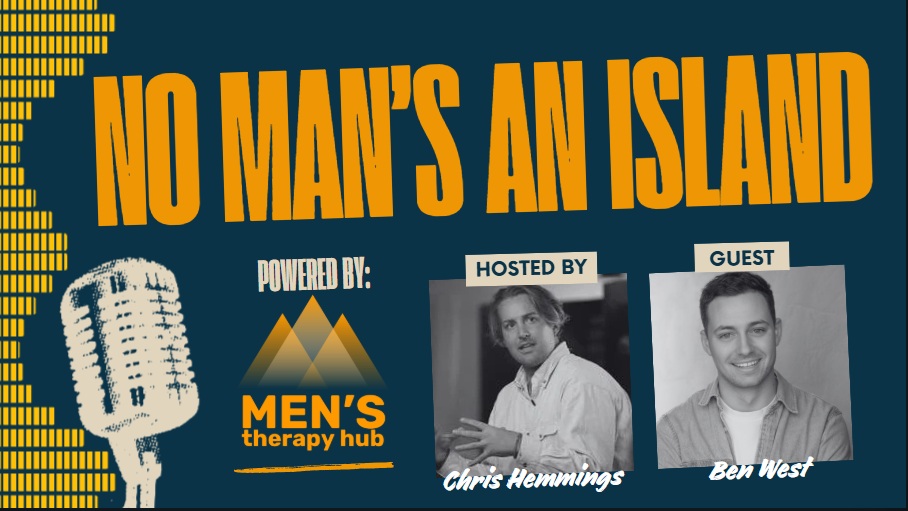
In this powerful episode of No Man’s an Island, Chris Hemmings speaks with Ben West – mental health campaigner, author and government advisor whose work has helped change how the UK approaches suicide prevention and mental health education.
Ben shares his deeply personal story of losing his younger brother Sam to suicide at 15, and how that tragedy reshaped his life. What began as grief became a mission to stop others experiencing the same pain. His petition for mental health training in schools reached over 300,000 signatures and led to meetings with the Prime Minister.
Together, Chris and Ben explore grief, guilt, resilience and hope – and the long road from shock to activism. They discuss therapy, trauma, emotional regulation and the importance of creating safe, informed environments for young people to talk. This conversation reminds us that progress isn’t instant – it’s built through courage, compassion and small consistent steps toward change.
What we cover
- Ben’s story of losing his brother Sam and the impact of grief as a teenager
- How avoidance, numbness and guilt shape early grief responses
- What schools and services missed in supporting Sam’s mental health
- The importance of access, quality and stigma reduction in mental health care
- How activism and campaigning became Ben’s path to healing
- The toll of advocacy work and avoiding burnout
- The real meaning of stoicism and self-awareness for men
- Ben’s reflections on therapy, EMDR and learning to process trauma
- Why he believes change in mental health systems must start with culture and education
Listen and watch
🎧 Listen to all episodes here: No Man’s an Island
🎧 YouTube: Watch on YouTube
🎧 Apple Podcasts: Listen on Apple Podcasts
🎧 Spotify: Listen on Spotify
Takeaways for men
- Avoidance can be a short-term coping strategy, but healing comes from facing feelings safely.
- Therapy isn’t about repeating the story – it’s about changing how your mind and body hold it.
- Resilience means seeking help, not suppressing pain.
- Campaigning, conversation and connection all begin with personal truth.
- You don’t need to change the world to make a difference – one honest act can change someone’s life.
Quotes to share
“Avoidance gave me respite, but healing came when I stopped running from the feelings.” – Ben West
“Sam was the first mental health campaigner in our family. He put up posters so no one felt alone.” – Ben West
“Therapy didn’t erase my memories – it took away the fear around them.” – Ben West
“Progress isn’t about changing everything overnight. It’s about showing up.” – Ben West
Resources and links
Episode credits
Host: Chris Hemmings
Guest: Ben West
Produced by: Men’s Therapy Hub
Music: Raindear
TRANSCRIPT:
Chris (00:00)
to No Man’s an Island, a podcast powered by Men’s Therapy Hub, which is a directory of male therapists for male clients. I’m Chris Hemings and our guest on this episode is Ben West. Ben is a force for change in the… Hi. Ben is a force for change in the mental health space. He’s a campaigner, an author, government advisor, educator. His petition pushing for mental health first aid training for teachers gathered so many signatures over 300,000.
Ben West (00:11)
Hello.
Chris (00:27)
that he ended up meeting the then Prime Minister Boris Johnson to further his work, something we will talk about. His debut book, This Book Could Save Your Life, was published in 2022 and his speaking engagements span youth, education, workplace, mental health, and suicide prevention. Ben, it’s great to have you here. Welcome to the podcast.
Ben West (00:47)
Hello. Now I can say hello. Sorry. I jumped the gun there. That’s a false start. A false start from me. Thanks for having me, Chris.
Chris (00:49)
That’s all right.
So the first question
that we’ve asked every guest who comes on this podcast is what brought you into this work? What brought you into the space that you work in now?
Ben West (01:04)
Yeah, it’s a good question. honestly, if you go back to when this all began, my plan in life was, so I was at school at the time. My plan in life was to go into the armed forces. I was doing physics at A level. was, a place at university to study aerospace engineering. I was going to go to university, study aerospace engineering, get a degree, go to Sandhurst. And then my plan was to join the army air corps and join the armed forces.
So like, was pretty set on it. so clearly the fact that I’m sitting on this podcast and doing the work I’m doing means that that hasn’t quite worked. I don’t fly helicopters, unfortunately, but what happened for me was, as I’m sure what happens to a lot of people that get into this world is there was a very sudden ⁓ introduction to the world of mental health and suicide.
And that came about for me because my younger brother, Sam was diagnosed with depression when he was 15. Um, I was 17 at the time and Sam sort of battled this depression for, for a while. And then very sadly in 2018, uh, January, 2018, uh, Sam took his own life, um, and died at the age of 15. When I was 17 years old, all before my A-levels and his GCSEs. And obviously, you know, like
Like so many people I meet have sort of lost people to suicide and have been there for that moment. And it is truly, truly horrific to be involved in that ⁓ experience of losing someone to suicide. So not only was there this immense grief of suddenly losing my brother, but also the trauma of sort of being in and around that environment when it was happening and just sort of dealing with the emergency responses was just absolutely horrific.
⁓ so I went from really not understanding much about mental health at all to now dedicating my day to day life, trying to improve the mental health system to stop what happened to Sam from happening to other people, because there were lots of things that went wrong with what happened to Sam that don’t need to keep going wrong.
Chris (02:56)
Yeah.
You said that very often people who work in this space have a personal story to tell. And of course that is why we asked that question as the first question, because it’s always fascinating that people have these life-changing events that bring them into this work. When you think back to that time of losing Sam, what stands out to you now as
the way that you coped or didn’t cope, that also, I presume, feeds into the work that you do. Because not only did you lose somebody to suicide, you also had to suddenly reckon with immense grief as a 17 year old. Losing a brother at 17 is, that’s not on the cards, that’s not okay. How did you…
Ben West (04:13)
Yeah.
Chris (04:15)
How do you look back now on how you responded then?
Ben West (04:20)
It’s really interesting because I mean, I’d never lost anything, you know, before that happened. I’d never lost a pet. I’d never lost a grandparent. You know, I’d never come across death or grief ever before. And then suddenly I was exposed to possibly one of the most horrific ways of losing someone and someone that is that you don’t ever expect to lose. So it was really awful. I guess the way I coped was, was interesting because so for me, I was
My initial reaction was to massively enter denial, but also because the emotions were so big, the only way I could cope with it was just pretending that I was okay and numbing that and sort of avoiding them. So I remember that the day after Sam died, was, so Sam died on a Sunday evening. Monday afternoon, I got in my car and I went to school and I just walked into school and I just said, I went up to my group of friends and I basically was just like,
Hi everyone, how you doing? They all knew what happened. The school had told them. So they must’ve looked at me and gone, what are you doing? But I just wanted to get as far away from it as possible. And to be honest with you, I tried to do that for a long time. that’s, sometimes avoidance is seen as a bad thing. And like, look, I’m not a professional, so I’m not going to give advice, but avoidance is often painted this bad thing that people do. And if you do it for long periods of time, like absolutely, you need to sort of…
feel emotions to process them and you have to sort of acknowledge things that have happened. But for me, you know, that was the biggest respite I had because at the time when Sam died, we had police at our house, people coming over to see us as a family. We had all of this grief that was going on and I just wanted to escape it for a second. And that was me getting my head above water for a little bit. And you know, I only lasted about an hour when I went back to school and then it all came crashing down and I ended up…
sitting in my car, just sort of hitting the steering wheel in bits and went home again. it was that my processing, my sort of dealing with this was very much a mix of huge outbursts of very, big emotions followed by quite long periods of just numbness. And it wasn’t intentional numbness. It was very much like a coping mechanism of my brain just went enough. We’re not doing this anymore. We’re just going to be completely numb.
And that was awful because also with suicide particularly, but any grief, there comes ⁓ a nice helping of guilt and not feeling emotions. I know at some points during that process made me feel incredibly guilty because I thought, how can I not feel sad? But it wasn’t that I wasn’t sad. It was just that my brain couldn’t cope with all the sadness. So it gave me some times off.
Chris (07:15)
Yeah, those moments of respite, you we can’t just be swallowed by grief a hundred percent of the time. And so it does make sense. I want to ask about, you said that there was some obvious things that were missed with your brother. And I want to come to that. But before I ask about that, I want to ask when you were grieving, what were some of the things that people said or people did?
Ben West (07:31)
Mm.
Chris (07:45)
that were either extremely helpful, but actually I’m mostly interested in what was extremely unhelpful for you.
Ben West (07:52)
such a good question. So I can think very easily of things that were helpful because my friends were just unbelievably good. They’ve never dealt with anything like this. So I don’t know. I don’t actually understand why they knew what to do so well, but they were amazing. And often that was not what they said. It was what they did. So that Monday evening after Sam died, my friend Izzy was just like, let’s just come and go for, let’s just go for a drive. And then we ended up just sitting in our car, just
I was just crying for ages and I don’t think we said anything. It was just, and that was one of the best, that was one of the best things that anyone did. And then my friends were so good like that. Like they were all just brilliant. Like they just, they just knew instinctively what to do. And I don’t know how they did it in terms of bad things. People said it’s, I don’t think anyone was ill intentioned with anything they said, but one of the things that sticks with me was obviously going through trauma at 17. It’s, you know, sets you up for potentially having some
pretty serious issues, right? ⁓ and developing post-traumatic stress disorder. And at the time I was dealing with acute stress, ⁓ acute stress of having gone through that. I was having flashbacks and having some form of hallucinations and was medicated by the GP for all of that. So I was sort of in my mind, I was, I was quite worried about PTSD and, obviously that’s a horrific debilitating illness that people have. And someone, lot of people at the time were saying,
Ooh, be careful though. Yeah. Make sure you’re, make sure you’re talking because you know, this, this is really serious. What’s happened to you and it can develop into serious problems. And I just thought, you know, I get exactly what people were saying. And I do understand why they saying that, but I was terrified. Firstly, I was really scared of developing like long-term injury from what happens. So trauma, post-traumatic stress disorder, things like that. And so that sort of wasn’t yeah. An emotional injury in terms of like.
Chris (09:48)
emotional injury, you mean?
Ben West (09:52)
know, PTSD was mentioned and it was on when you look at it, when you type in on Google, bereavement by suicide, it is there. It talks about the risk of developing post-traumatic stress disorder. And I’d just been medicated by the GP for this, this ⁓ reaction I’d had. And then I have to be honest with you is, you know, me and Sam, we grew up in the same house. We had the same parents. We went to the same school. We’re brothers. So we share a lot of the same genetics. I’ll be honest with you.
When Sam died and the dust started to settle and I was looking at what was going on, I was really scared that the same was going to happen to me because I couldn’t think of a reason why it happened to him. And I was like, well, if it’s happened to him, why shouldn’t it happen to me? We’re basically, we basically have the same life. So those sorts of things that people were saying, be careful, make sure you talk, but just be careful because this is really serious. It just, it really, really, I was dealing with a lot of fear when Sam died.
for lots of reasons. And that was very difficult to talk to. I guess to sort of not, well, fear of it happening to me, fear of being damaged, fear of, you know, cause I’d just gone through this, you know, I don’t want to go into too much detail, but I, you know, I found Sam along with my mom and did first aid on him for CPR for 20 minutes. So a really, really significant trauma. And, you know, I was really scared that that was going to massively.
Chris (10:53)
Fair of what?
Ben West (11:17)
cause issues for me in the long term. But also I just thought, Sam’s gone from being this really fun boy to now being dead. And I don’t understand how that’s happened. So the only thing I can think of is if that’s happened to Sam, why won’t it happen to me eventually? So yeah, I was sort of scared if the same thing happened and not being able to cope and being unwell. And so what people could have said was, this is really awful. You can come to me to talk.
And just, just held off a little bit with the language around PTSD. There’s a way of sort of describing it to someone. Um, and rather than going, you’ve got to be careful because you could develop PTSD. It’s going, if you need to talk to anyone, or if you’re worried about anything that’s happening or anything feels unusual, just come to talk to me because there are options and there are things we can do to help you get better. And you know, there are people that can help you. And that would have been a better way of basically giving me the option to have that chat. It’s a difficult way. It’s a tight rope to walk for anyone, but.
That was one of the things that I…
Chris (12:16)
Incredibly so.
Yeah, we’re talking about the difference between meeting somebody with like sympathy and fear rather, or meeting them with like empathy and compassion. But you were 17, which meant a lot of your friends were 17 and a lot of his friends were 15. And that’s a lot of people who aren’t very good at this stuff.
Ben West (12:28)
Mm.
Yeah.
No. No.
Chris (12:42)
And I say
that as a 38 year old therapist who’s still learning how to be better at this stuff. I wonder, and I want to ask you one more question about your own experience before we talk about what happened with your brother. And then you’re the oldest brother. And did you feel in any way a sense of duty to not compound the pain that the family was experiencing by being a mess?
Ben West (13:13)
That’s a really good question. So I don’t think so. I never felt like I had to keep it together for everyone else, but I was very, I was, as I’m sure most 17 year olds are, you know, I wasn’t particularly, you know, engaged with my family. Love my family dearly, love them a lot. But you know, at 17 years old, you’re going through that stage of wanting to be independent. You don’t want to be reliant on mom and dad, right?
And so I sort of, felt like, you know, with my grief, I wanted that to be my own thing. And also as everyone who’s been through this knows, grief in families can be incredibly messy because everyone does it differently. So my mum is very open about it and talked about Sam lots. And I remember when she wanted to talk about him a lot from day one and that felt uncomfortable to me because I just wanted to sort of forget and…
distance myself from everything, just give myself some space to breathe. So there was quite a lot of like tension about how we were dealing with it individually. I don’t ever feel like I had to keep it together, to be honest with you. I mean, the only time I felt like I had to keep it together was when Sam died, because obviously my mum was there and she was in absolute bits. And I was like, well, nothing, we’re not going to help if we’re both in shock. So that was, that was a weird experience for me where, you know, I was just, my brain just took the
took the back seat and just, I just went into autopilot mode and I don’t, didn’t feel any emotion, but that, but I think beyond that, like I felt like I was just, I wanted to be independent. I wanted to fix it myself. I wanted to do it with my friends who I sort of, I guess I felt like not closer to than my family, but sort of related to me a little bit better than my family, which I think a lot of teenagers would probably relate to. ⁓ So yeah, but it’s a good question though, because there was
it is difficult being an older brother going through that because you also feel things like, you know, forget a duty afterwards. The duty of what you should have done for Sam was awful. You know, the guilt that I had that he was my younger brother and my older brothers are meant to protect your younger brother. And if someone was bullying Sam, then I should have been there like fighting them or and the same with my other brother, like, and no one, I don’t think anyone bullied Sam, but you know,
there does feel that there should have been a duty that I didn’t perform and obviously that’s wrong that’s not that’s not that’s not how any family works but but that was really awful the guilt and shame of going why wasn’t I why didn’t I say that why didn’t I do more there why didn’t I protect him and all this stuff so it throws up a lot of pretty nasty emotions but afterwards I just wanted to get on with it and push it back in my mind
And I know that in the week after Soundtide, for the first time in my entire life, I sent an email to my teachers at school asking for more work. And that is, if anything is a sign of someone wanting to escape, it is me asking my teachers for work. They must’ve got this email and been like, what is Ben? What has happened to Ben? So, so yeah, that was, that was what I was doing. I just wanted to block it. I wanted to get something else done. I wanted to…
Chris (16:26)
Yeah. Yeah.
Ben West (16:32)
distract my mind and do something else.
Chris (16:36)
I know that place. I was basically dragged off air at the BBC because I was, I’ll do night shift. I’ll do this shift. I’ll do after the death of my dad. Like I’ll do all of these things to the point where I was just a mess on air, forgetting the names of people. And, you know, it’s, it’s a distraction technique, but also I would think, or I would hope at least that now the world would be able to go like, ⁓ Ben is doing this thing. And we.
Ben West (16:46)
Wow.
Yeah, yeah.
Chris (17:03)
I’m to put an arm around his shoulder and say, hey, Ben, we’re not going to send you more work, but we understand why. Maybe, who knows? You talk there about the guilt and you talk there about here’s what I should have done, here’s what I could have done, what did I miss? You say that there are now, years down the line, obvious things that were missed when it comes to what happened with Sam.
The question is twofold. First of all, what are those things? And then second of all, what is it like now to be able to see in hindsight with such clarity, particularly with the research and the understanding and the campaigning that you’ve done to be able to say, ⁓ know, the shitter about hindsight is that it’s so clear to be able to go like, damn, if only, if only, if only. So like, what are those things? And also what’s it like to know those things?
Ben West (17:50)
Yeah.
Good question. So the things that went wrong, as far as I know, and what I’ve seen is, first of all, he was considered low risk by his clinician, which we can get into a whole conversation about how difficult it is to risk assess people, but clearly something went wrong when they’ve got a patient on their books that was considered low risk, he ended up dying, I think a few days after they did that risk assessment. So that was one of the things that went wrong. I mean, his care was pretty…
shocking in terms of what I’ve read and seen. so Sam did talk about what he was going through. He went to the GP, got diagnosed with depression. He got a referral to CAMHS, Child and Adolescent Mental Health Service, ⁓ with the NHS. He also got a private referral. ⁓ obviously we, you know, when someone’s that ill, if you can afford it, you do put them privately. ⁓ so we took, you know, took him to the private, ⁓ provider and
It was very, from what I’ve seen, it was very ⁓ linear in the way they wanted to treat him. instead of going, instead of being curious and going, let’s have a, I’m really interested in the whole picture of what was going on in his life. It was very set on CBT and depressed and treating the depression. was like they were treating the symptom of that, of that depression without ever really considering.
like neurodiversity, because, you know, me and my mom have conversations about this a lot, where we’re pretty convinced that Sam would have probably ⁓ have had autism and been autistic, like pretty convinced. And, but there was never any consideration of that by, by his provider. And that was, and I think that was one of the things that was missed. was just treating him as a whole individual, not just as someone that has depression. I guess it’s a bit like having someone with a broken leg coming into hospital and just giving them painkillers to get better rather than going.
Let’s actually look a bit deeper at what we might be able to do as a holistic sort of measure. ⁓ so that was one thing. The risk assessment was another. And then to be honest with you, there was just a culture where people didn’t talk and he felt so weird and strange and abnormal for having depression. He didn’t, he didn’t feel like he fitted in. He didn’t feel like he could talk about it. He didn’t want people to know about it. ⁓ and that almost certainly
drove his feelings underground and suppressed it and made him feel and made him feel that his depression wasn’t something he was dealing with, but it was something wrong with him. And that obviously must have made everything much, much worse. So another thing is how do we improve culture in schools? How do we improve breadth of training in schools? How do we, you know, give people the environment that gives them the best possible opportunity to see things that are going wrong?
as something that’s happening to them, not something that they’ve done wrong. And that’s not easy, but it comes through culture change and reducing stigma and improving education and understanding of these things. So it was really for him, it was about stigma, access to support and quality of support. And that’s the three things that really went wrong. In terms of how it feels to know those things that went wrong, obviously there’s frustration because
Chris (21:04)
Mm.
Ben West (21:22)
There were little things that could, you could have been different. That could have changed the outcome. But then again, I, you know, I’m, I’m my brain is, I, you know, I went to uni to do engineering. Like I have an engineering brain and I like fixing things. And what is really good about knowing that small things made a big impact is knowing that small things are also easy to fix. Like it’s not some mysterious thing that happened. We know roughly what went wrong. So then it becomes a little bit easier to actually go.
Okay, so this is quite simple to fix then we just need to do these things differently. So actually, from that point of view, I actually would say I’m quite excited, because, you know, we talk about the mental health crisis as being something that’s really complex. And actually, when it comes down to it in simple terms, it is fairly, fairly simple, the the sort of macro changes that need to happen, the large scale changes, they’re not particularly complex.
We need to reduce stigma, talk more. We need to provide better access to services. We need to improve the quality of those services. It’s like, that’s not rocket science. And so it’s, it’s that excites me slightly. And from a campaigning point of view and a policy development point of view, it makes the job easier to know what we’re actually trying to solve. And obviously it’s frustrating, but then again, if it’s, if it’s simple things went wrong,
Chris (22:31)
Hmm.
Ben West (22:49)
it is quite simple to fix simple things. So we’ve got to try and do that for the next person because obviously since Sam died, thousands and thousands, tens of thousands of people have also died from suicide. And we just desperately need something to change now in one of those three areas that I’m focusing on.
Chris (23:09)
What was it that one day, and maybe it was a momentary thing, maybe it was a gradual thing, that one day you said, do you know what? I have to go and do this myself. Because you could have grieved privately, you could have run a marathon for Andy’s Man Club or one of these amazing charities. You could have done that and then quietly continued your life, as many do.
zero slight on people who do that. But for you, something in you said, no, I not only want to do more, I can do more. What happened?
Ben West (23:41)
No, yeah.
So I was at school when Sounder, I really genuinely think it was, I mean obviously it was awful to be so young and to go through this, but I was so lucky to be at school and at a school I liked with people I liked. I think part of the reason I’ve ended up doing this is because very early on I got given a platform to…
sort of start doing this. Very soon after Sam died, we did a memorial service at school and the school asked me if I’d like to speak. And when I did speak, I focus a lot on this isn’t right. We need to do better for each other. We need to talk more about this stuff. And that was received so well. And I was so supported by my friends and the people in my year group. And actually people just generally in the school.
that I sort of just found my place as this sort of spokesperson for this work that needed to be done locally. And so obviously you come off that and you have a bit of a buzz, right? People are validating what you’ve said. And so then you sort of go, well, how do we, what’s next? Like if people agree with me saying that things need to change, what actually needs to change? And so then me and my friends developed an idea to do a charity walk, not necessarily…
to raise money, but actually to get people walking so we can talk. And we called it wall to talk. And we did that and that worked really well. And we fostered conversations between people who had never really spoken about their mental health and created those bonds. And it was brilliant. It was amazing to see. And it was on that walk that you start also talking about your ideas for change and things that need to be different in the country that might help. And then you sort of feel, just felt that empowerment to go, well, why don’t we just do that?
And so we started a petition to make mental health part of teacher training at the end of that walk. And it’s honestly, my journey into this world has just been like, been support that has driven me to feel confident that I have a voice at creating change for those issues. And it’s been a sort of revolving door of that same experience over and over again. I say something, people agree. It empowers me to say more.
We have an idea, people support it. I say something, people agree, empowers me to say more. And it’s genuine. It’s just been that cycle for the last seven years. I’m so lucky that I’ve had that. really am because I’ve also seen without that, because this has been without a doubt, the most important part of my recovery. just, I would not be where I am today without having this idea of, I’ve done something about it and that feels so lovely. but
I know that other people, like when I went to Union, I had extraordinarily easy access to drugs and alcohol. And there were moments where I probably stepped a little bit too far over that line that I really like looking back. And I know how easy it would have been for me to have developed unhealthy coping mechanisms. And really the difference between me developing this whole healthy coping mechanism, which is campaigning, and me developing an unhealthy coping mechanism.
alcohol and drugs is just luck. I mean, it is just luck. It’s luck that I had the support around me that gave me this journey. That’s all it is. And that’s why I find really interesting when I’m like, and this isn’t going to sound like I’m blowing my own trumpet, but I’m not. When I’m receiving an award for my work and people are clapping me or I’m sitting on a podcast like I am now, like it’s so interesting because people celebrate me, but it’s not been about me at all. It’s been about the people around me that have given me the
empowerment to go and do this work and if it hadn’t have been for that I absolutely would have been developing some really really bad coping mechanisms so that’s my that’s my interpretation of what’s happened.
Chris (27:49)
Is it just luck? And I hate to be a therapist sometimes, but is it also the family network and the support that you’ve received? Because without that, if you had fallen into isolation through this, perhaps the drugs and the alcohol could have taken hold. Because for me, and I’ve spoken about this previously after the death of my dad and my cocaine use, it was two of my boys coming to me and saying like, hey man, stop.
Ben West (28:19)
Hmm.
Chris (28:19)
I’m not alone
in this, okay. If I didn’t have them, who knows where I’d have ended up, you know? So I understand its look and its genetic look, a lack of predisposition ⁓ for addiction perhaps, but also a solid familial and secure friend grounding has really helped you by the sounds of
Ben West (28:41)
I, I a hundred percent agree. And when I say luck, what I mean is I’m lucky to have those, those supports. So, you know, I know that, you know, that’s what, in terms of luck, just feel looking back now, I just feel so incredibly lucky that I had such a good group of friends and a good solid family life. Um, and, and that’s, so that’s what I mean by luck. And, and it’s not really luck because those are, those are relationships that, that they’ve done, you know, those people around me have been so incredible.
Chris (28:47)
Yeah, okay.
Ben West (29:09)
but it feels like luck to me because I obviously naturally in my work, get to meet so many people that have really awful experiences and you see what’s happened to them and they don’t necessarily have those incredible supports around them. And that’s what I mean is that I feel very lucky to have had that. And that’s what’s made me able to do the work I do now. And then it always feels a little bit funny being celebrated because I want to drag all of those people on stage and…
I can go down into the stat, into the audience and sort of clap them because they’ve done just incredible work to, to turn it around for me and give me the opportunity to do this. So that’s what it is. I’ve run with it and done my own thing, but they gave me the opportunity to, and they still do. Like I, you know, it’s still difficult. Like you don’t just suddenly wake up one day and it’s all, it’s all fine. And butterflies and rainbows, it’s definitely not. But, um, you know, those supports are so, I mean, it’s the most important part of my life is the friends and family I have around me. Like without a
Singled out.
Chris (30:09)
Yeah, I imagine one of those Oscar speeches where you’re thanking people and having to drag you off stage because the list is a thousand people long. ⁓ And I forgot on this person and this person and my God, this person, yeah. ⁓ You’re talking about awards and you’re talking about the validation that you get from it. I don’t know you, but I’m going to presume that that isn’t what keeps you motivated because working in…
Ben West (30:12)
Yeah, it would be.
No.
Chris (30:36)
the mental health space, working in advocacy, ⁓ being an activist, fucking tiring. For you, yeah, for you, does it sometimes feel like you’re banging your head against a wall? Does it feel like you’re saying the same thing over and over and over over over again? And you know that you have to, because otherwise people aren’t gonna listen. If you say it once, it’s like, yeah, nice idea, but gone.
Ben West (30:44)
yeah, horrific.
Chris (31:05)
So what has been your experience of moving into the advocacy space and what is it that keeps you motivated to keep going when sometimes people in your position, you can feel tokenized, right? It’s like, the mental health guy is here. So we’ve done something for mental health today. Like, no, you haven’t. You’ve just listened to me and gone cool. And then you’ve walked back to your house and done nothing about it.
Ben West (31:33)
You’re so right. So it’s, it’s a really, and this is what people don’t necessarily see about all of this is that most, most of the time it’s banging your head against the wall. It’s not being paid to do much. I mean, 90 % of my work is unpaid. You know, it’s, it’s a, it’s a really difficult choice to make because it is difficult. And, and I would, I would be having such a better time achieving things and getting stuff done.
and being paid a lot more for it if I’d just gone into engineering or the army. So it is, you know, I mean, it’s, it’s a really, really difficult thing to place to be. What I would say is what keeps me going in this isn’t necessarily, I mean, obviously getting stuff done and changing things is massively important. It’s my driver, but one of the things that’s really important and it’s something I’ve been thinking a lot about recently is out of the two of us, Sam was the first to be a mental health campaigner. Um, actually said this yesterday in a speech, but
Yeah, Sam was the first to be a mental health campaigner. He started putting posters up around school when he was ill, with sort of describing depression and talking about what anxiety was. And that was all for him to try and, he was trying to sort of change what people thought about these illnesses and he was putting them up. I didn’t know this at the time. I didn’t even know it was him. And then he died and the posters stopped. And then we found out that he had been going around after school and everyone had gone home putting these posters up.
because he wanted people to know more, but also he wanted other people that were struggling with these things to know that they weren’t alone and someone else was trying to change it so that these people in school could see these things on the walls. That was never going to change the world. Like it was never going to revolutionize mental health care or change the mental health crisis. But what it did do was show someone that they weren’t alone. And I think in this world, we get so caught up in
trying to achieve like really large scale change that we forget about the impact it makes on an individual level. And so something I’ve really tried to make an effort of recently is forgetting about the token, tokenistic talks you get invited to. It’s forgetting about how long it takes to get stuff done. mean, it took me seven years to get the department for education to add two words to the initial teacher training framework. It takes a long time to get this stuff done. And what I try and think of now is that it’s not about what change you can do.
It is what other people see you try and do. And the impact that someone just putting their head up and saying something they believe in, the impact that has on other people is enormous. And like Sam putting posters up around school, like if you can just demonstrate that they on someone is not alone and someone else is trying to do something about it, that can give so much hope to someone else. And I speak to so many people at the moment who have absolutely no hope for anything improving. And if I can be the person,
that’s on the news or on a podcast or on social media saying, hey, we should all sign this petition because this is not right. And I’ve got a meeting in Department of Education. We’re going to change education. We’re going to change health so that people don’t get hurt in these places. Then that can give some individuals so much hope that things might just get better. And so I’ve been really consciously thinking recently about just letting go of the big change and focusing on just showing up.
And being in those spaces, even when it feels tokenistic and just saying what I want to say and saying what I believe in and just understanding that that makes a difference on an individual level. And it doesn’t, it’s not all about the national difference. It’s not all about the, you know, changing the world. is just about showing up and showing other people that someone is doing something about it. And so that’s what keeps me going is just, you know, the idea that there’s a 15 year old boy scrolling for Instagram one day and sees my stuff and goes.
That’s really cool. ⁓ That’s what keeps me going.
Chris (35:28)
I wonder if I can challenge you then, because you’re saying that the stuff that Sam was doing with those posters wasn’t changing the world. I just moved my class, that changed the world, right? Like on a very, very micro level, what he was doing, and I’m blown away by the courage it would have taken him to do that. Like that’s incredible. And you don’t know who in that school read those posters and felt seen for a moment.
Ben West (35:38)
Yeah, yeah, yeah.
Yeah, I know.
Chris (35:56)
that changes the world. Like what you’re saying is we’re not going to, that didn’t save the world. That didn’t change the entire landscape of mental health advocacy in the UK, but for a brief moment in somebody’s life, we could make an impact. And I think it’s something that is already somehow becoming a regular topic on this podcast of, and it was still, we’re still in the first week of putting it out. Like I’m recording this on the Friday and there’s been five episodes gone out this week. Crazy.
Ben West (35:59)
100 %
you
Chris (36:27)
But this idea of success, I think if people who do the work like you do are too focused on, if I’m not toppling regimes and bringing the suicide rate down to zero, then I’m a failure. Well, no, we are a success if we define it by, actually, do you know what? I did a talk and then one kid came up to me afterwards and said, thank you.
that we’d change their perception on something or we’d help them to feel seen for a moment. Otherwise, you’re gonna burn out, dude. You are gonna be completely fucked. And I really don’t want you to be completely burnt out because we need voices like yours, who by the way, you’re much better at cutting through and doing the social media stuff than I ever will be. So I’m glad that you are seeing it that way because otherwise you’re just gonna get disheartened.
Ben West (37:01)
Yeah, yeah.
Yeah.
Yeah. And you’re so right because it’s, it, you know, those small things that we do, would just like, even just asking someone if they’re okay or telling your story in front of a room of people, you know, it doesn’t feel like it’s changing the world, but like you say, absolutely is because it is having an impact. So, ⁓ so that’s what I try and do because, but, also I, it’s a battle that I have internally is that I also just want to get stuff done. And I get really frustrated by these systems that just take an age to change.
So I’m working for the NHS and I absolutely love my team in my job with the NHS. But trying to change the NHS is a really, really, really, really, really, really difficult thing and far, far more difficult than anyone that hasn’t worked in the NHS will ever understand. But it’s about showing up with the right ideas, with the right people, putting the right work in and who knows, right? We could change what happens in, because with my work, I’m not really.
too concerned about what happens in the next five to 10 years. I know this change is going to take such a long time. So my timeline for all of this is I would love for all of this to look very, very different in 50 years time. And that might feel like a really long, long time. But I think with how massive these systems are, it’s going to take us a long time to change it. So that minimizes what we have to do in the moment. So what can I do today?
that in 50 years time is going to make an impact. Like what are those small edits that we can make in history that are going to really matter in 50 years time? And at the moment for me, that is really stripping stuff back and going, you know, we need to educate our teachers better. We need to trust our teachers with more ⁓ information and knowledge and training so that we can start to change culture in school. And if we can change culture in school, then actually children are going to be more likely to attend school and more likely talk to their teacher about issues.
And then if we pair that with reform in the NHS and we have NHS teams that are centred around schools and we improve that transition between education and healthcare, then actually we can create really good pathways where a child can talk to their teacher and actually get seen by someone of high quality very, very quickly. And then if that works and we also increase our research budget and we research mental health and we understand treatments and we understand medication, we understand what we can be doing for people and that’s paired with access.
That’s really great. So I think in 50 years time, if we can get these small things right now, we could be in such a good place. Like we could be doing so, well, but it’s about trying to just slowly nudge that towards where we’re going. ⁓ and that’s, that’s my goal as a campaigner really. And I have to say that because otherwise if I’m thinking in five years time, we have to get this done. Of course I’ll burn out. You can’t, you can’t get that change on that scale done in five years.
Chris (40:15)
Yeah.
I take a huge amount of inspiration from the women’s movement. I, there was a report out recently that highlighted that 16 to 25 year old women are now out earning 16 to 25 year old boys. And whether that’s something to celebrate or just accept or whatever is not relevant really. It’s important information to have. But I think, imagine telling the suffragettes.
that a hundred or so years later, young women would be out earning young men. Like, I’m not suggesting that we go around blowing things up. ⁓ I understand why they did that.
But these things take a hell of a long time. And in the men’s movement, I find myself regularly reminding, why are men still violent? It’s like, we’ve been talking about this for 20 minutes in the big clock of human time. We have to have patience with this stuff. For you, where do you get your inspiration to wake up in the morning and go,
⁓ All right, back on the radio to say the same thing back on this podcast today and tell the same damn story over and over again, because you know that it’s going to benefit somebody listening. Where do you get your inspiration from?
Ben West (41:47)
I don’t always have inspiration to do it. I’ll be honest with you. I have, I’m completely honest. There are so many times where I’ve got to do something where I’m like, why did I say not this podcast, just a caveat. I was, I was looking forward to this podcast because I’ve been doing emails all morning. I was like, I just want to go and chat to someone. But sometimes you’re like, oh, why am I doing this? Because it is just clearly tokenistic and I’m just, I’ve got so much to do. I take a lot of inspiration from
other people who show up in this, you, this podcast, what you’re trying to do, you know, this, these people that do so much and pour so much of themselves into this world. That gives me inspiration because it also makes me feel like I’m part of a team. Like we all, we’re, we’re not gonna know each other, but we’re all doing the same sort of work. So it feels like I’m part of a team. I also get a lot of inspiration from.
To be honest with you from the validation that you get when you make a difference. obviously achieving national change is huge. If you know you can do it, you’ll keep doing it. But also on an individual level, I just think one of the most incredible things to be told is that you’ve made a difference in someone’s life. Particularly from me, where this all started because I just wanted to stop what happened to Sam from happening to anyone else again. And so when I’ve had people message me or come up to me at an event,
and ⁓ it’s even it makes me emotional now thinking about it and stem saying like we read your book for instance and i gave it to my son and we’ve had a conversation about his mental health for the first time ever and actually we didn’t know how bad it was and he’s now gone on to get therapy and i’m like that is so incredible like and it’s and i’m so fortunate that happens quite a lot ⁓ that people say that and it’s just like
Chris (43:32)
Yes. Yeah.
Ben West (43:40)
And it comes from the most random thing. It genuinely will come from those. I’ll say yes to this random thing that I really usually wouldn’t have said yes to. And then a few weeks later, someone message going, I saw what you did with this. I just want to say this massively changed my mindset about this and I’ve gone to do this so-and-so. so I’m like, wow, that’s so amazing. And I’ve been involved in some really, really incredible moments. ⁓ and when, when my job at the start of this was to help one person, like I know that
I’ve helped far, far more than that in some way. So yeah, that inspiration keeps me going. Those are sort of blips of inspiration though. mean, I do, I don’t always feel inspired to do this work, but when something like that happens, wow, I’m just on another level. If someone has just told me that there is nothing that anyone can say that would bring me down and would stop me doing work, I’m on my laptop.
And I’m sending emails to MPs and I am doing stuff that I usually put off because I just feel like we, I, this is, am absolutely the right person for doing this and we’re going to do, we’re going to do so much. So those, that gives me a lot of inspiration. ⁓ and also other campaigners in this space and other spaces. I do quite a lot of work with, ⁓ campaigners in the climate, ⁓ space and I’m quite close to a lot of them. know, you know, you’d rarely meet people as tenacious as.
Chris (44:50)
Hmm.
Ben West (45:03)
climate change activists. are, they are otherworldly, like they are very committed to their cause. It’s quite, you know, it’s quite remarkable, some of them, how much they dedicate to that. So, you know, I’m very close with, with quite a few of them and they are just pretty, pretty incredible people, some of them.
Chris (45:05)
Thank
Yeah, well, I guess they have to be given the climate. Sorry, that was a bad pun, but yeah. You talk there about…
Ben West (45:26)
Yeah. Yeah.
Chris (45:34)
Inspiring somebody to go to therapy. This is a men’s therapy her podcast Well, it’s no man’s an island, but it’s powered by men’s therapy up and I do want to ask people this question Have you been to therapy?
Ben West (45:46)
Yes, I love therapy. It’s one of the best things I’ve ever did.
Chris (45:47)
Yeah. Okay.
What was it like for you as a man to go into that space for the first time? What was the process like for you to find a therapist, be in therapy and start to open up?
Ben West (46:05)
So I was I was reluctant to go to therapy because I didn’t understand how it worked. So I think from my from my perspective as a man, I’ve always been very, I want control. So I’ll only do something if I understand what’s gonna happen and I wanna understand what’s happening and why it’s happening. And obviously with therapy, it feels a bit weird weird and how is that actually helping?
especially because it’s in your brain. Like how is me saying something to you and you listening actually changing anything? That’s what I thought going into it. And actually when I had my first therapy session with the therapist I spent a long time working with, my first, when we sort of did hello and the sort of usual stuff and then she was like, do you have any questions for me? And I was like, how does it work? Cause to be honest with you, it just seems a bit magic and that’s not going to cut it with me. I need to have a bit of…
more of an understanding of, of therapy, of like how this works and just thinking of it as like some magical conversation. So, ⁓ so she walked through some of the research and like the practical side of it and, and brought me into it and just went, you know, that’s what happens. Would you like to give it a go and see how it turns out? And there’s no pressure. Like we can stop whenever and we can have a conversation about, you know, whether it’s working or not at any point, but let’s just give it a go and see, right? What harm is that going to, what it going to do?
⁓ and then you sort of get into it and you start having, you start building a relationship with that person and you start really feeling safe with them and connected with them and actually really liking them. Like I liked my therapist. She was a lot of fun. We had a lot of fun in some of these sessions and it was quite funny. ⁓ and then you build that trust and eventually you just look back and you go, I’m not as scared of that thought as I was a few months ago. Like I can think about what happened now and not.
tense up and feel scared. And that’s amazing because that is a physical difference I can feel between and it’s really hard to pinpoint where that happened, but it did happen. And now I can sit here and talk about Sam and talk about and think about what happened. And there isn’t that fear that I did have when I went into therapy. So it worked for me and was amazing. but from my point of view as a man, particularly as a man, I just couldn’t do it without understanding what he was doing.
because I just didn’t see the point of without understanding like the mechanics of like, what are you doing? What are you going to do to me? And once I once I got the opportunity to just like try it out, see how it goes, that brought me in.
Chris (48:33)
Did you have preconceptions or did you literally have no idea at all?
Ben West (48:39)
I had so many preconceptions because I just thought you’re going to sit there. Well, actually, this is quite funny. I thought that a therapist job is, this is true, this is genuine. I thought that your job is to not to actually actively not say anything. So you just as a person that you talk at. So that’s what I thought was gonna happen. So I was really shocked when she answered a question because I was like,
I thought therapists just sit there and be a person that you can talk to and they don’t say anything. So that was the first misconception. So I was just expecting her to sit there and not say anything. But also a big one for me was I started going to therapy during lockdown. So it was all online. So it was a very different experience. And I have to say, I loved the fact that it was online because I used to just…
get out of house and I drive somewhere, park on a quiet road and just do a therapy session in my car because that felt like a safe space for me in my car. So that really helped me. So the fact that it was virtual was actually really, really helpful. But yeah, I was so shocked that she said things because I didn’t know that’s how it worked at all. ⁓ But yeah, was, there were loads of other misconceptions about, you know, a lot of what you think therapy is going to be like, which is…
And how does that make you feel? It’s not, it’s just, it’s just, it’s not about that. And also, you know, I didn’t think that I was going to build much relationship with this person. I always thought it was going to feel very one-sided. No, like we had such a laugh. We got on so, so well. And I think that really helped build that opportunity to get in some really awful stuff because I just really liked the person on the other side of the phone.
Chris (50:30)
And that’s the change in the therapeutic world away from the kind of classic, what would be called psychodynamic, which is the Freudian model of being completely blank screen. And you can project all of yourself onto me. And I’m not going to tell you anything about myself to a much more relational style of, no, no, we’re two humans in this room together. And like, hi, fellow human. I have some understanding and knowledge of how to help you work through your stuff.
Ben West (50:39)
Yeah.
Chris (50:59)
You’re still the expert on yourself, but I’m the one with the training. So I’m going to also need to tell you some stuff, you know? And I think that’s one of the biggest frustrations is why I want to ask this question because to those that haven’t been to therapy as well, like what is it that puts you off? And I’m going to make ⁓ an educated guess here that that belief structure that you had about therapy of, well, I just didn’t know what it was first of all.
And what I did think was I was just gonna be forced to do all the work myself. And particularly for men, when we don’t have the emotional toolbox is the language that I use, just sit there and start to feel ashamed of the fact that we can’t do it. So I’m really glad that you had a positive experience. And I’m glad that we get to sit here and talk about the fact that therapy worked for you, even though you were terrified of it to begin with, because so was I, Ben. I didn’t wanna go to begin with.
Ben West (51:53)
Yeah.
Chris (51:59)
It was, what? I have to sit in a room with someone and just talk about my feelings? Like what feelings? I don’t have feelings, what you’re talking about. I’m fine, you know? So I’m glad that you had a positive experience. Go on.
Ben West (52:08)
Hmm.
And also.
And I’m glad you did as well because, you know, it’s, it’s, and then we’ve gone and done with it, which is this, also, you know, becoming one yourself. It’s amazing. I, I also, one of the things I thought with, especially with trauma, like a lot of people won’t go and seek help for trauma because, and I, my opinion was, why would I want to sit in a room and just repeat what I’ve said to the police? Like I, and I said this to someone, I was offered therapy really early on. I think it was by my school or something. And I would just replied, I was just like,
I’ve like, why would I want to just do my police statement again? Because that’s essentially what I thought it was going to be. I was going to sit there and tell them what happened. And then they were going to go, brilliant. Well done for that. It’s been a good session. And that’s just, I just didn’t see the point. And obviously with trauma. So I went for a course of EMDR therapy, which, ⁓ for me was, was great. I really, I really liked it. and, and that, again, the mechanics of that. ⁓
take some understanding and some trust that they do work. Because it does feel a bit weird when you’re doing it. But I just loved it. And it’s not like repeating the ⁓ police statement because you’re not focusing on what happened. You’re focusing on how that thing is interpreted by your own brain. You’re focusing on the effect it had on you. So it’s not just me telling the story of what happened that night. It’s me telling that story.
and then sort of understanding what impact that had on me and how it felt in the moment and really sitting with some really awful feelings, understanding it and then process by doing that processing and taking some of the fear around that situation out. So it wasn’t just sitting there going, because I imagine so many men, especially that because we know that a lot of men that experienced trauma don’t ever seek support for it. A lot of men that have experienced trauma probably think of therapy as just someone going, tell me what happened. But that’s not
from my experience at all, it’s not what happens and that’s not actually where the benefit of it is. It’s starting to take a little bit of the fear. And that’s the only way I can describe what happened to me in therapy was it just took the fear away from those memories. I’m not scared of them anymore. And, you know, I was pretty scared of them. Like I would have a fight flight response whenever I, whenever it was mentioned or talked about and I could feel my stomach tense when, when that topic came up or
or obviously, know, suicide in films or TV, whenever that came on screen, I’d go into full shock, stress mode. And now, I don’t feel that at all. So it does work.
Chris (54:44)
And as you move ahead in your life and inevitable painful, challenging, grief-filled experiences will occur, how do you, or maybe you’ve had some experiences since already, but how do you imagine that you will deal with those in an entirely different way than you did when you were 17?
Ben West (55:04)
have a lot more compassion for myself because I know that I know that I am very resilient as a person so I can put up with a lot without breaking but I also know that you know that is not just me blocking out things and avoiding things that is me I’m resilient because I’m really good at sort of having something bad happen and then dealing with it and going and seeking support and so I’ve got a like and
know, with therapy, I’d be if something bad happened to me now, I’d be straight back. I’d be straight back being like, Hi, me again. I have, I have some bad news. I am back again. But I’d be I’d be there in a heartbeat. And also, I just think one of the things I’ve learned to do through therapy was be better at identifying feelings. So I was, know, without going I was I was very, very quick to go to go like
I’m feeling sad or just I don’t feel right. And that was where it ended. That was where my understanding ended. And as you sort of learn about feelings and learn about what different feelings feel like and where they sit. And so for me, it’s my hands, funny enough, like that’s where a lot of my feelings go. So I get like tingling fingers. It’s really weird. So I can sort of start to just have a bit of a deeper understanding about how I deal with bad things. And you can then start understanding like
you know, rejection, for instance, and that this isn’t like major rejection. This is like micro rejections. I don’t take it very well. Like I’m really bad with rejection and without understanding it, I then become like annoyed and frustrated and angry. And I probably become quite snappy with people, but the more you understand, the more you can start to go, that’s happened. I can expect how I’m now going to respond to that. So how can I take steps now? Mitigate that response and make myself feel better. Usually that’s communication with the person that you feel.
has rejected you in some way, or it’s just doing some self care. Like for me, that’s running. I absolutely love running and sort of getting that sort of stuff off your mind and transferring some of that through self care or, you know, doing things that are nice for you or thinking about those experiences. And I find that that stops the whole response starting. So it’s just, from my point of view, it’s always just been about understanding. Like it’s given me so much more understanding about who I am and how I work. And that’s been so useful.
Chris (57:29)
to ensure that Future Ben has even better coping strategies in place so that trauma doesn’t take hold in the way that it can do when we have maladaptive coping strategies at the time.
Ben West (57:46)
Yes, 100 % because it puts you in the driving seat, not trauma. You don’t control when it happens. Sometimes things just trigger you, but you can get a little bit more control about how those feelings feel and how long they last and how much control they have over you. And that’s the biggest thing. I feel like I’m the driver of my own life now, rather than being gripped by difficult things that happen.
Chris (58:15)
And what we’re talking about there is Stoicism. And I use that term correctly because actually, culturally, we have completely bastardized the concept of Stoicism. And we have this idea of Stoicism of being like, well, no, I am just po-faced in the face of danger. I am able to suppress my feelings and get on with my day. can compartmentalize this. will actually, true Stoicism, what the Stoics taught was get to know your emotions, get to know.
Ben West (58:27)
Yeah.
Chris (58:44)
your triggers, it gets you know your responses. So then when you do have powerful waves of emotion, you can go, this is happening and I know why this is happening. And so therefore I don’t need to respond in the way that I have done previously. Instead, I can choose to respond in this way. And that is power. And so actually I would advise men to yes, be stoic, but before you say that, go and learn what stoicism is because it isn’t the thing that you think it is.
Ben West (58:59)
Yeah.
Chris (59:12)
⁓ and, and that is a really powerful skill that you are developing and it’s really cool. So well done for doing that. I’m going to let you go, but before you go, I’m going to ask you the question that we finished with everybody. Now I know a lot of podcasts will send, ⁓ their guests some questions beforehand, but I’m not down for that. So I like to put people on the spot with this. I’m going to give you the keys to the vault and you are going to have an unlimited amount of money.
Ben West (59:19)
Thank you.
Yeah.
Chris (59:42)
And with that, you get to make a change to the world to impact something that is dear to you in, I’m assuming, the mental health space. So you can’t just give it to your favorite sports team, for example, so they win everything.
Ben West (59:42)
Okay.
Okay. Yeah.
Chris (1:00:03)
What are you gonna do with it and how are you gonna do it?
Ben West (1:00:08)
That’s such a difficult question because I have a lot that I would like to spend that money on. I think the thing is no one change is going to solve everything. ⁓ You could put the money into the NHS and make quality of care better, but actually we know that a large number of people, clinical support is not what they need. It’s environmental changes in their life. If I could choose one thing I think would have the most impact.
I think it would have to be around ⁓ quality in terms of poverty and social mobility and the impact that has. Because if we can solve the quality of people’s lives and we can take a lot of the stress around what people are dealing with, usually through finance or those sorts of issues, we take a large step towards solving a lot of those problems. So what would I do?
Wow, that’s a really difficult question. would probably start to reform. Well, firstly, the housing situation and the sort of, you know, what people have access to in terms of housing and, and give them the environment to be able to be socially mobile is, is ⁓ such a driver of poor mental health. because if we reduce, and if we reduce the demand on the health service by people who are made ill by the environments they live in.
we actually then provide healthcare service that can then just get on with dealing with the clinical cases. And that’s not to say those people don’t deserve support. It just means we are giving them the support they actually need rather than putting them in the NHS, which is helpful maybe, but not maybe the biggest change that we can be made. So I’d use the money to give people the opportunity to not have to worry about their life, their quality of life.
shouldn’t have to worry about bills and heating and food and water and all the things that should be a human right. Give people safe housing, foster a sense of community in communities. So I’d bring back youth clubs and youth centers. I’d get, I’d, I’d, you know what I’d do? I’d make a ban on any sign that says no ball games. But you, when you drive through London, where I live, where you live, you go past so many like estates.
Chris (1:02:21)
Haha, yes!
Ben West (1:02:27)
And in the middle of the estate, there is a sign that says no ball games. I’d ban them. Like the first day of office, I’d get rid of every single sign in the country that says no ball games. You bring back youth centers, foster communities like Andy’s Man Club so that we have more of those communities around the country and that they’re sustainable and can keep growing. So we’re basically giving people the environments to be happy. That’s all it is. It’s just the environments to be happy and safe.
And then the NHS obviously can deal with what they’re really good at dealing with, which is the really significant clinical cases ⁓ that aren’t necessarily environmentally driven. So yeah, that’s quite a long answer for a question you wanted a simple answer to, but yeah, is. Yeah. Okay. I’ll just go no ballgames then. Yeah.
Chris (1:03:11)
It’s a greedy answer too, because I said one thing and there was about nine answers there, but I like it. That’s your inner campaigner. Yeah. That’s your inner campaigner
saying one thing. No, no, no, no, no. So yeah, thank you. And I totally agree on the no ball games thing. When I was a BBC journalist, I tried to do a freedom of information request to all the councils to see how many no ball games signs there were, but they didn’t have the data because I hated them when I was a kid.
Ben West (1:03:22)
No, no, no, I’ll there.
Yeah. Yeah.
Chris (1:03:38)
Thank you for coming on, Ben. Thank you for the work that you’re doing and for being so open and vulnerable and honest, because I think the more that we can do that as men, we’re modeling it to the future men. So well done for that. Where can people find you? What would you like them to do in order to join your campaign or help you out?
Ben West (1:03:52)
Thank you.
Yeah, you can find me online. I’m, ⁓ I am Ben West on Instagram and all those, all those places. ⁓ if you want to help out, be honest with you, ⁓ follow and like my stuff and engage with what I’m doing, what I’m doing. And, and usually if there’s something that people can sign or share or write to their MP about, I’ll pop it on online. So, ⁓ just worth, if you can just give me a little cheeky follow on there and come along for the, come along for the ride. Join our team.
Chris (1:04:27)
Nice one. Thanks very much, Ben. Really great to have you here and thanks for giving up your valuable time.
Ben West (1:04:32)
Thanks so much, Chris. Thank you.