What We Get Wrong and How We Prevent It with Dr Luke Sullivan
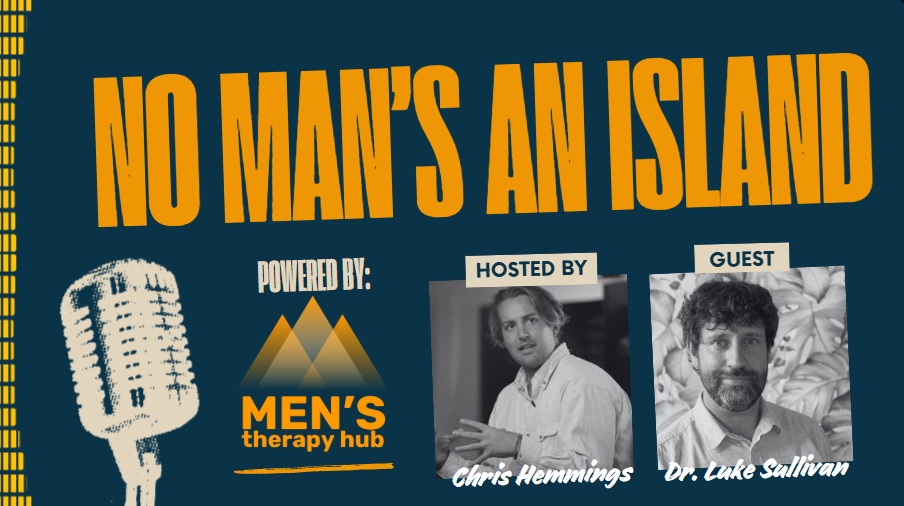
Welcome to episode five of No Man’s an Island, powered by Men’s Therapy Hub. To round off our public launch week we sit down with Dr Luke Sullivan, co‑director of Men’s Minds Matter and a clinical psychologist with deep frontline experience in crisis intervention. Luke has spent two decades working across inpatient and crisis resolution home treatment teams, developing a structured model for suicidal crises that meets people where they are. We talk about what actually helps men during acute distress, why many view suicide as a life problem rather than a medical one, and how services can earn men’s trust through clear action, structure and urgency. We also explore male loneliness as emotional isolation, the role of emotions as guides rather than enemies, and how to make therapy feel purposeful for men. If you want a practical, compassionate take on reducing male suicide and engaging men sooner, this conversation is for you.
What we cover
- How Luke’s early life and NHS work shaped his focus on suicide prevention
- Why many men experience suicidality as a life problem and what that means for support
- Men’s Minds Matter and the psychological entrapment model for suicidal crises
- Meeting men where they are through structure, direction and clear next steps
- Emotional literacy, male loneliness and building safer relational spaces
- The system side: crisis pathways, access, signposting and collaboration
Listen and watch
- Listen to all episodes here: No Man’s an Island
- Watch on YouTube – https://youtu.be/C9cm23hawRQ
- Listen on Apple Podcasts – https://podcasts.apple.com/us/podcast/how-emotions-help-us-understand-the-world-with-dr/id1849171262?i=1000735640115
- Listen on Spotify – https://open.spotify.com/episode/0rnyWTGdCSfRbCLPxl5vJp?si=BMNf9cWBTO-uxX27iFzk7A
Takeaways for men
- Seeking help is an act of courage that takes strength and intent
- Action plus empathy works: clear plans, structure and check‑ins keep you engaged
- Emotions are signals that guide decisions rather than problems to suppress
- Loneliness is often emotional not physical; build one honest connection at a time
- If therapy felt aimless before, try a more directive therapist or service that fits you
Quotes to share
- “We meet men where they are.”
- “Many men see suicide as a life problem they cannot solve.”
- “Emotions are there to guide you through life.”
- “Anonymity and consequence‑free conversations help men open up.”
Resources and links
Episode credits
Host: Chris Hemmings
Guest: Dr Luke Sullivan, co‑director of Men’s Minds Matter
Production: Men’s Therapy Hub
TRANSCRIPT:
Chris (00:00)
Welcome to episode five of No Man’s An Island, a podcast powered by Men’s Therapy Hub. That’s a directory of male therapists for male clients. And today marks the final day of our public launch week, during which we’ve spoken with Luke Ambler from Andy’s Man Club, Mark Brooks from the Mankind Initiative, Eleanor Donohue from James’s Place, three of the charities we’re proud to donate 10%, 10 % of our therapist subscriptions to.
Last but by no means least, we’re joined today by Dr. Luke Sullivan, co-director of Men’s Minds Matter, a not-for-profit charity dedicated to suicide prevention and men’s mental health. Men’s Minds Matter is the fourth charity benefiting from our advocacy work and we’re delighted. Luke is here today. Hey, Luke. So, Luke, alongside your very important role with, I don’t know if you call yourself MMM, Men’s Minds Matter.
Luke (00:44)
I.
Chris (00:53)
You’re a clinical psychologist with what is fair to say is a pretty long track record of supporting people in crisis intervention and acute distress. So you’ve helped shape some pretty innovative approaches over the years to tackling suicidal crises. We’re going to get to those because those are really important. But the question that I always ask everybody to start with is how did you end up in this space?
Luke (01:22)
Yeah, good question. I like it. How long have we got? Yeah, I mean, so I’ll try and sort of start from the beginning really. As a clinical psychologist, particularly on the course that I trained on, Salomon’s, which is part of Canterbury Christchurch.
Chris (01:28)
About an hour.
Luke (01:47)
We had a lot of reflective groups, a lot of reflective groups. For the whole three years, we’re part of a reflective group meeting, very regularly, once a week. ⁓
Chris (01:59)
And can you just,
for those who don’t know, what is a reflective group?
Luke (02:03)
Well in that context it was ⁓ difficult to define. Some people thought that it should be professional, some people thought that it should include some personal elements and probably I’d imagine a bit of both within that context. ⁓ But it’s an opportunity to use psychodynamic psychotherapy.
in a group setting alongside the other trainees to maybe help process some of the work that we do, some of the challenges of doing the course and the sort of high level of kind of academic kind of work that you have to do. It’s pretty intense. So it was different things to different people. But for me, it was a bit personal, bit professional.
But anyway, as a clinical psychologist, it’s always important to reflect on how we come to the point that we find ourselves. And I suppose suicide was part of my life as a kid growing up. There were people in my family who were suiciding and I often find myself comforting them late at night, one o’clock, two o’clock in the morning as a young teenager, 13 years old of age, just trying to kind of get high and support this important person in my life.
not knowing what was underneath it or what was going on. I haven’t really spoken about that before, only with sort of close friends, but not publicly. I do have the consent of the person to kind of talk about it. And yeah, so it’s quite a difficult time looking back. My brother would find sort of notes that…
were suicide nights essentially and he’d find them and hide them from me but I’d be the one that would wake up in the night and go and console the set person. ⁓ We found out later the reasons why that had happened.
there was a series of events in their life that contributed to them being at the point where those thoughts were happening and thankfully they got through it and they’re doing very well to this day. yeah, I suppose that’s my earliest experiences of sitting with somebody who was suicidal.
Chris (04:16)
Are we talking then about you recognizing even then that you an ⁓ innate ability or desire to want to, I think the modern parlance is hold space.
Luke (04:30)
I I wouldn’t necessarily say that I identified at that time, no, but I suppose it may was, maybe it was sort of part of how I was organised in terms of, yeah, the support that maybe I thought was helpful at that time was probably a psychological kind of holding space for that person, yeah. Not knowing at that time that maybe that’s what it was.
And yeah, I suppose I went on to do an undergraduate psychology degree. had no idea what clinical psychology was, but my dad said, why don’t you become a clinical psychologist, son, like every good son and father relationship. I said, of course, dad. And then I went off and it took me about 10 years to work out kind of what I was doing in that space, at which point I got on the training to become a clinical psychologist.
I suppose all throughout that journey before you before I became a clinical psychologist and before a lot of people become a clinical psychologist, you do an undergraduate degree, might do an MSc, some people do PhDs. And at that point, you might get on to the doctorate if you’re if you’re lucky, or if you ⁓ push hard enough to to get to the point where they accept you on which was
kind of my journey not being academically high achieving. didn’t get very good, I got reasonable grades at university, but I wouldn’t say that I was academically high achieving at all, quite the opposite. And most of the people that go onto that training are academically high achieving. Now the reason why I mention this is it took me quite a long time to get onto the course. I was 30 by the time I got onto it, towards the sort older age group bracket of people that go onto that training.
Chris (06:12)
What had you been doing in the meantime?
Luke (06:15)
Lots of work on inpatient and crisis resolution teams. So both of those services being part of the acute care pathway in NHS mental health services. I spend a lot of time as a support worker ⁓ being part of inpatient teams, but also crisis home treatment teams. ⁓
We spent about six years doing that work, not as psychologist, as a support worker. So sitting with people, just spending time with them, forming therapeutic relationships, doing practical stuff, taking them out and ⁓ trying to support them through that point of crisis. And of course, within those services, that’s where you’ll find…
that population of people that are actively suicidal. the crisis resolution teams are an alternative to hospital rather than putting people into a hospital and detaining them and having a locked door. What we can do is we can see them at home ⁓ and we can support them intensely. ⁓ I we can see them once a day, twice a day, three times a day, whatever’s necessary in order to provide them with enough support that hopefully helps them navigate through that crisis period, which people say on average statistically would last around four to six weeks.
⁓ So it kind of would be about the average time that people would spend with a team. And at which point they’d go back to their lives ⁓ without the presence of hopefully the thoughts that they maybe had before. then when I just dovetailing slightly, while I was also doing that support work, I also did this project for.
South London and Morsley NHS Foundation Trust and the project was looking at men’s mental health in the London borough of Southwark as a support worker at the time but also…
a psychology graduate. And this was a research project going out and looking at what services there were for men. And I really wanted to do this good job. And I wanted to come back with loads of findings and demonstrate to the board that I presented to that I’d been working hard and I’d done all this work. Look how good I am. Thank you. Can I get a pat on the back please? And so I felt good about myself. And I did, I put together this huge document. It’s kind of so many pages in it. And it was pointless. Dawn on me years afterwards.
That’s pointless. All I needed to turn up with was maybe a piece of paper that kind of summarized what service… Just to say that there is no help for men.
Chris (08:39)
They said men need help.
Luke (08:45)
There are no services for men. are services, but there are no services that specifically speak to men. The only services that you will find are the criminal justice system. That’s kind 90 % kind of men. Homeless services, 90 % men on average, street sleepers in London, 70 % on average ⁓ across the UK. And then the other services.
Chris (09:08)
Addiction Services?
Luke (09:10)
exactly drug and alcohol services, yeah. So there are those services, but again, they’re not specifically designed for men. They kind of do seem to sort of be used more by men, and there are reasons why that might be that are gender specific. But in terms of services that were there specifically for men, there’s nothing. There’s no research on men. There’s no interest. Nobody interested in men’s mental health.
Chris (09:37)
year was this just to give us an idea 2004 okay so yeah 21 years ago you were well ahead I made a joke in one of our earlier episodes where Mark Brooks described me as an well apparently no Mark Brooks described me as something to my colleague Will who then reflected back that Mark described me as an OG in the men’s space because I’ve been doing this for 10 11 years but you’ve been doing this 20 years
Luke (09:39)
2004.
⁓
20 years, yes. Thanks for that.
Chris (10:05)
And you were doing it
way before it was cool.
Luke (10:09)
way before it was, I don’t know, it felt pretty cool at that time. And I suppose as a researcher with that kind of head on, you find an empty, or when finding an empty space for me was, you know, it’s like a unicorn, it doesn’t really exist. So ⁓ it naturally attracts me when I find something where there isn’t much happening, I see that there’s potential to actually do something quite interesting.
And that equates to the suicide intervention space as well, which I’ll come to shortly. ⁓ But I really enjoyed that project and I could have turned up and done less work and just basically said there wasn’t anything, thanks. And everyone would be like, great. What there was was a really interesting statistic, or not just statistics, but a really interesting mental health statistic of which nobody was paying any attention to.
And you can probably guess what that statistic is. It’s 75 % of all suicides in men. What? 75 %? Okay, well somebody must be looking at that issue. Oh, no? What?
I mean, there was one guy that I found a really lovely guy, David Wilkins from the Men’s Health Forum and absolute, ⁓ you know, forefather of thinking around men’s issues in the UK. Really working hard to start to think around kind of what was happening within that population. He just had lovely reports like untold problems from the Men’s Health Forum. And I kind of attached myself to him a little bit and sort of followed him around and volunteered for anything that he was doing and sort of got to know very well, which introduced me to some
other people that were maybe starting to think around these issues and you can count them on one hand Mark Brooks being one of the people that was sort of around at that time, Jane Powell from the CALM and some other people that were quite important ⁓ in really bringing kind of Ben’s issues to the fore in the UK.
⁓ so finding that statistic, doing that research project, finding that there was nobody looking at this global health epidemic of suicide and suicide in men. The question is, well, why.
And I’ve always just been curious about why, why is there this absence of kind of interest in this glaringly obviously, glaringly obvious and really concerning statistic? I just could, I could never understand the, well, I do understand, at that time it was hard to comprehend how nobody was paying attention to it. ⁓ Of course, at that time there were no, there was no national suicide prevention policy that didn’t come out until 2013.
I 2013, 2011. And there was nobody really thinking about suicide. And suicide itself was seen as a symptom of mental illness, mental illness is a mediator of suicide. So it may or may not increase the risk within somebody that’s suicidal, but it’s not a causal factor.
is media thing is slightly elevate the risk in some disorders, not in all disorders. So you most people that are depressed don’t have thoughts of suicide and they don’t kill themselves. Depression and suicide are almost synonymous with each other, but actually they’re not. There are some elements of depression that potentially kind of elevate the risk, but that’s not what’s happening. A mental illness is not a useful model for conceptualizing suicidality. Unless of course you then kind of ⁓ categorize suicidal ideation as a diagnosis itself.
that
and it changes things because you’re actually thinking about it as a a construct in its own right but slightly kind of I mean where am I thinking that currently ⁓ but I’ll sort of not get into that point so
doing this work with people that are actively suicidal, finding the statistic about men, ⁓ becoming interested in the psychology of men and boys, that was kind of everything that people would be going to at that point, trying to… ⁓
find out kind of how maybe there was something I could do in this space. And fast forward anyway to my clinical psychology training. ⁓ As part of that, you’re doing clinical placements. So you’re working with people ⁓ face to face applying psychological science to try and relieve their distress within services, primarily the NHS and mental health services. But you also have to do a major research project and… ⁓
we were told that, you should get involved with established research networks and join on somebody else’s project. So I tried to do that. And then I was kind of like, I don’t really want to do that. I want to do something in men. So I did. I did a major research project in men’s attitudes towards seeking psychological help based on a number of factors, which are attachment, ⁓
sort of fear of anxiety within its intimate relationships and the Alexis time here which you may have heard of.
Chris (15:13)
Thanks for that.
Luke (15:15)
Here we go. Just to remind us. so I did that research project. And interestingly, when I tried to find a supervisor that would supervise me in a research project in men’s mental health, it was very hard to find anybody that was interested. But I found a lovely person, Brown from the IOP, did that research project. It still informs a lot of my thinking around how I think about men to this day.
⁓ Then qualifying, I qualified sort of post the financial clap. So when I came out of university, there weren’t many jobs and I had no…
I wasn’t kind of leaning towards working in inpatient services and crisis teams at that point, but it turns out after applying for a few jobs and not getting them, I ended up getting a job in Tottenham with Barnet & Field and Haringey Mental Health Services. It was inpatient and crisis resolution home treatment teams as a band seven. doing lots of psychological face-to-face work five days a week. And I took it and it was really intense because you should have read the recommendations are that you don’t have
Chris (16:15)
It like…
Luke (16:18)
newly qualified clinical psychologist in that service because a lot of the work is indirect, it’s supporting teams, it’s doing quite advanced psychological work that isn’t necessarily seeing people face to face. But I just…
got my teeth into it and started to go out and see people. So I’d see up to two, three, four people a day in Tottenham, cycling around, doing loads of miles. I’d cycle up there from Peckham, super fit, really enjoying myself. I’d just be out on the, just going to people’s houses and seeing all these people that were suicidal. And I did that for many, many years. I don’t think there’s anybody.
within crisis teams that could say that they’d had that experience. There may be, and if there is, I’d love to talk to them because I’d love to get our heads together and start to think about this issue because, well, wouldn’t that be amazing? ⁓ But I don’t think there’s anybody that’s had that experience. And over time, what seemed to happen is that I started doing the same thing with everybody that I would see.
no matter whether or not they had a diagnosed mental illness or not. Lots of people in those services don’t. Didn’t matter how complex they were, i.e. if they came from sort of very complex childhood trauma histories or whether they were just presenting because something had happened recently. It didn’t matter whether they were old or young. It didn’t matter what ethnicity they came from. It didn’t matter whether they were a man or a woman.
that what seemed to happen every time that I started to, over time as I was working with people that were actively suicide, I was doing the same work. I was doing the same interventions and I was bringing in these models to understand the problem that seemed to point towards suicide being a distinct problem in its own right.
It’s not a symptom of something else. It’s a distinct problem. has its own features. So if you end up doing the same thing with the same people, because they seem to present with the similar psychological underlying kind of problems, you’ve got a problem that has distinct features. So when I’m doing this work, I’m going, okay, this is interesting. I think there’s maybe an intervention here that I’m crafting that seems to be kind of an intervention that is working for these people. ⁓ why don’t I start to think about that?
So around about 2016, Men’s Minds Matter was kind of sort of sat there, was doing some consultancy work. We’d been kind of really visible up until 2013, until Google changed its search criteria. And we weren’t very visible, and I wasn’t sure whether or not I’d continue with it. But then it dawned on me, I was kind of like, okay.
This is interesting. 78 % of all suicides don’t come, the people of all suicides haven’t come into contact with a home treatment team. Only 22 % of people that are suicidal will ever come into contact with a home treatment team. So 78 % of people that wouldn’t get that support. Now if they’re in those teams, I won’t see a psychologist. And they’re certainly not gonna see me because I’m just part of one home treatment team. But if I’ve got an intervention that works, how can, if I think that there’s an intervention here that I can develop that could work.
Why don’t we think about how men’s mind’s matter could develop that intervention? So I just went away for and put myself in a hole spent about four years just focused on this issue, trying to work out the psychological theories and ideas and interventions, evidence-based practices that would kind of underpin an intervention that define the mechanisms that led to suicidal thinking, planning and intent.
And we did that. I did that.
I say we because I did it with our co-director Nigel Sanderson who’s our lived experience lead. He tried to end his life in 2017 around about 2018-2019 he came into Men’s Mines Matter and he co-facilitated the model with me. So the model that we developed I spent two years doing it in terms of creating a general idea about what it looked like and then Nigel came in and told his lived experience and then I’d feed the model into his experience and we’d test out whether or not that seemed to kind of capture what was going on for him and then in
2021 we launched it.
Chris (20:25)
Is this your psychological
entrapment model?
Luke (20:29)
Yes, so the men’s wives matter, matter model of psychological entrapment and suicidal crises. Peskem, we call it so we told her a nice abbreviation always always works. So P S.
Chris (20:34)
fancy name for it. Yeah, okay. Yeah. Okay.
And of course, yeah.
And of course that’s going to be a huge thing that we don’t have enough time to get into the full detail of. One of the things that we’re hoping to do with this podcast, of course, we are male oriented. are hopefully trying to encourage more men into therapy and more men into being therapists, but also to try to uncover what sort of interventions and ⁓ strategies are working to engage men.
So what is it specifically about your psychological entrapment model that is actually working as you see it to keep men in the system, if that’s the way to describe it.
Luke (21:29)
I would design a model to keep men in a system. suppose that coming into a sort of therapy kind of endeavor is a personal choice and it has to be the right time for the person if they’re looking to engage in psychological work. You’ve got to be a willing participant coming to that if you’re going to get the best out of it. ⁓ The question is, well, okay, well, what do we need to do in order to… ⁓
provide men with a good enough experience of therapy that they’re going to want to keep coming.
And what are the factors at the moment that seem like barriers to men seeking help, not just psychological help, but seeking help across the board? I you look at the rates of help seeking in general health, they’re lower in men than they are in women. If you look at them in mental health services, same. If you look at them in psychological therapy services, men don’t seem to be accessing them as much. I suppose we’re not gonna engage men in those services if we just sit around and wait for them to come.
and you’re have to maybe go out and do some work to kind of help them.
Chris (22:32)
Encourage them gently.
Luke (22:35)
Yeah, to make it more attractive, to allay some of the ⁓ fears that people might have when they enter into kind of services like this. And those fears can be different for different people. ⁓ So for example, I live in Peckham and within Peckham there’s a…
I forgot what the project was called, Cares of Life project, ⁓ run by ⁓ a psychiatrist called Delia Lajaday. I actually applied for a job with them when I first moved to London. And that job was about trying to build better relationships with the black and African Caribbean community within Peckham because there are ⁓ young black men, particularly, are more likely to be detained under the Mental Health Act than ⁓ white Caucasian men. ⁓
There’s a lot of fears among the black community about ⁓ mental health services and what they can do to people, i.e. they can detain them against their will and lock them up until they decide to let them go.
Chris (23:37)
Hence you pushing back against
the word system that I used a moment ago because that actually
Luke (23:41)
Yeah, mean,
there’s some issues with this. mean, the Mental Health Act itself is, you know, it’s it’s an act of law. It’s the only act of law that we have where you can detain somebody against their will when they haven’t done anything wrong. It’s a very, very incredible power. ⁓
Probably at the moment we don’t have an alternative. There are some interesting alternatives that are being played around with, but I think all of sort of ⁓ countries, they all have a similar system to be able to do that. So I think that…
there are reasons why that’s in place, which we’re not going to talk about here. ⁓ But I suppose it’s how do you engage people in accessing something that might be helpful? So if somebody felt that they needed to bake a cake, I’m not going to say, hey, come over to my psychological therapy services.
do some psychological therapy because that’s not going to end up with a cake is it? But if you’re actively suicidal what are the things that are going to help you? Okay well here are the services and actually do you know about them? Are you aware of them?
and do you know how to access them? And I suppose with any kind of service you need to kind of market it and let people know that it exists, but the NHS doesn’t really do that. A lot of people don’t even know that crisis resolution teams exist. Then you find out at the point where they need it. So people don’t have the awareness. I think if you have awareness about where to seek help, when what services are available. And the thing about services is we have a limited menu. There are only a number of services that exist within the
NHS
that are there to support people who are struggling and in crisis. That’s the acute care pathway. Generally, psychiatric liaison, usually access to A &E services, its crisis resolution and treatment teams and its inpatient services. And there’s kind of holding services. The interventions there are mainly medical. You might find some psychological intervention, ⁓ but you’re not going to find a huge amount.
⁓ And that’s what we have. ⁓ are charities out there, helplines, and people ⁓ find different helplines useful. So for the Samaritans, it’s a listening helpline. They’re not going to give you practical advice and tips. It could be quite frustrating for some people. If they want to be told, hey, are you suicidal? you need to do X, Y, and Z. Samaritans don’t do that. They’re a listening service. And that in itself is a really powerful intervention. Other helplines like Calm, they do offer advice. They do kind of see people more than once.
or talk to people more than once and they will guide people and tell people what to do. I think the 111 number is a really good number that people can call if they’re in crisis because unless it’s an emergency they can also then guide you through what’s available.
In terms of how do you engage men, ⁓ mean my research was around men’s attitudes towards help seeking for psychological therapy. Psychological therapy itself is a face to face intervention. So you’re sat opposite somebody. It’s quite intense. relationship is quite an intimate relationship. ⁓
Chris (26:50)
terrifying for a lot of guys.
Yeah.
Luke (26:54)
which is why I included a measure of fear of intimacy in my research because I thought that that was probably a factor that made it a little less palatable to men. And then this idea that men are with alexothymia, so alexothymia is characterized as a disorder in which somebody struggles to identify and then communicate how they feel.
people might imagine that might be something that men struggle more with. Interestingly, within the literature, it doesn’t actually point in that direction that men are more alexithymic on average than women. There is…
Chris (27:28)
No,
I once spoke to Ronald Levant who came up with the terminology normalised male alexithymia because actually the clinical condition isn’t gendered in any way but normalised alexithymia for men makes a lot more sense.
Luke (27:36)
There you go.
No.
I mean, you can create something else that captures kind of what you’re looking for as well as the danger is, are you looking for something and then creating something because you’re looking for it. ⁓
But I think we can probably all agree that there is a different kind of relationship to emotional experience that exists between on average between men and women. think men are from Mars and women are from Venus, from the 1970s, was it? I mean, it pointed toward these differences between these two binary kind of groups. of course, genders may be a little bit more ⁓ colorful than that now. But if we will stick with the two binary groups for the purpose of this conversation.
that these ideas have been around and actually I think we can probably all agree that maybe there is something going on for men when it comes to emotions that’s quite important to think about, particularly when you’re thinking around psychological therapy, because psychological therapy is all about healing the pain of emotional distress from my perspective.
So we’re going to be working with emotions. You’ve got this intense intimate relationship of which men struggle more within intense intimate relationships. In my opinion, there is research to back that up and things that would point in that direction. There is a pathway of development, interestingly, that would account for that being the case. And interestingly, what bonds people together in terms of their relationships and increasing a depth in relationships is emotion. So actually, if you’re not able to communicate emotion, you don’t really
of tune in to your emotions or see them as useful or use them for what they’re there for which is actually to guide you through your life you’re going to then end up with relationships that aren’t as deeply connected as they might otherwise be hence why at the age of 30 you see a drop off in men’s close relationships and they end up being much more ⁓ alone than they might have been actually if they had that skill ⁓ so
Chris (29:40)
Yeah, I wrote something not so long ago about
the difference between the perception of male loneliness, often being that men are physically isolated, when actually most male loneliness is not physical isolation, it is an emotional isolation. You know, I don’t have anybody to talk to about the challenges and the depth of my soul.
Luke (30:02)
Yeah, nobody gets me. that’s the difference. So social isolation is about numbers, about kind of whether or not you have any kind of any people in your life that you connect with. And the emotional isolation, you can be emotionally isolated with a thousand friends because they don’t really know you because you haven’t communicated with all of you.
Chris (30:16)
Right.
Luke (30:22)
you’re not telling people actually about what lies beneath and some of the struggles that you have. know, if you think of masculinity then and kind of, know, storuses, I mean, this idea that men kind of hold a lot of kind of weight and responsibility, they’re protectors, providers, they’re all of these things that kind of, you know, a lot of us struggle to kind of reach, know, sort of reach. If you think of all those factors, there is sort of then a sort of culture that we have that guides men in that direction. And that’s been kind of forged over, you know, many decades and centuries.
that have shaped kind of how we think about ourselves as men and how other people ⁓ other people think about men. But they can all change you know, masculinity is a construct so we can…
social constructs, we can change the constructs and that men’s rights matter, that’s really kind of one of the things that I’ve always wanted to do is actually start to kind of get some leverage that does change the ideas that we hold about kind of what we want to be as men so that we can craft a new kind of future. That’s happened in the women’s movement for over a century, know, and look at the amazing achievements that have come from the women’s movement, know, young girls and women are doing fabulous stuff now, know, they’re outperforming boys on many measures and why is that? Because they’re
done
the work. It’s not because there’s any conspiracy or neglect of men and boys and if there is a neglect of men and boys it’s come from us men. We’ve neglected to pay attention to our own gender and
There’s lots of things that point towards men and boys not having it easy. I mean, you go back to kind of the world wars, you know, and any war in history, you look at the thousands and millions of men that have been sacrificed.
to protect others. That’s not easy. That’s not having it easy. I we could get into emotion and why men struggle to kind of, with their emotions. You go back to World War II and the awfulness that occurred there, people just shut it down. They didn’t want to talk about it. They didn’t have anything that could help them if they did talk about it. So it got repressed, it got shut down because it was too painful. And then that has this generational, transgenerational handing down of that challenge of actually going near your emotions because actually we’re going near them.
that’s going to bring up some really, really, really challenging stuff, and particularly if you don’t have any interventions that can help you. Of course, psychological interventions weren’t around during that time. I mean, there’s so many things that point towards so many challenges that men and boys have had. And I’m not playing a little violin, you know? I know the challenges that women have had because they write about and they think about and they’ve thought about it since the 19th century.
They’ve been thinking around the inequalities and barriers that they have to kind of accessing kind of equal opportunities. And it’s such a lovely movement that began with kind of the suffragettes and the right to vote. Interestingly, working class men didn’t have the right to vote either at that time. Now again, power and privilege, you think about that. ⁓ People of color didn’t have the right to vote. Then after that, it became about
addressing vocational and academic and vocational opportunities, you know, and have done that. Amazing things changed in the 80s for women and interestingly, some other things changed during that time, which I won’t talk about now, but we’ll be putting out some information on that in due course. But they’ve done the work. This is a century of work that has led to kind of changes for women and girls. And good on them. Well done.
We go back to our conversation, I say that, oh, I came across these statistics that men seem to die earlier of all major illnesses and injuries. Even in the womb before birth, they’re more likely to die. then 70%, 75 % more of suicides are men. Oh, when did you find that statistic? 2004. Okay, who was paying attention? Nobody. Okay, well, 20 years and you expect kind of, can’t, it’s just.
This is the beginning of kind of the work that’s required to elevate men and boys, not bring women and girls down to actually learn from that movement. I see a lot of this on Instagram and on X and people that are pissed about boys being let down and have been left behind. And yeah, we didn’t do the work and wouldn’t be lovely.
Chris (34:42)
Can I push back a little bit against that? Because I agree in principle with what you’re saying, that we as men haven’t done that work traditionally. ⁓ years ago, I spoke about the women’s movement and it’s like, we need to learn from that as men because they collaborate, they think about these things like, yes, the more I’ve worked with men and the more I understand the kind of male, and you touched on it there, you touched on generational trauma.
Luke (34:53)
Thanks.
Chris (35:10)
We don’t talk about male generational trauma. We don’t think about the legacy of not just world wars, but all wars, right? For thousands of years. And you also said that women have been talking about and thinking about these things since the late 1800s. And yes, they have. However, because of the socialization of men and the socialization of women,
Women are socialized to empathize. Women are socialized into compassion. We are not socialized as men into those realms, into those spaces. So like I say to my clients sometimes, like, I’m going to give you a trombone and I’m going to ask you to play a jazz solo. Are you going to feel ashamed and embarrassed when you can’t do it? Well, no, because no one’s ever taught you how. So
We need to take away the shame. And I fear that sometimes we can get into a victim blaming space to say, men, you know, it’s the same with men. need to talk more. How, when, where, about what, to who? Like, and if I do, I get shamed and laughed at because they’re insecure. So I do agree in principle, but I passionately feel like we are.
teetering on victim blaming men for not being able to do something that we haven’t been taught how to do.
Luke (36:42)
I yeah, I checked out the online space and conversations around about 2011 because the conversations were just so difficult to have a reasonable kind of dialogue with anyone. You had these opposing kind of positions. had people that were really apologetic for all of the terrible things that men have done and were kind of, know, staunchly alongside feminists. And you’ve got these other men that were kind of, we’re not apologizing for anything. We haven’t done anything. it’s not me. And it’s kind of like…
Yeah, I mean, it’s early days, know, when you raise some initially when we raise something, it’s always hard to hear something that’s challenging to hear. ⁓ But I think within the messaging, is things that we maybe need to be kind of thinking around and. ⁓
I think it’s important for us to kind of be able to kind of listen and take that in and not assume that people are right. mean, that would be ridiculous, but to actually not assume that we know either. I think anybody that claims that they know what we need to do in order to ⁓ address all the issues and that men.
boys face, they’re kind of maybe a little bit ahead of themselves because we haven’t really kind of fully understood exactly kind of what it is that might contribute to kind of the struggles that men and boys have and that’s a lot of work you know it requires people to go away and identify what the issues is and there’s a lot of kind of health inequalities stuff around emotions, it’s stuff around loneliness, it’s stuff around kind of addictions, there’s lots of things that men seem to struggle with and I mean we do know a lot more about kind of some of the reasons why that might be but we’ve got so much more to learn. I mean my position
is a position of not knowing, I always assume that kind of there’s always stuff that I can learn. I never assumed I know what I’m talking about, even though I probably do know what I’m talking about, because I’ve been thinking about it for such a long time. But…
Chris (38:33)
And clearly you do. And it’s been great already
in this conversation to me be challenged. And that’s great. But one of the things that I say sometimes to clients is the more I learn about the human mind and the more I learn about men’s mental health, the less I realize I know.
Luke (38:48)
Yeah, I know it’s now wonderful and as I say that as a when I discovered that there was nothing in this space as a researcher as a psychologist I’m going to hold on a minute. I’m going in there. This is great kind of I can find out loads of stuff and it’s going to be really helpful and you know of value to kind of all sorts of people in the future. So yeah, I mean I just get curious and I’m just ever increasingly curious because it’s a personal journey too right. I’m a man and I have to think about these issues and how they relate to me and then I have to think about them in the context that I find themselves in.
men in my life and their different kind of experiences and ideas and beliefs.
You know, I’ve got good friends in my life that just come to things from completely different perspective to me. And I don’t, I don’t kind of shut them down. I don’t want to not hear their stories. I want to kind of understand kind of their positions and where they come from. And I think what, what’s, what’s happened as we’ve kind of raised men’s issues is that, you know, it’s, it’s always stirred up very strong emotions in people. When you talk about men struggling, it doesn’t land that well, because that’s not how we’ve thought about men. You know, if you look back through all kind of literature and kind of
and children’s books, you men are the villains. They are the perpetrators of wrongdoing. know, so that shame and guilt runs deep. It’s kind of something that we learn that men, they have a bad energy. And there’s all sorts of things that happen along the way that also push that kind of narrative. And you look at expulsions in schools and ⁓ boys being far more likely to be expelled from school. Why?
Chris (40:02)
Yeah.
punished
more harshly for the same infraction.
Luke (40:20)
and punished because their expression of
their distress is through anger and angry is not an allowable emotion. get the criminal justice system, you get punitive responses. So you can see how that involvement with the criminal justice system happens from a very early age because boys get angry. You can’t do that. You are punished. We can’t handle you. So get out. I mean, what kind of…
Chris (40:39)
even though anger
is the only acceptable emotion that we’ve been told to have as men for generations, it’s so confusing for young men. I understand the confusion.
Luke (40:44)
Yeah,
it’s more trauma heaped on kind of young boys who are coming from places where they’re already probably going through something traumatic and we’re not tuning into it and we don’t, we struggle with that stuff and there’s no blame here for schools or for teachers for not being able to do that because…
So I’ll just pause. Can we pause? There’s no blame here. I’ll come back to that one. ⁓
Chris (41:10)
Yep. Yeah.
Luke (41:37)
Okay, so yeah, there’s no blame here for teachers because they’re managing difficult situations and angry young boys are pretty intimidating. I can remember, they can be very intimidating. So it’s very difficult for teachers and assistants to really manage that stuff, but we could do much better.
And we could be more compassionate towards men and boys, young boys in those situations as we could be more compassionate towards men. But that’s hard to do because if we’re not good at compassion, even as men, we struggle to give it to our fellow men, right? And you’re right, we need to be able to develop those skills. And think when somebody points out that you might…
you might struggle in a particular area with a particular skill. We do feel a little bit embarrassed and lacking in knowledge and it does feel kind of a bit hard to think that we might need to do some work in an area when we thought that actually we’re doing okay. ⁓ Or maybe we don’t want to. So a lot of men…
don’t really value emotions. They don’t see them as ⁓ a strength. And in fact, they see weakness, that would be the more common narrative. So again, one of these barriers to kind of getting men into psychological work or thinking around the emotion is actually, why would I even bother doing that? Because emotions are terrible. Why would you want them?
Chris (42:40)
And I’ve had, yeah.
Luke (42:58)
I mean, there’s a lot of work to do to educate people around actually what emotions are and what they’re there for. And essentially, I mentioned earlier, emotions are there to guide you through life. They’re what bring you at the experience of life. Without emotion, you’re numb. Emotions are our life force, literally.
The thing that bring meaning to life. in fact, we were guided by our emotions for 270,000 years before we got complex language. We were dependent on our emotions to help us navigate through life. They’re incredibly important and incredibly powerful. But if you don’t know how to use them, they can be life threatening. Yeah.
Chris (43:37)
And
as you’ve alluded to, they can be shame inducing if we use them, quote, incorrectly, or we don’t know how to ⁓ express them. you know, I say this, whether they’re 15-year-old clients or 50-year-old CEOs of big business that I’ve worked with, and they say, well, I should be able to do this. Should be able, how? Should be able to do what?
You know, you can’t do something if you haven’t been trained how to do it. actually my belief in is what my, my, my original business was empath, which was about empathy in men. Right. And the whole point was this realization of, we don’t just have to start meeting men and boys with empathy. also have to teach them empathy, but you can’t learn how somebody else feels. can’t learn to feel how somebody else feels unless you understand how you feel.
Luke (44:11)
Exactly.
Chris (44:36)
Because how can empathy is about understanding how somebody else feels. But if you don’t have access to that same feeling in you, that’s an impossible task.
Luke (44:45)
Yeah,
I mean, it’s a really interesting one, is it? It’s quite a perverse thing in terms of, you know, when people kind of say, hey, man, person in my life, I need you to be more empathic towards me. Why can’t you give me the emotional support that I need? It’s like, did you not get the memo? I’m actually shit.
Chris (45:07)
Yeah, I don’t know how
to do that.
Luke (45:09)
You might actually maybe not maybe look towards me to be really good at it We can be better I mean this isn’t to say women are very good at sort of knowing what emotions are where they come from how you should use them and what to do with one with them when when they arrive, know women, you know really struggle with emotions too, and then if you look why And I always do this I’m a very emotion focused therapist because it’s part of the model that I use for thinking around people that are suicidal
models of emotion, also I generally kind of see that as essentially what we’re trying to kind of work with within therapy as a relieving of distress at an emotional level. So I’m being on emotions. Now, interestingly, when I started to look at emotions, I realized that all the researchers that were interested in emotions didn’t really agree on what emotions were. And they actually weren’t really sure exactly what we were talking about when we were talking about emotions. Actually, they’re quite complicated. It’s a complex pathway. It’s a bidirectional pathway between the body and the brain that creates a number and range of experiences that
sort of come together in the brain as emotions but within the body they’re more feelings based from my perspective. But interestingly people weren’t really interested in, there wasn’t a universal understanding or agreement on what emotions were and you have different ways of thinking around emotions. Now I’m a clinical psychologist, now you look back on my training, you get training on emotions. I’m like what? I’m a clinical psychologist? ⁓
Chris (46:31)
Yeah, about what each individual emotion
actually is and how it feels and how it operates and how it can be processed and expressed. Yeah. I’ve just had that realization about my training right now. Yeah.
Luke (46:37)
Imagine that. ⁓
Exactly. when you look at it, and again, I always assume that I don’t know. And if I don’t know, then I’m going to be inspired to try and kind of find out. And by doing that, then you uncover all sorts of things that actually might, it may not be as it appears. And actually, when I talk to people in therapy, and I ask them, or even professionals, and ask them what emotions are they?
Very few people can define what emotions are for me, or even feelings. I use them interchangeably sometimes, but there is a distinction between the two. ⁓ Now that’s really interesting, because hey, most people haven’t done a psychology degree, and most people haven’t done a therapeutic training. And even if they did, they’re probably not gonna find out about emotions, and they certainly didn’t get any teaching along the way.
So how can we expect anybody to be any good at this? Now, I would say that 95 % of the population aren’t very emotionally literate, and that’s men and women.
Chris (47:38)
Right.
Luke (47:50)
Women have a bit more of an accessibility to emotions, but they also struggle in different ways. They have many struggles, but the struggles look different. They’re also much more relationally bonded. They have more close relationships, and that’s because they are a little bit more tuned in, tuned into emotion. But actually there’s a lot of relational stuff that occurs within the world of women that’s way more complex than the world of men. ⁓ It’s a different set of problems that on average look slightly different that are linked to kind of gender and
sort of that gendered process. ⁓ But very interesting, people just don’t know what emotions are. So I think it can be exposing when we have to recognise that we might have an area in which there’s a limitation. But you an area for limitation is an area for growth. And wouldn’t it be great if we can grow and actually, from my perspective, you know, with this world of suicide, because emotions are so core to that experience.
Chris (48:37)
Yeah.
Luke (48:47)
If we can, because people aren’t really taught anything around emotions, I think just a little bit could make a big difference. But actually if they had the whole package, what would that do? Now.
I think there’s a lot of potential here. So when I again, when I see something and it doesn’t seem to be a lot happening, I’m like, there’s some real potential, some real potential to do some really interesting stuff. If we can understand what these things are, we can use them to our benefit and emotions are really, really key. As I say, the life for that, that the thing that bring energy to life and they’re to guide us through life. If they’re causing you problems, your relationship with them needs to change and you need to do something about that.
And that’s cool because actually if you learn how to use them, actually you end up with another strength ⁓ alongside kind of a more rational thinking mind. You can bring those two together and end up with wisdom. You know, it’s very helpful to be able to tune in with emotions, but actually if they get overwhelming, if they get to a point where they’re so uncomfortable and you can’t get any relief from them, you’re in trouble. And lots of people fall into the traps that the human mind can… ⁓
chappers in that contribute to all sorts of mental illnesses or psychological difficulties as I like to call them. ⁓
Chris (50:03)
You talk there
about the kind of possibility for growth. And of course, as a therapist, it would be remiss of me to disagree with that in any way. Of course, that is kind of the work that I try to do with my clients is to encourage them in. I know this is hard right now. However, what we sometimes I think don’t utilize enough. talked earlier about gender being a construct and we could probably do an entire podcast episode about that.
However, what we do know is that within the kind of masculine socialization and by masculine, I don’t mean male, something like 70 odd percent of men globally identify as masculine. So it’s a very high number in the masculine construct or in the masculine ideal are these amazing traits of strength, bravery, courage. And I’ve made the joke with multiple people like clients and in my mental health workshops to say,
you would feel more willing and able to run into a burning building than you would to sit down with a professional and speak openly about your pain and your struggles. So how can we harness, this is the question I want to ask you, how can we harness the amazing traits that we have been socialized into of bravery, courage, strength, being assertive to say, well,
The single bravest thing you’ll ever do as a man is put your hand up and say, you need help. The strength and conviction it takes to even come to a first therapy session. At the end of my introductory sessions with my clients, I say, well done for making it this far. Most men don’t. Like I’m playing on that, like ⁓ competitive spirit that men have. Like it has taken you immense courage to come here. And I think that’s something that we’re really missing out on when it comes to engaging men in this work.
Luke (51:43)
Mmm.
I mean it sort of rebrands the experience doesn’t it? mean I think therapy itself is certainly kind of where I am is certainly people…
much more open to it now than they used to be and actually see it as a tool not just for addressing problems but also for sort of human growth more generally about how can you kind of iron out some of the struggles that you might have had ⁓ over the years without necessarily having a period of depression or anxiety, how can I kind of maximise myself psychologically that I can take away some of the burden that I might experience through overthinking for example. There’s all sorts of things that there are we can do that isn’t necessarily just about addressing problems, it’s actually more positive psychology perhaps.
enhancing people’s effectiveness potentially. And I think that that is somewhat more attractive than just thinking that I have to go along and bear everything ⁓ or find out something that I don’t know about myself in which somebody tells me that actually I was right all along and actually…
there’s something terribly wrong. And I think that’s the fear that most people have is that they’ll go along in their therapist and be like, okay, we need to talk about something.
Chris (53:08)
You are broken. Yeah, yeah, yeah.
Luke (53:11)
Yes, yes,
you’re going to travel into a thousand pieces and disintegrate before my eyes. You that kind of sort of idea, know, mental health and mental illness isn’t about that. You know, this idea of kind of when often people have a fear of going mad, they have these ideas of madness, of kind of like losing their mind and never coming back and running around the streets going, ⁓ and everybody kind of pointing at them. And they just kind of lost it completely, lost it and have lost it forever.
I have never ever seen that in a presentation in all of my years of work in the mental health services. That is not what it’s about. But people have these great fears about what it might uncover. And generally in my experience that actually we’re not necessarily, you’re not going to find out anything hugely, you know, you’re not going to find anything that’s going to lead you to unraveling. I don’t think it’s highly.
Chris (54:04)
Maybe short
term there will be some dip in mood and some dip in your expressions of yourself day to day, your low energy, but that is short term because that’s the work happening.
Luke (54:11)
I mean, yeah.
And there’s some unconscious stuff that you’ll find out along the way that you will come out through sort of more extended therapy. But generally people have a good sense of the things that have happened in their life. ⁓ And it’s not gonna lead to any kind of, it can be hard, yes, and it can be challenging actually that work therapy, it will involve going near things that you might not wanna go near.
But most people would have an idea about what those things are. ⁓ So yes, it can be hard and people can struggle and actually there may be a period of things getting worse before they get better. ⁓ But in terms of the overall benefits, I think if you’re looking to embark on that journey and open to doing the work and feel that it’s the right time, know, you’re going to take something beneficial from it. Hopefully, if you have a therapist that is able to kind of support you on that journey. Unfortunately, therapy is an unregulated industry.
in the UK so I can’t vouch for all therapists but yeah I think yeah so check your accrediting bodies and things before you embark.
Chris (55:25)
That’s why
a men’s therapy of everybody who is listed is registered or accredited with a body who has an ethical code and mandates supervision, because I think that’s really important. And for those who don’t know what supervision is, I, as a therapist, for at least 90 minutes every month have to go and speak to a man older and wiser than me who’s been doing the work for a lot longer than me. And I can check myself and say, hey, I did this. Was that OK? Or this client made me feel things and I didn’t know what to do with them. And
That’s vital to me. I mean, I fucking love supervision. I look forward to it every month. I think that the lack of regulation is a problem, but I think that we do, I think with that model, at least we hold ourselves accountable as therapists.
Luke (56:10)
I think that’s where better help got into trouble, wasn’t it? They didn’t quite understand the regulatory landscape of the UK and they quickly…
Chris (56:13)
was it?
I’ve heard they’re quite litigious,
so I’m not going to say anything about better help, but I would recommend using other services.
Luke (56:25)
I mean, I don’t know, I’m just gonna point out kind of what seemed to be the case. ⁓ but yes, it’s tricky. And I understand that struggle, because it is tricky kind of, I know the landscape, and actually I find the landscape tricky to navigate. So if you don’t understand the landscape, actually, gosh, wow, it’s really hard. And we…
Chris (56:46)
Yeah. had a, I had, I had someone message me
yesterday to say, uh, they’ve just got, they’ve just booked a therapist through men’s therapy hub. And he said that, thank you for creating this site. And I said, well, what was it about it that was particularly helpful? And he said, well, you only allow therapists to choose five specialisms. You go on the main other, you know, you’ve got 25, 30, 40 things that you specialize in and say, well, that’s not specializing that. So it’s.
I think it can be overwhelming.
Luke (57:17)
And I think anything that sort of helps people on that journey is really helpful because it’s such a hard process to find the right person anyway. And then when you’ve got this background of kind of sort of unregulated kind of people operating in a system, it’s really hard. And some people have terrible experiences and that’s really sad.
Chris (57:34)
Yeah, I mean, some of my clients have
had really bad ones. want to, because you have a lot to say on this and I could talk to you for multiple hours because ⁓ I’m very much not trying all the time not to be somebody who thinks they know what they’re talking about. And you have been doing this work for a long time and I’m very grateful that you have. So I want to run a kind of theory past you that I have. And also then with a big ending question, which is…
rightly there has been pointed out in the medical profession, the kind of physiological medical profession, that women were treated as men without penises. The women’s bodies were the same as men’s just without penises. And that’s absurd in many ways. And it’s been pointed out more recently how that think there was a study into like a uterine cancer drug that was tested on men, which is just bonkers. Therapy was
designed by a load of old white blokes, mainly to pathologize the issues with, quote, domestic female problems. Male problems were more, you’re tired from working too much. I’m generalizing slightly, are we, you know, there’s 20 % of therapists are male, less than a third of therapy clients are male. Are we…
feeling the repercussions again, semi self-inflicted from the male side of things of saying that male minds, men’s minds, you would say, men’s minds are the same as female and therefore need the same interventions and men in therapy need to be treated the same as women because my staunchly held belief is that that is not true, that very many men need very specific tailored services for them and
So I would like your, first of all, your take on that. Is that a reasonable consideration?
Luke (59:37)
Yes, a lot of
Research has been done on men, but it’s never been done on men where it’s seen men as the point of analysis. What it’s seen is men are the norm, against which all other categories are then compared.
Yeah. So anything that deviates from the norm is unusual. So men would just be seen as normal rather than unusual. And that’s a double-edged sword is yes, kind of, you know, lots of research was done on men, but it was never gender sensitive. But what it also did is it categorized men as normal. Hence you didn’t actually look at the problems that they have. So it’s a massive failure in actually addressing the issues that men have had because you said that they didn’t and actually, of course they do. Of course they’re going to have issues. We’re human. Now go into this idea of kind of the human mind.
is your mind is the same as my mind. ⁓ It has the same parts to it. Those parts do the same thing. We all have arms, we all have legs, we all have hands and fingers, not everybody. There are people that do have parts of the brain that are missing. That’s generally abnormal. It’s generally maybe due to a brain injury or some kind of defective birth. ⁓ But generally, we all have the same.
Machinery we all have the same hardware our brains are the same, know men and women’s brains have the same parts They do the same things all those things do different things now What happens is as we grow and we? Experience stuff is that our brains develop kind of strengths in certain areas and maybe are more limited in other areas So we all have areas in which we have strengths and we all have areas in which we have limitations And that’s due to kind of what we feed into the system and how it grows over time biggest thing
Chris (1:01:12)
the socialization
model, basically.
Luke (1:01:15)
Could be socialized, yes, so in terms of how we develop a sort of developmental kind of psychological approach to thinking about human beings. yes, that may involve socialization, but it could involve other factors. So, you know, maybe there’s some traumas that happen along the way that aren’t necessarily social. They could be, you know, something different. But lots of things happen along the way. The things that we hear, the things that we see, the things that we smell, the things that we touch, the things that get into us that we then embody. We are the product of our experience and we continue to experience these things as we get older.
the brain is developing a lot until the age of 26 when we become adults, not 1826. So we all have the same thoughts. So if you then think about what that means in terms of psychological interventions is that the interventions for men and women should be pretty much the same. You don’t need new interventions necessarily. So our model, the men’s wise model of psychological entrapment and suicidal crises, it is…
not a gender sensitive model. can be applied to women as easily and as effectively as it can to men. What we have at Men’s Wise Matter is a platform that speaks to men.
And that platform is about engaging men. It’s about providing something for men because there wasn’t anything. Okay, well, let’s put something in there. And our platform is about specifically talking to men in suicidal crises. At this point in time, we’re to do some other things in the future, which are very exciting. But at this point in time, that’s our focus. That’s what we want to do. And that’s what we want to try and help with in terms of the problem. We’re not at a point where the rates are coming down yet. And we’re not at a point where we have an intervention that we can say, hey, we can offer that to you yet. So we’ve got to build.
it and create it and put it out there. When we do, we’re not going to confine it just to men, we’re going to make it available to women. Now in terms of your point about kind of the needs of men is that because the experiences are different, that on average, because of gender, what you seem to end up with is a set of strengths and limitations that maybe you can spot that on average might, there may be sort of differences that kind of you can observe because of gender, they’re gender sensitive issues. ⁓
And there’s often an overlap, etc. ⁓ some men struggle on average more with identifying emotions than women do. There’ll be a lot of women that also struggle with that. Like bell curves, kind of cross over. ⁓ So there is a set of experiences that then kind of lead to a position in which you might then observe something that needs to be thought about.
And I suppose what we’re thinking about in terms of accessing services is that what we often see is men don’t access them until the point of crisis. So therefore we want to try and move upstream and try and bring them in sooner.
And that actually, you know, there may be more apprehension or some other barriers that exist that make it more difficult to engage men. And when I think about it, it’s about psychological therapy, it’s about engaging men in psychological therapies. Okay, well, what are those barriers and what might be creating those barriers? And if I understand that, then I can come up with some ways that I can say, actually, I think this would be helpful in working with men and retaining them in therapy. So for me,
Chris (1:04:23)
which is the crux
of it for me. It’s how to retain them, how to keep them once you’ve got them because I think that the Zach Seidler research showed 50 % of men drop out after about two, three sessions.
Luke (1:04:31)
Yes.
do they? Not in my therapy. ⁓ But and I don’t want to keep people from my own personal gain either. It’s about kind of help. It’s about seeing that there’s a potential use for therapy in people’s lives and actually if they come along.
Chris (1:04:37)
Or mine neither.
Luke (1:04:49)
how can I give somebody a good experience of therapy? And there’s a few things that I find, a lot of my case slide is men, obviously, not through choice, but just because men seem to want to come to me. So I think having a male therapist is often an attractive option and also one or a therapist that specializes or identifies as having an interest in the issues that men and boys face. I think that helps people. That’s really helpful from what I hear now. And actually the female therapists who I work with that specialize in this area, they’re saying that actually
actually, their caseloads out, there’s a lot of demand that when you put it out there in that way, actually people are like, ⁓ I feel safe coming to you because you’re saying actually, you’re not ⁓ a foe, you’re not somebody who, you’re not a woman who sees me as a bad object, you’re not somebody who sees me as toxic.
You know, you don’t see a terrible human being and you know, think that toxic masculinity, what a load of fucking bollocks that is. ⁓ Sorry. I mean, come on. What’s the other one? Mansplaining and there’s another one. ⁓ my goodness. mean, and it is shaming. I do have a story that I won’t tell here that.
Chris (1:05:48)
No, I agree. I agree.
Man-spreading, man-keeping is the new one. Any ways to shame men for being male.
Luke (1:06:06)
that I think during the Harvey Weinstein times, know, obviously the things that he did were absolutely atrocious and ⁓ it’s terrible stuff. But I think that kind of sort of experience for men was really kind of overwhelming. And I remember somebody saying to me that they felt that they were a virus. felt hearing stuff and the way that they were being spoken about at a conference around men’s issues is that they internalized this idea that they themselves were a virus because of the narrative that was
so strong. I’ve got to be really careful with these narratives. I agree with you that they’re very divisive, they create distance, and they push people away. And they don’t bring people in and actually they’re misguided. They’re often kind of missing the point. And you know, it’s taking a piss in a way that in for somebody who can manage that fine, but lots of people are very sensitive and will take you know, feel very strong emotions about their identity as men based on all these issues that are suddenly being brought up about kind of
not maybe things that they’ve done, but they’ve been done by their fellow men. And I think that shame runs deep, you know, potentially. ⁓
Chris (1:07:13)
this is bell hooks model is
the bell hooks is the this is about what has been done to men as boys and we as an entire culture in society should take responsibility for that but that’s not what’s happening me me I’m being blamed for Harvey Weinstein I’m being blamed for you know the the murder statistics I’ve never murdered anyone you know
Luke (1:07:34)
Yeah, I suppose we’re not. But because we are men, we identify with kind of the bad things that men do. And when it says men, it does include us. And in a way, we all have the capacity to get things wrong. And we all have the capacity to potentially kind of do harm. know, most people don’t choose that path, but lots of people do. And, you know, there are some things that happened in this world that are perpetrated by men that are horrendous stuff. And that’s hard to think about.
have to think about that and when I think about it you know there may be things that I also need to think about myself and my part the things that have happened in my life that are relevant here and that can be really hard it can be really hard and we don’t necessarily want to go there so we kind of push it back and I think that push back is is maybe not all that helpful and getting angry about it isn’t helpful I think that the delivery of kind of the message is also kind of really kind of not very good but we can be much better at this and I think we will get much better about it as it becomes more easier to kind of
you know, listening here and communicating and sharing, you know, do the work. I think that will happen over time naturally. But it’s been quite a challenging experience talking around the issues that men and boys face since I found the issues in 2004. Other people found them too, but talking about them, I’d always get very strong responses and reactions to me just raising these things. And that’s all that’s been the case since the beginning. But it is getting better and we are more open as a society to thinking about
around
these issues and I think there’s a general appreciation that it’s a good thing to do this work now. It never used to be, it used to be kind of, no, can’t do that, privileged and blah, ⁓ So yes, the intervention that we have, we all have the same brains but we have different experiences.
And there are things that you need to do differently. Now, lots of people say that you shouldn’t get into emotional work with men. I’m like, what are you talking about? Of course you should. But you don’t do it at the beginning. You’re often talking in different ways. It comes further down the line because talking, you what you can’t, yeah, it’s again that thing, you know, I’m to talk to you about emotions. No, I don’t know anything about emotions. I don’t want to do that. Yeah, that kind of stuff. But it’s about, we have a motto at Men’s Minds Matter. Our motto is we meet men where they are.
Chris (1:09:34)
Softly, softly.
Yeah. How do you feel first session? what? Yeah. Yeah.
Luke (1:09:52)
You you can’t just go in and just do what you would do ad hoc with groups of people that are kind of really struggling with high anxiety about coming along to what they don’t know they’re coming along to or have fears about what might happen. You’ve got to meet people where they are and in order to do that you’ve got to try and tune into the experiences of men and boys and understand what they are. And if you understand that then you can come to men in a way where you provide the right framework.
like to hold them when they come to therapy. And that may involve, for example, being a bit more directive. I often find that I’m needing to be a bit more directive and a little bit more ⁓ vocal and engaged.
Chris (1:10:36)
I so much pushback against that on my course when I was like,
that was so obvious to me.
Luke (1:10:42)
Yeah, to provide a little bit more structure and yeah, there’s lots of women that also I work with that also need that but more on average, that’s generally kind of something I do a lot more of. And over time, what I then end up with is I end up with a little bit is that people kind of feel that they’re getting something.
which I think is important for lots of men. But also over time we end up being able to then naturally sort of evolve into kind of other sort of ways of kind of holding the space which may involve, know, periods of kind of not filling it so that we can see what arises. So more psychodynamic kind of approaches which don’t necessarily involve being…
director or putting anything into the space, it’s more. No, I think to understand the difference between the models is important. but I also think there’s a responsibility to be a reflexive and flexible kind of therapists and to meet them where they are. You know, if they’re not at the point of coming to therapy, then what do we do? Okay, well, we need to kind of maybe help people understand kind of other places where they can access help. And there’s other things that are helpful for us, you if you’re feeling as a, you’re
Chris (1:11:25)
That’s all. ⁓
Luke (1:11:53)
struggling, talking to a friend and learning how to do that and be more effective at that.
Chris (1:11:59)
into a group and feeling not feeling pressured to speak but just being there.
Luke (1:12:05)
Finding a sports group, finding a new hobby, kind of getting out and about, doing some self help kind of reading stuff or finding something else that feels kind of useful, finding a community where you can belong. ⁓ There’s other things that are helpful and there’s other sort of charitable services where people can access help and support that don’t involve kind of going into sort of formal NHS pathways. So it’s about finding something that’s right for you. And it may or may not be psychological therapy.
but from my perspective as a clinical psychologist, I obviously embody this idea that it’s helpful for people if they are struggling with distress. And interestingly, I think it can be helpful in addressing suicide. that’s where my brain’s at at the moment is how do we use psychological evidence-based theory and practices to bring down that rate of suicide. And I’ve been doing that for a long time.
Chris (1:13:04)
And then I’m really glad that you have. that is why I forgot to ask Mark Brooks and I’m sad. But I’ve asked each of my guests so far this question, which is the last question is going to be, I give you the keys to the vault. So you have unlimited funds. What would be the one thing that you would do with all of that money that would create the biggest change in terms of
everything we’ve been talking about, about how to engage men, how to keep men, how to reduce the suicide statistics, how to reduce the alcoholism, the addiction, the violence, the homeless, everything. What would be the biggest and most obvious and biggest, most impactful thing?
Luke (1:13:51)
⁓ Gosh, yeah, it’s bit we asked this question of men’s mind matter on a way we can which was last weekend about okay, what do we want to do if we you know, if if we had the money and it was we had enough to do all the things that you wanted to do, what would we do? And we already know what that is. The thing about men’s mind matter is that I’ve gone away and I’ve thought about what
seems to contribute to this problem of suicidality, know, and learn from other people who have done that too. But I’ve then taken my clinical kind of experience of working with people and applying it in practice to create something that is an intervention that we can deliver to people. And I know how to deliver that. And I know how to get to the point where we can make that accessible to anybody that is in a crisis.
And that’s gonna take time. We didn’t have funding. I’ve been, Mesmerism has been around since 2009. We didn’t get any funding until 2022. It was all self-funded. It was done in my own time. It was all kind of, know, I did do some consultancy work along the way. So I you know, I got a little bit of money, but I also just put that back into the CIC. So.
Chris (1:15:00)
Wow. Okay.
Luke (1:15:13)
You know, it existed for a long time doing things that were, you know, we didn’t have any money, you know, we’ve done incredible things without money. You know, imagine what we could do if actually we did have investment behind us and we did get investment from the David Riddle Trust, which allowed us to bring in a fundraiser. our sort of foundation is, is, is, is different now. And the reason why we got that is because we told people about what we have and what we want to do. And when we tell people about what we have and what we want to do, they go, ⁓ okay.
Chris (1:15:42)
It’s hard to argue
against reducing suicide, isn’t it?
Luke (1:15:45)
Well, it’s about how. So we have the how. It’s like, we want to reduce suicide, but how do you want to do that? And we’re like, here you go. And they’re like, OK, we can see that you have something quite different here. so we’re not a startup. We’re what you call a scale up. And we can scale up as fast as financially viable. And we will do that. We’ll just do what we can with what we have. But if we had a big chunk of money, we’d just do exactly what we plan to be doing.
In ⁓ terms of… Yeah, we would grow into a bigger scale, yeah, inevitably, and the more you have, the more you can offer,
Chris (1:16:17)
⁓ on a bigger scale.
Luke (1:16:27)
You can only do what you can with what you have. can’t do more if you don’t have the resource. And you can try, but you’re going to end up messing yourself up and other people too along the way. And within this, in the work that we do, I’m not doing that with the people that work for Men’s Minds Matter. I’m staunchly protective of them because of the whole work they do. And I’m certainly not going to overstretch them and put them in situations where the burden is so great that they end up burning out themselves. That’s not, not, not,
the right context for this type of work because we’re working with people that potentially will end their lives, know, this is not serious stuff. ⁓ So what we do the same things in terms of what would make the biggest difference from my perspective and from what I hear from people is this wealth gap.
is that this wealth gap that exists within Western society is pushing people further and further into struggling at the foundational levels of being able to live within… ⁓
the means that they have that doesn’t leave them scratching around trying to put food on the table or pay their bills or it doesn’t take everything out of them and it doesn’t transfer that wealth into the rich and you know there’s a lot of people that are talking about this at the moment is that the wealthier seem to be getting much wealthier but actually everybody else seems to be getting much poorer and the more they learn about economics is actually that’s how it works at the moment and at some point
something’s gonna break. Now the reason why I say that is in terms of suicidality is actually we know that financial stresses and burdens and overstretch and overreach are a big contributing factor to why people might end their lives. It’s one thing that we do have a link, a very strong link between the two and actually if you…
Chris (1:18:26)
You talked about the
financial crash earlier and the rates of unemployment around the country, the rates of male suicide tracks almost identically.
Luke (1:18:35)
Yeah, so if you could actually kind of redistribute wealth in a way where actually kind of the majority are able to kind of have kind of buffers around them financially. So if something goes wrong, they don’t lose their house, they don’t lose their family, don’t lose everything, know, having things that protect people’s assets in ways where they’re not taken away in an instant. It’s a shocking world that we live in. it’s good. I think Gary Stevenson talks about this quite eloquently about how he sees this
this
is probably the number one problem that the UK faces and if it doesn’t get addressed then we’re in trouble. But of course you can’t tax the very wealthy and when he says about the very wealthy he’s talking about the billionaires, know the people with, you know, he’s looking at how much a billion is and you’re like what the, how much is that, who needs that money, that’s an absolute crock of balls
Chris (1:19:18)
The actual privileged ones, yeah.
Luke (1:19:29)
But, you know, it’s a strange world we live in and, you know, the people that have the money and are wealthy, you know, they don’t want to give it up.
Chris (1:19:39)
I know that this is one of the things that frustrates me is there’s so, so, so, so, so many really wealthy men out there. And there are so many men’s mental health charities that are struggling financially. And, you know, we’re giving, we’re giving, you know, 10 % of our pittance on men’s therapy hub away, because to us, the advocacy is the most important thing. It’s like, we are all a group of men who are saying that men’s groups like yours need support. But where are the millionaires and billionaires saying, do you know what, do you know what, Luke?
Here’s a million quid, go and do your s***
Luke (1:20:11)
Do you know what they’re not doing is they’re not working with people that are actively suicidal. I’ll tell you that. They might be building some rockets or kind of playing around with something else. It’s such a shame that things are organized that way, but the caring industries and working in the NHS and our public service workers.
Chris (1:20:16)
because they’re surrounded themselves by people who are fine.
Luke (1:20:34)
They’ve been stripped of kind of sort of a lot of their wealth over the years because of kind of this financial collapse and the freeze on pay, you know, it means that kind of they’ve just got less and less and less and you give people less and less and less. There’s less to put into the economy, less people are spending, businesses do worse and we end up with these people just squirreling it away kind of, I don’t know. I mean, some people do good with it, but you you don’t need that stuff.
Chris (1:21:00)
and then other people completely burn
out at the other end.
Luke (1:21:04)
Yeah, and which is why I say within men’s minds matter, you know, we’re not going to do it unless we’re resourced to do it. I’m not stepping into this space. I’ve done it for a long time without sort of receiving anything in. Yeah, was self founded. We didn’t kind of have any money coming in. We’ve got some money now and we’ll spend that money and we’re not going to screw all the money away either in our charity to we’re going to spend it. We’re going to go way of spending.
Chris (1:21:25)
which some do.
Luke (1:21:28)
I don’t know how you would know anything about that, but I think the Tim men know a little bit about it. Tim men knows a lot about it. But anyway, ⁓ I’m aware of the landscape and I suppose I think one of the problems there is that actually in order to use it, you’ve got to know how to use it. And we know how to use it. I can use the money. I can spend the money and I’ve got a kind of whole kind of range of things that kind of I know we can build. it’s all linked. It’s all being created because we’ve got a model that allows us to create it. So that model has just been so important to our identity and where we’re going to
and we can get there but we do need kind of the backing to do it. The more we get the better. So if there are some wealthy folk out there that want to kind of hear about what we do we’re more than happy to come and talk to people and give them. You can find us at Men’s Minds Matter www.mensmindsmatter.org.
Chris (1:22:09)
How did they find you?
Luke (1:22:20)
Yeah, just ping us a message through that website or you can find me. I’m sure Dr. Luke Sullivan somewhere. We got a bit of a profile.
Chris (1:22:26)
Yeah, you’re not so hard to find.
Luke (1:22:28)
Well, I don’t like to go and put myself out there too much. I think this is the second podcast I’ve done. ⁓ But I will be talking a little bit more and coming back to being more visible after disappearing in 2011 because it felt a bit too kind of divisive out there. No, I’m more than happy to start talking around this stuff too because I think we’ve got a strong message and a sort of moderate kind of position to that. ⁓
and a quite thoughtful, considered position based on having been around this work for so long. There’s lots of things that I think about.
you know, or I was thinking about 10 years ago that are probably, you know, the current kind of sort of buzz within the sort of general population around issues and thoughts and ideas. So you have, we have a good voice and we have a story to tell. But yet, so it’s not too difficult to find me, I’m sure, or to find me as wise matter.
So yeah, yeah, we’ll be doing it anyway. We’ve said that from the beginning. We’re not messing around and yeah, we’ll do it regardless. And if we want to get on board with our cause and our journey, we can certainly kind of, you know, we certainly like to hear from people. We are a community of people who come to the project and get involved. Lots of people that come to us and get in contact, they end up becoming part of our community. And Men’s Rights Matter is a community psychology project. So it’s
It’s not my project, I don’t own it. It’s the creation of the people that have come to it and added value along the way. They may come for a day or a week or a moment or they may stick around for a longer period. ⁓
And that’s how we’ve been able to do so many things with so little. We won a drum award with our first ever campaign, was produced by Pro Bono for us by Media Bounty and their team there. And a drum was a really prestigious award within the advertising world. ⁓
You know, to be able to have done that with a fast campaign at no cost to the organization because people wanted to do some work and support us. It’s incredible what people can do when they come together. So anybody that does sort of give to us not just about money, it’s about coming in and using the platform. I always say men’s women’s a platform for people to contribute to if they want to come and try and address this problem. But if you come, we need you to have some ideas about how you might want to kind of apply your skills and expertise and practice.
Okay.
Chris (1:25:01)
Well, I’m
really happy that you chose to do us as your second podcast. I’m even more happy that you’ve been doing this work for so long because you clearly, very clearly have a lot to talk about. You are 15 minute answers if I don’t cut you off. Like it’s amazing. Like your mind is full of so much knowledge and I really hope that you will consider sharing it more because I’ve learned a lot from speaking to you. I know people listening to this will. And I’m really proud that
Men’s Therapy Hub in a very small way can support, you know, the keys to the vault, the more men’s minds matter, because it sounds like it’s vital that you get more money and you can do more across the community. So thank you, Luke. Thank you for coming on. And I will hopefully speak to you again at some point in the future.