Creating Andy’s Man Club with Luke Ambler
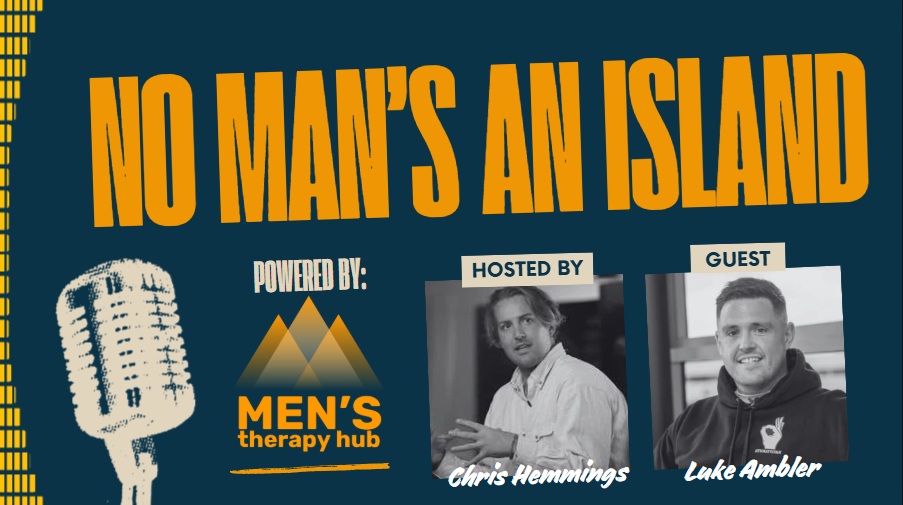
Men’s Therapy Hub is live and we’re kicking launch week off with our first guest episode of our new podcast, No Man’s an Island. Chris Hemmings sits down with Luke Ambler, founder of Andy’s Man Club, to talk about how a tragedy sparked one of the UK’s most impactful men’s talking groups, why hope matters, and what a Monday night actually looks and feels like. Luke shares his journey from professional rugby to advocacy, the mindset shift behind his “What’s next” mantra, and how men can find spaces where they belong without judgement. We cover the difference between mental health and mental illness, how to define success as progress, and practical ways to start feeling instead of armouring up. Watch the full conversation, listen on your preferred app, and use the links below to find a therapist or a local group that fits.
What we cover
- How Andy’s Man Club began and why it works for thousands of men
- The power of hope – moving from despair to “What’s next”
- Mental health vs mental illness and why the distinction matters
- Directness, plain English and peer‑led support
- Success as progress – defining wins without the pressure
- What actually happens on a Monday night
- Practical steps to start feeling instead of armouring up
Listen and watch
🎧 Listen to all episodes here: No Man’s an Island
Watch on YouTube – https://www.youtube.com/watch?v=4PSE8uScMbE&t=3691s
Listen on Apple Podcasts – https://podcasts.apple.com/us/podcast/success-failure-and-showing-up-with-luke-ambler/id1849171262?i=1000735124572
Listen on Spotify – https://open.spotify.com/episode/65nRJDAbwhdxk9FNQjYYyv?si=dW8QvbJmSHelw2AMaU9DYg
Takeaways for men
- Showing up is courage – your first night can be a win in itself
- You are not alone – thousands of men meet every Monday
- Choose the setting that fits – group, therapy or both
- Define success as progress – micro wins build momentum
- Hope is practical – small experiments change how you feel
Quotes to share
“Hope is that tomorrow can be better than today.” – Luke Ambler
“Positive doesn’t mean you won’t get punched by life – it means you dust off and go again.” – Luke Ambler
“Success is progress in some form of way.” – Luke Ambler
“Vulnerability can be small experiments you try this week.” – Chris Hemmings
Resources and links
Men’s Therapy Hub UK – therapist directory and podcast hub
Men’s Therapy Hub resources:
- Anger and irritability in men – understanding the emotion behind the outburst
- Men and loneliness in later life – finding connection at every age
Episode credits
Hosted by Chris Hemmings with guest Luke Ambler. Produced by Men’s Therapy Hub. Recorded November 2025
TRANSCRIPT:
Chris (00:02)
Welcome to No Man’s An Island, a podcast powered by Men’s Therapy Hub. That’s directory of male therapists for male clients. I’m Chris Hemmings and this is episode two, where we’re gonna be speaking to our first actual guest on the show. Not that Jet Stone wasn’t great in episode one, it’s just that he’s a cohost, so he doesn’t really count as a guest. That first proper guest is Luke Ambler. Hey, Luke.
Luke (00:24)
Hey guys.
Chris (00:26)
So for those of you that don’t know Luke, he’s got a pretty amazing story to tell. And his story is directly tied up with the work that he does. He’s the founder of Andy’s Man Club. One of the four charities Men’s Therapy Hub is donating to as part of our advocacy drive. To me, both Luke and Andy’s Man Club are inspirational, but I don’t really want to spoil the story by saying too much now, because all I will say is that Andy’s Man Club is a place where over 6,000 men go every week to meet with other men, to talk, to listen.
to feel seen, heard, and understood. There are spaces run by men, for men, and I know they’ve helped countless men out of loneliness and mental health challenges. So we finally tracked you down after you’ve had a crazy busy few weeks, Luke, and we’re gonna get to that. The first question that we’re always gonna be asking on this show is, what brought you into this space and doing this work, which actually for you is the big one?
Now I know you’ve told this story countless times before, but I would really love to hear it firsthand. So can you shed some light on that for us?
Luke (01:27)
Yeah.
Yeah, I think how I got into this space might even be news to you. I think obviously the work with Andy’s Man Club is very public. People know that, but I’ve been working in this space for 15 years now. I’ll dive into that in a little bit. You know, that’s give you some food for thought about how I actually got into this space. So I’ll let you ask some questions on that. But what most people will want to know is how did I become involved with Andy’s Man Club, I guess.
Chris (01:51)
Okay.
Luke (01:59)
I say involved, how did I create Andy’s Man Club? Back in April 2016, tragically, my brother-in-law took his life just to the scene. It was a pretty normal weekend. He’d gone and watched his old football team play football. They’d managed to come in to get his boots on because they a man down. He ends up playing, has a good game. Cousin gets his daughter and my partner, his sister and the kids and they all go to play gym together while I’m playing rugby. And then after that, I go back and meet them all.
I was at my mother in laws house for Sunday dinner and you know we were having banter like lads Jews do you know it seemed in pretty good spirits had a few bits going on but note that didn’t seem like it could handle or that it wasn’t handling and then he got up the next day went to work and didn’t return home that night you know I’ll never forget Tuesday morning getting a call off my mother in law Elaine just saying our Andrews dead and I remember just being in this world of like what how why you know didn’t have no clue what was going on and at the time I had Alfie and the cow meals
was my stepson who were so close with his uncle Andy and he was only six years old at the time so I dropped him off at the rugby ground where I was going to deliver a rugby camp and then jumped in my car and shot some over in Lars house not really knowing how he’d died and you know remember struggling to say how he’d died and then eventually it just came out the words that took his life and I just remember being like someone just punched me in stomach and thinking wow it can’t be true what do mean he can’t have took his life you know you were at my house yesterday and
seen him tomorrow, he’s on about buying a house. I just look, he’s took his life and was honestly like someone sucker punched me. But in that moment I thought, if I feel this bad, how does she feel as a mom to tell me about her baby boy? And I then decided, you know, through a theory that I had to call What’s Next, which you can dive into in a little bit, but about what can I do about the problem we’re facing here. And I guess it came out with this, that I need to out the best I can. So I had to start delivering the news. So told my partner that a little brother took his life and then it worked.
onto family members and friends and go get his car from where I’d left it but I always say the single hardest thing I’ve done is having to tell Alfie and his nephew that his uncle had taken his life. quite deliver it that deep, just sort of said that Andy is no longer with us, he’s gone to heaven and the screech in which he let out with six-year-old boy I guess will live with us forever. Sort of a big driving force and it were heavy, think any parent…
Chris (04:19)
Yeah.
Luke (04:24)
listening on all that you have two jobs, we’d always get it right, but it’s to provide and protect and felt like I couldn’t protect him and yeah, in a short version, because I don’t want to, you know, go on too long, but you know, ultimately we, I was driving home, all these questions going through my head about why, why, why, and I got right back to that real question of what are you going to do about it? And our professional rugby player at the time, and I started thinking about that I’d never heard of suicide, I’d never had anyone close to me that I knew to the life.
I’d never as a rugby player had talks on suicide and I’d talks on checking my testicles and I’d talks on heart screenings and drug use and alcohol use and everything that you could imagine but no one had ever told me to check myself and that made me think that if no one’s ever done that to me as a professional rugby player at that point and no one’s definitely needed to hand it in the industry you were in. So I’d dive down this rabbit hole of suicide and the stats and all these figures were leading to the biggest cause of death of my age.
I’d never been told that and it kept coming out with this common theme that men don’t talk, men don’t talk, men don’t talk and I thought we’ve got to stop other families going through this even if we could stop one of our family going through this you know it’d be a nice nice thing to do so approached my mother-in-law and I want to start something in Andy’s name and together we came up with this name called Andy’s Man Club and I had this concept in my head turned up first night not knowing what to expect and the short version is that nine men walked through the door that first night
all different backgrounds they opened up the talk second week 15 men turned up and guess they the rest is history and lots have happened in between that, highs, lows and lots in between but yeah you know we’re now having 6444 men attending this week so we’ve come a long way in just nine years but you know it’s bittersweet talking about it it’s beautiful what we’ve done and what we’re doing and what’s still left to do but ultimately it still all derives from ultimate tragedy doesn’t it
Chris (06:20)
And so many of the men and not just not just men, the people who work in ⁓ advocacy work, they are often driven by a personal story. I know I have spoken about this multiple times on this podcast. But no, by the time it finishes, if it ever does. But the really interesting thing for me about that is so you were a professional rugby player. And like you said, you’d had all of these talks on ⁓ let’s call it well-being.
So health checks, prostate cancer, all stuff that’s really important. But actually, how old were you at the time? In 2016?
Luke (06:55)
26 26
Chris (07:04)
and
Luke (07:04)
You lost me.
Chris (07:07)
So actually, yeah, hang on, my internet is going.
Someone’s cut the cable on my…
someone’s cut the cable.
Okay, I’ll ask that question again. ⁓ So can you hear me now? Is that working all right?
Keith? Are you using the wifi?
UGH!
What’s going on?
Chris (11:14)
Look at that.
Yeah. Okay. Apologies for that. There was an issue with my wifi, but I think I fixed it now. Um, someone caught the, someone cut the fucking cable on the street the other day and I’m trying to set up a business anyway. Um, so I’m, I’ll, I’ll, I’ll go back to the question I was asking, which is, so, um, hang on, let me just make sure this is set up right. So you said you were 36. Okay. So you were 26 and.
Luke (11:42)
26
Chris (11:47)
You’d had all of these talks on all of these health conditions and yet the most likely way that you were going to die at 26 years old was taking your own life. But back in 2016, we just didn’t talk about this shit at all. It just wasn’t something that was even considered. I mean,
When I learned about it, it was around the same time. It blew my mind that that was the reality, that me as a kind 30 year old was living under.
What was that like for you to discover that in the midst of all of this, like living the reality of it?
Luke (12:27)
Yeah, it were interesting. think I’ve always been a time obviously like wow, this is is big and frustrated. But I’ve just often never really put stuff externally like that because I just think you whether blaming society because we’ve been in society when people say that or governments I don’t really get damn rabble. I just think what am I able to do within my power? I within two weeks starting as man club I just thought if 15 men can talk and
two weeks how many more guys out there don’t know this stuff and I found these stats and I put them together on a bit of a post and then I took a selfie and we had a little tagline you know it’s okay to talk and we’re at a tagline and I took a selfie with an okay sign to tag five people let them know it’s okay to talk and we’re in four weeks 100 million people have done it now categorized one of the biggest mental health movements that’s been on planet and that’s obviously been a
the logo that we’ve had at Andy’s Man Club, we’ve sort of, it’s been our underlying message from day one and it still is today because we wanted people to know that it is okay to talk, it is okay to talk about suicide or bereavement or grief or whatever you’ve got going on inside. And ultimately that were a message to all and it’s something that people still buy into now nine years on and I think that campaign had a real, real, it was a real good start point for people to really start talking about.
this in workplaces, businesses, in front rooms, in the living room, in sports changing rooms. I think it sparked a lot of conversations. What have all been positive? You know, some people still aren’t ready yet and that’s fine. You know, that is okay. You know, you can’t just turn the change of generation or a society’s beliefs into, you know, it takes time. And that’s why we’ve just slowly, well, I say slowly, we’ve been quickly just continuing to bang that drum and bang that drum and
to some people have been watching from the beginning, it might be a like a broken record, but there’s still so many people out there struggling. And, you know, that’s why we’ve got to continue to do everything that we can in our power, you know, all of us, you know, no matter what space you’re in, you know, I’ve always said, whether it’s Andy’s Man Club, I don’t really care about us being any type of front runner or big movement. Some of that actually happened recently, it me smile. Some other mental health organization in an area was…
like annoyed that Andy’s man club was coming to town because they called us a juggernaut which some people would think that’s really positive you know they’ve been called this juggernaut and I find it like quite crazy because I just think two things I think one is is that the more access there is for men the better whether that’s under Andy’s man club brand or it’s under Dave’s man club or whether it’s under you know men’s therapy or whatever it’s under run club, walking club, knitting club, Warcraft club you name it can you know rugby club
Whatever I said from day one of my first ever interview with Sky Sports. I don’t care what everything ends up being called long-term. If you want to start something like that, it’s my call. Go start it. Because more things are for men, the better. And I think anyone who believes that is doing it for right reasons. Anyone who’s worried about someone taking your numbers is clearly in it for wrong reason. Like because it’s never about numbers. We only post our numbers, not to say, how amazing we are. For a few reasons. One is a lot of people doing a lot of awareness events for us. We want them to understand the impact that they’re having.
Chris (15:44)
It’s working.
Luke (15:44)
Numbers grow
because of what you’re doing. Number two is, if you’re a guy sat at home in absolute despair thinking I’m on this desert island and there’s only me struggling with this. And Facebook message pops up that says something along the lines of 6,400 men spoke at our groups this week. You’d be like, what? There’s 6,400 other people like me who are going through, we? That’s why we’ve always shouted about that. Like, cause it’s actually about that guy sat at home on his phone or in pub or wherever he may be just flicking through and it comes up.
suddenly it’s like shit that’s me and we people to feel like less stigmatized how do you make people stuff less stigmatized make it more normal and the more numbers that people you know more guys that attend and speak and go to the families and the better members of society the better it is for us all right
Chris (16:30)
The interesting thing about that, and I said in the opener that your work is so inspirational and it is, know, male-led, the facilitators are all men. Am I right in saying that all your facilitators are men who have been through the process of walking through that door as a guy who needs the help and, you know, just to turn up to a session to start with?
Luke (16:48)
Yeah, so what’s really nice is that all two and a half thousand facilitators are guys who walk through the door and that number continues to grow because more guys walk through the door, we open more doors, we need more facilitators. But in order to facilitate a group, you’ve got to in a tentative group. And then what happens is when a group gets to a certain level or an area gets to a certain level, for example, where do you live?
Chris (17:10)
I actually live in Copenhagen, but I used to live in Manchester. Yeah. No, one day.
Luke (17:14)
Right. So Manchester, great example of Copenhagen. We’re not there yet, but Manchester.
Yeah. How it would work in Manchester is once Manchester, you know, once we had Holden Rochdale, then we got into the city of Manchester and then went to Warrington. So I know as we take on an area lead, we call it scenario lead is like a regional manager in most people’s case. So they look after a region of some sort. Um, but they’re also that pool of, of staff members. Now it can only be chosen from facilitator.
So then suddenly what you’ve got is, is groups being run by guys who use a group, but then you’ve also got groups being overseen by guys who over do group. Then they’re actually, they area leads have to have a region area lead. So like we’ve got East, North, South, West Scotland. And then we have a head of England group, head of groups for England and Wales and a head of Scotland, head of groups in Scotland. And each one of them is a guy who use club as well. So, and then right up to trustee level, we have three trustees who sit, who use as a club.
So it’s, couldn’t be any more grassroot if we tried. So then when people say something along the lines of whether it’s within us groups or without like, you’re so big, you’re juggernaut, you wouldn’t even understand. just, it might seem really big, but actually on a micro level in Manchester, couldn’t be any more grassroot because run by people from Manchester who care about Manchester and who care about men. So.
Chris (18:32)
Right.
And that’s the thing for me that is so inspiring about it is because it is by men, it’s for men. And the thing that I love about that is and I’ll I’ll I’ll tell you that I’ve sent a few of my clients over the years who are struggling with loneliness to to Mandy’s Man Club, because, know, if it’s in the area, go because what you’ll the fear is always people are going to laugh at me, people are going to judge me. And I say to them, OK, well, the thing about Andy’s Man Club is all of the people who are there.
were once you that walks through the door on that first day. And I didn’t know about that structure. It’s like the best pyramid scheme I’ve ever heard. And I love that. the thing about men’s therapy, one of the things that I’m, I’ve come up with this marketing idea, which is like worried about therapy or unsure about therapy. It’s like, we get it. We were too. It’s like men’s therapy or male therapists for men, because it’s like,
I remember when I first thought about going to therapy, I would, I was trying to come up with any reason not to go, like any excuse not to go and like look into myself. And I’ve, I’m also a part of some like private men’s groups and they are so beautiful when, when you get down to it and the work that can be done in those spaces is brilliant. But, and here’s the big question or many big questions I want to ask you. You will have come up against a lot of skepticism from men.
right, to say, doesn’t feel like me, I don’t feel like I’d fit in, or the kind of, the judgment, if you meet, if you’re wearing your Randy’s Man Club t-shirt and some random bloke in a lift says to you, I’ve heard of them, but like, I don’t feel like it’s a place for me. What do you say to them?
Luke (20:18)
So interestingly, I think because we don’t promote it in a sense of that you should come. So there’s never really an ad sell to someone. You don’t really have that debate. Cause what we’re saying is we are open for this. Should you need it?
So I think it’s positioned very different maybe to a lot of other places. So there will obviously be skepticism in general. And we answer that through different marketing ways, through Facebook posts and Instagram and different ways that we put posters out and different campaigns that we do. be a running event. So how we, I guess, ⁓ put the message out there is in very different ways to different people. would be guys on a construction site or not. But all of my presentation and everything that we do is delivered by a guy who’s been there.
Everything, you you go to a presentation on his man club, which will be free by the way, you know, you turn up to a building site and there’s a guy that is, he works for his man club or is a volunteer at his man club. The organization can make a donation, but it’s free. So that guy’s there for goodness of his heart. So he’s telling you because he’s sponsored a chair just like you. So he wants to help you. He wants everyone in that room to know about his man club. But what we say is that Andy’s man club is open for everyone, but it’s not going to be for everyone.
Some people need to go see a therapist. Some people need to go to run club. Some people want to go to gym. Some people want to go see a psychotherapist. Some people want to go see the GP. Everyone has different ways. And my big thing is they exhaust all avenues. Right. So what I’m trying to say out here is, that you can never convince someone. I don’t think you should ever try convince someone to come to your service or any service, because you’ll know this yourself when you went through your struggles. wasn’t until you accepted there were problems, could you really get out. So that’s it for everyone.
No matter whether you’re alcohol problems, drug problems, mental health, your mom, your dad, your partner could tell you to your blooming face. And they might come a shock and all mom, your partner’s gonna leave you. Your family say they’ve had enough because of whatever reason. But something comes to a point in your life where you were a version of your rock bomb, whatever that may be, and you say, shit, I’m not right, I now need help. I accept there’s a problem. You then change all accountability from everyone else to yourself. So now it’s my problem.
which always is, it is your problem. Your problem is Andy’s Man Club’s problem. Your problem is your problem. But you can bring that to Andy’s Man Club for anyone in that room who will help you. And how are they gonna help you? They’re not gonna help you through some magic advice. They’re not gonna help you through some special therapy. What they’re gonna help you through is by listening to you and by telling you their story, which hopefully will give you the one thing that most people are lacking nowadays, which is hope. And I always say, what is hope? Hope is that tomorrow can be better than today in a nutshell, and that’s it. And ultimately, that’s Andy’s Man Club’s message. So.
When you’re about a guy in that lift, the conversation would be not, you should come on his man club mate, it’s great. What is that on his man club? Oh mate, we’re talking groups for men. You know, some people it won’t be for them, but I’ll tell you what, man, I’ve got a wristband here. Take it, you never know where you might need it. But I’ll tell you what, you might never know when someone in your life might need it. So a good thing for men, I always think is his position in it. For example, if I had a friend that was struggling, I would always tell people this, he wouldn’t necessarily be telling him he has to go. Tell him that you want to go, but you need him for support.
And it might have got to do that and how much I work. So a dad might go with son, son I’m struggling on it. I want to go to this group, but I don’t want to go on my own. You know, it might be not for me. Son goes, I’ll come with you next minute. Son stays, dad goes home. Son stays forever. Cause son realized he needed it. Dad played a blinder. Sometimes dad stays as well. Cause he found himself out with shat to for me. Do you understand what I’m trying to say? That it’s not push, push, push, push, pull. It’s shat to the less poor people. Less show them the way and let them follow. Not force them through a door.
Chris (23:45)
Yeah.
Yeah, it’s actually interestingly the same. We learned this in therapy school, which was to say, if somebody doesn’t want to be in therapy, therapy won’t work for them. If somebody has been coerced or like tricked or like pushed to coming into one of your groups, they’re not going to be there with a mentality that is going to be beneficial for them or the group. Right. They have to want to be there for yourself. And I love that. That, you know, the hope is that tomorrow will be better. And one of the other
big beast in this industry, Movember, they’ve released some research about, well, it’s a guide ⁓ and professional development for therapists who wanna work with men. And what they talk about is this emotional backpack and the load that we carry as men. And it’s not about ⁓ throwing the backpack away or getting stronger to carry more. It’s about, hey, can…
Can I take this brick out of this backpack and you just hold it for me for a second? And then I can look at it and think, actually, do I need to put that brick back in? Like, why have I been carrying that around with me for so long? And you did a brilliant thing. I mean, you went through something horrendous with your family and you immediately turned to ⁓ activism and advocacy. But the genius of it is,
Luke (24:57)
Yep.
Chris (25:16)
You also created a space for yourself to start the process work required to to to heal from Andy’s death. And I’m curious for you, you know, I hear you’re from even further north than me in the UK. Right. I can hear the accent. So, you know, the north of England, there is a certain stereotype of ⁓ men from up there that does hold true still in some in some respects. What was it like for you?
to have that first session. Do you remember? mean, you must remember when you sat down for the first time and there’s you and eight other guys in the room and it’s like, all right, now what? What was that experience like for you to dare to do that for the first time?
Luke (26:00)
Yeah, really daunting, really daunting because you don’t know what to expect. You know if anyone’s going to turn up. You don’t know if it’s going to be for anyone. What are people going to talk about? Are they going to talk? And first night were still the best night of my entire Andy’s Man Club involvement. With these blocks in there and there were a little foam ball on the floor and I picked it up and I was just picking it. And on all the blocks, the chuckers at ball cock. So chucked in ball.
and he just offloaded about his life and losing his son you know not to suicide but you know still tragically lost his son and then threw it to another guy and that guy caught it and he suddenly forced upon having to tell his story and then this was very different and his band club didn’t run like this now and suddenly all these guys all shared the story second week they all did it and then third week we heard everyone’s story now we’ve got to put some structure around this because we all just keep telling each other the same story and you know but the first night was so powerful because you just
Everyone just opened up and taught. I’d already been doing a lot about my own life. I’ve been on a real lifelong personal development journey, you know, from a pretty young age. So I probably were already in a really good position and deliver that space to people because I’ve already been through a lot. I’ve already been through my worst point personally. That whole situation was horrendous. It was far worse for my family than it was for me because one, it was their little brother, their son.
Right? Not that didn’t deeply care about him and still do, you know, but I’m not going to try and say for anyone listening that it were harder for me than my partner losing her little brother because it wasn’t. Right. But I was probably in a space from the stuff I’d personally been through for my own life to be in a position mentally to be able to handle that burden of starting that and having those eight guys there. So I’ll probably come in from a different place of that. I won’t there to necessarily talk about anything that will go down in my life right there, but things have been through like they all have been through.
But I probably were in that space where I was more ready to lead that movement, you know, from that point, because I already in that headspace to be able say, no matter what life throws at us, we’re ready to go.
Chris (28:06)
You gave us a little tease about that when we first started out. Are you okay to share about what had brought you to that place?
Luke (28:11)
Yeah, yeah.
Yeah, so, you know, there’s always pillars to life of what things were. always think that it’s always hard on a podcast or when you deliver a talk because what you have to do is you have to summarize to make it relatable, right? So have to give the, you have to give the end of the story really quick because no one’s interested in 23 years because you just don’t have time to do that, But if I were looking at like what were key moments that changed my life negatively to positively.
One would be eight years old, parents separating, mom having a car crash, living with brain damage and having a mental illness called need. So my mom has drop attacks. So she’ll just fall, she’ll drop, she’s broke cheekbone, broke a jaw, knocked her teeth out, you name it, she’s done it. It’s not allowed to in an house because if she falls on the stairs, there’s a good chance she could die. not allowed to bath because you can drown in bath. And she’s not allowed, carpet’s in the house because she slips on the carpet, it rips her skin off her arms and face. So saw a lot young. My mom then developed…
anxiety, depression, suicidal tendencies or anxiety without a badge shouldn’t leave your house for four years, not once. So I started to understand the stigmas of mental health at a very young age because mum had a mental illness, which is very different to mental health by the way, for those that are listening, very, very, very different. And then obviously that impacts your own life, right? So I had comfort eating problems and were overweight and lots of different challenges. And then rugby were a really good mechanism for me. It were a really good escape.
The short version is I end up playing professionally. I signed for team in Manchester called Salford City Reds, but then I get bought by the Leeds Rhinos, were world champions at the time when I played for them. Unbelievable inspiration from people like Kevin Sinfield, Rob Burrows that I played with, who are tragically no longer with us. really, you know, talk about being a young kid, single parent background, looking at playing rubber league, getting bought by the Leeds Rhinos, dream come true. I played there for a few years. I go on loan for a year, come back, they brought a new manager in and everything in my life started to spiral.
because my emotional intelligence was put your mask on, pretend you’re okay. Don’t tell anyone, especially as this big, strong, successful rugby player I’m meant to be. Broke up my partner because we self destructed, don’t we? And I went down this bad path, ended up in a police cell one night from an altercation with some doorman, asking myself, why me, why me, why me? And it went until I realized that if you want better answers, you need to start asking better questions. And that’s where I came up with what’s next. And it’s just what’s next, put all ownership and accountability on me. So no matter what happens, Luke, what are you gonna do about it?
And this isn’t saying to everyone that you are going to be a victim of some other times, horrible things are going to happen to you. But I want to take power back and saying, what can I do about it? Because at this point I got myself in this situation where I were in this depth of despair. My life felt like it had been in turmoil, but actually what’s next? We’re turning point. And that meant from now on, I’m going to focus on everything that I can do. And yeah, I just dive deep into looking at the mind, how it worked, how the body worked.
trade myself up physically, I find when I’m trading physically I’m better mentally and I just develop this real good aura I guess and belief system that know that the glass was half full and actually the realistic of life is that in order for it to be good it’s got to be half empty as well because if it weren’t you wouldn’t know what good is if you don’t know what you know if you’ve never experienced hate you can never experience love right you never experienced stress you can never experience peace and that’s sort of like I just start to realize that so when we got to that point of losing hand you know I already at a point there where
sat and watched my missus be put in an intensive care unit and be told that my baby inside her, both of them were going to be gone because you’re having an asthma attack and there was a plummet to like 80 or 60 and were bad and the pump and all into her. So moments of realisation and thankfully the doctors saved her but moments like that, the constant way, were really touch and go if you’re to lose your whole world. So when Andy died, it was horrendous. But I’d already been in a situation where I’d sat in a doctor’s office at the hospital and told me
need to get Lisa’s mum dad on here, know, mum on here, need to let them come say goodbye. This is a five minute window, it’s gonna go either way. So I’ve already been in them really dark places. So fast forward when that happened, it were horrendous. I’m not gonna try and say that it wasn’t, it were horrendous. But I were in a place mentally where I was ready to do something about that.
Chris (32:19)
We’re talking there about this often used and kind of bastardized term of resilience, right? Because traditionally the concept of resilience for men has been keep calm, carry on, shut up, know, suppress your emotions, put that face on, as you said, right? That you’ve been doing for a long time. But actually, and I love this analogy of like, people think that resilience is like an oak tree, right? It’s like rock solid and firm.
Luke (32:40)
Yeah.
Chris (32:47)
But actually, like a palm tree is much more resilient because it can learn to bend and flex with the conditions that are around it. And that sounds like what you would learn to do is that how can I learn to bend and flex? How can I expand my emotional bandwidth whilst also saying, I have to take accountability for my own behavior. Not necessarily as a therapist, I will say.
Luke (32:53)
⁓
Yeah.
Chris (33:12)
I don’t think it’s fair to blame yourself for the things that have happened to you in your past, particularly when you were a child or the challenges that were put in front of you as a kid. But as an adult, you do have the choice in some ways of how to start to change your responses to them. What was that like for you? How did it start to change the way that you interacted with the world around you?
Luke (33:39)
Yeah, I just want to pick up on that tree analogy because I think probably I’ve never really thought resilience in this way, but it’s more like a bamboo stick in it because bamboo is ultra strong, but ultra flexible. in order to grow bamboo, it’s got to grow beneath the ground first for a long time before it shoots. So if you, know, and that’s a little bit more probably eyes like resilience. I’ve never really thought about it until when you were giving trees analogy and I thought bamboo would be a great analogy for resilience because a lot of
Chris (34:02)
love that.
Luke (34:09)
it’s got to be done underneath ground first a lot of strong roots have got to be put in place before you see that the shoots and once it’s strong the roots are very strong but it will bend and even make scaffold out of it in some countries don’t they so it’s a very very strong tree plant branch so I think if for me you know I live I live a bit of a weird
Mentality you know what’s interesting. I never really talk about this on podcasts. I think it’s good sometimes to dive into stuff different. So I 15 a bit of shit time at rugby just performance wise Other bits and matters happening. No drastic mental health wise just just stuff happening where you just like need to and I found a jujitsu class right before the boom of jujitsu, right? We’re really underground then I went to jujitsu and the guy were running it were actually a former Buddhist monk, right? So teach us around lessons of Buddhism at the time. So
I found that my name is Luke Benedict, right, by the way, so you can’t get a more Catholic man from a big Irish family played for Ireland. So very Catholic upbringing, altar boy, you name it. Right. But I related so much to this concept of Buddhism. I like to call it religion because it’s more of a theory, a set of theories, set of beliefs. Right. But I really connected to it. And what’s beautiful about Buddhism is that all suffering comes from attachment. Right. And I start to realize it’s so true. And, know, I watch people play for Leeds, want to play for Leeds, want to play for Leeds.
I can’t play for Leeds, but I’m one who play for Leeds. That’s where all angst comes from, right? All anger, all frustration. And what I’ve had to realize is that if you think about now in therapy, like it’s a lot of practices that people teach around breathing, you know, around mindfulness, around meditation, around being present, around grounding, all derived from Hinduism originally. All modern Western psychology derives from Eastern philosophy. All right, it’s crazy. Right, that’s the point we’ve got to. And I think I’d been reading a lot about this.
So I think my outlook on life is that I genuinely, it’s really ironic I run a suicide prevention charity. And I say ironic because probably couldn’t have been, a mindset that, I couldn’t have had a better mindset at the time of starting it, but I love life and everything about life, good and the bad. I think you’ve got to take it all, you’ve got to take it, you know, every single bit of it. Because every single thing, I hate saying, would you go back and change anything about your life? No, because I can’t.
So I don’t even want to put myself in that mindset. Well, yeah, know, if my mum didn’t have a car crash, because mum didn’t have a car crash, then how would my life be? Would I ever be in a professional rugby player? Would I have opportunities? If I could save my mum, one million percent I would love to for whatever which went through my car. So I wouldn’t even put myself in that. So I view my life like that. I don’t view stuff on when I get asked, could the government do more to betterment of her? Because that’s not going to change whether they do or don’t. What changes it is honest, real conversations with what we can control right now, right?
It’s putting yourself in situations that other people find inspiring. We’re doing a physical challenge. We’re having an honest conversation. All of it’s about being vulnerable in it. Vulnerable in any capacity that you have. And that’s how you create strength. So when you ask the question about how do I view life or how has all them things shaped me? Just shape me to really appreciate life. I don’t take life for granted in any single way. In any way. I don’t. And I don’t wait for a funeral to say we’ve got to live more. I, to my family and closest people’s…
Chris (37:07)
Mm-hmm.
Luke (37:26)
Demise at times or frustration. try and suck or suck every single second of life. I want to say to their demise is because my missus is more of an introvert and I’m this big bundle of energy at times. It can be quite draining for people like that. But I just love it. I just love every single thing about life. it be out camping with kids or it be whatever it is. I just want to each and every moment try fill it with some purposeful because one day bum, you know, could post this podcast tonight and tomorrow be gone. And it’s just like what we legacy.
And that’s what I ultimately think about each and every day. Like one day this is all gonna be over. Like, I can ride it out with a smile on his face. I’m not saying that everyone can do that by the way. And you know, I’m not validating that people go through struggles and what’s going on in the brain, you know, isn’t really tough in situations. Cause I don’t want to hate to come across that. But that’s just my belief. Just like kids believe Santa comes down chimney. It’s a really nice thing to believe whether it’s true or not. Right? I believe that it’s just nice to live and laugh.
Chris (38:14)
Mm.
Luke (38:23)
much as I can because one day it’s gonna be taken away from me when I probably least don’t want it to happen so that’s just sort of like my belief personally
Chris (38:31)
And I think, I what you’re touching on there is existential philosophical thinking, which at the very core of existentialism is life is worth living because it is finite, that everything is going to end. And if it didn’t actually, there would be no point to existence. It would be meaningless. So the meaning of life is the fact that it is finite and the fact that it exists is beautiful and brilliant. And of course, I really appreciate, because…
I felt like I was gonna have to say it, but you said it. It’s like, not everybody can have the get up and have a good day. ⁓ Some people can’t do that any day. And that is really harrowing and challenging for them. yeah, yeah. Well, some people can’t ever, and that is a challenge for them. Very few people.
Luke (39:09)
yet yet
Chris (39:24)
The thing is, and I’ve been speaking, I’ve been thinking and speaking about this recently about the idea of privilege and that’s gonna be something that comes up in this podcast a lot. I spoke to Mark Brooks in an episode that’s coming up about my privilege being this like a really emotional privilege that I had growing up as a kid. And I think that as somebody who has been through really dark times myself and has been suicidal myself and has been at really dark point to come out of that.
has given me a similar viewpoint to you. And also to add to that, my friend Charlie died when he was 30, right? And I saw how he lived his life knowing that he was gonna die and he sucked out all of the juice of life while he could. So I think when you go through hardship, it’s difficult. I always remember my dad saying that sometimes you can’t see the woods for the trees. And when you’re in the depth of despair,
Luke (40:18)
Yep.
Chris (40:21)
It’s very difficult to imagine what life can be like on the other side. But once you come out of this, and I say this to my clients, like there will be a day that you look back at these sessions where you are in bits and say, wow, I’m so proud that I’ve come out of that and found the place that I am now. And I didn’t think I could find that so many. I asked this question in my last session with clients always, which is like, has it surprised you that you’ve got to this point? And often the answer is like, I didn’t know this place existed. And it’s like, right.
But you have to do deep work on yourself. I’m really, really privileged that you’ve shared more of your story here because you’ve been working on yourself for a lot longer because you’ve had to.
Luke (41:07)
Can I ask you a question? So if everyone who were listening went and really put in the work, as you said, put in the work, they found it within them to be able to do that. Maybe they started off small. They dug deep, they learned about themselves, they got vulnerable, they opened up more. Everyone would then have a chance, right?
Chris (41:09)
Yeah, please.
Much more of a chance, yeah. Much, much more of a chance.
Luke (41:31)
So I just want to
give people hope. I just want to give people hope over listening who thinks I’m always going to be like this. You’re always going be like this if you keep doing what you do. That’s a fact because that’s the definition of insanity, right? Doing the same thing over and over again. I expected the result, different result. So I just want to make sure we get clarity on that because I genuinely believe, I’m out of hearts, that everyone can feel some form of elation in their life at some time and build that. the difference is, and I have this all the time with people, I work with a lot of people who say, but I’ve always felt like this.
And we’ve tracked back to why they might have always felt like that But if you start doing something different, you’re probably gonna feel different So it’s not gonna eradicate 20 years of trauma. It’s not gonna eradicate 30 years of suffering But what it might do is start to build some positive habits that make you have One in instead of having seven in seven out of seven bad days. You might have six out of seven bad days But now we’ve got hope because I’ve had one in seven good days and suddenly it starts to come out So I just think if you ever put a label on anything where it’s like there’d be some people will always be like that
They will if they choose to be. And that is a choice then. What’s happened to them is a choice. That’s not their fault. You know, some people have some bad stuff. But if they make the assumption and label, I will always be like this, then you will always be like that. You’re right. If they turn around and say, I might feel like this for a long time, but actually I really, you know, if they accept, they need to do something different. They take accountability and they do a different action. They’ll always feel different.
Chris (42:57)
I agree with all of that. The caveat I would put on is that that probably doesn’t take into account people who are suffering from my actual diagnosed mental illnesses that are incurable and solvable. For people who are, because you made the important distinction between the two earlier. There’s a very big difference between depression and clinical depression. Everybody goes through periods of depression. Some people longer than others.
It’s the same with anxiety. There’s a difference between anxiety and generalized anxiety disorder, right? What we’re talking about here, and I completely agree, and it’s where actually I do like a bit of positive psychology sometimes, is to say, yeah, as you say, this, you have been stuck in a rut for a long time, and your patterns and the way that your relationships play out and your self-critique, I use the word self-troll these days because it’s kind of the modern way of describing it.
Like that is a real challenge that a lot of people deal with. And you’re right that we will, we can get stuck in a cycle of, I’m just complaining about how I feel, but I’m not doing anything about it. You know, I’m a, I’m a 38 year old with a bad back and I was tipping 130 kilos recently. Right. That’s on me. Now I have, I have a bit of propensity for comfort eating.
So I’ve had some challenges over the past six months, because some of my trauma resurfaced and I was comfort eating again, but like my back hurts. So do you know what? I’ve been looking after myself. I’ve lost 15 kilos. I’m back in the gym. I have to do that. And it hurts and it sucks sometimes. And I tell my clients like, it’s going to get harder before it gets easier. I make the joke, like I guarantee that or you’ll get your money back. And yeah, it is about making.
Small and it’s the tiny changes. It’s the small, you have to start small. It’s not about, okay, on Monday, I’m gonna quit smoking, I’m gonna go on a diet, I’m gonna go to the gym, I’m gonna go to Andy’s Man Club, I’m gonna call a therapist, like, no, no, no, no, no, no, Start small, have a win, get some positivity from that, and then build from there.
Luke (45:11)
know what you said there on Mondays, the mountain top, it actually start by being at what? You bought me garden. And then then try maybe go to you got bought me garden twice at next day and then maybe. Yeah. ⁓
Chris (45:17)
Right. Right.
It’s why I love the couch to 5K. If you’ve ever seen the couch to 5K,
it’s brilliant. It’s like go for hundred meter walk and then go sit down, back down on the couch again. Because there’s a hundred meters more than you’ve walked before.
Luke (45:31)
got them
correct and that’s same with with anything and I’d even I’d even debate even people with mental illness are gonna have good days in life and they’re not always gonna feel like they do they might they might you know depending on what your class is normal you know they might not always be consistently a six out of ten in the amount of days but they’re zero out of ten for a long period of time but they’ll have eights as well and then suddenly start to average it out they’ve also got hope on there I think we’ve got to deliver constantly is hope to people so we’re listening now is someone who’s got a minute as well what’s point I’m always gonna be like this
You know, you might always have an element of, of, some of that don’t quite work right in your computer system of your brain, but that doesn’t mean you still can’t function and be a great member of society and be loved and be cared for and still be a good contributor because you can and you have been. So you’ve probably still got someone in your life who loves you and cares about you deeply, regardless of what’s happened here or what is going on with your computer right now. You’ve still got hope.
Chris (46:28)
Yeah. Hope is really important. And I really hear that that is a message that you are pumping out there. And I appreciate that a lot because we need some of that in this world right now. The world is not necessarily a great place for a lot of people currently. And one of the things I’ve wanted to ask is, so 6,400 and odd men are coming every week and you’ve not met all of them. that probably means there’s been 10,000 or more guys who’ve come through the doors over that time. That’s just…
who was there last week, you will have met some incredibly inspiring people doing this work. I would like to ask if there are any particular stories or individuals that have like really stuck out for you and then to say like, is it them that keeps you going? Like what is it that inspires you to keep going to do this work?
Luke (47:22)
Great question. think I’ve met so many, know, whether it be the younger guys who were 18 come for the first time or we’ve had people who were 86. I think we have so many men who come and just on that of the 6,400 this week, 600 new faces, we have 10 % new faces every week. So, you know, people that come for whether they’re ill or other reasons or they’re on holiday, you know, so we have, I by the end of the year usually we’ll have had, you know, 100,000 hits as in 100,000 people have been through it all.
They’re not individual, but we have about 20 to 30,000 new faces a year come through our door. Yeah, yeah, which is a lot of men. It’s not necessarily the same men who come in all time. Some come for a week, don’t come again. Some come for three weeks, some come for every week forever. You know, but on average we have about 500 men a week. you know, times that by 50, 40 weeks here, 25,000 men. Fruit Door this year on average will have had brand new faces who come Fruit Door. So it’s a lot of men.
Chris (47:56)
Wow.
Luke (48:21)
So there’s a lot of stories doing that. And I just find anyone inspiring who’s come, actually sometimes find people as inspiring who were never gonna walk through it all. Went into grit and all from recently, I was talking to a young lad and he’d said, oh, he didn’t know who I was and I love that. And said, why are you running for Andy’s Man Club? I’m running it at same time, I’m going around asking everyone. And he said, oh, cause it saved my life. And I says, oh really? Like what group do you go? And he says, oh, I don’t go to a group. He goes, it’s just online. So you go to online group? And he said, no, no, no.
I was an online group. I just follow all content and it’s really just, yeah, it saved my life. It’s given me something and I was like, that’s what inspires me. don’t know if anything inspires me is like the families, like the families who’ve lost people. That inspires me more than anything because you know, the pain that they’re going through, that inspires me to keep going, to keep pushing, keep up with this. Because I really want to clarify something here because I thought it was really interesting. I’m not an ultra positive person.
I think ultra positive people, if we’re to go down that route, think that bad stuff doesn’t happen in life. I know that life knocks the shit out of you on a daily basis. I, aside from Andes Man Club, I’m voluntary CEO of Andes Man Club, which means I don’t get paid for it. Right? Never have, never will. Right? Well, you never know what could happen in life. So I like to say that never will because it’s it’s a passion to me. But I never plan on working for it. Although I’m full time.
voluntary CEO, means I run it like a normal CEO does. Apart from today, I would do tip runs for it. So I still do the ground level stuff too. And I’m telling you that because I then do a lot of diverse work in my own work that I do. So my own business, have a mad life. You we run projects in prisons, regular, you know, we’re part of healthcare system in there. Worked in 61 prisons with countries most violent and most vulnerable offenders. We’ve, you know,
most complex units you’d imagine people with personality disorders. And I just think every single person I meet from the most diverse background, it’s a primary school kid in school, whether it’s working in prison, is that life smacks as harder than you could ever imagine on a continuous basis. And it’s not pretending that you’re not getting punched in the face. That’s what positive means to me. Positive, positive, means that I’m never gonna get punched in face. Life’s always gonna be great. No, no. My way of living is that
You’re going to get whacked in the face. It’s going to hurt from time to time. Then we’re just to self down and we see if we can go again. And we try and deal with the things that are knocking us down in first place. Because that’s what I’m a big believer in, like dealing with the things that are knocking you down. Is that past trauma? Is it past? Is it issue relationship issues? Because maybe how you got treated, is it your, your, you know, interpretation of relationship with your parents, you know, you know, you’re not passing down to your kids, you know, that’s my big thing. Like let’s deal with the roots. Let’s get to roots and deal with that.
So I find anyone inspiring in all the work that I do from Andy’s Man Club, right through to the work we do with Amblers is anyone who’s just trying the best. That’s all I mean, I tell my kids this all the time. My kids are phenomenal athletes. And I say, I never care if you win. I just care that you try your best. And if your best that day means that you win, great. If your best means that you don’t, but I’d rather you try your best and lose than just cost them win.
I want you to always feel like you’re dominating, right? And that don’t mean dominating others. It means them coming off whatever they do, whether that be schooling, life, relationships, friendships, knowing I’m giving my all. And that’s the same with mental health, right? As long as we can all look at something and say, you know what? My life might not be perfect. I might be struggling, but I’m trying my best. And that’s the same with Andy’s Man Club. I just love going and seeing guys who are just trying their best. And the facilitators are people who I find massively inspiring.
because they’re ones who put their hand up and said, I want to give back. want to help other guys. without them, there is no Andy’s Club. So we need them. And then there’s the area leads and all the other staff and behind the area leads, you’ve got the admin staff who are answering the emails every single day. And it’s hundreds and hundreds of them.
Chris (52:16)
Hmm.
They were getting them from me when I was trying to track you down.
Luke (52:33)
And then you’ve got people like, dealing with the partnerships and, you know, there’s so much that goes on in this, in this cog. I think to individualize any one person, and I’m not trying to cop out from that. It’s too big now of a movement to, you know, pick one individual because there’s so many people that make this movement so special from the mother going out and doing great and offering because she lost her son tragically, you know, on his 40th birthday. And that’s a real life story through to a kid who
is giving wristbands out because tragically lost his dad, which is horrendous. Right through to the brother who wants to now do something crazy for us like Roe Cross the Atlantic because the group saved his brother and his brother’s still here today. So there’s so many inspiring stories that I see everything. And I’ve seen myself on social media for Andes Man Club. You know, I see someone just ran from Bournemouth to Paris. Unbelievable. I’ve just seen that like, you know, there’s stuff happening all the time where I’m like, wow, how blessed.
are we to have so many people care about this cause? Because we’re forever indebted to those people aren’t we? Because without them their intermission isn’t their intermission.
Chris (53:37)
Yeah. I’m gonna retract that you’re a positive person and call you an optimistic realist instead. I think that seems…
Luke (53:45)
That’s what I call myself.
An optimistic realist is what I call myself. Yeah, it’s I call myself. It’s mad that, yeah.
Chris (53:49)
really? Okay, great.
Love that, okay, great. Well then we’re in sync on that, excellent. Because…
Luke (53:55)
Yeah, I call on you out.
I just think we live in a world where people talk about positive and talk to positive. I don’t really believe in any of that. I think someone wants to be positive and that’s how they want to live their life. Perfect. Let them. Because for some way that makes them tick. If someone wants to live the life where, you know, they see the darker stuff because it makes them get through. I am this person that like you do what you do. This is to everyone. Find your thing that gets you through each day. And that’s the main bit in it. And I’m sorry, I want to retract that. Don’t say through each day because I think that’s a terrible saying. Get through each day.
Chris (53:59)
Yeah, yeah.
Luke (54:23)
I know sometimes in life you’ve got to get through a day but actually we’ve just been talking about how we don’t know when his last day is going to be, we? So I hope people can live each day.
Chris (54:32)
as best as they can. And that was what you just talked about there with your kids. And that, I love a good segue, because that was going to be my next question. Because the question I was going to ask was, what does success look like on a single Monday night for Andy’s Man Club? But I kind of want to change the focus of the question, because when I do men’s mental health talks in businesses, one of my big focuses is on this weird concept of success, right? And how
Luke (54:33)
Cheers.
Chris (54:59)
Success for men in particular seems to have this like aesthetic and when I asked the guys in the room, it’s like nice house Fast car hot wife and it’s weird that it’s like in that order and then like these days, you know, it’s like Hotel, you know holidays in Dubai for some reason which I’ll never understand and like, you know, whatever there’s this like aesthetic of success
I was on LinkedIn today and I had a post do quite well on LinkedIn today, which is a first for me. And then I saw a guy post, it’s like on Twitter you would call it a sub tweet, right? And he was like, I see all of these people trying to start these new men’s therapy platforms. And I just think, therapy doesn’t work for men. So we need to stop trying to get men to go into therapy and start trying to get them to go actually into organizations like yours. Because we had a healthy conversation between the two of us, which-
rarely happens online. And I said to him, I already know, because a guy messaged me, I already know that one guy is four sessions in with a therapist he found on Men’s Therapy Hub, and he is already starting to see benefits in his life. So to me, if Men’s Therapy Hub closes tomorrow, it has already been a success. Like, I don’t care about, look, if I wanted to make loads of money, I wouldn’t be a fucking therapist.
Luke (56:12)
Correct.
Chris (56:17)
Like to me, this is, I also wouldn’t be giving part of it away to your organization, right? Like to me, this is bigger than that. And I wonder then, because I was gonna ask you what success looks like for a single Monday night, but your Buddhism shines through, right? And your spirituality. So I know what your answer is gonna be for that. So then how do you define your own success in life? And then also within that, within Andy’s Man Club, but I guess…
You can already say Andy’s Man Club has been a success. Again, if it closed overnight, it would be sad, you would already deem it has helped so many people. It’s already been a success.
Luke (56:55)
Yeah, I think there’s just so much to go for. There’s a full podcast just in that question, if I’m being honest, because I, and this can be real mad, right? I’m going to start with this because I’m a contract man. I don’t think there’s anything wrong with a guy wanting to have a certain type of house, have a certain type of car. If he wants a certain type of watch, certain type of partner in his head, I don’t think there’s anything wrong with having aspirations. think we’ve actually lost aspirations. And I thought about this because I used to sort of think, cause I’m not into those things, right? So I’m not big on materialistic things at all.
I’m big on experiences. So I’d rather anyone here do acquire, I’d rather go travel, right? Or do something that is going to fulfill me in a certain way. Whether it’s going out with my kids camping or whatever, right? So it’s a really interesting, but I went to a school recently, I ran a workshop with some year 11 boys. We were talking about their aspirations and a couple of them said, you know, a couple of them were unbelievable. I just want a wife, an house, and I want to have kids and I want to have a nice job. And I thought, great. Some of them were like,
I want to own a business. I want to have a Lamborghini and I want to have a smoking hot wife and a four bed house. I’m like, hey man, I’m thinking, usually I’d pull them apart here. I’m like, why? Like we keep saying that everyone’s got low self confidence and low aspirations. The issue is, is whether they define the life on achieving that or not. And that’s the big, there’s a big difference, right? So if they attach the concept that my life will be a failure, if I don’t achieve that, then there’s going to be a problem. What the thing is, is it’s okay to have aspirations, good to have aspirations. We should all have aspirations. If we didn’t have aspirations, we’d all still be living in caves now.
Chris (58:08)
Exactly.
Luke (58:22)
Right. So in order to get out the cave and go build the mud holes and then go live in towns and villages, then cities, and now Elon’s track gets to moon on Mars. We as humans will always want to think so. I don’t believe there is such thing as success as a final destination. I believe you can be successful in areas, whatever your marker is for that. So my daughter recently won the cross country for our town. So last year she was successful in being the fastest runner in our town for her age group. Right.
But when she goes against other people from other areas, would you now say she won’t success because some of them beat her? I just think everything. So Andy’s Man Club, it was successful on Monday night. This is my mentality, it successful on Monday night. We talked to lot of guys. But Tuesday, the work starts again. Because now we have a load more men who don’t know about us. And this is my mentality as a rugby player, shining through, because we would play this game on a Sunday and then we would get ripped on Tuesday. Either what went really well or what you can improve on to get better. So what I think success is,
Chris (59:07)
Hmm.
Luke (59:20)
my own little walk world is just getting better. That’s what it is. It’s progress in some form of way. And I think that’s how you become more content and more happy when you see yourself progressing in some way as a partner, as a parent, whatever it is in life. So Andy’s Man Club, if we wanted to just, what the original thing was is you’ll have seen it hashtag that one man. If it was just about that one man would have stopped on night one. It’s a bullshit really, isn’t it? It’s a nice saying. The fundamental thing is we’re not that one man, we’re not that one family. But if we’d wanted to do that,
Chris (59:44)
Yeah.
Luke (59:50)
We’d be done now. Thanks for coming. We hope that one man great.
Chris (59:52)
But you know it’s not about one man, it’s about what that one man represents to the people in his life.
Luke (59:54)
is not.
correct correct and that one man is one man in every town every say times by a thousand so actually you know when will his man could be a success well he’ll never have an end goal because the ultimate end goal is that it no longer exists which would be the perfect goal and no exo no over organization I know of his ultimate goal is that they don’t want to exist and we don’t you know that’s not probably good for people who are listening over
staff of Andy’s Man Club but they know that they know that the mission but we also know that what happened in our lifetime but I love it my son grew up and just knew that actually if he was struggling just talk to your mates about it and and this is another thing I really want to cross I have this with young lads all time don’t ever stop having banner because men need that too men need playful banner with each other right they do in my opinion we need to still have love because men show love different to women right women are really good at beginning to I’m in a group great group of mates
If any us are ever like this from happening in his life, we’re there for each other. But then away from that, if we’re going out, bike riding together, running, we’re having playful banter, we’re giving to each other, but we all thrive in that environment. But what I say to my son is, is you have to know your environment. So you know that that lad there, Brad, making that name up, that name Brad, ain’t about that. You know they don’t respond to him. Don’t be having that with him. Put your arm around him. You know, this is where your emotional intelligence comes. You’ve got to know who you can have in that. But I think as men, and when.
Chris (1:01:20)
and when.
Luke (1:01:22)
And I have this with young lads all the time, I said, lads, you know the thing is, I still think you should have banter, because we’re all in banter with each other, we still love each other. But you’ve got to get to a point where as a man, you, not your group, you, can say to your mates, listen boys, banter aside for a bit, I need to talk to yous. And then your group can be receptive to that. But you’ve got to do that. You as your group of mates. Because I guess you’d all rather your mate open up to you than go off and do something that you’d be devastated about. And they all go, yep. So that’s where we need to get to. So for me, I just think.
success is a destination. just think and I think about a lot and I thought about this thing I think if I said you know have I been successful in starting in this man club some people would be like yeah you should be really proud of it I’d say still loads to do still loads to do man
Chris (1:02:07)
Can you be both?
Can you be proud of it and also consider that you have more to do? Okay, good.
Luke (1:02:11)
I am 100
% bad as thinking if you sit and clap yourself up and pat yourself on back too long. think you should always, my big thing is, that we are his own biggest critic at times. You need to be critical in order to be successful. If I won’t be a bad dad, I’ve got to look at myself and say, was the way I spoke to my son this morning acceptable as an example here? You know, you know, was the interaction we had with each other, or I wearing my own phone too much tonight when we went to be watching TV together. You know, we’re going to go out tomorrow and do something. Did I go to work instead? I’m making these examples up.
traffic, what guys will be up to. But there’s lots of different things that are paving up. Did I speak to my partner in a certain way in front of them? You’ve got to be critical. You’ve got to say, actually, I need to be better at that. So you’ve got to be critical, right? But you’ve also got to pack yourself up, Matt, but you can’t do either too long, can you? This is where like balance is so hard because you don’t want be over critical of yourself, but you also don’t want to be over encouraging of yourself because it gets…
Chris (1:02:59)
No, you don’t.
You don’t. And one of the things I talk about the important difference is when I was speaking to clients, actually, you know, at the end of the first session with every client, not necessarily every single one, but most clients, I will say, your homework for this week is to go for a 20 minute walk at some point in the next week, sit on a park bench, look at a tree, just like, really just look at a tree. And I want you to try and tap into a feeling of pride about the fact that you’ve come here to do this work because I know…
how much courage it took for you to dare to do this. And you have started a very difficult process. like that is to me tapping into, it’s like putting positive energy on something that’s difficult because then, okay, if I can keep doing that, it’s gonna make it more likely I’m gonna keep going on it. And I don’t underestimate, and I know that you don’t either from the work that you do, just how challenging this is. And to go back to one of the things that you just talked about with the banter between mates.
What I used to say when I went into schools ⁓ to do the work with Empath, my previous business that I’ve now been demoted in by Will who’s taken over. ⁓ sorry, I would say to these boys, similar to you, okay, you have aspirations for all of these things, okay? What happens if you don’t achieve them? Does that make you a failure? Because I don’t think it does. And actually, your mates…
They don’t really care how hot your wife is. used to make the joke like, and if they do, that’s probably a question you should ask them about, right? Why do you care if my wife’s so hot? Like, your mates don’t care how much money you have. Your mates, if they’re really your mates, they should care about whether you’re happy and healthy, yeah. And then I would say, and with my mates, we’ve gone from, up until my mid-20s.
basically around the time my dad died, our relationship dynamic with my friends in London changed massively. I moved down there. I got a big group of friends down there. And it was 100 % piss taking. Our relationship was 100 % piss taking. And I said to these lads like, now it’s like 90 % piss taking, right? But we know that when we need to tap into that 10 % that isn’t, that we can do it like that, like you said, that I can say,
You know, I can say, hey, do you know what? That nickname that you come up with for me, I actually don’t like it. Can you stop calling at me? And people will, right? And it won’t just be like, ha ha ha, fuck you. Then we’ll call it you more. How it would have been when we were 18, 19. And I say that I was a full part of that too. Sometimes a ringleader of it because that was part of game. But it’s like, to me, I consider me and my friendship group a huge success because we’ve done that work. And…
Luke (1:05:23)
Yep.
Yeah.
Chris (1:05:44)
They were, in fact, some of them came to visit me this week, that was last weekend. And we had a great time together and we’re sitting around having like, you know, we’re crying over dinner about our friend, Charlie, who obviously wasn’t going to be there. And five minutes later, like our mate had said something utterly hilariously dumb. And we’re all in like hysterical tears laughing about it. And it’s like, that is the beauty of what can happen. If we allow us ourselves to put down, because I think often this piss taking, and this is a rant from me now.
I think often that piss taking between mates is one-upsmanship, trying to step over each other, trying to prove that we’re superior, trying to be the dominant, the alpha, the sigma these days, if you’re into that kind of thing. And if we can just put that down for a minute and realize that if we could just stop competing against each other and instead look inward and say, am I doing the best that I can? If you can honestly say, I’m doing the best that I can, which I think a lot of people can say, then what more can you ask of yourself
And then if you think that of yourself, well, that’s what your boys are doing too. And if they’re struggling and you’re struggling, stop taking the fucking piss out of each other all the time for struggling. Because the saddest thing I’ve ever heard was a 15 year old came up to me at end of an assembly once and he said, he’s just been diagnosed. It makes me fucking cry thinking about this. He’s just been diagnosed with a mental illness. And when he told his mates, they laughed at him. And I was just like devastated for him.
And obviously I realize that’s because they’re scared and these lads don’t know how to handle the information. But it’s just this idea of success is like so often for men, it’s like stepping over each other and putting each other down. And if I had a magic wand, that’s what I would change. I would change that dynamic amongst men. Because I think that’s where a lot of the, what would be labeled as toxicity, I don’t use that language, right? But I think that’s where a lot of it comes from.
Luke (1:07:38)
Yeah, I just think ultimately the cause, know, root of everything is what’s your intention. And I think, you know, if your intentions have some fun to make your mates feel better and they feel better as a result, but you know when to pull back. That’s emotional awareness, right? But I also think intention in anything, you know, Andy’s Man Club is a very, you know, deep and dark place at times. I want to say at times, I mean, at times in that room, because we have five questions.
And on question three, it’s gonna get dark in some places. People can offload some big shares, but there’s a reason why we have four and five, which are always positive. Some people will leave their laughing their head off over some of the so silly of a question that we’ve asked. know, the mouse I leave with some really nice, you know, we might ask a question this week where, you know, we’re doing the stuff, but like, what’s your love language? Well, some people will be really open there. It’s about my love languages, physical touch. You know, some people might have made a joke in that, right? You know, that might be a little joke, but people will laugh and people will love that.
And what we people to do is leave a smile on the face, right? If people leave a smile on the face, they’ve given themselves a chance, haven’t they? And I think when I’m on about there about, you know, banter, I just think what we’ve got to do, I just think some stuff have become where people that instantly put labels that everything’s toxic now, right? You know, they do, right? know, mentioned that banter, well, that’s really harsh to say that mentioned that shouldn’t have banter. You want to use it actually 90 10, which I love.
You know, in some, you know, in my group of mates, we might even have, you know, eight to 20, 70, 30, we go running sauna and have breakfast together on a Tuesday morning. Everyone in there will talk about business, about life, but then we’ll also just, we’ll, give each other a bit, you know, and everyone loves that and everyone leaves laughing because everyone knows that everyone in that group is there because they love each other and there’s an intention. And it’s most people in that group will say how for that group of friends, it’s made them a better man.
Ultimately, and I think ultimately what’s your intention if you’re calling someone out? For example, how I work is, like if me and you were chatting now and a couple of others and they’re all, you know, they’re all like starting to slag Mark off for whatever reason. I’ll, I’ll pro approach Mark and not tell him everyone’s slagging off, but I might know it might be the ace about Mark. I’ve been doing summer. So my thing is I’ll approach my mouth. What’s going on? Notice you want been doing X, Y, Z lately. Yeah. Yeah. Because of this, right.
and I want feedback, you’re not mad, your mom’s ill. Let’s lay off that, And I don’t lie, I just think with anyone in life, let’s address it, let’s get to the root of it. Because what’s your intention? Is your intention to belittle someone? Or is it to go over and find out whether they’re really okay and let’s make you a better man? Let’s help you out a long way. And I think anything anyone’s gonna do in life, anyone’s do it, what’s your intention? Is your intention to be a better man? I think that’s we all want, What is success? For me, success, and this is where, I’m gonna finish with this.
on the success bit with this fear. His successes to me is when my times said and done and they throw a bit of soil in there and you know if I can somehow see my kids I sat in with each of them and go you know what dad we’re good aren’t we? Dad tried his best. I’ll be happy. I’ll die as well. Correct he was deeply flawed he didn’t get it right you know sometimes he shouted sometimes he didn’t know what to do when we brought him in and do have two daughters? You know we talked to him about
Chris (1:10:45)
And he didn’t get everything right.
Luke (1:10:56)
women stuff and he didn’t know what to do with that at times. But you know what? He just tried his best didn’t he? Like he told us to do all the time, he just tried his best. I think I’ll sit and think that’s a success. Because I always think my Irish nana had 16 grandkids and she was deeply flawed. But everyone looked at her as a queen. Now you’d say that was successful, right? But it’s what you mark it as. I just think, to add a more content, my thing is everyone aspired to what you want, but you might get there.
into that rainbow and realize there weren’t really a pot of gold there but at you got to experience going for it didn’t you? But like you said and I’m on that same wavelength is that if you don’t achieve it how are you going to respond? you know that’s ultimately and it’s fine to be what you want to be try make a change in the world but yeah stuff aren’t always going to go your way and how you respond to it not going your way is ultimately what you’re to be judged on not whether you won or lost and I don’t ever think this is a loss or a failure anyway
I don’t think this is such a thing.
Chris (1:11:55)
Well, no,
we kind of think the opposite of success is failure. Like, it’s not necessarily failure because failure is kind of finite, right? So yeah, I mean, you’re right. We could have done an entire podcast episode on success, but we don’t, you know, we don’t do that. Maybe one day I’ll get you back on and we’ll have that conversation about success. I would like that. I want to get back to Andy’s Man Club because that is the reason that we’re here. And as I said, to me, really inspiring in terms of…
Luke (1:12:00)
Yeah.
in future. Yeah.
Chris (1:12:24)
men creating a space for men. and it’s what men’s therapy was hoping to achieve is that maybe men will see a therapy space that is by men, four men and go, maybe I’ll give this a try. So for the men who are, it’s my job to convince people to come the therapy, the men’s therapy hub, least sell men’s therapy, there’s a concept to them. What I want from you now is, so you just talked about the five questions.
A guy plucks up the courage, because it does take courage, to come to one of your sessions on Monday night. They happen every Monday and you can find out where they are on Annie’s Man Clubs website. When they walk through the door, can you talk us through what a session looks and feels like for them and what is expected of them and what those five questions are?
Luke (1:13:09)
you’re left to come back out into the car park or out onto the street because at this point anxiety is going to be here an all time aye what if I’m judged what if people don’t understand what’s going to happen there’s going be so many questions going through it and then they’re going to see a sweeper and I don’t mean a sweeping brush or a sweeping man they’re to do what we call a sweeper which will be a couple guys from Andy’s Man Club stood at the door maybe having a bit of a laugh talking to each other and they’re users just like you but we call them facilitators got Andy’s Man Club top on and they’re gonna they’re gonna spot you
Chris (1:13:11)
Okay.
Luke (1:13:36)
They’re gonna say, hi, mate, what’s your name? And you’re gonna say, my name’s Luke. And they’re gonna say, you’re looking for Andy’s Man Yeah, come on in. Come on in, come over here and get yourself a brew. There’s gonna be a free tea and coffee. There’s no charge for Andy’s Man Club. There’s no referral needed. You just walk in, get yourself a tea and coffee. Someone probably be on brew station, I’ll make you a tea and coffee. There’ll be some free biscuits there. Grab yourself a biscuit, a couple of biscuits. Some of them, wife or daughter or one of members of the community might even have made a cake. Grab a slice, sit yourself down. Chairs will be out in a circle.
You’ll sit down and then shortly after that, you know, some guys might chat to you. Some guys might be more quiet because they might also be brand new and anxious. And then a facilitator who was a guy who walked through the hall at you will read, will introduce himself and then read a quick intro sheet just about the rules and guides of that session. He will then have a phone ball, the ball we call it, right? The talking ball. He will then tell you it rules and then he’s going to get kicked off with the first question. That first question is what’s your name? And you can make a name up if you want. It’s just.
Yeah, you don’t have don’t have to you know, could be a secret forever But you name and one positive reason why you’re there Right balls gonna go around and then we’re start the real session So we’re gonna find out why you’re there and it’s gonna be a nice thing This gives you a quick chance to chat. You might have a quick look I don’t know what my positive is back home. That might be fine Then you can answer how’s your week been? We’re gonna answer that lads right? We’re gonna answer how’s your week been? It’s been good indifferent shit. I don’t want to talk about my week. It’s been crap, right?
Then you’re gonna ask for, we’re gonna ask for you for one positive of your week. And for you, might have been walking through that door. Right. It might have actually been, you can’t wait to walk out that door at that moment. Then it’s going to be a third question, is anything to get off your chest. Somebody is not going to tell her or know your story for three weeks. All right. You might sit there for three weeks and you might be looking at people’s shoes. You might be a shoe watcher. Then you’re to be a knee watcher. Then you’re going to be a stomach watcher. Then you be an eye watcher. Right. And then you’re to have two more questions that hopefully.
Chris (1:15:11)
Hmm.
Hmm… Yeah.
Luke (1:15:31)
Listen, by this point, hopefully you’ve listened to 10, 15, 18 other guys speak and you start to relate to some of them and realise that you’re not on your own. And then fourth and fifth question, fourth question might be like, what’s something in your life that you’re proud of and why? We’ll always have an and why question when I attach emotion to it. When I say what am I grateful for and why, who are you grateful for and why? We’ll always have an and why question. Then we’ll always finish with a quick fire question, but in between four and five, depending on how good the flow of the group’s been, you’ll always have a break after question three.
get another drink if you want some water, another cup of tea, another coffee, decaf if you don’t want to drink too late. Get yourself another biscuit if you need some sugar in you. Have a wee, sit back down, go get some fresh air, then sit back down on four and five, we’ll get deep on that question. Four and a positive deep, and then question five will be a quick fire question. That can be just summer fun, might be. Favorite movie, favorite Giddity Pleasure song, et cetera, et cetera. You’ll hear lots of different ones. And then end of session, you’ll have a, you know, the facilitator will close it off and.
invite you onto a closed Facebook group if you want extra support during the week and then it’ll depart everyone will probably shake hands or you know give it to an i5 or a fist pump or whatever that individual group might do to say goodbye some of them might even give it to a runnogu I don’t know you know it might be depending on that
Chris (1:16:44)
I was just going to
say, I hope some have got to hugging and I’m sure they have.
Luke (1:16:48)
Anyway, we’ll do it. I also don’t want to scare a guy off again. don’t want go and a of guys. Some guys will then go outside and they’ll continue an informal session. Let’s be talking outside until the door’s locked and then they’ll all depart. Hopefully you’ll feel a little bit lighter for doing so.
Chris (1:16:52)
Yeah, the hugs are optional.
Okay. Generally, do you find that there is a big mix of newbies and some who are ready to like hit the ground running and some who, like you said, they’re the shoe watchers for three, four weeks before they, you know, before they even pick up the ball.
Luke (1:17:22)
100 % you’ve got some guys who are going to talk on Thursday night. Some guys take three weeks to walk through the door, sit in car park for three weeks and drive home, come back, then drive home. And Lee Barnes who works for us as ⁓ a filmmaker, he’s just made that one man film powerful, right? And it shows lots of different people’s stories within Andy’s Man Club. It’s so powerful and it’s proper film with actors. ⁓
It’s written in a way and there’s a bit in it where a guy sits in pub and he looks over and keeps looking over at group and then he rings his wife when he leaves. Yeah, I’m gonna have a good session until eventually like third, fourth week he actually goes. And he just reminded me of that movie, that film that leaves me that’s going to come out next year that people will see that there’s so many guys like that where they sat outside a little light to the partner that I’ve been. Yeah, of course I’ve been. Yeah, we’re good. And then
And also big, I would just walk straight in first time he’s in despair and he discuss and then opens up. And that’s what’s so beautiful about it, right? Cause everyone’s journey is different. And you no one’s journey is linear. You know, no one’s like just comes in as the exact same experience. Some guy might come in like it’s not for me. know Neil Wayne who’s had a group of, ⁓ for England and Wales now biggest advocate, you know, one of the biggest advocates, Fandies man come and tell you, went in and they’re like, isn’t for me. I don’t like this. I don’t want this. Went again. Still not me but.
Mrs. so I said I’ve got to come and try it out. But third week he opened up and never looked back. It’s just, you know, and some guys have been and won’t be for them. It’s the open for them, but it might not be for them. That’s why they might need, you know, men’s therapy or they might need to speak to an individual therapist because group settings him for them because of the social anxiety. You know, I think he’s just this is what’s beautiful about this. He’s like, I’m not trying to sit here and say that Andy’s Man Club is going to cure everyone’s problems. What I’m saying is it’s just there for you should you ever need it.
Chris (1:18:52)
Yeah.
Yeah. And it’s an option out of the many that you listed earlier. And that is the beauty of it. I’m, I’m going to let you go in a minute. I’ve got a couple more questions to ask. ⁓ I really appreciated you giving us the time, ⁓ because I know you’re a very busy man. ⁓ we haven’t even talked about the fact that the whole of December you were doing like mad long distance runs and cycles and triathlons and all sorts of stuff. Like go on, go on Luke’s Instagram page. You want to learn more about that, but he’s a busy man. No, has been a busy man.
Two questions, the final question is gonna be the question I ask every person who comes on. But the question for you before that is, when you started this, did you have some preconceptions, some beliefs about men, about masculinity, about mental health, that your work with Andy’s Man Club has just completely smashed to bits? That’s completely altered your thinking about who and how men are?
Luke (1:19:51)
Yep.
So Andy’s man called Ultimately is a suicide prevention group. Right. It just also really benefits guys generally, whether you’re lonely, mental or love. But I think if I’m being honest here and this is what you’ve got to do when you’re talking about Brexit, I just thought suicide. what, you’re be guys in straight jackets? What is it gonna be like weirdos? And I’m saying this lightly, right? I’m not saying this is my belief now. We talked about, has it changed anything? I thought, you know, then I started actually thinking about, well, Andy won.
weirdo because don’t know weirdo is now this is what’s changed my mind on stuff we have this idea of what it could be and it’s everyone right it’s like everyone with your black white brown whether you you know whether you’re the most masculine of guys whether you you know you’re not whether you’re a banker or whether you’re currently unemployed it it don’t matter like we are all affected in some way and I think what Andes Mancos taught me is is that whether you’re an 86 year old man or if you’re an 18 year old man
We can all sit together as men and still chat because go right back to caveman days. It’s what men did, you know, these, you know, even some tribes now men still sit and circles around fires and talk. And I think this is just like what we’ve gained back to his route. And I think it’s what’s so powerful about being run by men. I think I didn’t know what to expect. I just believe that men wouldn’t talk, you know, that, you know, it would take a long time to get these guys to talk. And then it just became so normal. And like now guys in these groups just talk and
you know, about anything. it’s, beautiful, right? That the guys feel that they can go to a space and just open up and connect and feel heard ultimately. I think that’s what has changed. It’s just changed the ability that you can go to a group like that and we’re normal. And that’s why I said preconceptions of straight jackets and weirdos. And I use that language on purpose because that’s what some people are thinking now. I got that. What’s that going to be about? Therapy? What they do put me in straight? No, no, it’s just two guys having a chat. You know, speak to your therapist, make him like yours. Been through some trauma and
Chris (1:22:08)
Right.
Luke (1:22:10)
wants to give back and not that sevens and his man club just they do it for groups rather than individuals and you know that that’s all I’m in there anyone and I was a therapist therapist or get it or psychologist or another do that’s why they do it no one I’ve ever met I’ve worked with hundreds of thousands of people now with my career every single person who works in this field does it because they care and I think once you understand that it changes the game
Chris (1:22:40)
Yeah. ⁓
Yeah, I mean, I really admire your honesty and it’s making me want to be honest about a preconception I had before. So I will talk about this. Jet is going to interview. In the first episode, I will have interviewed Jet and at the end of this launch week, Jet’s going to interview me. And in that, you’ll hear more about as a 26 year old, my dad dying and me just like trying to take all the cocaine in Manchester to try to cover it up, right?
⁓ turns out didn’t work. I’ve done the research. but before that, I will be completely honest and say that I had this belief that if you were depressed, you just needed to cheer up. Like just, just cheer up. What have you got to be sad about? you know what? might never happen, but do you know what I realize now? It fucking has happened. Like that’s why people are down. That’s why people are hurting and that’s why people are depressed. So we all go on this journey and I think something to take away.
I hope for people is ⁓ Luke, are a shining example of somebody who has been through that personal change. I’m trying to lead by example into say that like I’ve made mistakes, I’ve hurt myself, I’ve hurt people ⁓ and we can do better and it’s okay to do that. And I love that, that you didn’t have this belief that men would actually be willing to come to Andy’s Man Club. Boy, have you been proven wrong.
in the most brilliant, beautiful way. And I just love that. And I think that is testament to the fortitude that men actually have when you, you you talked about masculinity there. One of the things I try to do with a lot of my work is like tap into that masculinity and say, I know how much courage it took for you to come here. Like be brave, be strong, be a leader in your friendship group. You know, be all of these things that you want to be as a man, but let’s do it in a different way than we have done before. ⁓
Luke (1:24:39)
Yep. luck.
Chris (1:24:41)
So that’s beautiful.
so the final question is, I am going to give you the keys to the vault. You have unlimited funds. What would be the biggest thing you would do in order to affect the biggest change that you would like?
Luke (1:24:59)
told you at beginning of the night and it’s a great question. I can’t do hypotheticals, my brain don’t work like that. I just think, and I suppose it’s gonna be a poor answer for you. But what I’m gonna do is, regardless if there is unlimited funds or not, is keep doing what we do. And I’m gonna keep opening more doors, keep us team honest, keep us team remembering why. And we will keep coming on a podcast like yourself and promoting what you do because every light.
Everyone doing something that we can shine a light on just gives hope to another guy you now might be the You know the lighthouse in the dark times for someone else, so I don’t want I know it’s a really poor answer fear But I just think that there’s not going to be any of all full of money where we’re gonna be a for all that a government to do this or that So what I’m gonna leave on is by saying what I’d love to do
is let’s imagine there’s a vault where we can just have one day where we can do something we’d love to do. And I’d love everyone just to have a day where they check in with a loved one. And I don’t mean you check in with someone you think might be struggling. I think you are struggling, have the courage to check in with someone else because we’re all good at wearing masks. We’re all good at pretending that we’re okay. And your loved ones do love you, but they don’t always know you’re struggling because you put that brave mask on, put that banter face on that we spoke about.
So I’d love it if within that vault there were an opportunity for everyone better to take their mask off for a day, be vulnerable and not be like that 15 year old kid who has people laughing at him but have people maybe understanding or empathising with So I’ll give you an hypothetical situation on that. Cause I do believe that we can get to a world where it’s like that one day where we’re all in a space where we can be comfortable in being ourselves. So we don’t need to spend any money for that either, which is a beauty. We don’t need to go wheel and ask him to invest in it. We can just invest in it ourselves.
Chris (1:26:43)
Amazing. Okay. ⁓ Thank you. If people want to find Andy’s Man Club, how do they do it?
Luke (1:26:49)
and hismanclub.co.uk or they can go on all social media platforms and hismanclub.uk and you’ll get lots of info on there about where groups meet but also just general general content that you might just like and might want to pick
Chris (1:27:03)
Great. Thank you so much for coming on Luke and for giving us your time. And it’s been a real privilege to hear your story and I look forward to speaking to you again in the future.
Luke (1:27:13)
Likewise, Chris, generally, I think it’s inspiring what you and Jett are doing here. And I’m excited to see how you guys go on and prosper and thrive and continue all up.
Chris (1:27:22)
Thanks very much. Speak to you soon.