Male Victims, Stigma and Misunderstanding with George from The Tin Men
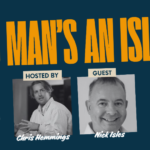
In this episode of No Man’s an Island, Chris Hemmings sits down with George from TheTinMen, a platform dedicated to evidence-based, unapologetic advocacy around the issues affecting men and boys. Together they explore the tension between facts, narratives and compassion in the gender equality space – and what happens when you challenge long-held assumptions about men’s lives.
George speaks candidly about his decision to stay anonymous, the backlash he faces, and why he believes real progress requires discomfort. The conversation moves from male victims of abuse to politics, charity, masculinity and courage – asking what it truly means to stand up for men’s wellbeing in a divided cultural landscape.
What we cover
- Why The Tin Men started and the philosophy behind “evidence-based advocacy”
- The backlash against challenging gender narratives
- The realities of male victims of abuse and violence
- Why statistics about men often go unshared or ignored
- The difference between being anti-feminist and scrutinising ideas
- Criticism of large men’s charities and how to make change responsibly
- The emotional toll of this work and how George protects his mental health
- Finding integrity and hope in difficult advocacy spaces
Listen and watch
🎧 Listen to all episodes here: No Man’s an Island
🎧 YouTube: https://www.youtube.com/watch?v=PxWqfrekmMA&t=44s
🎧 Apple Podcasts: https://podcasts.apple.com/us/podcast/the-personal-cost-of-showing-compassion-for-men/id1849171262?i=1000737168024
🎧 Spotify: https://open.spotify.com/episode/5IZQWTXhA5Uz6melVBoPoI?si=iWSsK2FCS32vL-NzHbp2-g
Takeaways for men
- Speaking up about men’s issues doesn’t mean being anti-women – it means broadening the conversation.
- Progress always feels uncomfortable; it’s supposed to.
- Data and empathy both matter – one without the other doesn’t create real understanding.
- Personal boundaries are vital when working in divisive spaces.
- The goal isn’t to win arguments but to make life better for men and boys.
Quotes to share
“What’s right and what’s popular are seldom the same.” – George, The Tin Men
“Progress isn’t achieved by guardians of morality, but by mad men, heretics, dreamers, hermits and sceptics.” – Stephen Fry, quoted by George
“It’s not as hard as being one of those men who is being abused today.” – George
“Being a progressive means being uncomfortable – that’s what progress feels like.” – George
Resources and links
Episode credits
Host: Chris Hemmings
Guest: George from The Tin Men
Produced by: Men’s Therapy Hub
TRANSCRIPT:
Chris (00:01)
Welcome to No Man is an Island, a podcast powered by Men’s Therapy Hub, which is a directory of male therapists for male clients. And today’s big question is going to be, what happens when you challenge the long-held narratives around men and boys issues? To talk about that and much else aside, I’m joined by George from the Tin Men. So the Tin Men is a platform that advocates to change the narrative around societal issues that impact men and boys. And I think it’s right, George, you describe yourself as evidence-based, unapologetic activism. That’s right, isn’t it?
George @thetinmen (00:31)
Yeah, I’ll try my best to be those things. Lovely to be here. Thank you.
Chris (00:34)
Okay,
great. And I mean, that all sounds pretty good so far, but as always in the gender space, there are detractors. And some will say that what the Tin Man is doing at the very least is contentious. And at the other end, there are those that say what George is doing is downright offensive. So as a result of that, you’ll notice that I’m only using George’s first name because he doesn’t share his surname publicly. And…
George @thetinmen (00:42)
Mmm.
Yeah.
Chris (01:02)
That’s in large part because you don’t want your personal life to be affected.
George @thetinmen (01:06)
Partly yes, but I mean, you could quite easy find out who I am if you really want to. ⁓ but also it’s, just don’t want to be the face. I didn’t do this to have my face like splattered around the internet. I just wanted to share information. felt was useful. If you go on, if you go on most people, most influencer, if that’s what I am, most influencers profile on Instagram, it’s just photos of their own face. Most of the time, just a grid of their own face. Now you won’t see that on my page and I only reluctantly put up reels of me, but.
For many years, was just facts, facts and facts and facts. And yeah, a lot of people don’t like the facts and I’ve learned that often what’s right and what’s popular, seldom the same. But I try to concern myself with what’s objectively right. mean, a lot of people try to talk to me about masculinity. And I just, try to, hate that question on podcasts because I don’t know what you’re talking about. And I don’t, I don’t know what masculinity is. I don’t really care that much, but I try to talk about things that are objectively.
Chris (01:41)
Mm.
George @thetinmen (02:06)
bad, like men in abusive relationships, boys being behind in school, men ending their own lives. Those are things that are objective numerical facts that are bad. The talk of masculinity can be had by someone else and I’m not interested in it, but yeah, I I don’t get much hate. mean, this, I’m not, I’m not like getting a barrage of bricks through my window or dog shit on my doorstep. I get wall to wall appreciation. So I don’t put your violin away. If you think I’m.
some sort of martyr, because I’m not.
Chris (02:39)
I
admire that approach because it is ⁓ taking stock of the reality of the situation, I guess, would be one way to describe it. But also you’re being quite boundaried by saying, I don’t want to be the face of it. What I do want to do is ⁓ this really caught my eye. And it was actually reading this that made me want to reach out to you to do this episode. So I’m going to read some of your own words back to you that you posted on LinkedIn a few weeks back. It’s a little long, so bear with me. So you wrote, to talk about gender equality, particularly as a man.
George @thetinmen (03:00)
Yeah
Chris (03:08)
is to walk a tiny tightrope, strung high above a swamp of crocodiles who are all too happy to eat you if you fall. Like all swamps, gender equality is muddled, impossible to dissect or see beyond, and hides great pitfalls of the overconfident or the foolish fall down. Despite these challenges, people want simple, straightforward, tweetable answers where there are none. Others grasp for ammunition or hand grenades to throw at the other side without rhyme or reason.
Many paint in a singular color, black versus white, red versus blue with slogan airing cartoonish or one size fits all rhetoric of quote, privilege and quote the patriarchy. It is of course not an easy place to tread, especially when so many quietly want you to slip and fall into the snapping jaws of those patiently waiting below. All of that said, the first question we ask on this show is how did you end up in this space?
which I do want you to answer, but given that that’s what you’ve written, I also want to know why, because you have chosen the path of much resistance.
George @thetinmen (04:14)
⁓ Yeah, that’s what, that’s my favorite thing about this space is that everyone in this space, know, almost with certainty that they’re not here for a quick book because there are no quick books to be earned here. Like you are going to get, I don’t know. I’m not, obviously I said, I don’t get threats of violence, but I also, it’s not easy either. There are easier ways to become well known or rich. So it isn’t, it isn’t that.
And also I want to say that I don’t write those things about being on a tight rope where people want me to fall into the snapping jaws of crocodiles with anger. I appreciate, I appreciate the scrutiny I put under. have people going through every single pixel of my posts with a fine tooth comb, adding up the numbers, going through the sources, making sure what I’m saying is absolutely right to the decimal place. And I appreciate that because that’s made my content so much better. It’s watertight because it has to be watertight and
I often just copy and paste information from reputable sources and present it back to people. And I’ve had to work really, really hard to make sure that is accurate. Whereas other people on the so-called other side, they are given a lot more grace than I am. They’re accepted at face value. And I do find that frustrating when I’ll, I’ll present like a meta analysis of hundreds of papers captured across decades by world leading experts. And people still don’t believe me.
And then someone will present a pixelated tweet. They’ve screen grabbed on their phone and then everyone’s convinced that they’re the ones that are right. But why did I start? Because I felt like someone needed to. I felt, I went on a journey myself of having, I wouldn’t, if I’d found my own page five years ago, I would be as offended as I’m sure most people are. I was very much into the belief against what I’m saying. I, it’s Tin Men is sort of.
the journey I’ve been on a realization of my own uncomfortable facts that I’ve then presented back to people. It started off basically just, wanted an, like an arsenal of information and facts in the palm of my hand, under the table quite literally. So when I’m talking to people in the progressive spaces that I call home on the, on the left, I can talk with information that is accurate and modern and
responsible and I never intended, I never thought people would follow me, but people clearly have, because clearly other conversations are happening on other tables and other facts have been held under those tables. So it was mainly just an archive information for myself and now people appreciate that. And then I’ve brought into my creative skillsets because I work in the creative industry, primarily as a filmmaker, but across all different mediums. And I’ve tried to bring a sense of production value and grace and just visual quality.
and understanding of creative strategy to this obviously very contentious area of advocacy. Cause that’s what I felt was missing. Like I would read the facts like men’s health, worse than women’s in every area, boys behind in education in every country in the West. would see millions of men in abusive relationships without help. And those were, in my opinion, indisputable facts that just needed presenting in the right way by someone like myself.
And then I thought someone like me would find the cheat code to unlock people’s compassion for men and boys. And I’ll be honest, I don’t think I have. quite, I actually am disappointed. thought surely just a little bit of work from someone like myself, so self-aggrandizing would blow up. I was just like, I am what’s needed. was like, I am the what is required. I will pull the sword of Excalibur from the stone that no one else is going to do. Like, and I haven’t.
Chris (07:54)
Yes
George @thetinmen (08:05)
And that’s more interesting. Like I’ve become increasingly more interested and alarmed, not by boys being behind in education, but by people’s reluctance to talk about it and to insist the opposite often. So yeah, it’s an interesting lifelong struggle that I’m excited to be in a set of creative challenges that I’ve worked in this industry for nearly 20 years now. I’ve never struggled this much. I’ve done so much more, way less for my clients. And yet I feel like I’ve been dealt a hand.
Chris (08:06)
Yeah.
Hmm.
George @thetinmen (08:35)
a royal flush as a creative in this space and every time I tried to put the cards down nothing seems to change so it’s intriguing.
Chris (08:43)
Yeah.
Is that continual belief of, this brilliant like witticism that I’ve come up with or I’ve found the statistic that’s gonna unlock the compassion for men and boys. And when I present this to people, they will go, okay, we have been wrong. Yeah, I remember vividly the first ever talk I did nearly 10 years ago now when my old book came out.
George @thetinmen (09:02)
Mm-hmm.
Chris (09:12)
And I left that talk, you know, like tail between my legs, like what just happened? Like neither the men nor the women in the room liked me. Nobody liked me. And that’s where part of my respect for what you’re doing is that, well, I wonder if you do see it this way that what you are doing is still considered to be contentious, as I said in the opening.
George @thetinmen (09:38)
Lesser. Oh yeah, it is, but less so. But the thing is, as the world catches up with what I’m saying and becomes comfortable with it, I’ve just gone further into, I don’t know, further into the vanguard. Like a lot of people are swimming around in the shallow end, I think, and I’m happy they are, but I’ve just been heading off into the deep end the whole time. So, I mean, I did a lot more in the earlier days of like, you know, softening my words and rounding off my edges and…
You know, offering, asking for penance and apology. And now I don’t bother with that. I just want to get to the, let’s just get to that. mean, most podcasts start off with some sort of like spluttering of some sort of disclaimer, typically about women and girls. And I don’t do that apart from obviously now, because I don’t think we need to or should, think boys and men deserve this in their own right and are deserving of it. And I also don’t think it works. Like I’ve often, whenever I see, I can advert for like McDonald’s.
Chris (10:12)
the caveats.
George @thetinmen (10:36)
And they will say, this is a hundred percent beef. I’m like, well, I, I assumed it was a new saying. It’s a hundred percent beef now makes me doubt the integrity of the burger. So me continually having to say, care about women and girls, women and girls. feel like only someone that’s sexist should say that. Like it’s the classic, I’m not racist, but which is like the classic forwards of a natural racist, but I would rather people judge me by my actions and my content.
And I don’t think you can judge it as being anti-women. And no, of course I’m not anti-women. And I don’t think I should have to say that. And any time spent saying that as I am now, is time not spent talking about what is important in terms of boys and men, or at least what is important to me.
Chris (11:17)
I want to come on to that the fact that you’re actually if you look at your content, you’re very clearly not anti-women because that is something that is very clear to somebody who works in this space. However, I guess what I do want to ask is you recently asked your Instagram followers to explain why they don’t share your content because
I guess the underlying narrative or the understanding there is that in some way your content can still be seen to be anti-women. So can you tell us about that exercise? Because I read the, I kind of read your report on it and I found it fascinating.
George @thetinmen (12:01)
Well, yeah, I mean, I polled my audience on Instagram and this was a couple of years ago. So it’s probably changed for the better now, but I asked, have you seen content on my page that you’ve agreed with, but haven’t shared specifically because you’re afraid. So some of you otherwise would have shared, are too afraid to. And I think it’s 81 % said yes. So more than four and five of my followers. I’m basically, I’m starting the handicap of like four times. Like I’m losing 80 % of my following in many ways, cause they’re too afraid.
and they otherwise would have shared it. So that’s obviously a disadvantage. ⁓ But it’s a very, yeah, it’s a very interesting phenomenon. And I must be honest, I’ve now forgotten the question you asked me. if you would.
Chris (12:42)
Well, it’s
about the exercise. I, cause my follow up question to that is that what is it that you think frightens people about advocating for men and boys? Because that is what it’s about.
George @thetinmen (12:50)
Oh, it’s just like, well,
it’s obvious, it? mean, if I were to show you every single piece of data ever presented by the CDC’s national intimate partner and sexual violence survey over 15 years, and we’re talking samples of maybe 50,000 Americans captured by non-partisan government organization, the CDC. And it shows every single time.
in all surveys that men and women are equally violent in relationships. That is obviously unpopular. doesn’t, it doesn’t, with anyone, with anyone that has convinced themselves that women are a particular certain way. And the most counterintuitive thing for me is I’m, I feel like what I’m doing is presenting true autonomy for women. Like autonomy for women is to do either good or bad.
Chris (13:25)
With who? With who though?
George @thetinmen (13:46)
either brilliant things or criminal things and everything in between that, that is what autonomy is. But people seem to think that women are only capable of great things and they certainly are, but they’re also capable of bad and they’re also capable of violence and intimate partner violence at that. So yeah, people seem to think that in that case, intimate partner violence is a gendered issue and it’s men who are overwhelmingly the ones doing it. But a lot of the data such as the CDC data finds that’s not true.
Or at least it’s a lot more complicated than that. So yes, it’s unpopular to talk about these things. I mean, I’ve been looking at some data from the seed from Australia. I look, I’ll just read it right now actually. Um, and it finds that 45 % of abuse victims in Australia are men. Uh, and it finds that another, another study found that, um, in Australia again, 26.4 % of Australian men admitted to sexual violence.
which is obviously a huge problem and a massive, and is an epidemic, but then 17.7 % of Australian women admitted to perpetrating sexual violence. So that’s a difference of 8%, slightly more. And no one talks about that at all. So obviously in that case, male violence is greater, but it’s not so, so much greater that we can just ignore female violence altogether. So I did another visualization of intimate partner violence yesterday that found that in
high school, universities and colleges, women are 2.5 times more likely to perpetrate unilateral violence than men are against women. So female violence, unilateral violence in universities is 2.5 times greater than male violence. And that is obviously horrendously unpopular. And it’s, that’s why I find it so interesting in a, in a dispassionate point of view as a creator, like how do I present this shit sandwich?
So people eat it down. And I’ve tried to my very best. I’ve tried to keep it really, really objective. I’m presenting all the citations and sources, very easy to access. You can check it for yourself. Uh, and I present source after source after source. Like that was like a meta analysis of thousands of people. And like I said, it’s still not enough because people don’t want to present that. People don’t want to share the fact that in that case, women in university are 2.5 times more likely to perpetrate intimate.
unilateral violence in men, because it is not what we believe and not what we’ve been taught. And ultimately it’s embarrassing in some senses that we’ve believed a lie for so long and we’ve made that lie part of our fundamental identity in many ways. I’ve always thought about it as like having food between your teeth for your entire life. And you finally find out that you’ve been walking around this way and it’s embarrassing. So yeah.
Chris (16:37)
Is
it a lie specifically? Have we been lied to? Right, okay. So it’s an omittance of the whole evidence. is, think, I may be paraphrasing you here, but what you’re talking about is selective presenting of evidence. is, you are presenting the violence against women and girls. However, in the same study, you are not presenting
George @thetinmen (16:42)
Well, it’s not the complete truth.
Chris (17:07)
the evidence from the other side. In fact, I shouldn’t even say the other side, right? I should just say the additional evidence that shows that men are also victims too. Because a lot of your work seems to be the yes and approach. It’s not the no but. It’s not saying women and girls are, you you’re not kind of anti-feminist as we spoke before. You’re not anti-women. You are, yes, these issues are real and women do experience them and.
George @thetinmen (17:17)
Mmm.
Mmm.
Chris (17:33)
Here are some issues that affect men and boys too. Can we give those some airtime?
George @thetinmen (17:41)
Well, I’m certainly, I mean, I’m certainly not anti-woman, but I have been very critical of some of the feminist frameworks that have led us down this road that has, have excluded men in many ways. Some people would call that anti-feminism, but I would just consider it scrutinizing political ideas like I anyone’s political ideas. But the nub of the point is that yes, like I’m happy to show you both halves of that pie chart. If I would just draw you a pie chart of domestic violence in the UK or England and Wales.
It would be something like 2.4 million women experience it last year and 1.5 million men, which is about 38, 39 % male victims. I’m happy to show you both sides of that. The 2.5 million women and the 1.4 million women. I do, and people are never happy. People are like, why are you showing us the women that you’re making this a competition? And then I’m like, okay, well, I’ll just show you the men. And then people would be like, well, why are you removing the women? Like you’re just showing us. So people are never happy, but
Chris (18:23)
And you do. Yeah.
George @thetinmen (18:38)
I’m more than happy. My advocacy is not based on erasing the experiences of women and girls. Like I, I’m happy to talk about the women are abused. think it’s obviously horrendous. I feel as strongly about those issues as anyone else or any feminist. What, but what I’m adding, as you said, and is the other side or at least the other 38, 39 % of that issue. And I don’t understand why people are so comfortable just erasing.
a significant minority of the problem just because they’re men. And we’re talking about millions of men in that case, we’re talking about 1.4 million men being abused in this country this year. I don’t know why they shouldn’t be part of the conversation. Like I got into an argument on Reddit of all places yesterday, because the government about to announce an apology for basically killing witches, historically speaking, which is fine. I agree with that, but I know that about 20 % of
witches killed were men, male witches, whatever they’re called. And there’s no, there’s not going be an apology to them. So I would ask why are we not, why are we excluding them? And obviously people get upset. They consider me hijacking the conversation, but ultimately men have a seat on this plane too. Maybe not as many seats as women, but a seat nonetheless. So it’s about time we took it and sat down and without apology, but also without antagonizing the other side.
So yeah, like I’m happy to be yes and rather than either or. I think that’s important.
Chris (20:12)
I think one of the,
yeah, it is, I agree with that. One of the biggest turning points for me was I started out similar to you. I started out very much men need to be better for women. That ⁓ the advocacy for men was to say, we’re not good enough and that’s affecting others. That is obviously not my approach now. is, you know, we’re not good enough, we’re not very good for it to ourselves because let’s also be honest here, George, like we as men or men in general are not.
very good at advocating for other men. That is a place that we struggle big time. But one of the big turning points for me was, and I think I mentioned this in one of my earlier episodes was, I used to sit on panels and I used to talk about ⁓ male violence. And I would say that it’s the violence itself that’s the problem. It’s not necessarily violence against women and girls, it’s the male violence. So let’s talk about that because men are also victims of violence too.
George @thetinmen (20:45)
Yeah. Yeah.
Chris (21:09)
and more so than they are women, to which the response was always, yes, but it’s mostly men doing the violence. And back then, before I was more learned, I would kind of not know what to respond to that. But now I realize if we do take the progressive approach, it’s just to say, well, that’s victim blaming. That is to say that you are saying that it doesn’t matter.
that men are victims of violence because it’s men who are enacting the violence. So if I get punched in the face by some random guy on the street, which is much more likely, I eight times more likely to be ⁓ assaulted on the street than any woman, ⁓ if that, just because that guy is male, somehow I’m to blame for that.
George @thetinmen (21:53)
Yeah.
Yeah. I mean, I think it’s, we’re talking about strange violence, about three times more likely. Um, and I’ve read studies where criminals specifically target other men because they don’t want to mug or assault women because they feel bad. And when they have, it’s often because a woman’s with a man and they feel great shame into having done so. Uh, but back to your point, you know, whenever people talk about
Chris (22:07)
Yeah, I saw that.
George @thetinmen (22:19)
women just want to get home safe. I’m like, oh, they should want that. And that’s totally understandable. But guess what? I want to get home safe too. And, uh, and then people, and I’m less likely to do so, but I feel like I’m also hijacking the conversation in many ways because violence on the streets isn’t by done to people like me violence on all women. It’s often gang violence, particularly young black men in inner cities, not by privileged middle-class white men like me who can probably walk the streets with more or less.
Chris (22:26)
Yeah. And I’m less likely to do so.
George @thetinmen (22:48)
with safety as can most women. So I don’t want to present myself as a victim either. I want to talk about the actual victims, which are, like I said, young black men, particularly gangs who ultimately have nowhere to better to go to and are exploited often slaves in many ways, modern slaves, and they are failed often from again, fatherless homes. There’s so much more to say. ⁓ and yeah, but going back to your thing like, yeah.
It’s by the men, it’s men doing the crime. So that doesn’t mean anything to the person that’s been stabbed. That doesn’t, that doesn’t mean it doesn’t hurt. Well, it’s not a crime that provides zero solace whatsoever. And it’s, it’s the same, it’s the same thought experiment bigotry as black on black crime, where people would try to wave away crime against black men because it was black on black crime. so that doesn’t make it any less important. Like that’s if your priority is to highlight the genitals of the assailant.
rather than offer sympathy to his victim, then I would argue what sort of advocacy is that? Like it should be about protecting people, making sure we all get home safe, rather than endlessly pointing out the gender of those committing the crimes. difficult one.
Chris (24:00)
Yeah, it is a difficult one. And I have heard this argument. So I’m going to present it here as a, as a possible pushback to say that ⁓ if I walk down the street, I’m I’m, I’m six foot three and, you know, too many kilos than I’m more kilos than I should be currently, but I’m a pretty big guy, right? Form of rugby player. I, people will be able to think, even though I’m extremely soft, people will be able to think that I can handle myself. So.
to me walking down the street, even though technically I’m more likely to experience violence, perhaps the threat of violence towards me isn’t as impactful on my psyche as it might be for a five foot tall, very slight woman. And so therefore, maybe just the pure statistics don’t actually…
George @thetinmen (24:56)
Hmm.
Chris (24:57)
engage us with the reality of the experience of living in fear? How would you respond to that?
George @thetinmen (25:03)
I mean, I
think I’m quite sympathetic towards that. And I think, I mean, some agreement with that. ⁓ but I’m happy to have a conversation about how the impact of violent crime might differ depending on the sex of the victim and like their physical stature or their inability to defend themselves. But we need to have that conversation on the foundation that both men and women are subjected to violence, violent crime. That shouldn’t be diminished because you share the same sex with the assailant.
But that once we’ve agreed that and we’ve come to terms about, then I’m happy to talk about the impacts. Like people always talk about that in domestic violence, where women fear more, women are more often injured. There’s some truth to that. And I’m happy to have a conversation, but we need to agree that both men and women can experience these things. And once you’ve done that, we can have additional conversation about potentially having different impacts on these, depending on these different things. But we’ve not even gotten over that first hurdle yet.
And I really, I really wish we would. ⁓ but I mean, just listening to each other, like anyone that’s still listening to his podcast of after 26 minutes should be giving themselves a pat on the back, having made it this far. And you, my friend are part of the solution in many ways, because you’ve actually not turned off and you’ve not reported this podcast or left a nasty comment, or maybe you have, but if you’re still here and willing to listen to the other side of the coin.
Chris (26:06)
How do you think we could?
George @thetinmen (26:31)
then give yourself pat on the back for being part of that solution. That’s more than most people can, I tell you that. And understanding that violence is very complicated. Like people would look at street violence or homicide that is overwhelmingly perpetrated by men, certainly is. No argument there from me, but they move that across and they assume that domestic violence must be the same. It must also be 90 % men doing that. And that’s not the same because domestic violence and stranger violence are completely different crimes. But
I would encourage us to look at the causes of violence, what shapes violent people, what experiences have they gone through, where they come from. Like their gender is not that important in my opinion. Like if I, if I would ask you what, what is the single biggest yet least discussed cause of family violence, I don’t think you’d name it in a hundred guesses, but it’s spanking children, like hitting your children in childhood.
Chris (27:25)
I don’t know what’s…
George @thetinmen (27:30)
corporal punishment, physical violence against children. That is described by Maurice Strauss, who was a founding father of the field of family violence, who is like, who probably was the world’s leading expert in the field. He said spanking children is the greatest yet least discussed cause of violence, domestic violence later in life, because you’re teaching children that you can use violence to solve or correct misbehavior. And I was like, if you’re learning that,
Chris (27:56)
Yeah.
George @thetinmen (27:58)
I can hit someone if I don’t like what they’re doing. And you were taught by that by your parents from the youngest possible age. Obviously you’re more likely to carry that lesson forwards upon people in your life, such as your partner, but never hear that discussed. You’ll never see spanking children talked about. And ironically, I mean, I saw Kirstama pledged a half violence against women last year. And then the following week he refused to make hitting your child illegal in England. it’s like, how could he possibly say these two things? So.
stopping violence against children, particularly by parents, is a much better use of our time than endlessly pointing the finger at the other side. Because ultimately most men and most women are not violent. And most men and most women are wonderful people and not deserving of any sort of condemnation. So I’d rather treat the problem than this endless gender war between men and women.
Chris (28:51)
Hmm.
The use of the term gender war itself is frustrating. I know why you use it because that is what it feels like. And yet, having done my research on you, you are also outspoken against a lot of organizations that advocate for men and boys. You are like equally bashing of both sides to say, nobody is getting this right. Yeah, not nobody, but these big organizations and you can name them if you like.
George @thetinmen (29:19)
Yeah.
Chris (29:26)
but I’m guessing what you’re saying a lot is that these men and boys, and I have said this, I could have made much more money. And I see people doing it now. If when I was trying to sell my wares of going into businesses to talk about men, what I talk about is issues that affect men and that men affect, it’s both, but I could have made much more money.
if I’d just done the issues that men affect side of things. And I guess, is that part of your frustration with these big male led organizations that sometimes they’re going for the easy book, as you said at the start?
George @thetinmen (30:09)
Yeah. I mean, you want to talk about November, we can talk about November. mean, there’s lots of criticisms to be leveled at them. And I mean, as a starting point, let’s remind ourselves that they are the biggest men’s health charity on the planet by a significant mark. They’re bigger than everyone else combined. They’re like this huge monolith giant with enormous amounts of money that in my opinion aren’t doing the work they should be doing. We can talk about that in detail, but I mean, I, I have loads of criticism to be leveled at loads of different people. I’m writing one right now.
Like I’m getting increasingly frustrated, for example, by people talking about male, ⁓ male suicide. And then all the work they’re doing is they’re just dividing the data by sort of arbitrary lines around demographics. So they’ll present data on ethnic groups and male suicide, or they’ll present data on age and male suicide. And it’s like, find that relatively interesting, but ultimately not particularly helpful. I’d rather talk about male suicide in terms of what causes it and like what childhood experiences and the environments and external factors and.
personal stresses that shape suicide rather than the race of the people who ending their lives. So there’s a lot of criticism to go around. I’m not, I’m obviously, I can, can be and have been quite critical of certain feminist organizations. Uh, and I’m obviously open to myself being criticized. I don’t think anyone, any of the things off the table, but remember I put under additional level of scrutiny because they are the ones with the political connections and the money.
to have real change. Like ultimately I’m sat here with my laptop with a few hundred quid from some very generous Patreons and that’s it. Like I didn’t have anything that I’ve known of their political connections, but I feel like I’m doing a lot of the work they should be doing. And a lot of the work they should be doing by their very name is men’s health, male suicide prevention. And unfortunately, lot of the things that shape male suicide and a lot of things that are detrimental to men’s health are really, really unpopular to talk about.
I recently learned that violence against women has a greater detrimental impact on her health than smoking and poor diet and illicit drug use. Like it’s horrific. And of course intimate part of violence is and should be a women’s health issue. Now, Movember have refused to talk about violence against men. So here we have the biggest charity in men’s health in the world.
refusing to talk about violence against men when violence against men could well have a bigger negative impact on a man’s health than smoking. So they’re not talking about something that’s even bigger than smoking or poor diet because for one reason it’s unpopular. They’ll lose some of those political connections and probably some money, but I would say that’s sacrifice worth making because like I said, there are millions of men whose lives are being immiserated now, right now. ⁓
because of violence and they’re not being helped and they’re not even being helped by those who could help them and have the funds to help them immediately. So I’m not afraid of throwing a few stones at them. I mean, I’m also thinking they’ve done some great work. They’ve done some great work in terms of getting the men’s health strategy over the line. And they’ve done some great work in men’s obviously like prostate when it comes to physical health, like body fat, BMI, prostates, they’ve done some great work. Cause that’s all like sort of more politically expedient, more comfortable. They’re sort of not.
quick wins, but then no one’s going to complain about that. But now comes the ugly work and that and part of the ugly work are men who are abused men who are victims of sexual violence and more. So yeah, I’m happy to criticize both sides. And that’s led me down the road where I’m rather lonely. I find myself alienated from all sides. ⁓ And I just want to keep going. Like my dad says, follow your nose. So
Chris (33:36)
Hmm.
Hmm.
George @thetinmen (34:02)
I’ve got a good nose to follow both literally and metaphorically, so I’ll keep doing that.
Chris (34:09)
Yeah, I have a kind of idiom that my granddad used to say to me, which is play it as it lies. And I guess what you’re doing is you are seeing the reality of it and speaking it. I guess from Movember’s perspective and I will agree that Movember in a therapeutic space, Zach Seidler is already on the slate to do an episode of this. He’s the global health director of Movember. he and his
George @thetinmen (34:15)
You
Say hi to him for me.
Chris (34:38)
I will. He and his research team have done some wonderful stuff in changing the narrative around ⁓ men’s mental health and how to engage men in the therapeutic space. ⁓ However, what you’re saying is, yeah, and again, what you’re, yeah.
George @thetinmen (34:49)
Yeah, a hundred percent. Just to be clear, I’ve read that
research work as well. It’s amazing. I’ve posted specifically about that work by Zach. I really, really appreciate it. I admire it. I really respect that work in particular by Zach. mean, obviously we have some rather fractious fallings out, but that’s not to say there aren’t things I really respect about him. So there’s my olive branch and I, I, yeah.
Chris (35:12)
But you see, there’s the yes and approach again. And I think that’s
what is, ⁓ it’s a privilege actually, George, because again, I might not agree with everything that you say. I hope you experience at least some pushback from me on some of the stuff, because I think that’s important. I don’t just want to, know, let’s just sit here and stroke each other’s whatever’s right. ⁓ Like this is about having a real conversation. And when I speak with Zach, which I will do, I will be putting to him.
George @thetinmen (35:32)
Ha ha.
Chris (35:42)
some of those challenges from you because they are also some of my beliefs too, which is you have the ball, like Movember has the ball, like more than anybody, you know, you have the money and the space. And I wonder if to show the Movember organization as it is, some compassion to say they’re able to do amazing research in prostate cancer, in therapy, in ⁓ weight loss, in all of these areas for men because they play it as it lies.
because they don’t try and smash the Overton window. They sit slightly off-center in it, but kind of comfortably in the middle of it. And then because they do that and they can get such good funding, then they can do the other deep groundwork that is also impactful. Do you understand that?
George @thetinmen (36:35)
Yeah. And I understand that, but I’d say a lot of the overton wind shifting of this overton window, which they do benefit from is down to people such as myself, not obviously just me, but we’re the ones are like taking the heat on their behalf to try and shift people’s perspective more into this uncomfortable area of advocacy. And I must say from what I understand behind the scenes, they are coming around to the idea of violence against men and boys at Movember. Not fast enough, but
I’m going to keep trying to pull them along. And I would say the roles are reversed. They’re the ones that have an enormous, enormous legal department and millions of pounds in the bank, tens of millions in fact, to protect themselves. have nothing. If someone, if someone with bad intentions comes after me, I’m not sure what I would do. It’s actually quite nerve wracking and it’s not, I don’t want my head to be on the chopping block forever. I feel like.
Someone like November, they’re the ones that should be in my seat. They’re the ones that should be leading this charge. And ultimately their job is to make sure men live long, happy lives. And the things that stop them from doing that are often comfortable. The low hanging fruit of prostate cancer, et cetera, have, have been done great work, but now it’s time to go into the garden of the forbidden fruit and talk about what I’m talking about. Like everything I’ve already gone over and more and
If they can’t do it, then who can? It shouldn’t be people like me. But sadly, I’m the best you’ve got, seemingly. But yeah, like I just don’t understand. I don’t understand why November are funding violence against women campaigns and seemingly giving nothing to men who are abused. Like millions of dollars go into violence against women for November, nothing going to men who are being abused, as far as I’m aware. And I don’t know why they’re sitting on so much cash.
Like we can see how much money they’ve got in the bank. And we’re talking about 55 million pounds in the UK. I’m not sure where, why that’s there, where it’s going, but it’s not that money. Let’s remind ourselves of that. It’s money it was given to them that they’ve held onto for, I don’t know why. So yeah, that would be a second criticism. I’d love to level at them. Like why have you got so much money? Why are people still giving me November’s coming along? So they’ll probably add to that big mountain of cash. And I meet charities every single day in the UK that doing incredible.
work for men and boys and they they’re literally going bankrupt all the time. So let’s see some of that money. Shall we?
Chris (39:07)
Yeah.
Well, you talked about protecting yourself. So perhaps I can give you the advice that my accountant gave me, which is ⁓ set up as a business so that if you ever do get sued, it’s the business that sued. Okay. But then, know, you’re not completely a risk, but I do take the, because actually the question I was going to ask you really is, this is a risk that you’re taking. This is a personal risk. It’s a professional risk. You know, you don’t use your full name because of the potential.
George @thetinmen (39:20)
yeah, I’ve done that. Bye.
Chris (39:37)
pitfalls as you talked about with the crocodiles. From a personal perspective, do you ever get disheartened? Do you ever get saddened? Do you ever want to give up?
George @thetinmen (39:49)
Yeah.
Yeah. All the time. Like really very close, even recently, like I’ve just had a break for three weeks and loads of reasons why that, and there’s definitely a big part of me that’s like, why am I still doing this? Like the end, the end is, I don’t even know what the end even looks like, but it’s certainly not in sight. And it’s not, it’s never been the angry people that say nasty things about me that deter me. In many ways they motivate me. It’s the people that
I considered my allies who just capitulate and who just bow down and should not, not doing the hard work. Like I know, I mean, I’m I’m not going to compare myself to Martin Luther King, but his letter from a Birmingham jail is probably the most seminal piece of political literature ever written. And he wrote that the most bewildering thing to him was not the KKK, but the white moderate.
And those who are just sort of lukewarm acceptance. said lukewarm acceptance is much more bewildering than outright hostility. And if I can take anything from Dr. King, it would be that. And that’s, I feel the exact same way. Like the people that send me stupid DMs, I’ll have a little laugh about it and I’ll move on. But it’s the lukewarm acceptance that’s way more bewildering. And I see that from many different people in my space, people that I consider on my side. And yeah, that’s what gets me down.
Like there’s there’s a set of awards coming out soon next month in the men’s sector to give into different organizations and individuals who have done good work in this field. I know people that have nominated me for some awards and I appreciate that. didn’t ask them to do it, but they have. Not sponsored by Movember. So I’m, I’m not going to go. So if I do get an award, I won’t be there to accept it. So if I get like the award for public awareness.
fact that I’m not even there, boycotting the very award itself is like that sort of represents how I don’t feel like I have a home many ways. I feel like a nomad. I feel ostracized in many ways and yeah, it has a massive impact on my mental health. And that’s why I take breaks and I go away and I just wait for the motivation to come back. And it always does, but it won’t forever. People are very happy for me to be out here making trouble causing, you know,
throwing stones at the big charities and rocking the boat. And I’m happy to do that, but it is fucking tiring. Like it’s tiring and I’ve not, I’m not made of money. Like I’m not, like I, I fund this myself and it’s, it’s got a life lifetime on it. Let’s put it that way. And I don’t know how long that is.
Chris (42:14)
Yeah, I know.
Yeah. Yeah. I feel you on that George. went away after a really harrowing public personal experience. ⁓ and I had to just reconsider what I wanted to do and how I wanted to do it because it is, you know, it is forever bashing your head against, you know, it’s an, move of what feels sometimes like an immovable object. But, but, I, and I say this with like, I don’t know what the word for it is, but like, ⁓ reluctant to be excited.
George @thetinmen (42:45)
Mmm.
Chris (42:55)
I don’t know what the words, there’s probably a German word for it. ⁓ There is a shift happening. There is a movement. I had this question in my head to you because I saw in one of your publications recently, I saw a tweet by a guy called Paul Elam. So Paul Elam, for those that don’t know him, would be like front and center old school men’s rights activist. Like he is like anti-women. ⁓
George @thetinmen (43:01)
Yeah.
Yeah. Fucking…
Chris (43:24)
fervently pro-men, men can’t do any wrong, the whole world is problem because of women, which like, no. ⁓ Yeah, did, well exactly. He put a tweet up comparing white liberal women to the KKK. And you disagreed with him publicly. But then as you’ve just talked about there, so you disagree with like the hardcore men’s rights activists. You disagree with some of the work that ⁓ men’s organizations do, not all. You disagree with.
George @thetinmen (43:30)
Idiot. I hate him.
Yeah.
Chris (43:52)
You you disagree with some feminist organizations and you recently demanded ⁓ apologies from a host of female speakers from the past and the way that they’d spoken about men. And you talk there about not having a home. To me, what you are trying to do and what we are trying to do with Men’s Therapy Hub, and the great thing about Men’s Therapy Hub is that if people say, I don’t like it, I can say, okay, do you know that X on your screen? You can just close it and then you never have to think of us again.
If you don’t like it, we’re not for you. I’ve had men say, ⁓ but I don’t want to only work with men. And I’m like, that’s not what we’re saying. There doesn’t seem to be a natural home for the men’s movement that says the yes and, that says we are supportive of everything that’s going on over here or most of what’s going on over here, but we’re not supportive of the lack of stuff that’s going on over here. So that is a long way to ask.
George @thetinmen (44:23)
Hmm.
Chris (44:51)
Where do you figure that you would sit? Because you called yourself left earlier. Are you progressive? Are you liberal? What would be the space that you actually would like to operate in or that you feel like you do?
George @thetinmen (44:56)
Mm.
Well, I mean, as, of every general election in the past five years, will find my ballot screwed up into a ball and stuffed into the ballot box. That’s where I am. I mean, I’m a nomad. don’t know who I would vote for to what side I belong. I mean, I’m naturally left leaning and a liberal, classical liberal at least. So I just don’t know where, where I am now. And I’m in this space. I’m
Chris (45:24)
Mm.
George @thetinmen (45:34)
I want to, guess I am the troublemaker. I don’t want to be the troublemaker all the time, but as long as I’m making specific criticisms at certain individuals and organizations, rather than just generalized attacks like Paul Elam, who let me be clear as an idiot and a misogynist who’s just saying women are the KKK or worse. That’s not helpful. But when I’ll criticize feminist organizations or November or him, I’ll say this is the problem. And this is why I think it’s a problem. But.
That’s where I want to be. I’m unafraid of criticizing people in a way that I hope is constructive and I hope is encouraging others to hold each other accountable, not for my sake, but for the sake of men and boys, most of all, but also women too. ⁓ and right now that has left me in a lonely place for sure. I mean, I have an enormous community of my own. So whatever it, wherever I am and whatever it is, I, where it is I belong, I’m going to have to build those four walls in myself. and I have.
But I hope in time, the things I’ve said and content I put out will become vindicated in some ways. And I think the people who disagree with me and don’t want to talk about male victims of abuse, for example, and don’t want to talk about men who are raped or whatever else that isn’t popular now, as that becomes more accepted and is adopted into the public lexicon of politics, they will be revealed as having failed men and boys and betrayed them.
They all look back at themselves 10 or 20 years from now with shame, I think. And hopefully I will be proud of what I’ve said. And I’ll be proud that I did a little bit to raise a flag for the 1.4 million men who are abusing England and Wales. The 50 million men that are abusing America across their lifetime. And although I’ll take heat now, I hope in time I’ll be vindicated. And I really wish people that are dragging their heels in this space.
Ask yourself, what will your future self say in 20 years when these conversations I’m having are all benign and we all look back at what we didn’t do and how we left so many millions of immiserated and ending their own lives as a consequence of our political cowardice. And I want to honestly ask them, encourage them to think about that a little bit and do your future self proud.
Cause I obviously, I can speak of some experience about this. all, we all look back in time at photos of ourselves and for me, ridiculous haircuts. And at the time of me having that haircut, at the time of me wearing that full one piece velour tracksuit, I thought I looked great. I thought this is the best haircut ever. This velour is amazing. But now I look back 20 years on, I can’t believe I ever did it. I can’t believe I ever thought that was good.
Chris (48:28)
Hmm.
George @thetinmen (48:30)
So hindsight is a wonderful thing. The same is true for politics. So I don’t want to look back 20 years from now and be embarrassed by my political position. And hopefully I won’t be.
Chris (48:42)
And the issue is like with the Velour tracksuit is you don’t know how you’re going to react to yourself 20 years from now. All you can act upon is your conscience as it is. And what you just described there, which is quite strong rhetoric is political cowardice. You genuinely think this is cowardice.
George @thetinmen (48:48)
Yeah.
Mm-hmm.
Mm-hmm.
Yeah. I, yeah. And it’s, it’s hard. It’s definitely hard. I get it. It’s very hard to say men can be abused too. And in significant numbers, difficult, very difficult to say that on a public platform with your face, but it’s not as hard as being one of those men who is being abused today. That is like, obviously so much worse. So any discomfort or pain or sacrifice I have to make is nothing in comparison to what’s happening to men quietly now.
Like nothing, I can’t compare myself. That’s why I don’t want to be a martyr. Like, yeah. And it is, like it is obviously politically uncomfortable to say these things. Even when they’re substantiated by literally hundreds of sources. But that doesn’t mean we shouldn’t do it. And I feel like we have a responsibility to say these things, even if it comes at personal cost, because ultimately no amount of political discomfort is more important than a man’s life.
So I remind myself of that. And I know there are many tens of thousands of people that follow me that feel seen by my work. ⁓ and that their appreciation is way more important to me than any award or any sort of golden handshake or photo opportunity. So I only have to go to my DMs to see that. And, ⁓ I remind myself what I’m motivated by and that is to
help men and boys live longer, happier, healthier lives. And if that comes at some discomfort to myself, then so be it. And I hope more people follow me down that road.
Chris (50:38)
Yeah, and the personal discomfort is something from my own experience that is part and parcel of being in this work. mean, I will, if it’s okay, I’ll share an experience with you I had where, okay, so downstairs in my house, I have ⁓ a poster, like an artistic poster of Emmeline Pankhurst, right? So I’m a card carrying, ⁓ excessive civic pride, Mancunian. So Emmeline Pankhurst, like big up Emmeline.
for all of the work that…
team did ⁓ to progress. Like, you know, I would rather be a rebel than a slave is the quote that’s often attributed to Emily Pankhurst, right? And I don’t consider myself to be a slave in the traditional sense of the word, but the kind of sense of like, we can become a slave to ⁓ the accepted narratives. And ⁓ with empath, we were doing this huge piece of work in
Borough Council in the UK, I’m not going to name them. And I did a talk to one of the schools at the start of the project. And the talk is basically your blog in talk form. is, here is the reality of the life for your boys right now. And one of the things that I talked about was the sense of a social justice.
released this report recently that showed that the gender pay gap for 16 to 25 year old men and women has now switched and that boys now earn less. And there was a small group of female teachers who went to the people leading ⁓ this piece of work in the council to try to get me the equivalent of canceled basically, right? To say that it was offensive that I would say that even though it was research-based.
George @thetinmen (52:18)
Mm-hmm.
Chris (52:38)
And I remember sitting in my house and I was crying because I was so tired of this, right? Because I’m just trying to help fucking boys. I’m just trying to help. Like this is what I ended up saying to the people who running it. Like we had this big meeting and I’m like, I’m just trying to help these boys that are struggling. And these are like white working class boys. And I don’t need to tell you what that means in terms of their life chances, right? And I’m so deeply affected by this, but then I sit and I look at this post of Emmeline Pankhurst and I get emotional thinking about it now to say like,
George @thetinmen (52:59)
Mm-hmm.
Chris (53:08)
These women back then, they went through so much more than I will ever have to go through in order to be heard. Like these women were treated appallingly by the establishment, if you want to call it that, right? So we are pushing back and you are pushing back and there are many of us pushing back like that. I find inspiration from some people like Emmeline Pankhurst, you clearly find inspiration from Martin Luther King, so like…
George @thetinmen (53:38)
yeah, if I can paint myself that enormous compliment, which is outrageous, but yeah, I take inspiration for sure. Yeah, yeah, yeah. Definitely not.
Chris (53:38)
you know, fair enough, like.
But no, I’m saying you take inspiration from him, not that you are in
any way in his league. When there are people out there listening to this and, you know, to the 12 people listening, hi. ⁓ When people are listening to this and they think, but this is too hard or I’m going to get pushed, my female partner is going to hate on me. ⁓ You know, I’m going to get whatever the 20 year old equivalent of being
canceled within your friendship group might be, right? What do you say to those people who are not willing to take the risk that you and I are, perhaps because something in our makeup, in our psyche, or because we’re idiots, I don’t know. What do you say to those kids who are those young men or older men who are like, but there’s too much at risk for me, so it’s easier for me not to?
George @thetinmen (54:39)
⁓ I mean, if you’re still listening to this podcast and you’re needing convincing on that, then I’m not sure what else I could possibly say, but I would remind you of the words of Stephen Fry where he said, ⁓ progress isn’t achieved by guardians of morality, but by mad men, heretics, dreamers, hermits, and skeptics. And what he’s saying is that progress isn’t achieved by people that just
nod along and pat each other on the back and do the easy work and look good doing so. It’s by those who are willing to rock the boat as I try to. And that’s how progress has only ever been achieved, including by Emily Pankhurst. Although I would disagree in some of the ways in which you described it. think she’s got a bit of a mixed history, which we probably don’t have time to go into, but yeah, yeah. Yeah. But I mean, she spent a lot of time with the order, right feather with her daughter.
Chris (55:28)
Don’t we all?
George @thetinmen (55:36)
giving away white feathers to unenlisted men and boys to essentially shame them into going into the war. And I understand women were horrifically oppressed back then, but I wouldn’t consider Emiline, who was upper middle class, be the best example of that. And also she, people forget that most men also couldn’t vote back then in the early 1900s. And she never did anything for them, working class men particularly, exactly. And they also won the right to vote.
Chris (55:41)
Yep, I know. Yep.
Yeah. Working class men. Yeah.
George @thetinmen (56:04)
And I’d also say a lot of people, some people think the suffragettes work might have actually alienated politicians and delayed women’s winning the right to vote because of their, app. I, one of the things I learned recently is that the suffragettes invented the letter bomb. There’s some trivia for you. So mixed bag, like you said, of everyone. I’m sure I’ve got my, we’ve all got our flaws. But I would say that’s how progress is achieved. Sometimes you need to rock the boat. Sometimes you need to throw stones. Sometimes you need to be a troublemaker or a conoclast. It’s not.
Chris (56:17)
Yep. Yeah.
George @thetinmen (56:34)
nothing is achieved by nodding along. Like being a progressive by its very nature is about being uncomfortable because that’s what progress feels like. You’re journeying into the unknown and the unknown is often scary. So I would say that. And I’d also say that the fear you’re feeling is probably overblown. Like I’ve, I’ve had my head above the parapet for five years and then nothing’s really happened to me. Like
I get occasional death threat or horrible things said to me, but I’m overwhelmed with messages of thanks, overwhelmed like 99 to one or more. So it’s worth it and it’s necessary. And if it’s not going to be you, then who will be the one that does it? So this is how progress is achieved and it’s not as bad as it seems.
Chris (57:23)
Hmm.
Hmm.
In the disclaimer for the start of this podcast, it says the opinions of the guests are their own and theirs only. We aim to challenge where necessary, right? And I think I’ve challenged you a little bit on this, but I think it’s probably fair to say that it’s fairly obvious to listeners that I agree mostly with what you’re saying and your approach. One thing that I think would be a major challenge would be, and you kind of just spoke about it there, was like maybe the suffragettes alienated politicians through their approach.
I could have a long conversation with you about how else could they have gone about it and we could have that. That’s a whole podcast on its own. Yeah. Yeah. Yeah. But you never know because we’ll never be able to know would one have happened without the other. Is there ever a time when you think that maybe, I think sometimes that the posts and the way that you approach things could be considered to be abrasive.
George @thetinmen (58:06)
Well, like the suffragists, there’s a second movement, you know, the suffragists did the exact same thing, but they did it peacefully. So like them, I imagine.
Chris (58:30)
They’re not abrasive to me because I mostly agree with what you’re saying. Do you think that abrasiveness, do you think that approach could actually be putting more people off than engaging them?
George @thetinmen (58:44)
Uh, yeah, potentially some people, I mean, some people, I mean, they even follow me every time I put a post up, I’ll see the followers go up or go down. Uh, I mean, I’m, I’m open in many ways, really keen to hear from those people, the people that are like, what you said is problematic or you’re a misogynist or an incel. And I’m like, okay, thanks. Thanks for that. But can you just be specific on what it is I’ve done or not done or said or not said that you find abrasive?
I genuinely want to hear those things. I don’t want to just be accused of blanket terms. want to know, want specific feedback. So hopefully I can learn. Like the Tin Men is a continual journey of learning, but I can only learn from such people if they make a specific point rather than just generic insult often at my sex life. ⁓ so I’m, I’m many ways desperate to learn from these people. If only.
to me get through to them. But I can’t learn from just being insulted or called an incel. I want to know what am I doing wrong? Or what do you think I could do better? And I, it would be wildly hypocritical of me to criticize so many people and then not to leave myself open to criticism. And one of the things I want to do in my podcast, I want to talk to people that disagree with me, but there’s not always people want to talk to me. So I feel like I’m stuck here.
Like I’m just trying my best. That’s something I won’t be criticized on. I don’t mind people having a go at me for maybe I’ve rounded something up or down the wrong way, or maybe I’ve missed something, or maybe I don’t quite understand the stats in some way. That’s fine. And then maybe they’re right. I won’t accept criticism of my character or my intentions. I’m not interested in that. Like I know what I’m doing is, is at least intended to be good. And my intentions are similar. So.
Yeah. Um, I want to learn. I’m, like, I’m not naturally a researcher. I’m a mediocre bachelor of arts from a very average university and a filmmaker. Right. I’m not the one that should be criticizing people as Zach Seidler who are enormously achieved really in the area of psychology. He is the number one. So I have a lot to learn, but I can only learn if people talk to me.
Chris (1:01:09)
I’ve just noticed, and I’m really fucking annoyed about this, for some reason Riverside is saying that it’s audio only recording, so that’s fucking annoying. So if you don’t mind, I’m going to stop and then can we do like another 10 minutes or so with the video? Yeah.
George @thetinmen (1:01:23)
Do it all again.
Chris (00:01)
With this personal very much being part of the political, it is something that is inextricably linked in this way, ⁓ what would you say would be the…
George @thetinmen (00:07)
Mm.
Chris (00:16)
If I could give you the keys to the vault, this is a question that I’ve asked every guest so far. If I could give you the keys to the vault and you could have unlimited funding to do anything, where would you start in terms of changing the narratives or changing the statistics around all of the things that you talk about?
George @thetinmen (00:40)
Wow, I I talk about so many different things, but if we were to pick a particular subject, I would want to start off by just finding out what the problem is. Like if we’re going to talk about male victims of abuse, I’d want to do a massive survey of those men to find out how many there are, what they need, what their experiences are like. I wouldn’t want to just be the one that decides. I don’t want to decide what they want. I just want to give them the microphone so they can tell us what they want for boys being behind in school.
I don’t want to speak on their behalf or decide where the money goes. The first thing I do is let’s do a massive survey on where we are failing boys. So I’d want to thousands, tens of thousands of boys down and be like, what don’t you like about school? And some people have done that already and they found out that the things they do like are nothing. The second one was substitute teachers. So when teachers didn’t turn up, they like to substitute. And the third one is PE. So pretty dire. But my point is that.
I don’t want to decide what men and boys need. I would like to ask them myself. So the first step would surely be a huge survey rather than continually speaking on the behalf, which everyone seems to do. Cause that’s always the voice that’s missing from the conversation. Like everyone seems to know what men want and boys need, but we never hear from them themselves. So a massive learning experience, huge, but in things like domestic violence,
I would like to recognise that this is not a gendered issue, although there are gendered elements of it. I would say anyone can be abused. And the way we can produce that is that we know we’ve done that learning experience in many ways. And I would like to go back to childhood. I would like to look at children who experienced violence in early life. And I would like to understand that. And I would like to pour money into support for families. So obviously violence is a…
A lot of it’s related to stress and anger and frustration. So I’d want, I want all parents, particularly in early years to feel supported and looked after so they don’t resort to violence and they don’t repeat the cycle of violence that has destroyed so many millions of lives. And then I’d want to change intervention strategies away from the gendered models who currently have. But I mean, ultimately, I don’t know. My expertise have been presenting the ideas of far smarter people than myself. So I’d like to use the money.
learning from men and boys and also understanding these things better from a properly non-partisan evidence-based point of view. Beyond that, I’m not qualified to speak, to be honest, so I’m very apprehensive to go further.
Chris (03:14)
Hmm.
Fair enough. ⁓ One of the things you said at the very start was that at least for yourself, you’re not trying to ask for the tiny violin. ⁓ Is that part of the problem here? Is that actually when we look at…
male victims of anything and the homelessness, the violence, the addiction, that actually there seems to be a cultural lack of violin playing for men. There seems to be a lack of compassion for men. And here’s where my slight cynicism comes in to say that, at least from my perspective of it, that is the case. However, and maybe a lot of that
sadly comes from men themselves that we don’t look at ourselves with compassion. We don’t look at other men with compassion. We are only trained to look at others who are not straight white guys, let’s say in the Western world with compassion.
George @thetinmen (04:09)
Mm.
Hmm. Well, when I say put your violin away, I mean, I meant specifically for me in the sense that I live a privileged life. Like I love, I obviously it’s difficult. I love, I love my life. I love my work. I love having this community. love the sense of purpose I achieve and reminded of every single day. So if you want to feel bad for me, then please don’t. But I think you’re very right in that more men should just like.
Ask, well, I obviously ask for help and talk about what you’re going through. I always think a lot of what I talk about is squeaky wheel gets the oil to capture it quite well. And more men need to be that squeaky wheel so we can have some oil. And by oil, mean, compassion, funding, support, research, whatever else. But we all know that men are less likely to share what’s on in their life, especially painful experiences. know
men who being abused or about two or three times less likely to tell anyone. Obviously that has a massive detrimental impact to those men primarily, but it also warps our understanding of the more generalized male experience. Where because they’re not telling us, we don’t know. We don’t know what they’re not telling us. And I’ve often been quite cynical of the men’s sector, endless encouragement of men to talk.
Cause I, I appreciate that, but at the same time, a lot of the things men are talking about can’t be solved through talking. They need like systemic change. Like a lot of men, obviously losing children, family courts, they can’t talk the way out of that problem that comes from systemic change. However, I have slowly learned to change my mind a little bit on that because if men aren’t telling us what’s going on, then how can we ever make those changes? So definitely encouraging men to talk.
but only if it’s followed by the appropriate listening and then of course, action. So yeah, I think there’s definitely a secondary impact of men not sharing what’s going on in the sense that it’s the missing half of the picture. But at the same time, one of the reasons why men don’t talk about experiences of abuse is because they so often rarely see it discussed anywhere. Like if you were to go ahead and Google domestic abuse now,
You won’t see any men being abused. You won’t see it in the news. You won’t see it on TV. You won’t see it on social media, apart from on my page. So it’s hardly surprising that men don’t see it themselves when no one else sees it either. So men are just a product of society. So yeah, it’s a bit of chicken and egg in that situation, but overall, the more men that can find the words to what they’re going through, the better we are to help them. But like I said, chicken and egg.
Chris (07:10)
Hmm.
the language that you use there and the way you described it, I can hear on a panel with ⁓ a bunch of women, I can hear one of them saying that is patriarchy affecting men. That the society that we live in is perpetuating the lack of compassion for men and it comes from men and also that, you know,
George @thetinmen (07:32)
You
Chris (07:44)
when you talked about the media there and men have traditionally been in charge and running media organizations, you push back against the concept of the patriarchy. Is that a fair way to describe it?
George @thetinmen (07:59)
Yeah. Yeah. Yeah, of course.
I think it’s quite a low resolution cartoonish and increasingly out outdated point of view that is very divisive. And I’m not saying there’s no truth to it. What I’m saying is that there way better ways to see the world. There are higher resolution, more delineated, dare I say more grown up ways of talking about these issues. And yeah, men built a system, but then we’ll be talking half this podcast about domestic violence. And I I’ve seen the gender breakdown.
of those employed at Refuge UK and who are the largest and biggest and oldest domestic violence charity on the planet. And it’s like 97 % women. So if one of the problems we’re talking about is men not being adequately helped in abusive relationships, then there was no way you could say men built that system because women built the domestic violence industry, started that movement. I’ve even met the woman that started it all. So I’d rather move beyond these divisive.
political points of view, i.e. the patriarchy, and start to bring back some of the scientific tools of psychology, economics, family violence, anthropology, you name it, that are more precise, higher resolution, testable, and depoliticised, and not divisive. And then we can have the conversations on the pay gap, because we can understand the pay gap so much better if we look at it through economics.
then we can by just having this really broad, vague, ideological brushstrokes of the patriarchy. So there’s just better points of view. And I think we just start using them.
Chris (09:41)
And to circle right back to the start, in the text that I read out, quoting yourself back to yourself, you talked about this desire for like tweetable sound bites is what we’re kind of talking about, right? We want things that are, you know, in the therapeutic world, it’s this, these five things changed my life. If you do these five things, and it’s like, as a therapist, it’s like, no, no, no, no, no. Like, it’s not just so easy as just…
George @thetinmen (09:55)
Mmm.
Chris (10:10)
changing five things like that and all of your dreams will come true and all of your problems will be solved.
George @thetinmen (10:13)
Mm-hmm.
Chris (10:16)
You are requesting of the world and your followers to engage in nuance in what Richard Reeves, the author of ⁓ Boys and Men would say would be holding two thoughts in our hands at the same time. It’s the yes and that we talked
I am sad to say that I feel like we’re further and further away from a world in which nuance and an hour and 10 minutes of a podcast and you and I sitting here trying to meet with understanding and compassion of issues and also in some disagreement but meeting somewhere in the middle, that we’re moving further away from that. Do you have any belief that-
This is gonna land, this desire you have to move away from chunks of sound bites that will sound like they’ll solve everything.
George @thetinmen (11:19)
Yeah, I think I’m a bit more optimistic than you seem to be. think generally speaking, the landscape of politics is really not great and it probably is going the opposite way. But in my area of discourse, a lot of the things that I was pelted with eggs for saying five years ago are now being talked about quite openly in public and literally in Westminster. And by that I mean the men’s health strategy, the minister for men and the violence against men and boys bill. Those are things that I just suggested. And obviously people talking about it way before me.
But those are fairly benign things to say, one of them is actually happening. So that shows progress. And I’ve, in my short tenure in this space, I’ve seen more and more people come out of the woodwork. I’ve seen conversations happening in every day that are similar to what I talk about that I don’t think would have happened like 10 years ago. don’t think Richard Reeves’ book of boys and men would have been recommended by the president of the United States. By that I mean Obama.
10 years ago. I don’t think his book would have received the recognition that it rightly deserves 10 years ago. And yet here we are with both those things. So it is changing, but I agree with you in the broader political landscape, it does seem to be kind of fucked. But a lot of that might just be the fact that we are seeing things through the prism of social media, which is always amplifying the extremes and the most outrageous takes. So having just taken a three week break from
social media, I am reminded that the world is a lot better than it looks and it does through this phone. And I recommend more people should do that too. ⁓ I also like to talk about a guy called Hans Rosling who studied this and he did an interview, a survey, a quiz in fact, gap-minder quiz of people all over the world, tens of thousands over his entire life.
And he asked people about their understanding of vaccines and democracy and health and life expectancy and women and girls education. And despite it being a multiple choice quiz of 12, people did worse than they would have done had they discussed. They’re twice as bad. And that basically shows that we have an overly negative view of the world because we’re constantly bombarded.
by the very worst news, through our phones most of all, and just but generally the news. Someone summarized it well on my page saying, unexploded bombs don’t make the news.
And I remind ourselves of that, that it does seem like it’s bad, but we are looking at the world through a tiny keyhole of outrage and memes that are just by their very design, not a true depiction of what is actually out there.
Chris (14:15)
Yeah, I speaking to my friend Jess yesterday about ⁓ the human negativity bias, which the social media and the play by play of a genocide. We shouldn’t have that information. Even I’m a former journalist for the 24 hour news channel, BBC 24 hour news channel. I disagree with the fact that I did that. That is not good for our souls. And we also have to acknowledge that
George @thetinmen (14:39)
Mm.
Chris (14:44)
when it comes to the vaccines and the conspiracies and stuff. Think about Donald Trump. He was millimeters away from being assassinated and no one’s talking about that now. That is just old news. If he had been killed, the fracture that would have happened as a result of that would have been monumental and there would have been all sorts of crazy conspiracies. ⁓ Are we, and I joined myself in, sorry, I joined you in this fight.
George @thetinmen (14:52)
Mm.
Mm-hmm.
Chris (15:12)
Are we in some ways pushing back against the men who came before us who didn’t have the best interests of men at heart and the men who still operate in this space and don’t have the best interests of men at heart? You know your Manfluences or whatever the current, you know, the the current rhetoric to describe them is I know you don’t like the term Manosphere and I understand why but there are certain men who definitely don’t have men’s best interest at heart and
George @thetinmen (15:34)
You
Chris (15:40)
What do you say to that, to the people who are trying actively to distort the window through which we see reality?
George @thetinmen (15:54)
I mean, I try not to speak too much about them. There are certainly people that I’m happy to scrutinize, but there’s also people that thrive off that attention. Like those in the Manosphere, the Red Pill podcast bros, the Andrew Tates, the Fresh and Fits and the Pearl Davis and stuff like that who say, Paul Elam that say horrendous things. And although I hate them as much as anyone else, I try not to speak about too much because they, that’s, that’s what feeds them.
Like you, you put a fire out by starving it of oxygen. don’t blow on it. And that’s been my frustration with all the discussion around the manosphere where I feel like the manosphere is sort of dead now. And I think it would be dead had we not been so hysterical about it and blowing up into something that it isn’t. Cause these people, like I said, they feed on controversy and they’re not deserving of our time. ⁓
So that’s one of the cases where I don’t want to spend all my time criticizing them because otherwise I’m just giving them exposure that I don’t want them to have. And they already have too much, but I’m very much aware of who these people are. And I try to spend my time building a space that I hope is a healthier, although still unapologetic conversation as positive about men and unafraid to say things that need to be said, but then isn’t built on a bed of misogyny and natural sexism. So.
I tried to just set an example rather than come down and then with fire and brimstone, although often I do that as well.
Chris (17:28)
What would be to end, what would be your advice to a young guy who is circling that drain, so to speak, ⁓ and is being pulled in? Because I hate to say it, those guys are way better than me at ⁓ content creation and getting viral clicks. I’ve experienced virality, that’s not the wrong word. I’ve experienced, yeah, virality. I’ve experienced, yeah.
George @thetinmen (17:46)
Yeah.
by ranting. Well, hopefully both.
Chris (17:57)
Yeah, true. I’ve experienced going viral once and it was pleasant and unpleasant in many ways, but these guys are experts at doing it regularly and frequently and with vitriol. So if there is someone out there who is maybe a Tin Man follower and also a follower of some of these guys,
George @thetinmen (17:58)
Hahaha
Mm-hmm.
Chris (18:26)
Because the sad thing is is that me and you and them overlap on many issues, but also are very far away on others. What is your advice to those people about how to escape that mentality? Do you have any?
George @thetinmen (18:32)
Mm.
Yeah. I mean, obviously nuance is very important. I mean, I full well how to go viral and it’s by making bombastic, really easy to digest, highly shareable pieces of content that are completely opposite to what is actually a fair point of view. Like one of the things that the red pill bros talk about is like false allegations of rape, which is obviously extremely controversial. They’ll say so much stupid, narrow minded, but shareable. And it will get, you know, millions and millions of hits. Whereas I’ve done posts on this issue and it’s like 20 slides long, it presents dozens of different
studies and it’s very obviously a lot of gray area and it doesn’t do well at all. And I know it won’t do well and that’s fine. As for advice, I mean, I, I often talk to public talks now and almost every time normally a middle-aged woman who’s a mom taps me on the shoulder afterwards and asked me for this advice and she’ll say, well, my son is watching Andrew Tate. What do I do? And I’m a first thing I want to make sure it’s like, please don’t lecture him. And often they already have, and I might as soon as start lecturing him and wagging your finger.
This is the moment you’ve probably lost him. So I’d encourage any parent to ask without judgment, why are these, why is your boy watching these things? What is he getting from them? And are there other places he can find it healthier places, maybe my own, ⁓ that can give him that sense of understanding that isn’t built on misogyny. And so the boys themselves, I would, I mean, I gave you advice from my dad and I’ll give you some advice from my mum.
And she always said everything in moderation. She was a nutritionist. So she’s obviously saying about like fruit and veg, but everything in moderation. I, any, I wouldn’t recommend people just follow me and accept everything I say as the single complete truth. I am, I am just one page. And what I hope is a massive saga of knowledge, including people that are diametrically opposed to me, including people that I’ve criticized that
In total, the sum total of that being a really broad encyclopedic knowledge of this very contentious area of advocacy. So I’d want to see a bit of me. I want to see a bit of November. I want to see a bit of some of the feminist charities, maybe even Zach, like Richard Reeves. Like I just want to be one single page. I don’t want to be the sum total of all knowledge. So, and no one can ever claim to be. ⁓ so I’d say even Andrew Tate.
has some pearls of wisdom. Dare I say it? He says some things. I remember seeing one video about, was trying to call him out and I was like, oh, I can’t wait to hear what he says. Like I’ve heard him say some horrendous things, like calling women, all sorts of stuff, like horrific. can’t, I won’t even say it, but the sound bite he said was something, and this is something that was supposed to be problematic. He said, I want men to know the world won’t give you what you want. You have to go out there and get it for yourself. And I was just like that.
is actually kind of great advice for everyone. So definitely moderation for him, for sure. Like a little morsel of Andrew Tate, but fill your plate with as many opinions as possible and add and take them away as you feel appropriate. Don’t just have one particular thing and eat your fruit and vegetables as well, of course.
Chris (21:41)
Hmm.
Last question then because I appreciate we’ve taken a lot of your time and I really do appreciate it a lot that you’ve given us that time given this the stress and the challenge that you face day to day and on on the on the topic of challenge We like to challenge our guests. I haven’t asked this of anyone yet, but what would you if
George @thetinmen (22:13)
Enjoy it.
Chris (22:25)
As we are embarking upon Men’s Therapy Hub, what would you like to challenge us with in terms of how we approach this? In terms of me personally, based on our conversation or as an organization that’s going into the UK and the US to begin with, how would you like to challenge us?
George @thetinmen (22:46)
⁓ similar advice to what I gave around talking to boys, ⁓ talking to male victims and of course, talking to men who feel failed by therapy. Obviously quoting Zach’s work, but he, I think he found that half of men who took therapy dropped out. the overwhelming reason why men dropped out is because they felt they didn’t have a connection with the therapist followed by therapy didn’t work. So that clearly shows a massive gap in the market for men who do not feel.
adequately served by therapy. So I’m sure it’s not even advice because I’m sure you’re already doing it, but I would definitely encourage you to just talk to men. What is it you need and what is already working? We know what is already working for many men are group activities, social prescriptions, especially where men aren’t necessarily sat in a room talking to each other like we are. They’re doing things that are more active, more group-orientated, more productive. They’re, know, hiking.
They’re working allotments, they’re working in sheds, building things for people. Those are what already we know do work the whole shoulder to shoulder time is obviously great. But ultimately we are, you’re entering into a world that so few, no one really understands because no one has ever asked men what they want. So that would be my first advice. I wouldn’t want to speak on behalf of what men in need want.
Just encourage you as I’m, as I know you already will be to talk to them and do like a massive survey of what do you want? What are you missing? Why did you drop out? Like people like Zach have put down the bedrock for those conversations, but there’s still lots more work to be done. So yeah, that’d be my advice, but I’m sure you don’t need it.
Chris (24:33)
All advice is good advice, whether you’ve heard it before or not. So I appreciate that a lot, George. And if people do, after an hour or so of conversation and they haven’t switched off and they do want to find you, where do they find you?
George @thetinmen (24:34)
you
Yeah.
⁓ the Tin Men on Instagram. Although I’ve got a website that hopefully will be up by the time this comes out, the tin men dot blog. but through my Instagram, you can find everything you need. That’s still, that’s still the centerpiece of all of my content. So yeah, the Tin Men, all one word on Instagram.
Chris (25:05)
Awesome. Thank you so much, George. And I look forward to more of your work making the rounds and hopefully getting more exposure because it’s needed. So thanks very much.
George @thetinmen (25:16)
Thanks very much. Lovely to be here and good luck on such a worthwhile journey. can’t wait to hear more about it.
Chris (25:23)
Thank you.