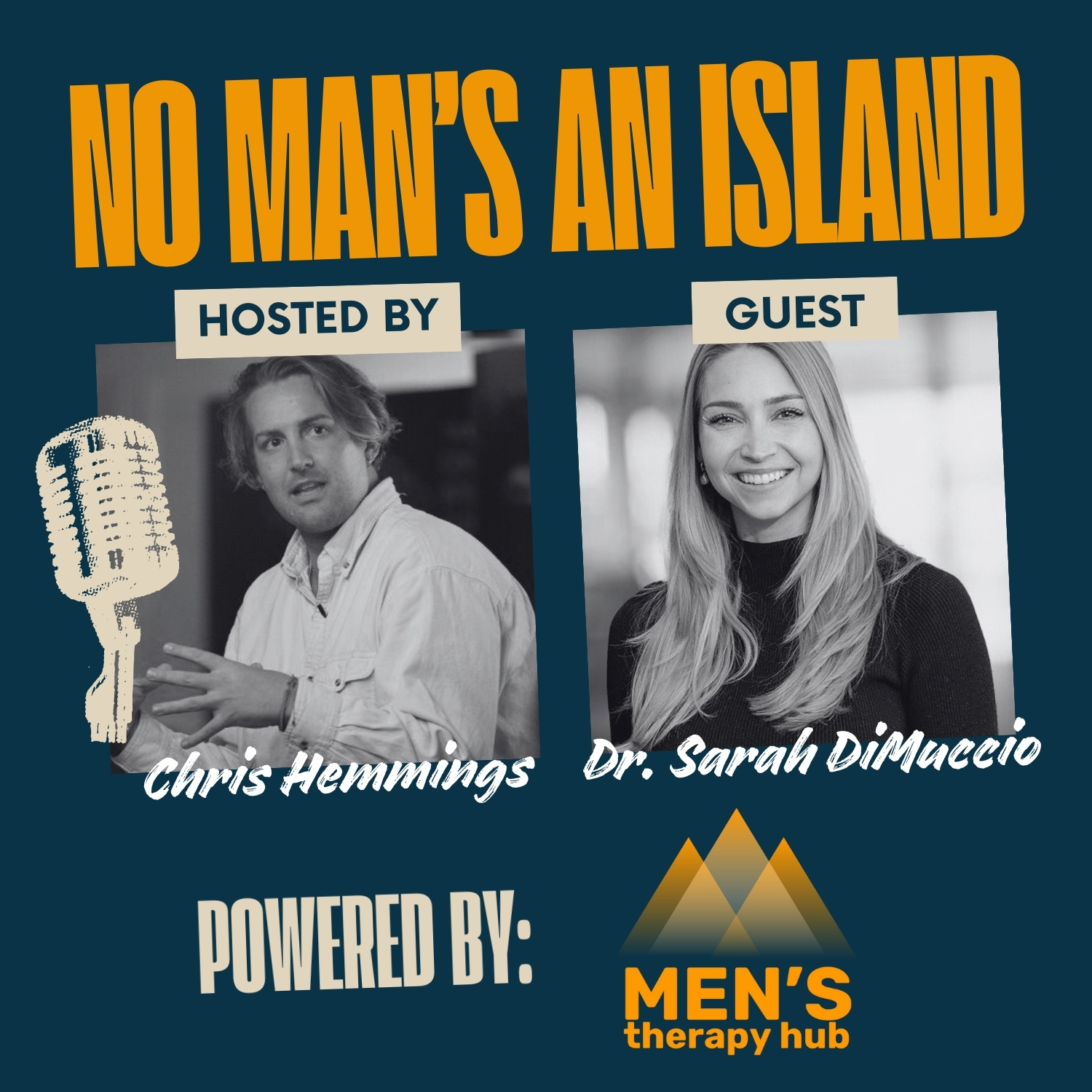
In this thought-provoking episode of No Man’s an Island, Chris Hemmings speaks with Dr Sarah DiMuccio, a social psychologist and gender equity expert whose research explores how masculinity, identity and culture intersect in the workplace. Based in Copenhagen, Sarah’s work focuses on how men experience “masculine anxiety” – the pressure to constantly prove they are “man enough” – and how this affects their engagement in diversity, equity and inclusion (DEI) initiatives.
Drawing from her studies in the US and Denmark, Sarah reveals striking differences in how cultures shape masculinity. American men, she explains, often define manhood in opposition to womanhood – a constant status to be earned and defended – while Danish men tend to view it as a developmental process of maturity rather than dominance. This nuance forms the basis for her work on how cultural and organisational norms either reinforce or relieve the anxiety men feel around their gender identity.
Together, Chris and Sarah unpack how “precarious manhood” plays out in workplaces. In male-dominated or high-pressure environments, the expectation to perform strength, certainty and success can lead to burnout, isolation and resistance to DEI programmes. Many men, Sarah notes, see inclusion efforts as a “zero-sum game” – that supporting women or minorities somehow means losing ground themselves. Her mission is to shift that perception: to show that everyone benefits from more inclusive, psychologically safe cultures.
“It’s not men who are toxic – it’s the expectation that they must constantly achieve manhood.” – Dr Sarah DiMuccio
“If you call men out, that’s a masculinity threat. Calling in with curiosity is what opens dialogue.” – Dr Sarah DiMuccio
“Freedom to be who you are shouldn’t only be for women – men deserve that same flexibility.” – Dr Sarah DiMuccio
“When workplaces demand constant performance, both men and women lose. It’s not good for people or business.” – Dr Sarah DiMuccio
“If the message isn’t landing, change the message. Empathy moves people further than shame ever will.” – Dr Sarah DiMuccio
What we cover
- How “precarious manhood” theory explains masculine anxiety
- The cultural contrasts between Danish and American masculinity
- Why DEI often fails to engage men effectively
- The dangers of competitive, high-performance workplace cultures
- How language, empathy and partnership can reshape inclusion
- Why calling in beats calling out when challenging bias
- The impact of masculinity threats on men’s wellbeing and behaviour
- Why psychological safety matters more than corporate slogans
- How true equality benefits everyone – not just one group
Listen and watch
🎧 Listen to all episodes here: No Man’s an Island
🎥 Watch on YouTube: No Man’s an Island – Episode 19
🎧 Listen on Apple Podcasts
🎧 Listen on Spotify
Takeaways for men
- You can’t engage others until you’ve learned to empathise with yourself.
- Emotional intelligence isn’t soft – it’s a survival skill in leadership and relationships.
- Feeling uncomfortable in DEI discussions doesn’t mean you’re the enemy – it means you care enough to grow.
- Real strength lies in curiosity, not control.
- Freedom from rigid gender norms benefits everyone.
Key concepts explained
Precarious Manhood:
A social theory describing how manhood is seen as a status that must be earned and can be easily lost. This constant need for validation fuels anxiety, competition and emotional restriction.
Calling In vs Calling Out:
Calling out shames someone for their behaviour; calling in invites reflection and dialogue. As Sarah explains, calling in preserves psychological safety and encourages change through empathy, not humiliation.
Masculine Anxiety:
The fear or pressure men experience when their masculinity feels under threat – whether in the workplace, relationships or social groups. It can lead to overcompensation, defensiveness or disengagement.
Quotes to share
“Culture doesn’t change through one-hour workshops – it changes when empathy becomes the norm.”
“Men aren’t the problem to be fixed. They’re part of the solution.”
“Freedom from restrictive norms isn’t about becoming less masculine – it’s about becoming more human.”
“Workplaces that value belonging outperform those that only value performance.”
Resources and links
- Dr Sarah DiMuccio – Website
- Above and Beyond – Leadership and Inclusion Consultancy
- Men’s Therapy Hub – Find a Male Therapist
- Episode 14 – Adapting Therapy for Men with Dr Zac Seidler
Episode credits
Host: Chris Hemmings
Guest: Dr Sarah DiMuccio
Produced by: Men’s Therapy Hub
Music: Raindear
TRANSCRIPT:
Chris (00:00)
Welcome to No Man’s An Island, a podcast powered by Men’s Therapy Hub, which is a directory of male therapists for male clients. On this episode, I’m speaking to Dr. Sarah DiMuccio. Sarah is a gender equity and diversity, equality and inclusion expert with a PhD in social psychology from New York University. She works for Above and Beyond, part of AVT Business School, which is an international consultancy and leadership academy that helps strengthen inclusive cultures and leadership within business. A big focus of hers,
is how to better engage men as genuine partners in progress on gender equity within the workplace. Amongst many other things, her research explores masculine anxiety, the pressure some men feel to prove they are quote, man enough, and how competitive workplace cultures can increase that pressure, making engagement with DEI programs feel risky, meaning that basically a lot of men don’t engage. Hey Sarah.
Sarah DiMuccio (00:53)
Hey Chris, it’s great to be here.
Chris (00:55)
Thank you for coming on to what you have told me is your first ever podcast experience. What a privilege for us.
Sarah DiMuccio (01:02)
Thank you. Yeah, thanks for having me on. I’m really excited. I’ve had a lot of these kinds of conversations, but they’ve just not been recorded, I guess.
Chris (01:10)
Yeah, and you and I have had
a conversation. We actually sat and had a coffee a few months ago and had a brilliant conversation, which is why I wanted to have this. So you’ve listened to an episode already as I gave you a warning. So you know the question that’s coming, which is, I’m always extra interested, I think, when we have female guests on the show, because this is not a podcast for men, but it is a podcast about men. And you are somebody researching masculinity and gender equity in the workplace. And I wonder what it is that
Sarah DiMuccio (01:18)
See time.
Chris (01:40)
brought you into that line of work and that line of research and questioning rather than staying in what might have been a more traditional social psychology lane.
Sarah DiMuccio (01:50)
Yeah, it’s such a great question. I actually always love to answer this question because the answer is deeply personal. I’ve been doing this work and this research and have been interested in this topic for 15 years. So I started this work in 2010 and it really came from a study abroad experience I had. I am half Danish, half American. And after I finished high school in the US, I took a gap year and spent the year in senior year of Danish high school.
⁓ in Copenhagen. And it wasn’t something that I ever really noticed before coming to Copenhagen, but I started noticing a really big difference in how the boys in high school acted in the Danish context compared to the American context. And I started remembering how in the U.S. it seemed like guys were, their experience was so fraught. Everything that they did, the behaviors that they had, the gender policing ⁓ at the time, it just seemed so
⁓ hard to be a boy. I kind of would watch all of these, the social capital of the jocks and who could wear pink and you couldn’t give a guy friend a hug without saying no homo after and you couldn’t say I love you dude, right? Showing affection wasn’t something that they were really allowed to do and it was very clear who was sort of allowed to play with those lines and it was certainly not the musical guys. So there was just this really big pecking order and hierarchy and just a lot of
needing to sort of navigate in these kinds of ⁓ friendships, right? Emotional, ⁓ showing emotion, showing affection. that was that to me was just so ⁓ shocking when I then went to Denmark and saw how the Danish guys, were they would hug each other for a long time. They would give each other a kiss on the cheek. They would text each other with like heart emojis and smiley faces and, you know, call each other for hours on end. And my first thought when I experienced that was
they’re acting like girls. And that was a shock to me because I was having to confront my own cultural upbringing, right, in a way that, you know, I know Denmark, I spent summers in Denmark, so that it was almost like this existential crisis for me to think, but I don’t think that, right? I don’t, you know, I’m not turned off by men being affectionate to each other, but I of course had been socialized just like everybody else is in the dominant culture. And so that really led me to think, okay, I actually, feel like I have
to understand this better. And when I started my undergrad, ⁓ the next year, I started doing that research immediately. And that led to my first research study where I interviewed ⁓ American college-aged men and Danish sort of similar-aged men and tried to understand how they perceive and think about and describe ⁓ their own manhood and masculinity and what that looks like for them.
Chris (04:45)
I’m interested in so much of that, not least because regular listeners will know I now live in Copenhagen and that is of course how we ended up speaking. Before we get to that, there was an episode that we did very early on with Dr. Luke Sullivan who he was kind of delighted as a psychologist many years ago to realize that there is ⁓ a lack of research into this. So as a researcher,
Sarah DiMuccio (04:48)
you
Chris (05:11)
Did you walk into this space and realize that actually there was a gap in the market?
Sarah DiMuccio (05:16)
Yeah, absolutely. I sort of happened upon the first literature that I could find, which is the…
precarious manhood literature, which we can talk a little bit more about what that actually means. ⁓ And they were sort of the pioneers of doing this work about how manhood is this unstable social status. And what I didn’t find was really almost any cross-cultural work on this and certainly no qualitative or sort of interview type research, which is what I started with, because I was like, why isn’t anybody just talked to men?
ask them what it is that they think and use that to then inform later research, which of course is what I’ve done. But certainly there was a gap and I’m happy to see that it’s really exploded in the last, I mean, in the time that I’ve been doing this, you know, especially probably the last five or six years, we’re seeing a lot more work in this area, but definitely there was a gap.
Chris (06:14)
podcast’s testament to the fact that this work is currently exploding and there are, you know, I wish I could show listeners the list of potential guests that we have because it’s so long now but I guess 20 years ago it would have been 10 people.
Sarah DiMuccio (06:28)
for sure.
Chris (06:31)
Have you had any pushback? Because you’re female.
Sarah DiMuccio (06:35)
it’s so funny. And it was something that I heard and really resonated with in the podcast with Zach, which is ⁓ this way in which you really get hatred from both men and women. And I have experienced it my entire career is that I’m trying to come in with this empathy for an understanding for men. ⁓ And that comes from an outsider’s view, but also from a view that is deeply related to, is deeply ingrained in it.
and the research that I’ve done and also the cross-cultural experiences that I’ve had and the conversations that I’ve had ⁓ for the last 15 years with men and women alike. And ⁓ men just mishear me on purpose, I think. They think that I’m attacking them because they’re not listening to the message. And women think, why are you focusing on men? Which I think is the classic experience that…
folks like us have in this space because certainly in a lot of academic contexts, I think people were really hesitant to engage with the work that I was doing because it just seemed so counter to all of the work that everyone else was doing on women and how women suffer. And my point is always that of course they do. It’s just that men also suffer in these same structures in a way that we ⁓ really devalue and underestimate and think that, well,
they’re thriving in these kinds of environments and with these norms because that’s what’s helped them get to the top and those things can be true at the same time, right? It can be true that when you play the game right you get to the top but it could also be true that it’s killing you at the same time and that it’s awful for your mental well-being and for the people around you and for your ability to connect with others so those things can be true at the same time.
Chris (08:22)
Well, let’s talk about that precarious manhood. Because for those who don’t know, can you give us an outline of kind of what that theory is?
Sarah DiMuccio (08:33)
Yeah, absolutely. And in really simple terms, it’s just the theory that manhood itself is a status that men have to actively achieve. So it’s not given developmentally. You don’t just, by virtue of growing up, become a real man. You have to do something socially to prove that you’re a real man. And it’s precarious, which means that it’s unstable. It’s uncertain. You don’t, even if you’ve achieved it, you’ve done things that people think you should do to be a real man. If you falter,
you’ll lose that status and you’ll have your manhood called into question by for example being called a pussy, right? ⁓ Being, you know, attacked on your manhood and we have all have lots of, right? Why do we say grow a pair? Why do we say, you know, grow a pair of balls, right? Like why are these be a man? These are things that we’ve all heard before and so that comes from this
I hate to use the word fragility, but it is in the literature, you know, sometimes people use fragile masculinity. think that that can be attacking to men, right? Because you’re, seems like you’re attacking their manhood. So I like using the word precarious. It’s maybe a little bit more academic, but it is the idea that it’s the status itself. And I think for those of us who don’t know this literature, what I think actually makes it different from some of the other areas of sort of masculinity work is that what defines real
manhood is going to vary. It’s going to vary depending on the context, depending on the group, the situation, right? Which group of friends you’re in, if you’re at work, if you’re at home, ⁓ you know, if you’re in rural areas, if you’re in urban areas, and that can change for a given man in any given context, but it also changes across time. It’s different across cultures. What doesn’t change is that we think that men have to do something to achieve their manhood. Does that make sense? So it’s like what the content of that manhood is varies, but not the fact that it needs to be achieved, which is
Chris (10:20)
Yeah.
Sarah DiMuccio (10:24)
something that we think about women and womanhood.
Chris (10:27)
Yeah, I was invited in to speak to a Latino ⁓ employee resource group, a very big company a few years ago ⁓ in the Netherlands. And, you know, I’m a guy from Manchester in the UK. They said, do you think it’s possible actually to speak to us about our experiences? And what I said was, what I can tell you with absolute certainty is, is while the symptoms of the problems may differ, the root causes are often very, very similar.
and the root causes are what you’re talking about. I actually, for all of these terms, I don’t mind precarious as a terminology because it is precarious because it is something that we feel we have to earn all the time. And it is in that constant drive to prove our worth, as you said before, that we can become exhausted to the point of quite literally, killing ourselves as men.
Sarah DiMuccio (11:23)
Absolutely. Yeah. And I’m happy to hear that this is something that resonates for you in your work because I do think that it’s something that’s important to understand because, and I so agree with what you’ve said in the past about how damaging it is to use the word toxic. And in my line of work and in this sort of grounded in this theory, we always say it is not men that are toxic. It’s not even the masculinity that’s toxic. It’s the expectation
that men must achieve their manhood. And the means through which they achieve them can be more or less damaging to themselves and to others. you know, sure, sure, we’re not working within a framework in which the masculinity that men are trying to achieve is just really wonderful and positive all the time. ⁓ Certainly, there is a lot of culture, but it’s really interesting because when you look at the anthropological work, ⁓ there are, I think it’s like two cultures.
in the world that we know of that don’t have gender differences and they often talk about the why of that and one of the theories is that they’re so isolated that there’s no external threat. So if you look at like different cultures you’ll see that manhood is perceived as being more precarious the more unstable the society is. So men have to sort of feel like they have to perform their manhood, right? They have to be the protector and the provider in this really visceral sense.
in a way that maybe in sort of Western cultures in which we’re more industrialized, that those norms are not, ⁓ you know, as strong. So in an organizational context, I can stand there and be like, well, you don’t need to, you know, have your spear and protect anyone. But that’s not necessarily the case in other non-Western contexts.
Chris (13:12)
And the major reason that I wanted to speak to you today is because your work is focused on the much maligned DEI space these days, which, my business, Empath, and I’ve in the early throes of starting one in Denmark, trying to engage men, you know, Empath’s slogan is engaging men in cultural change because it is happening whether we like it or not. Your work is about trying to…
Sarah DiMuccio (13:20)
Thank
Chris (13:38)
get men to better engage the same way. What are the biggest pitfalls? What are the biggest challenges that we face culturally in workplaces and businesses to actively engage men in the experiences of queer people, people of different races, ethnicities, of women, of disabilities, everywhere on the intersection where a lot of straight white men, I would say understandably, but I’m not going to steal your thunder. They are reticent of
getting involved in that sort of work and those sorts of conversations.
Sarah DiMuccio (14:12)
Yeah, absolutely. I think it’s probably not surprising to you that when folks are hesitant that it often feels like it’s because it’s a zero-sum game, then I think there is an onus on us as the communicators of that to make sure that they don’t see it that way. And one of the first places I always start with my work is to make men and women alike see how men and women are both harmed by these norms and systems.
how we both stand to benefit. And I think when you can see the benefit to yourself, then you have the capacity and the empathy to give to then other people and see how can they benefit from this. Because if you feel like you are, you’re being maligned, right? Like if you feel like you’re the one who’s not standing to benefit from these changes, why would you care about other people, right? If you feel like your ability to put food on your family’s table is at risk,
because you are the provider and because that is the expectation for you, then why would you give a shit? Sorry to say that, but why would you give a shit about what’s happening with all these people who you don’t see yourself in, who you don’t understand, who you probably think, you know, just are complaining, right? So there’s a lot of layers to this and of course there’s lots of personas of people who have different views on this, but I talked to a lot of people who are sort of like…
you know, they’re not anti-DEI, but they also need to see the purpose in it. And, you know, from an organizational perspective is they have to understand what the business impact is. And I know that there’s some pushback on sort of the business case of DEI, but…
I work with lot of corporates and you still have to talk about the business case of including people of everyone feeling belonging. And when I say everyone, when I talk to DEI practitioners or HR folks in these organizations, I’m like, you have to care about men. I know that that seems really counterintuitive, but they make up 60, 70, maybe 80 % of your entire organization. If they’re not resonating with what some of these initiatives are, then you are going to, you’re not going to succeed. mean, hands down.
Chris (16:25)
And that’s why with empath, what I tried to sell it in as it’s like the prequel to DEI work. It’s like, if you want these most, I think sometimes we can go a little overboard with the DEI stuff, but I think of course, generally it is really important to help people who particularly from extremely marginalized communities go into a workforce to not feel marginalized within their own office structure is so obvious to me.
as a privately educated middle-class English guy, right? It’s so obvious to me. And yet what we’re doing is saying, yes, but you as men, you should only care about other people despite the fact we don’t make you feel cared about. To me it’s the, and this is a topic that’s come up a lot, so I’m not gonna go into it too much detail, but it’s the kind of the universal privilege argument. It’s that men, are just privileged.
Sarah DiMuccio (16:56)
Thank
Chris (17:21)
and therefore you must help everybody else and you’ve got a guy who’s going through a divorce and is perhaps suicidal or you’ve got a young black guy who’s come into the business and he doesn’t feel like he belongs and he’s just told well you’re privileged so come and help the women out come and help the queer people out that doesn’t feel fair to those men
Sarah DiMuccio (17:40)
No,
of course not. And I totally understand that. And I think that there is, you know, there’s always this conversation about, what is, you know, how are you changing your message to sort of placate people? And I always argue if the way that our message is…
being delivered is not being received in the way we want it to, then we have to change it. And I often, and I use the research that I did when I was working at Catalyst, which is a diversity, equity and inclusion nonprofit, where I was the director of research for the men advocating real change sort of sub area that they had. And it was all I was doing was trying to understand how men were feeling at work and how the norms, specifically masculine norms, which most workplaces are driven by masculine.
norms for men and women alike, right? It’s not about men. It’s about just like the patriarchy is not, it is about how the structures have been set up and how that then impacts men is that the more masculine the workplaces, the more they expect you to work long hours, to put your work over your family life, that you have to compete with others, that it’s a really, really high pressure, high performance situation in which you’re just being pitted against each other. The more that the organization’s culture is like that, the more anxiety
feel about having to perform their masculinity, the more burnout they feel, the lower psychological well-being, right? And I use those numbers specifically about men because we’re not surprised when we hear that women are not thriving in those environments. But I think people are surprised to learn that men are not either, because they think that they should be benefiting from the kinds of norms that are more consistent with their gender. And first of all, that just makes men seem like a monolith, right? They all, well, they’re all like that, right? Of course, that’s not true to begin with. So you have a bunch
of those who are non-normative in whatever way, maybe even non-normative and just wanting to be a really engaged father, right? Or it could be that you are not heterosexual. There’s all kinds of other ways that you can lie outside of what we consider to be normative and then be suffering. But these men were not necessarily that, right? It wasn’t just the non-normative men who were like, well, this sucks. This sucks to be in a workplace in which all I’m doing is competing and feeling like people are going to stab me in the back and that I have
to really really bust my ass to get any kind of success.
Chris (20:04)
And that idea of success, because I know you use the term masculine anxiety in some of your research, that idea of success is something that you touched upon earlier. This nebulous idea, we still don’t know. Nobody can show me. I’ve asked young lads in schools, like, who is this one guy that you consider has it all that you are trying to emulate? Like the successful guy. Because in that workshop, I make the joke with the lads and I say, you know, the fastest guy in the room, the richest guy in the room,
the most mushy guy in the room, the guy with the biggest dick in the room, they’re all looking around at the other guys saying, well, if only I had what he had, I’d be happy. And actually this kind of hyper-capitalist structure, as you determined at the patriarchy, which capitalism is certainly a part of in the way that it plays out today, it doesn’t create space for men to be openly anxious and struggling and suffering.
And there doesn’t seem to be support structures in place for them. And then they see support structures being put in place for everybody else. And they’re told, you need to support them. Which again, this podcast, we’re always trying to do the yes and approach. It’s like, know, the zero sum game. It’s like, can we say to men, yeah, support them. And actually, because the work we do with Empath is always, we’re trying to give you the tools.
to first of all understand yourself and your own challenges, empathize with yourself, understand yourself and then go out and do the allyship bit or the partnership bit. Cause that stuff is, that’s really difficult. That partnership that I need to go into a space where people are talking about the challenges of being queer and I do not have any language for it.
Sarah DiMuccio (21:39)
Yeah.
Yeah.
Yeah, and also I think even just, you I also teach on just emotional intelligence, which, you know, you could probably talk about some gender differences there, but for me it’s just, you know, how are we making sure to understand our own emotions and name them and regulate them and use that to then communicate and understand others’ emotions, which is, very basic, but it’s something that people are very terrible at, and I’m sure you know that as a therapist, like even just naming emotions that are more than just anger and sadness, right, we’re really bad at that. ⁓ And I think,
especially men, have been socialized to pack those things away and not have any language for their own emotional reactions or reflections on that, which is harmful to them and to creating relationships, right? Like the whole, the way that we thrive in as humans is by having relationships. And it’s not, you know, I don’t think it’s…
random by any means that there’s a loneliness epidemic, right? It’s not just, ⁓ you know, all the things that we’re seeing directly related to men’s health, by not going to the doctor and these things, but like not being able to have…
the same kind of meaningful relationships or even, you know, as ⁓ a former colleague of mine has named it man keeping, right? This idea that women have to basically organize men’s social lives because the women are the social ones. That’s not good for you. That’s how you die younger, right? Is by not having meaningful social relationships. And so not having that kind of emotional intelligence ⁓ is really hard when you don’t have that language to even talk about it.
also
means that you don’t even have empathy for yourself. How are you gonna have any empathy for other people if you’re not able to give yourself that understanding and the the view of yourself that it’s okay to be human, it’s okay to be vulnerable and fallible, right? And if the the view is, which we all know is the case, even if you don’t agree with it, which I think is the really interesting part of a lot of the work that I do, is that this is not just the men who agree that manhood should be a certain thing. It’s also the men
who don’t agree but they still feel the effects of it and that’s really the power of stereotypes and gender is that you can be impacted by it deeply even if you think that it shouldn’t be that way which is something that I think has really been shocking for me in the work that I’ve done is to see
the most, you know, seemingly stable or, you know, secure in their manhood men be immediately impacted by a situation in which they think they’re going to be seen as gay if they wear the wrong shorts, right? And then you’re going, what, where did that secure masculinity go? Well, it went out the door with the situation because you know what people expect of you. And suddenly now you have to change your behavior accordingly, which I think is, you know, when I talk about this and often when I talk about it to men,
who don’t agree, I say think about it from the perspective of freedom, right? Freedom to be who you are shouldn’t only be for women, right? How long have we been telling women that they can be whoever they want to be? Now, we’re still getting them there, right? There’s still a structure in place that hasn’t allowed them to be equal in all parts of society, but we’re at least raising them to think that they can be. When is the last time we heard people encouraging men to be ballerinas and to be nurses, right? We need to do that on the other side as well.
not because they have to be, not because they are having choice taken away from them, but because they need to have the choice. How long have women been wearing pants? And men are still not allowed to wear dresses and skirts. Like I think it’s such a simple example that really illustrates the man box, right? It really illustrates the constrictions that men, there is one right way to be a man.
And we have told women there’s lots of right ways you can be a woman. So it’s about expansion, right? It’s about flexibility, right? What’s the opposite of restrictiveness is flexibility. It’s about and then, right? Not either or.
Chris (25:58)
Yeah.
And what we’re facing now, in my book many years ago, I wrote about the backlash against feminism. Like with every wave of feminism, there was a kind of anti-feminist backlash. Right now, we’re in a kind of male liberation period, and there is online a anti-male liberation backlash. How do you see that playing out in workplaces right now? How do you see that? You know, there seems to be a…
The release felt for me 10 years or so where men were starting to feel a bit more liberated and now some dissenting voices have come in and sadly the dissenting voices are much better at getting clicks and likes and shares than No Man’s An Island is because we’re trying to have nuanced conversation. How is that playing out in the workplace at
Sarah DiMuccio (26:54)
Well, it’s so interesting because I think, and as somebody who lives in Denmark, you as well, ⁓ there is this view of Denmark from the world that we are just very gender equal and we’ve got it all figured out and ⁓ that is unfortunately not the case at all. And in fact, compared to our Nordic neighbors, Denmark is much worse ⁓ in terms of gender equality than Norway and Iceland and Sweden. And we’ve been behind in a lot of legislation to get us closer to that.
and I think unfortunately that’s led to…
even more backlash because people have this perception that we’re equal, right? When I go out into especially, even if it’s global organizations, if they’re headquartered in Denmark, then people are really resistant because not just even as a backlash to the trends, but just as a backlash to the idea that there’s anything that needs fixing. And that’s not an old idea, right? That’s been around forever. There’s always somebody who thinks, well, this is not a problem that you think it is. ⁓ But certainly I speak to a
Men and women alike who in corporations who are just like I don’t see the issue like everything is fine We’re not America. We’re not you know
other areas and other places in the world where things are much worse. Like our women are getting educations and our women are in the workforce ⁓ and men are good fathers and they take parental leave. So like what’s the problem? And I think for me that’s a real struggle because there clearly is a problem and it’s a misconception that these norms of precarious manhood don’t exist here. I will say just because I think it might be interesting for listeners is that the research that I did that first
where I compared Danish and American men’s perceptions of their manhood, what I found was that in America the sort of automatic association is, or disassociation, is that if you are a real man that means you’re not a woman. So manhood is the antithesis of womanhood. It’s everything that womanhood is not. And when you act like a woman then that’s when your manhood gets called into question. When I asked Danish men about their manhood they
volunteered that you are not a man when you’re boy.
it’s more developmental. It’s that you grow up and you stop being a man child and that’s when you become a real man. That’s not to say that you don’t still have to do something, but it’s not as gendered. And I think that that’s interesting because it sort of can lead us to think to where do we want to go? We don’t want to be in a place in which people shouldn’t be adults, right? But the Danish men said, well, women also need to be respectful and responsible and independent and protect others and
be out on their own, right, and have their own ideas. That’s important as a man just as well as it’s important for a woman, whereas we in America, at least I’m not sure how it is in the UK, but you’ve just had it ingrained, you’ve had banged into you that if you do anything that’s womanly or perceived to be gay, then you are not a man. And that’s why manhood and womanhood just, cannot coexist in the same person because they’re the opposites of each other, right? And that makes it really hard to think of where are we then going? How can we move
Chris (30:09)
Yeah.
Sarah DiMuccio (30:13)
toward. It’s not a seesaw. It’s both and.
Chris (30:17)
Yeah, which is probably testament to, you know, compared to America, compared to the UK, Denmark is of course, ⁓ much more, ⁓ much more equitable. And so that’s probably testament to that. And yet, some of the things that we might associate with boyhood might be weakness, might be crying, you know, but so there probably is some similarity in the in the underlying concepts, although it’s perhaps not gendered.
And I wonder then in terms of the expressions of masculinity or manhood, because in the UK it’s, I would say, very similar to the US. It would be very much anti-female in terms of your gender expression for a man. How do you perceive the Danish men that you’ve been out and met? Because when I first arrived in Denmark, somebody told me, you should probably go out and meet some Danish men. And I thought to myself, well, yeah, fair enough.
Sarah DiMuccio (31:12)
Hmm.
Chris (31:15)
my inclination was there’s not gonna be that much difference. And actually I went, when I first arrived here, I went to play, I was interested in playing a sport. I’m not gonna name the sport, because you’d able to find the person. And the head of that sporting organization in Denmark, I was really struggling because my wife was going through some mental health challenges. And when I told him that, his only response was, is that because you married her? It’s like, I’m struggling with my mental health because my wife is really
not doing very good and his response, and I thought that’s not very progressive, it? And so this perception perhaps that the world has of Denmark or the Nordic countries as these like bastions, of course we still have the same challenges here, but perhaps what I’m inquiring about is like how do they show themselves differently perhaps in a work culture even?
Sarah DiMuccio (31:50)
Yeah, wow.
Yeah, yeah, absolutely. And you’re totally right. So it does show up here and it is maybe a little bit more, you know.
Progressive is sort of a weird word to use here, but certainly maybe we’re just sort of 10 years further ahead in terms of where we’re hoping that some other countries will be, but we’re not, you know, 130 years ahead, which is what they guess is gonna, that’s how long it’s gonna take for women to actually be ⁓ equally represented in society. ⁓ But certainly I think what you do see is…
big generational differences, which is not new and not different from the US or from Denmark to two other countries. But you also really see that there is more of an incorporation of empathic responses. There’s more sort of an understanding that humanity is important. It’s incorporated more. I think you see a lot more affection from fathers to sons than you do in sort of other kinds of cultures, maybe in the UK and the US.
There’s more of a discussion about feelings, I think, even if it’s still not where we want it to be. And then I think there’s also a really deep ⁓ cultural emphasis here on male relationships in a way that I don’t think you see as much in, at least in the US. ⁓ There’s much more community feeling. Men who gain friendships and friend groups in their young schooling years keep those friendships their entire lives, which is also very dangerous.
It’s
something that Danish women do as well, which I think is unique and it does allow for a bit of a buffer ⁓ effect against some of these things. But the ways that you see it manifest in the workplace when it’s not there is the same way you see it in the US, right? It’s the same sort of idea that we can’t challenge these norms in the workplace because this is what leads to more money. It leads to better performance, right? It’s a misconception that if you just hammer people ⁓ into, you know, even if it’s just in the short-
hours of the day, they’re not working as long hours, but it’s certainly in the hours that they’re working, is there’s still this perception that if we let in too much, you know, femininity or humanity, maybe that’s not what they call it, but in the same kind of way of DEI, right? They think that if we talk about inclusion that that’s too soft and that there’s no reason to talk about that, that it’s because it will have a negative impact on their bottom line. And so that’s why I always have to go back to re-anchoring the work and why it’s
actually important for them, not just from an organizational perspective, but also from a talent acquisition, talent retention perspective. And not just because you want people to feel good, you do, and you want them to belong because it’s good for them, but because it is good for business, it’s good for collaboration, it’s good for teamwork, it’s actually very hard to have any kind of teamwork without relationship building, right?
Chris (35:07)
and diversity of thought.
Sarah DiMuccio (35:09)
diversity of thought is the only thing that leads to innovation, right? And it’s protects against group think, right? All of these things that I think for folks like us seem very obvious, but I sometimes I’m a little bit shocked about how much resistance I get on those basic tenets when I’m in corporations. And that’s not that different in the US and Denmark, I would say.
Chris (35:30)
And a lot of organizations have for the last 10 years or more been running training around DEI about inclusion, equity, diversity, all of these. Some of them, like I said before, like brilliant ideas and ways to help people to feel more included. And while there has been some success, as we are talking here, like C-suite down behavior doesn’t really shift.
Where is it failing? What are the most common reasons that interventions like this don’t work?
Sarah DiMuccio (36:07)
⁓ They are too focused on the individual.
So I’m a social psychologist, I also know lots about bias and I think that bias training can be really valuable, but it cannot be in isolation because we think that if we just change individual people’s behavior, then we can change the culture. And unfortunately, that’s not how culture changes. It’s part of it. You can’t do it without people’s behavior changing, but it has to be coupled. So there’s too many of these. First of all, they’re one off. It’s like, I had like a three hour training, so now everything will be different and better.
⁓ And it’s very, very focused on individual behavior and to the extent that like you have to think about, so for anybody who doesn’t know, social psychology is all about how the situation is the biggest predictor of our behavior. Not our own individual personalities, not our own individual intense wishes and desires, the situation. And we are deeply, deeply impacted by norms. And for better or for worse, we never talk about them. And so it’s not the…
written roles. It’s the unspoken scripts that are hardest to see and therefore hardest to change. And so it really requires that people from the top are acknowledging that this is a problem, that there are cultural norms that we completely take for granted. Like what we see as good leadership. I mean, there’s still to this day is research that shows that think manager, think male. So we still think of leaders as being male and children.
if you ask them to write, draw a photo of a leader, still draw men, right? So it’s, obviously there are things that have changed, but like that’s an unwritten expectation about how a leader should be, right? There’s a ⁓ greater chance that ⁓ taller men get into leadership positions because we have these ideas about, and that’s for men, right? It’s not for women. It’s that we have this idea that leaders are tall. And so we have these unconscious bias. So I think acknowledging those and then saying, we need to name where these norms
coming in and how do we change them and that has to be really systemic and there are just not I mean again coming from the corporate world the HR ⁓ you know the HRs don’t have the budgets they have like minuscule budgets and so it’s not we’re not getting in and to where the people are actually able to enact change it’s just not happening people think and I get calls all the time can you do like a one-hour keynote on DEI and I’m like what are you hoping to get out of that?
Chris (38:38)
Yeah.
Sarah DiMuccio (38:39)
hoping to get out of a three hour session on DEI. Like this is something that you have to be working on constantly and consistently and across all the layers of the organization. And it can’t be separate. It can’t be like, here’s this DEI training. It has to be the same in the same vein that you would do leadership training. You have to be talking about belonging and inclusion and talking about norms that are damaging and the kinds of positive norms that you need in order to make sure that people can speak up and make sure that you’re getting that diversity of opinion.
and make sure you’re not falling into all of these traps that we know are not good for business and not good for people. So I try to always expand it so that everybody understands that there isn’t, the only downside that is definitely true is that people say, we just don’t have the time. Like this sounds great. Like even if I can get them on board, they’re like, this sounds great. We don’t have time. I’m like, well, that’s built into the structure then, right? That’s a problem.
Chris (39:26)
Yeah.
Yeah, which is kind of the point, which is you don’t create time for anything other than hardcore work and you’re not developing your people, you are developing workers and that’s very different. I know you’ve touched on this with some of your work and to me it’s the kind of elephant in the room often is some of your research has been around the challenges for men calling out sexist practices or sexism direct in the workplace.
Sarah DiMuccio (39:41)
Exactly.
Exactly. Yeah.
Chris (40:04)
I think some of the time what we, and I say we, just cross-culturally, we underestimate the level of risk that a man at least feels like he is going to undertake when he comes across ⁓ two male colleagues having a chat in the break room and…
Sarah DiMuccio (40:10)
Okay.
Chris (40:30)
They’re being a little overtly sexist or a little homophobic or something that is a little uncomfortable. And what we’re telling men is just like, hey, it’s incumbent upon you to improve all of the men around you.
I have taken it upon myself to try and help men. I’m aware that I’m a rarity in that. And I have, partly that’s because I have what people in Denmark would say would probably be arrogance, because I go against the idea of Yendolo, which is, ⁓ don’t be showy offy and don’t brag about yourself. And I’m like, I’m from Manchester, so I’m sorry, I was raised the opposite. ⁓ So I have that level of confidence. But a lot of men, a lot of humans, they don’t have like,
Sarah DiMuccio (41:00)
Yeah.
Yeah. ⁓
Chris (41:15)
Arrogance level confidence and so to say to them it is up to you to change the entire work culture around you It doesn’t take into account that level of risk and actually I kind of equate it to the level of risk That it takes for a man to go to his friends and say I’m not okay. I’m struggling. It’s very similar It takes it takes an immense level of courage to do that. Do we underestimate?
Sarah DiMuccio (41:44)
absolutely we do, and it’s often why anytime I talk about, even in the research on interrupting sexism,
else you’ll see that the causes of men interrupting sexism less is the culture. So it’s not, we don’t talk about their individual desire to interrupt sexism. Actually it’s quite the opposite. You see a large amount of men, like up to 80 some percent of men saying that they would like there to be no sexism at work, right? This is a goal that they have because why not? And then you have 30 % of them saying that I have no confidence in my ability to actually make any change because first of all, what am I supposed to do without
stepping on anyone’s toes, right? Because it’s not just that there’s a running a risk of saying it to the men. It’s also that if you try to help in the moment that one of the women might take it the wrong way, right? you’re just the chivalry on the white horse and that’s, know, that’s infantilizing or something, right? So there’s this, there’s this minefield of like, what am I supposed to do? Like,
even if you have the confidence to do it. And then let’s say like you’re saying, which is that you have no confidence that you can actually make any difference for the people that are like, I can’t either. I’ve been in lots of situations, maybe also with women where there’s jokes being made, where you just think, am I gonna be the one that now absolutely destroys this entire environment by like suddenly calling people out? And so I always say that
It’s so important to know how to call people in rather than call them out, to ask questions about what they’re saying in order to, or to be able to just respond in a way that doesn’t make the other people feel like they’re being, getting a slap on the wrist. Now, with all that being said, we know, as you said, what you’re describing is the situation, right? If you are in a group of people and people are making sexist jokes, that situation is so powerful, it would be insane to…
think that somebody should just speak up. And we know that they don’t because it’s terrifying and it’s awful. And you could be actually ousted, right? You could be an outcast if you did that. You could suddenly now not be invited to these meetings and not be invited in these spaces. And particularly if it’s a superior, right? And even if it’s not, you know that it’s not just…
Chris (43:56)
particularly if it’s a superior.
Sarah DiMuccio (44:03)
you know, official hierarchy that matters. It’s also social clout and social status and social capital in a way that is not written, right? It’s the popular person, so to speak, right? In the corporate world, we know who the popular people are, right? They’re the ones who have a lot of influence, even if they’re not necessarily the superior or the leader. So you have to be very careful in whatever you’re doing. that’s why these changes cannot happen without the structure and the norms changing and without
involvement from the top where the CEO says and we actually worked with it with a large company here in Denmark where the CEO said when I came in there was a guy who was just consistently breaking these sort of norms of respect of ⁓ you know working together in a way that it creates a respectful and good environment and he was fired and that sounds like that you with the examples that he gave everyone was in agreement that
this was not okay behavior and he didn’t stop and then the CEO said, that’s it, right? We don’t allow that here. So if you are able to agree on a set of norms because it’s coming from the top and then there are people, men or women who consistently are breaking those norms, then it’s important that we show what is okay and what’s not okay through our behavior and not just through what we say. With that being said, that’s not to say that it should be a cancel culture, right? It’s not that it should be like somebody
misspeaks
or steps out of what somebody thinks is acceptable one time and then we can’t have empathy for that. So I always tell people.
Chris (45:41)
There’s the fifth of
them, man.
Sarah DiMuccio (45:43)
There is, that is the fear and I think it’s a totally valid fear and that’s why that has to be part of the norm too. When I talk about, when I teach about psychological safety I’m like that means that the people who maybe are offended by something, somebody saying something that’s not, that didn’t age well, right? That you have to be able to say that’s okay but now we’ve learned, right? And we’ll move on, right? You have to be able, whenever we say people need to be able to make mistakes we are never talking about the men or the women who might be making a mistake.
in.
calling somebody the wrong pronoun or saying something that is not a great joke, right? That’s a mistake. That can be a mistake too. And we have to have empathy for that as well. So I often push people on my side, so to speak, to be more open about that, not being tolerant of, you know, blatant sexism or racism that’s continued, right? That’s not somebody who’s genuinely trying. But for the people who are genuinely trying, we have to be responsive to that. And I tell women this.
as well. Like I know that it sounds hard from a woman’s perspective that now I have to be empathetic, even though I’m the one that’s suffering or whatever. But I’m going, but that’s how we’re going to move forward. Like that’s the only way that you have to be able to say, Hey, it’s okay. Just so you know, that might not have come off the way that you were hoping that it would. And so now you know that for next time. Or, Hey, I’m wondering what made you say that? You know, what, makes you think that maybe we can talk about where some of those views come from. Right. So, so having a conversation with people, turning it into a
dialogue and that’s what I talk about when I talk about gender partnership is that it’s just as much engaging in dialogues with the people who share your gender as it is sponsoring or supporting or somehow helping usually it’s women but whenever I talk about gender partnerships I mean it could just well be the brand new male intern who is trying to succeed right so if we can partner across between and within genders then we can reach new
places that I think sometimes allyship can feel very one directional and sort of for other people and not for you, for all of us.
Chris (47:55)
in our training with Empath in Business, the final piece of the work, so we did three workshops. We start with the Men’s Mental Health Workshop, so it’s about the men. Then we do the empathy, so we’re developing the empathy. And then finally we do the allyship, although speaking with you and many others, I don’t use that term anymore. So I use your term partnerships now, Sarah, so thank you, because it’s better and I understood it. And part of that, you just mentioned it there, is calling in versus calling out.
Sarah DiMuccio (48:12)
Yeah.
Right.
Chris (48:24)
And I would love it if you could just give an overview because when we teach that, when we do the calling in versus calling out, so many people had never considered just how powerful the difference can be. And it is remarkable how different it can be. So can you give a brief overview of calling in versus calling out and the way that actually, as far as I see it, that is the way forward to reduce the level of the risk of shame.
Sarah DiMuccio (48:50)
Yeah, absolutely. Yeah. I think really, to boil it down, it’s that calling out is shaming and sort of a proverbial slap on the wrist, right? You are shaming and chastising people for what they’ve said or what they’ve done. Calling in is that you are leading with curiosity and asking questions to open a dialogue. So I think that that’s sort of how I think of it. I’d love to hear what you do as well.
I think.
there was a time in which a DEI was all about, you know, make sure you’re calling out this and calling out that. And I have been on the receiving end of call outs in situations in which I was genuinely had no idea and felt awful and wish that it could have been a learning moment. And everyone is not there, right? It’s not. And I think that’s often where I get pushed back on this is that people say, there are people who just will say things to provoke. They don’t want to learn. They don’t want to grow.
They don’t want to be partners and they’re just doing it because they want to provoke you and I said that that’s always going to be the case but you can still be the one who tries to create a learning moment and a moment for dialogue and understanding ⁓ rather than just chastising them and I’m sorry but we talk about this all the time and you know as parents right like what is it that we do when our children step out of line or make mistakes is that we’re increasingly learning that spanking them or putting them in timeout is not the way that they
learn anything because they’re just being punished for it rather than actually having a moment to learn and grow and understand. And then you can, you know, I am somebody who gives people the benefit of the doubt for better or for worse, but I think that we could all, we could all give each other a little bit more grace. And that’s what calling in is, right? It is what is the most generous interpretation of that behavior or that ⁓ comment? What is the most generous interpretation of what they were trying to achieve there? And then it’s probably not that they’re a terrible
person. I would assume that 99 % of the time this person is just human and they are also learning and if you can engage them in a dialogue they might actually be more willing to change their behavior than if they are getting a slap on the wrist and then they’re going to become more entrenched in what they believe to begin with.
Chris (51:10)
Yeah, and this concept that I picked up on when I was learning about it was when we’re somebody out, it can create a sense of it’s called humiliated fury, which is I’ve been humiliated in front of people. And so actually, because I feel like I’ve lost something, I’m going to try and claw it back. And actually, it makes it
many, many times less likely that they’re actually going to engage. But if you can just take someone away from the situation and say, hey, that thing that you said before, don’t feel like, you make it about yourself. I don’t feel like that was appropriate. Like, do you have any understanding of how that might be difficult for some people to hear? Most of the time, that’s going to be received much better than the call out. Sometimes the call out is necessary. If somebody is just being belligerent, then the call out is necessary. But actually,
Sarah DiMuccio (51:58)
Yeah. Yes. Yeah.
Chris (52:03)
If we want to create the change. And I think this is, this is what men are terrified of. Men are terrified of that being put in that state of humiliation, that humiliated fury of, well, I’ve actually, maybe even I’ve, I’ve, I’ve come to a DEI something and I’ve put my hand up and I’ve said something that everybody who’s been doing this work for 10 years equates to stupidity or ignorance, but it genuinely was just because I didn’t know. So maybe it was some ignorance.
Sarah DiMuccio (52:09)
Mm.
Yeah.
Yeah.
Chris (52:32)
But now I’m being humiliated for it, which doesn’t feel fair. People are laughing at me. Well, I’m not going to come back.
Sarah DiMuccio (52:38)
Yeah, 100%.
100 % and that’s why, you know, we keep talking about like we need more empathy and we need these these sort of relational traits to be developed in the workplace and I’m like, but that that starts with you and doing that with the people, especially those who you disagree with because we are not going to get anywhere if you cannot accept that friction and be able to use that as a as a way to create learning moments and learning opportunities. And I’ve had interviews through my work at Catalyst with men who have been on the receiving end of a call in.
and who have actually managed to their beliefs about this. You can actually get people to understand you if you are willing to understand them first. And unwilling also to speak a language that they understand, which is also why, maybe this is a little bit American, but this is also why I tend to use the freedom framing. Freedom from restrictive norms. Not men need to be like women, which is also not what I’m saying in any case.
It’s freedom from the restrictions and the boxes that keep you from choosing what you want to do as a man and keep you from being the person who leaves work early to go pick up your sick kid because that’s what you want and that’s what makes sense for your family or that you want to take the full parental leave and not have to be looked down upon because that’s non-normative right men shouldn’t do that and Even if it’s and that is something that we see in Denmark, right? It’s much less so right? We’re used to men taking the parental leave, but if a man were to
to I’m going to take the 12 months, then people will go, really? Really? Like that’s typically what the woman does, right? So then you get, and people were also very against the earmarked parental leave laws that came a couple of years ago in Denmark. They didn’t want that, right? They were used to having women be able to take the full 12 months. And then you just continued to have inequality at work because you had the women who were just fully dropping off the cliff when they start, when they have their first child and men who just continue to rise.
ranks. And the last thing I want to say about this, about the calling out part, is this can be directly related back to the precarious manhood literature. If you call men out, that is a masculinity threat. So layered on top of just feeling humiliated as a human, you are now also threatening their status, their know-how, their capital, right? You’re threatening ⁓ their intelligence. All of these things are threatening them in a way that for men is tied directly to their gender.
and to the performance of their gender in a way that whether they like it or not is something that influences them and not something that is necessarily the case for women. And this is not because we need to compare men to women, it’s just that it’s in sort of normative language. That’s the only comparison that I can make that people, know. Right.
Chris (55:26)
Yeah. And there are differences. There just are differences
because we are socialized differently. I mean, what you’re talking about there is a man feels a threat, all of those things. It’s the markers of esteem. It’s their self-esteem, which is tied up so much in that idea of success and the success being viewed through the lens of capital, of how high up you are in the business, of your intelligence, all of that.
As you know, I could have this conversation with you for a long time. I think that was probably the most words said over a coffee ever when you and I sat and spoke at that time. ⁓ I have another question before I get to the final question, which is some of your research. And I hate to call in your American-ness here. You are a DEI expert from America where DEI has been trashed over the past…
Sarah DiMuccio (55:55)
Thank you.
No,
Chris (56:21)
year or so, two years, and you know, even Zuckerberg coming out and saying that Metta slash Facebook, Instagram needed to become more masculine, which is like, cool. Well done, Mark. Your research has looked at the masculine anxiety that we’ve talked about, the kind of precarious manhood, and how it ties to more aggressive politics and politicians and policies.
Tell us a little bit about that and also tell us, are you a little sad right now about your home country?
Sarah DiMuccio (56:57)
⁓ well, I can answer that question. It certainly is. Yes, it’s really, really sad to see. ⁓ Yeah, the turn that this has taken and I would say especially sad now to be an American Dane, right? With everything going on. ⁓ So, so definitely it’s so sad, but it’s also not at all surprising. And the research that I was doing in my PhD was understanding how masculinity, masculine rhetoric and masculinity norms, social norms,
Chris (57:11)
Right. Right.
Sarah DiMuccio (57:27)
have pushed men to the right and have pushed men to vote Republican and have pushed them to vote for Trump specifically. And that is borne out in decades of research on sort of the exodus. It’s sort of called this democratic exodus of women becoming more democratic and men becoming more Republican. And Republicans have really capitalized on that. ⁓ You can look at all kinds of examples of just feminizing Democrats.
feminizing Obama, they used to call him Obambee, ⁓ feminizing, know, just calling into question the masculinity of the party, of the politicians, and of people who vote for them. And so you’re basically making this huge masculinity contest or just litmus test, real men vote Republican. ⁓ And that really came to a head ⁓ in Trump’s first term, where we found that the more sort of
search terms that men searched, which would indicate they were probably struggling with their masculinity, erectile dysfunction, hair loss, how to get girls, that these, which we also verified, were correlated and were associated with sort of fragility, like feeling like your masculinity is on the edge, that those areas, those districts were more likely to vote for Trump. And then I did a lot of research, which we can talk about another time, but it might be a little bit interesting where I brought men in
into the lab and threatened their masculinity. So I brought them in and then I had half of them paint their nails pink and half of them, you know, draw on a piece of paper. So they’re not, their masculinity is not being threatened, right? I gave them a personality test and then lied to them and told them that their personality was more similar to a woman than to a man’s or walked around Washington Square Park and had them test their hand grip strength on a, it’s called a dynamometer ⁓ and then lied to them and said that their hand grip was closer to a woman.
⁓ average grip strength than a man’s. And just those things, which have nothing to do with politics, right? They are fully, I’m not even, personality one, I’m telling them that they’re more like a woman, but they’re just seeing that their score is similar to a woman’s than to a man’s, right? We haven’t told them that they’re woman-like. It’s just that they’re getting this false feedback that made them vote and make more politically conservative decisions and more aggressive decisions.
they’re
more likely to say that they would bomb an opposing territory, that they would torture ⁓ somebody who was an informant for the opposing, that they would send more troops on the ground, and that they would support more traditionally Republican ⁓ ideas, and Trump specifically. And the really interesting part, which is back to this thing about being impacted by something that you don’t agree with, is that we saw it with liberal men as well. So liberal men…
Chris (1:00:24)
Hmm.
Sarah DiMuccio (1:00:26)
moved more right after having their masculinity threatened, even if they didn’t personally believe that masculinity was important to them.
And I think that that can, we use that to then explain how Trump won the first time around is that he was bringing people over. People who are on the left side of the fence, not the, not the, you know, the super progressives, right? But the people who are on the fence, maybe a little on the left-hand side, he was able to bring them over by telling them, not only you have to vote for me to be a real man, but I will actually restore your manhood. I will give you jobs. I will make sure that your status as the man of the household is restored.
Chris (1:00:42)
Yeah.
Sarah DiMuccio (1:01:05)
So those promises of restoring their lost manhood were clearly effective.
Chris (1:01:11)
Wow. And it’s unsurprising when you put it that way. But when I read that research that you’d done, it was like, wow, that’s so interesting because, I mean, you’ve heard the rhetoric from like Stephen Miller recently around the Greenland stuff, which is we are bigger, we are stronger. The world is about power and strength. And it’s like, well, that wasn’t actually the world order that the Western allies had created. It was about saying, we’re going to do that anymore. And I do understand.
in a country where, you know, we are extremely privileged to live in Denmark because sure, we pay the highest tax per person in the world, but also like it’s almost impossible to be homeless here. You kind of have to choose to be homeless because if you’re on the streets, someone will come and say, why are you on the streets? Would you like a place to stay? Do you need some medical help? Like, so in a country that is becoming increasingly split on those, the haves and the have nots.
to feed a false narrative to those men who don’t have that easy access to the esteem of a job, to say, well, actually, maybe not, but you can be a part of a country that is great again. And we’re going to restore, like you say, we’re going to restore some of those jobs, which of course hasn’t really happened. And we’re going to restore some money back into your pocket, even though he’s cutting taxes for the rich. it’s just, for an outsider, it’s so absurd.
And it must be really, really disheartening for you to see that.
Sarah DiMuccio (1:02:43)
It is, and I think this is sort of back to your question about the backlash. This is certainly part of the backlash that we’ve seen, right? And it’s also part of…
You know, I, that’s again, I never say toxic, but I also, and I think Zach said this as well in the podcast episode that you had with him, but it’s again, it’s so important to say that it’s not because there’s anything wrong with being masculine. There’s nothing wrong with being wanting to be strong and independent and assertive and all of the, know, if you look at all the, the feminine and masculine stereotypical traits, there are going to be ones that are negative and there are ones that are, that are more positive. And if you take all the positive traits, right,
Thank
Those are the ones that everyone who wants to be those things should be them and that they’re good in a lot of different contexts. ⁓ What’s not good is when they become damaging, right? It becomes extreme and when it becomes forced, right? If you’re forced to be dominant in order to succeed, if you’re forced to be assertive in order to not be called a pussy, if you’re forced to be completely emotionally restrictive, some of the stories that the men that I interviewed would tell me about their
Chris (1:03:38)
you
Sarah DiMuccio (1:03:54)
childhoods were heartbreaking, right? If I said, well, what would happen if you cried on the soccer field? Well, I just wouldn’t cry. Well, but if somebody breaks your chin…
Chris (1:04:02)
Yeah, that’s just a hypothetical that would never happen.
Sarah DiMuccio (1:04:05)
Right, like, but somebody breaks your shin. what do you, well, no, I was had it beat into me from when I was a little boy that you don’t cry. And that sounds, it sounds like a caricature, but I think that for us who work with this, we know that it’s way more common than I think we know and understand. And it’s one of those, you know, was at, Denmark had the EU presidency and they actually brought the Equimundo CEO and Gary Barker to speak because there was a folk, they were going to have a
focus on boys and men, which was great. I thought this is wonderful and it was great to hear him speak as well. And one of the people who spoke said, I once talked to somebody who said, well, the only time I’ll ever be given flowers is when I die on my grave. Which is just so heartbreaking, right? Like it’s so simple to think, well, being given flowers is something that we do, that we give to women. But I think it’s similarly to the dress thing. It’s just such a great indicator of
the lived experience of having to wear this mask all of the time and having to perform this status.
all of the time in order to get anywhere. And it’s not just in corporate life, right? It’s also that men and women expect men to be this way. It’s not just other men, right? It’s also men who are trying to get partners and want to be seen as attractive and successful to a potential partner and that women want that too, right? That’s the whole point. That’s the whole point of me saying in the beginning of my story that I reacted negatively to the more feminized way of behaving as
men because I had been socialized to think that that wasn’t the way it was supposed to be. Really powerful.
Chris (1:05:48)
And I appreciate that so much,
Sarah. I appreciate the honesty and the willingness to share. I will just say that at the end of every year at Christmas, Empath sends all of its facilitators flowers, specifically saying, just because you never get them, we are sending them to you. Thank you for coming on. I really appreciate it. I’m going to ask you the last question now, you listen to. Episode 14 is the episode of Zack Seidler. If you that are listening want to go back and listen to that, it’s really good episode. Zack is so interesting.
Sarah DiMuccio (1:06:00)
amazing.
Perfect.
Chris (1:06:20)
So the final question, I’m going to give you the keys to the vault. You have unlimited funds to make the change that you want to see within the work sphere that you are in. What are you going to do and how is it going to change things?
Sarah DiMuccio (1:06:33)
I think I would make it mandatory for every single person and every single organization to receive basically training in social psychology, basically an understanding of how we influence each other and the negative ways that these norms impact.
all of us, not just on a personal level, but the decisions that we make, the quality of the work that we do, how innovative and able and equipped we are to solve complex problems, and how we have to invest in human capacity because humans are our greatest asset and also our greatest liability when we’re unable to recognize the power of these norms and actually be able to do something about them.
Chris (1:07:23)
kudos for giving the shortest answer so far. That’s very helpful given that we’re already over an hour. I love that because when I was on my therapy training course, we did very early on, we did like 12 weeks where we were talking about self-compassion, self-esteem, self-worth, all of these. And all I could think each week was, why are we not doing these lessons in school? Why was I not taught all of this in school? Because there were so many…
Sarah DiMuccio (1:07:26)
Hahaha!
Chris (1:07:51)
so many occasions when my course mates would be like, my God, that’s me. my God, I do that. my God. And on Oversight and Therapy course, we create a brilliant open space for dialogue and for personal sharing. But to do that within a business setting, I would love that. And so I think that’s a really great one. So thank you. Really great to speak to you. ⁓ You definitely need to do more podcasts because you’re very, very eloquent and you’re really interesting to speak to. ⁓
Sarah DiMuccio (1:08:16)
Thank you guys.
Chris (1:08:20)
Work you do is really cool. I know the organization you work for is doing really good work too. If people want to find you and learn more about you and your work, where do they go?
Sarah DiMuccio (1:08:30)
They can go to my website sarahdemuccio.com or also to the company website aboveandbeyond.eu.
Chris (1:08:37)
Awesome. Okay, great. I look forward to seeing you soon. I’ll call you for another coffee at some point in the near future. Thank you so much. All right. Cheers.
Sarah DiMuccio (1:08:44)
Would love to chat with you in the request. Thanks so much. Have a great day. Bye.