
For Therapists:

Voices and Videos

ADHD in Men and the Mask of Belonging – Why Masking, Shame and Late Diagnosis Matter

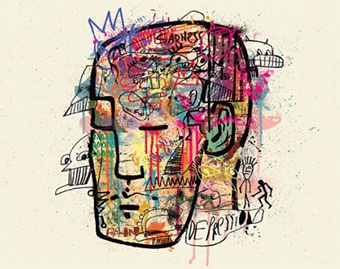
A drawing of a scrambled head to represent ADHD in men.

ADHD in Men – What It Really Looks Like

ADHD in men is often misunderstood – hidden behind humour, overwork or self-doubt. This story explores what happens when one man stops masking and begins to meet himself honestly.

James’s Story – Exhaustion Behind the Performance

A client of mine, James (pseudonym), came to therapy exhausted – not just from work, but from the daily effort of holding himself together. He had spent his life trying to appear “normal”: the reliable friend, the focused colleague, the man who could keep up. Inside, though, was chaos; racing thoughts, constant self-doubt and a quiet conviction that he was somehow the problem.
When James was diagnosed with ADHD in his late thirties, he felt both relief and shame. Relief that there was finally a framework for why life had always felt like walking uphill in sand. Shame that it confirmed what he had long suspected – that he was, in some way, different.

Masking and Masculinity – The Hidden Cost of Fitting In

For many men, ADHD is invisible. It is not just about distraction or disorganisation, it is about masking. Men learn early to copy what is expected, to perform competence and control even when they are struggling internally. They hide their sensitivity, their impulsivity, their confusion. They try to fit the mould – stoic, focused and capable – and in doing so, slowly lose sight of themselves.
This constant self-editing creates an enormous emotional toll. Behind the mask often lies anxiety, isolation and an inner critic that never switches off. Every social misstep, every forgotten appointment, every misunderstood cue becomes evidence of failure. And because society rarely sees ADHD in men as a difference – more often as laziness, carelessness or immaturity – the shame deepens.
James’s life was full of these quiet battles. He was successful on paper but perpetually disconnected – from others, from his body, from himself. When he spoke about his mind, it was as if he lived in fast-forward: ideas, sensations and emotions all arriving at once. He could hyperfocus for days, or spiral into obsessive loops about one mistake from years ago. His energy was high-octane, his sensitivity acute, and yet he felt perpetually out of sync with the world around him.

Therapy for ADHD in Men – Integration Over Fixing

Our work together was not about “curing” ADHD or turning it into a superpower. It was about integration – learning to live with it rather than against it. We spent time mapping his patterns, noticing when he became over-focused, when shame took over, when his body checked out. We gave names to these states so they could be recognised, not just endured.
Over time, he began to see his difference more clearly, not as a flaw, but as a particular rhythm of being. His restlessness became something to manage, not hide. His sensitivity became a source of empathy. His intensity, when understood, could be channelled instead of burning him out.
Therapeutically, the work was also relational. It was about creating a space where he did not need to perform, where he could show up unmasked, fragmented and still be met. That kind of acceptance can be transformational for men with ADHD. It says: You do not have to earn belonging by being less of yourself.
ADHD is not, for everyone, a superpower or a disability. For many, it is simply a way of being that demands understanding and care. It can bring enormous creativity, energy and insight, but also exhaustion, confusion and shame. The key is integration: recognising the patterns, naming them and learning how to live with them compassionately.

Belonging From the Inside Out – Redefining Connection

For James, that meant slowing down enough to listen to himself, to his mind, his body, his emotions. It meant unlearning the lifelong reflex to mask difference, and instead, to inhabit it. In that space, something softer emerged: not a fixed self, but an honest one.
Men with ADHD often live at the edge – between belonging and alienation, control and chaos. Yet when they begin to see their difference not as defect but as identity, a new kind of connection becomes possible. Not with the tribe that once excluded them, but with themselves, and that, perhaps, is where belonging truly begins.


For more resources and reading, explore our  Men’s Mental Health Tools.

Popular & Recent

Select focus area
specialisms

Proud supporters of

How to choose a therapist:

If you’re reading this, there’s a good chance you’re thinking about starting therapy. Maybe for the first time. That’s no small thing. Getting to this point takes guts. Admitting that things might not be quite right and deciding to do something about it is a massive first step. So first off, well done.

We know choosing a therapist can feel overwhelming. There are a lot of options and it’s easy to get stuck not knowing where to start. That’s why we created our Get Matched service. It’s designed to take some of the stress out of finding the right person for you.

Still not sure who’s right? That’s okay. Here are a few things to keep in mind.

Work Out What You Need

Before anything else, try to get clear on what’s going on for you. Are you struggling with anxiety, depression, or something that feels harder to describe? Maybe it’s your relationships or how you see yourself. Whatever it is, having a rough idea of what you want to work on can help guide your search.

Some therapists specialise in certain areas. Others work more generally. If you’re not sure what you need, ask. A good therapist will be honest about what they can help with.

Think About What Makes You Comfortable

Therapy only works if you feel safe enough to talk. So the relationship matters. Here are a few questions to help you figure out what feels right.

  • Would you rather speak to someone from your own home, or in-person somewhere else?

  • Do you feel more at ease with someone who listens quietly, or someone who’s more direct?

  • Would you benefit from seeing someone who understands your background or lived experience?

There are no right answers here. Just what works for you.

Look Beyond the Letters

Every therapist listed on Men’s Therapy Hub is registered with a professional body. That means they’ve trained properly, they follow a code of ethics and they’re committed to regular supervision and ongoing development. So you don’t have to worry about whether someone’s legit. They are.

Instead, focus on what else matters. What kind of therapy do they offer? What do they sound like in their profile? Do they come across as someone you could talk to without feeling judged?

Try to get a sense of how they see the work. Some will be more reflective and insight-based. Others might focus on behaviour and practical strategies. Neither is right or wrong. It’s about what speaks to you.

Test the Waters

Many therapists offer a free or low-cost first session. Use it to get a feel for how they work. You can ask about their experience, how they structure sessions and what therapy might look like with them. A few good questions are:

  • Have you worked with men facing similar issues?

  • What does your approach involve?

  • How do your sessions usually run?

Pay attention to how you feel during the conversation. Do you feel heard? Do you feel safe? That gut feeling counts.

It’s Okay to Change Your Mind

You might not get it right the first time. That’s normal. If something feels off, or you don’t feel like you’re making progress, it’s fine to try someone else. You’re allowed to find someone who fits. Therapy is about you, not about sticking it out with the first person you meet.

Starting therapy is a big decision. It means you’re ready to stop carrying everything on your own. Finding the right therapist can take time, but it’s worth it. The right person can help you make sense of things, see patterns more clearly and move forward with strength and clarity.

You don’t have to have all the answers. You just have to start.

 Send message to

Full Name *
Your Email *
Mobile Number
Preferred Contact Method
Reason for reaching out *

Your message will be sent directly and confidentially. Men’s Therapy Hub does not store the content of your message. For more details, please see our Privacy Policy.

About our therapists

At Men’s Therapy Hub, we understand that finding the right therapist is an important step in the journey towards better mental health. That’s why we ensure that all our therapists are fully qualified and registered with, or licenced by,  a recognised professional body – guaranteeing that they meet the highest standards of training and ethics in their private practice. This registration or licence is your assurance that our therapists are not only appropriately trained,  but also bound by a code of conduct that prioritises your well-being and confidentiality. It also ensures they are engaging in continual professional development.

We know that therapy starts with finding the right therapist so MTH offers clients a wide range of choices to ensure they find the therapist that best suits their individual needs. Flexible options for therapy sessions include both online and in-person appointments catering to different preferences and lifestyles. In addition, therapists offering a variety of approaches are available – enabling clients to choose a style that resonates most with them. Whether seeking a therapist nearby or one with specific expertise, Men’s Therapy Hub ensures that clients have access to diverse and personalised options for their mental health journey.

All the therapists signed up to MTH are not just experienced practitioners but professionals who recognise the unique challenges that men face in today’s world. Our therapists offer a wide range of experiences and expertise meaning clients can find someone with the insight and experience to offer them relevant and effective support.

Furthermore, MTH will aid our therapists to engage in Continuing Professional Development (CPD) specifically focused on men’s mental health. This will include staying up-to-date with the latest research, therapeutic approaches and strategies for addressing the issues that affect men. We’ll also feature men out there, doing the work, so we can all learn from each other. By continually developing their knowledge and skills, our therapists are better equipped to support clients in a way that’s informed by the most current evidence-based practices.

If you’re ready to take the next step towards positive change we’re here to help. At Men’s Therapy Hub, we’ll connect you with an accredited experienced male therapist who understands your experiences and is dedicated to helping you become the man you want to be

Our mission statement

Men were once at the forefront of psychotherapy, yet today remain vastly underrepresented in the field. Currently, men make up around a quarter of therapists and less than a third of therapy clients globally. We hope that Men’s Therapy Hub will help to normalise men being involved in therapy on both sides of the sofa.
More men are seeking therapy than ever before, but we also know that dropout rates for men are exceedingly high. Feeling misunderstood by their therapist is one of the key factors affecting ongoing attendance for men. That’s why our primary function is helping more men find good quality male therapists they can relate to.
We know that men face unique challenges including higher rates of suicide, addiction and violence. Research shows that male-led mental health charities and male-only support groups are showing positive results worldwide, so we’re committed to building on that momentum.
Our mission is twofold: to encourage more men to engage in therapy whether as clients or therapists and to create a space where men feel confident accessing meaningful life-changing conversations with other men.

We hope you’ll join us.

Let's get you started:

Where are you based?

What do you need help with?

Get Matched

Use our filter tools to narrow down your options

Type of Session

Type of Session

Location

Price per session

Price per session - slider
£0£140

What do you need help with?

Select some options
specialisms

Therapy Types

Select some options
Therapies Offered

Your Age

Age

Therapist Ethnicity

Preferred Language